Oxford International Law Library - Böcker
Visar alla böcker i serien Oxford International Law Library. Handla med fri frakt och snabb leverans.
14 produkter
14 produkter
2 018 kr
Skickas inom 5-8 vardagar
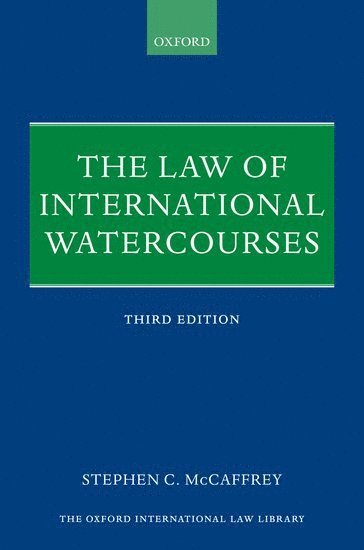
The Law of International Watercourses is an authoritative guide to the rules of international law governing the navigational and non-navigational uses of international rivers, lakes, and groundwater. The continued growth of the world's population places increasing demands on Earth's finite supplies of fresh water. Because two or more States share many of the world's most important drainage basins - including the Danube, the Ganges, the Indus, the Jordan, the Mekong, the Nile, the Rhine and the Tigris-Euphrates - competition for increasingly scarce fresh water resources will only increase. Agreements between the States sharing international watercourses are negotiated, and disputes over shared water are resolved, against the backdrop of the rules of international law governing the use of this precious resource. The basic legal rules governing the use of shared freshwater for purposes other than navigation are reflected in the 1997 UN Convention on the Law of the Non-Navigational Uses of International Watercourses. This book devotes a chapter to the 1997 Convention but also examines the factual and legal context in which the Convention should be understood, considers the more important rules of the Convention in some depth, and discusses specific issues that could not be addressed in a framework instrument of that kind. The book reviews the major cases and controversies concerning international watercourses as a background against which to consider the basic substantive and procedural rights and obligations of States in the field.The third edition covers the implications of the 1997 Convention coming into force in August 2014, and the compatibility of the 1997 and 1992 Conventions. This edition also updates the entire book, adds new material to many of the chapters, and adds a number of new case studies, including Pulp Mills on the River Uruguay (Argentina v. Uruguay) and Certain Activities carried out by Nicaragua in the Border Area (Costa Rica v. Nicaragua), amongst others.
840 kr
Skickas inom 5-8 vardagar
Revised and updated to include recent developments since 2013, the third edition of The Law of State Immunity provides a detailed guide to the operation of the international rule of State immunity which bars one State's national courts from exercising criminal or civil jurisdiction over claims made against another State. Building on the analysis of its two previous editions, it reviews relevant material at both international and national levels with particular attention to US and UK law; the 2004 UN Convention on Jurisdictional Immunities of the State and its Property (not yet in force), and also seeks to assess the significance of recent changes in the evolution of the law.Although the restrictive doctrine of immunity is now widely observed by which foreign States may be sued in national courts for their commercial transactions, the immunity rule remains controversial, not only by reason of the recognition of a single State's right to deny a remedy for a wrong - China, a major trading State, continues to adhere to the absolute bar - but also by the exclusion of any reparation or relief for the commission on the orders of a State of grave human rights violations. The complexity and moral challenge of the issues is illustrated by high profile cases such as Pinochet, Amerada Hess, Saudi Arabia v Nelson and more recently NML v Argentina in national courts; Al-Adsani v UK and Jones v UK in the European Court of Human Rights; and Judgments of the International Court of Justice in Arrest Warrant, Djibouti v France and most recently in the Jurisdictional Immunities of the State, which, particularly since the 2014 contrary ruling of the Italian Constitutional Court, has attracted strong juristic criticism. The expanding extraterritorial jurisdiction of national courts with regard to torture in disregard of pleas of act of State and nonjusticiability as in Belhaj and Rahmatullah offers a further challenge to the exclusionary nature and continued observance of State immunity. Recent developments in key areas are examined, including: impleading; public policy and non-justiciability; universal civil jurisdiction for reparation for international crimes; the application of the employment exception to embassies and diplomats; immunity from enforcement and procedural measures; immunity of State officials, and tensions between national constitutional requirements and superior international norms.
586 kr
Skickas inom 7-10 vardagar
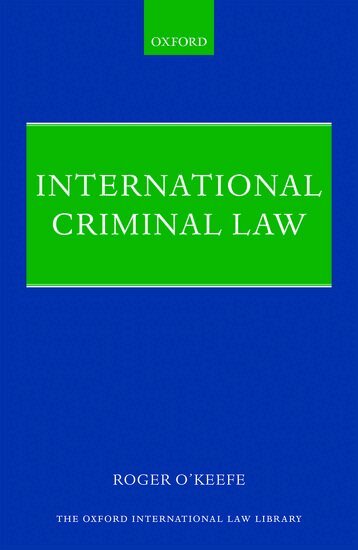
International Criminal Law provides a comprehensive overview of an increasingly integral part of public international law. It complements the usual accounts of the substantive law of those international crimes tried to date before international criminal courts and of the institutional law of those courts with in-depth analyses of fundamental formal juridical concepts such as an 'international crime' and an 'international criminal court'; with detailed examinations of the many international crimes provided for by way of multilateral treaty and of the attendant obligations and rights of states parties; and with sustained attention to the implementation of international criminal law at the national level. Direct, concise, and precise, International Criminal Law should prove a valuable resource for scholars and practitioners of the discipline of international criminal law.
542 kr
Skickas inom 7-10 vardagar
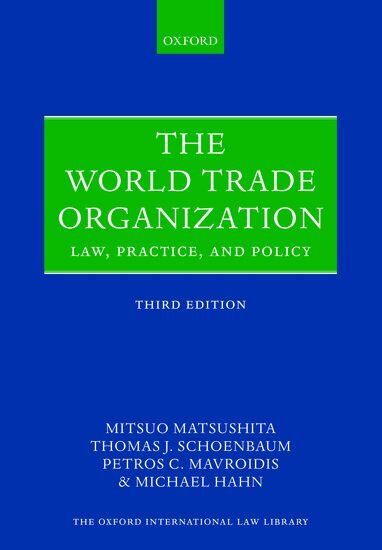
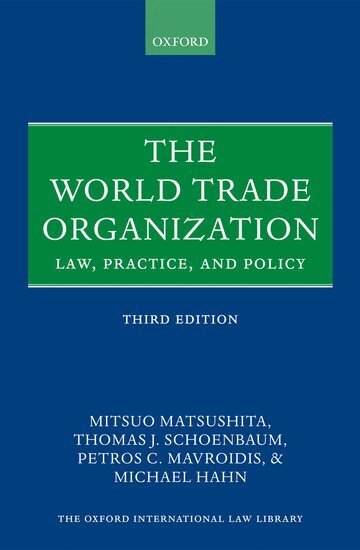
The WTO is one of the most important intergovernmental organizations in the world, yet the way in which it functions as an organization and the scope of its authority and power are still poorly understood. This comprehensively revised new edition of the acclaimed work by an outstanding team of WTO law specialists provides a complete overview of the law and practice of the WTO. The authors begin with the institutional law of the WTO (such as the sources of law and remedies of the dispute settlement system), then tackle the principal substantive obligations of the WTO regime (including tariffs, quotas, and MFN). They then move on to consider unfair trade, regional trading arrangements, and developing countries. In its final section the book deals with the consequences of globalization: first, where free trade is seen to be incompatible with environmental protection and, second, where WTO law confronts legal regimes governing issues of competition and intellectual property.
590 kr
Skickas inom 7-10 vardagar
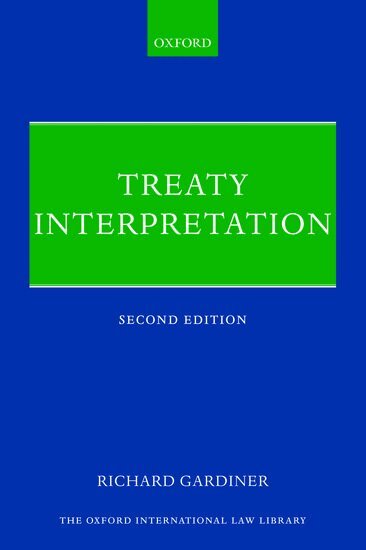
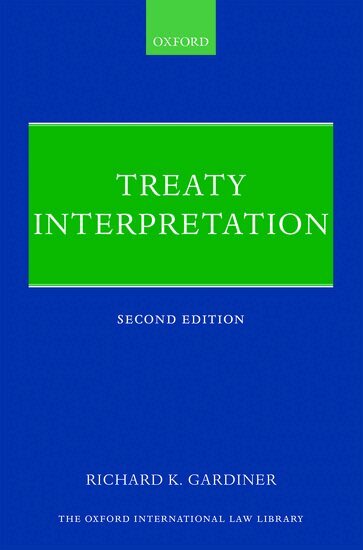
This series features works on substantial topics in international law which provide authoritative statements of the chosen areas. Taken together they map out the whole of international law in a set of scholarly reference works and treatises intended to be of use to scholars, practitioners, and students. This book provides a guide to interpreting treaties properly in accordance with the modern rules for treaty interpretation which are codified in the Vienna Convention on the Law of Treaties. These rules now apply to virtually all treaties both in an international context and within many national legal systems where treaties have an impact on a large and growing range of matters. Lawyers, administrators, diplomats, and officials at international organisations are increasingly likely to encounter issues of treaty interpretation which require not only knowledge of the relevant rules but also how these rules have been, and are to be, applied in practice. There is now a considerable body of case law on application of the codified rules. This case law, combined with the history and analysis of the rules, provides a basis for understanding this most important task in the application of treaties internationally and within national systems of law. Any lawyer who ever has to consider international matters, and increasingly any lawyer whose work involves domestic legislation with any international connection, is at risk nowadays of encountering a treaty provision which requires interpretation, whether the treaty provision is explicitly in issue or is the source of the relevant legislation.This expanded edition includes consideration of a range of recent cases, takes account of relevant work of the International Law Commission, and has new material addressing matters raised in the growing body of literature on treaty interpretation.
2 500 kr
Skickas inom 5-8 vardagar
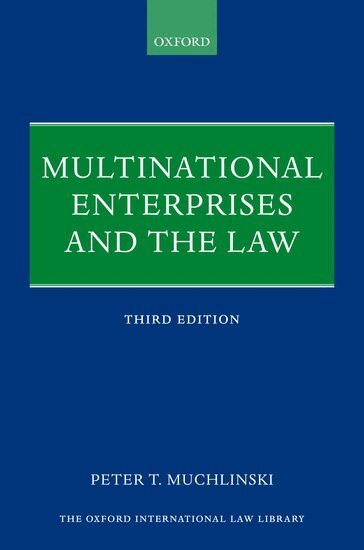
Multinational Enterprises and the Law is the only comprehensive, contemporary, and interdisciplinary account of the techniques used to regulate multinational enterprises (MNEs) at the national, regional, and multilateral levels. In addition, it considers the effects of corporate self-regulation, and the impact of civil society and community groups upon the development of the legal order in this area. The book has been thoroughly revised and updated for this third edition, making it a definitive reference work for students, researchers, and practitioners of international economic law, business, corporate and commercial law, development studies, and international politics.Split into four parts, the book first deals with the conceptual basis for MNE regulation. It explains the growth of MNEs, their business and legal forms, and the relationship between them and the effects of a globalized economy and society, now increasingly challenged by recently revived nationalist economic policies, upon the evolution of regulatory agendas in the field. In addition, the limits of national and regional jurisdiction over MNE activities are considered, a question that arises throughout the specialized areas of regulation covered in the remainder of the book. Part II covers the main areas of economic regulation, including controls over, and the liberalization of, entry and establishment, tax, company and competition law and the impact of intellectual property rights on technology diffusion and transfer. A specialized chapter on the regulation of multinational banks in the wake of the global financial crisis is new to this edition. Part III introduces the social dimension of MNE regulation covering labour rights, human rights, and environmental issues. Finally, Part IV deals with the contribution of international investment law to MNE regulation and to the control of investment risks, covering the main provisions found in international investment agreements, their interpretation by international tribunals, the process of investor-state arbitration, and how concerns over these developments are leading to reform proposals.
867 kr
Skickas inom 5-8 vardagar
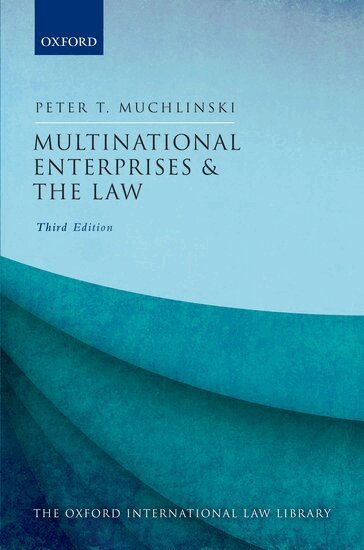
Multinational Enterprises and the Law is the only comprehensive, contemporary, and interdisciplinary account of the techniques used to regulate multinational enterprises (MNEs) at the national, regional, and multilateral levels. In addition, it considers the effects of corporate self-regulation, and the impact of civil society and community groups upon the development of the legal order in this area. The book has been thoroughly revised and updated for this third edition, making it a definitive reference work for students, researchers, and practitioners of international economic law, business, corporate and commercial law, development studies, and international politics.Split into four parts, the book first deals with the conceptual basis for MNE regulation. It explains the growth of MNEs, their business and legal forms, and the relationship between them and the effects of a globalized economy and society, now increasingly challenged by recently revived nationalist economic policies, upon the evolution of regulatory agendas in the field. In addition, the limits of national and regional jurisdiction over MNE activities are considered, a question that arises throughout the specialized areas of regulation covered in the remainder of the book. Part II covers the main areas of economic regulation, including controls over, and the liberalization of, entry and establishment, tax, company and competition law and the impact of intellectual property rights on technology diffusion and transfer. A specialized chapter on the regulation of multinational banks in the wake of the global financial crisis is new to this edition. Part III introduces the social dimension of MNE regulation covering labour rights, human rights, and environmental issues. Finally, Part IV deals with the contribution of international investment law to MNE regulation and to the control of investment risks, covering the main provisions found in international investment agreements, their interpretation by international tribunals, the process of investor-state arbitration, and how concerns over these developments are leading to reform proposals.
2 502 kr
Skickas inom 3-6 vardagar
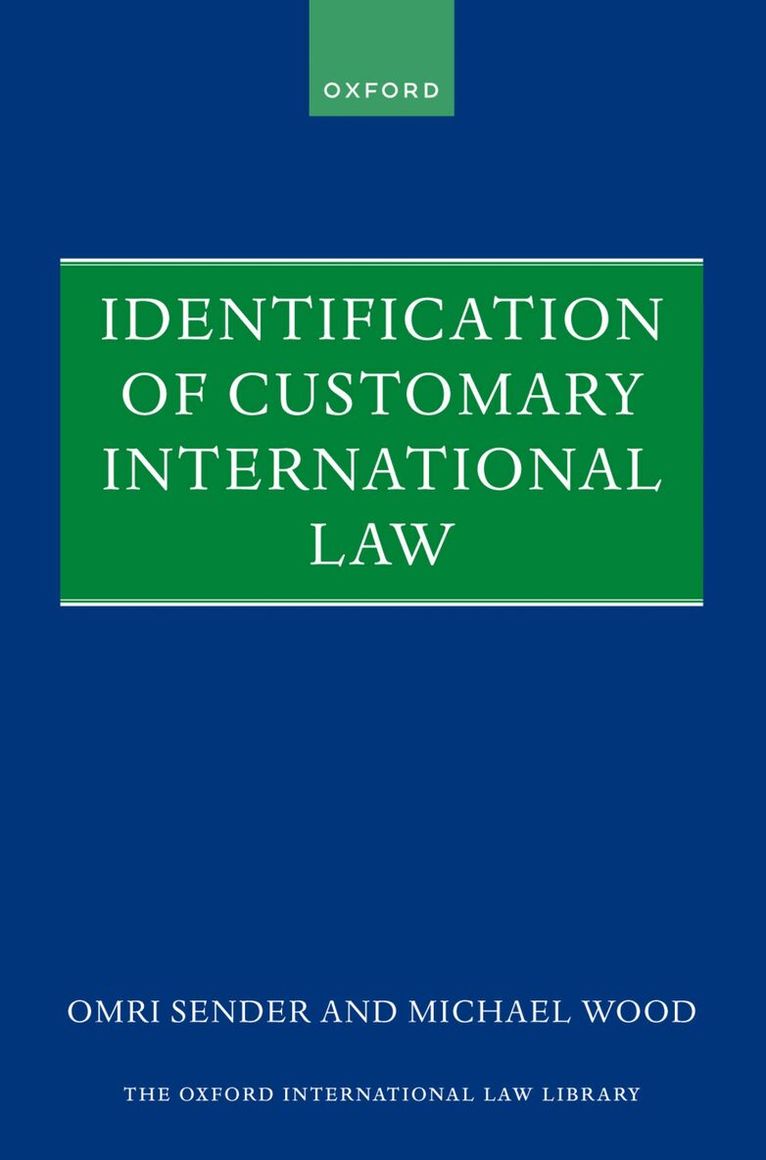
Customary international law remains a central source of international law and the core of the international legal system. It continues to draw the attention of lawyers, especially at a time marked by the great expansion of international law and its increasing application in domestic and international courts. Determining whether an applicable rule of customary international law exists is therefore of great practical concern - but this important legal task is not always simple or straightforward. This book serves as guidance to those seeking to determine the existence of rules of customary international law and their content. It elaborates on the methodology for the identification of rules of customary international law and examines a host of questions concerning the process and evidence involved. It does so by complementing the authoritative work of the UN International Law Commission on this topic, and by drawing upon a wealth of additional practice and writings. Identification of Customary International Law provides an overview of the Commission's work and expands on it by addressing the nature and history of custom as a source of international law, inquiring into each of the two constituent elements of customary international law (namely, a general practice and opinio juris), explaining the value and limits of certain forms of evidence, and throwing further light on such issues as the persistent objector rule and particular customary international law. Practitioners and scholars alike will find this detailed treatment useful in seeking to determine the existence and content of any customary rule and in ensuring that arguments about customary international law are persuasive.
2 859 kr
Skickas inom 5-8 vardagar
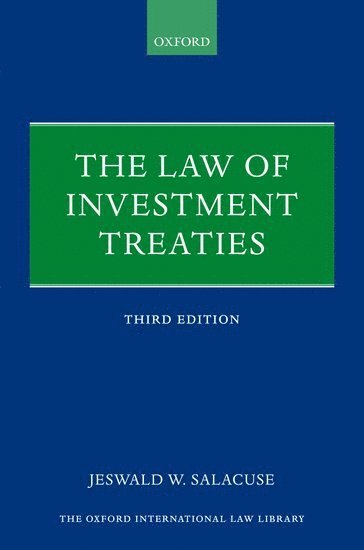
Investment treaties grant special international protection to foreign investors, and give them a means to enforce those rights against States in which they have invested. This book systematically examines the law of international investment treaties, particularly with respect to its origins, structure, content, and effects. Although the precise provisions of investment treaties are not uniform, virtually all investment treaties address the same issues. This book examines those issues in detail, including the scope of application, conditions for the entry of foreign investment, and general standards of treatment of foreign investments.Investment treaty law has continued to evolve rapidly and dramatically since publication of the second edition of this work in 2015. The field has seen considerable growth in the number and scope of investment treaties, now estimated at 3300, and investor-state arbitrations cases, which reached over 1000 in 2020. The field has also experienced significant changes and reforms. In 2018, eleven Pacific Basin Countries, despite the withdrawal of the United States, forged ahead to conclude the Comprehensive and Progressive Agreement for Trans-Pacific Partnership (CPTTP), a potentially far reaching regional trade and investment agreement. The next year, the three north American nations replaced the North American Free Trade Agreement (NAFTA) with the United States-Mexico-Canada Agreement (USMCA). And in 2020, European Union member states terminated over 100 intra-EU BITs, leaving intra-EU investors to rely on EU law and legal processes alone for protection from unfavourable government acts. This edition of The Law of Investment Treaties incorporates a consideration of all of these and other reforms into its analysis of the body of law created by investment treaties since World War II.
2 619 kr
Skickas inom 5-8 vardagar
The WTO is one of the most important intergovernmental organizations in the world, yet the way in which it functions as an organization and the scope of its authority and power are still poorly understood. This comprehensively revised new edition of the acclaimed work by an outstanding team of WTO law specialists provides a complete overview of the law and practice of the WTO. The authors begin with the institutional law of the WTO (such as the sources of law and remedies of the dispute settlement system), then tackle the principal substantive obligations of the WTO regime (including tariffs, quotas, and MFN). They then move on to consider unfair trade, regional trading arrangements, and developing countries. In its final section the book deals with the consequences of globalization: firstly, where free trade is seen to be incompatible with environmental protection and, secondly, where WTO law confronts legal regimes governing issues of competition and intellectual property.
2 058 kr
Skickas inom 5-8 vardagar
The legal position in international law of heads of states and other senior state representatives is at the heart of the conflict thrown up by recent changes in the international legal order. The establishment of the International Criminal Court and the ad hoc criminal tribunals reflects a growing belief that heads of states and other senior state representatives should be held accountable for serious violations of international law. It is now questioned whether foreign states and their officials still have immunity from proceedings concerning grave human rights abuses in national courts.This book provides a comprehensive treatment of this key issue, covering both civil and criminal proceedings before domestic courts and the position before international courts and tribunals. The positions of both serving and former heads of states are examined and, where appropriate, so is that of their family members. The wide variety of constitutional forms and titles enjoyed by heads of states and senior state representatives is considered and their internationally relevant powers and functions outlined. The implications of recognition or lack of it are assessed, together with the practical and legal consequences of loss of office and/or exile in a foreign state. In examining the position of heads of state and other senior representatives in foreign states, attention is given to the question of immunities before the local courts, and to other privileges, protections, and courtesies to which they may be entitled. The book draws a distinction between the personal immunity (ratione personae) enjoyed by heads of states which derive from their status or office, and the official act immunity (ratione materiae) enjoyed by all state officials. It closely examines the relationship between state immunity as it has developed under the restrictive doctrine and the immunities to which individuals are entitled. Careful consideration is given to separate regimes of international immunities such as special missions.This systematic analysis of the legal position of heads of states takes into account the history of the subject, relevant state practice (judicial and legislative), the impact of relevant international treaties, and international judicial or arbitral decisions on the matter.
6 144 kr
Skickas inom 3-6 vardagar
The doctrine of state immunity bars a national court from adjudicating or enforcing claims against foreign states. This doctrine, the foundation for high-profile national and international decisions such as those in the Pinochet case and the Arrest Warrant cases, has always been controversial. The reasons for the controversy are many and varied. Some argue that state immunity paves the way for state violations of human rights. Others argue that the customary basis for the doctrine is not a sufficient basis for regulation and that codification is the way forward. Furthermore, it can be argued that even when judgments are made in national courts against other states, the doctrine makes enforcement of these decisions impossible.This fully restructured new edition provides a detailed analysis of these issues in a more clear and accessible manner. It provides a nuanced assessment of the development of the doctrine of state immunity, including a general comprehensive overview of the plea of immunity of a foreign state, its characteristics, and its operation as a bar to proceedings in national courts of another state. It includes a coherent history and justification of the plea of state immunity, demonstrating its development from the absolute to the restrictive phase, arguing that state immunity can now be seen to be developing into a third phase which uses immunity allocate adjudicative and enforcement jurisdictions between the foreign and the territorial states. The United Nations Convention on Jurisdictional Immunities of states and their Property is thoroughly assessed. Through a detailed examination of the sources of law and of English and US case law, and a comparative analysis of other types of immunity, the authors explore both the law as it stands, and what it could and should be in years to come.
1 690 kr
Skickas inom 7-10 vardagar
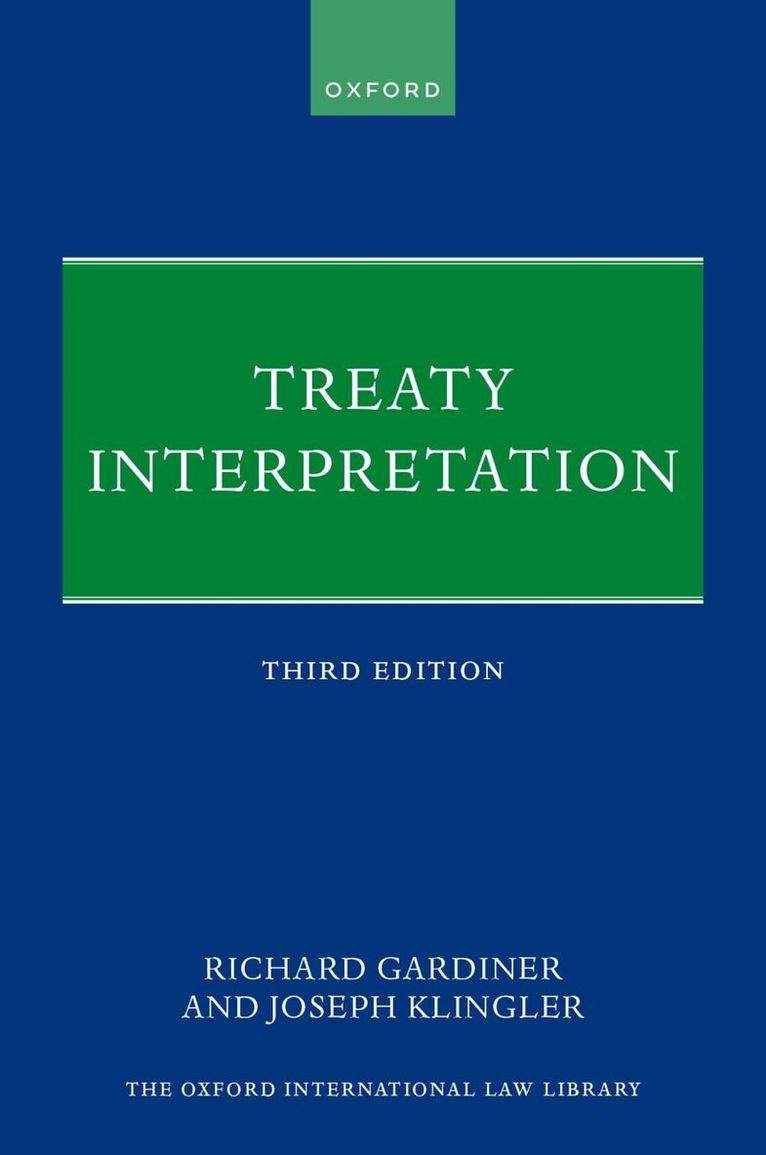
The rules of treaty interpretation codified in the 'Vienna Convention on the Law of Treaties' now apply to virtually all treaties, in an international context as well as within national legal systems, where treaties have an impact on a large and growing range of matters. The rules of treaty interpretation differ somewhat from typical rules for interpreting legal instruments and legislation within national legal systems. Lawyers, administrators, diplomats, and officials at international organisations are increasingly likely to encounter issues of treaty interpretation which require not only knowledge of the relevant rules of interpretation, but also how these rules have been, and are to be, applied in practice. Since the codified rules of treaty interpretation came into decree, there is a considerable body of case-law on their application. This case-law, combined with the history and analysis of the rules of treaty interpretation, provides a basis for understanding this most important task in the application of treaties internationally and within national systems of law. Any lawyer who ever has to consider international matters, and increasingly any lawyer whose work involves domestic legislation with any international connection, is at risk nowadays of encountering a treaty provision which requires interpretation, whether the treaty provision is explicitly in issue or is the source of the relevant domestic legislation. This fully updated new edition features case law from a broader range of jurisdictions, and an account of the work of the International Law Commission in its relation to interpretative declarations. This book provides a guide to interpreting treaties properly in accordance with the modern rules.
1 897 kr
Skickas inom 5-8 vardagar
International Criminal Law provides a comprehensive overview of an increasingly integral part of public international law. It complements the usual accounts of the substantive law of those international crimes tried to date before international criminal courts and of the institutional law of those courts with in-depth analyses of fundamental formal juridical concepts such as an 'international crime' and an 'international criminal court'; with detailed examinations of the many international crimes provided for by way of multilateral treaty and of the attendant obligations and rights of states parties; and with sustained attention to the implementation of international criminal law at the national level. Direct, concise, and precise, International Criminal Law should prove a valuable resource for scholars and practitioners of the discipline of international criminal law.