Oxford Legal Philosopies - Böcker
Visar alla böcker i serien Oxford Legal Philosopies. Handla med fri frakt och snabb leverans.
2 produkter
2 produkter
1 461 kr
Skickas inom 5-8 vardagar
This book argues that ignorance of law should usually be a complete excuse from criminal liability. It defends this conclusion by invoking two presumptions: first, the content of criminal law should conform to morality; second, mistakes of fact and mistakes of law should be treated symmetrically. The author grounds his position in an underlying theory of moral and criminal responsibility according to which blameworthiness consists in a defective response to the moral reasons one has. Since persons cannot be faulted for failing to respond to reasons for criminal liability they do not believe they have, then ignorance should almost always excuse. But persons are somewhat responsible for their wrongs when their mistakes of law are reckless, that is, when they consciously disregard a substantial and unjustifiable risk that their conduct might be wrong. This book illustrates this with examples and critiques the arguments to the contrary offered by criminal theorists and moral philosophers. It assesses the real-world implications for the U.S. system of criminal justice. The author describes connections between the problem of ignorance of law and other topics in moral and legal theory.
1 130 kr
Skickas inom 5-8 vardagar
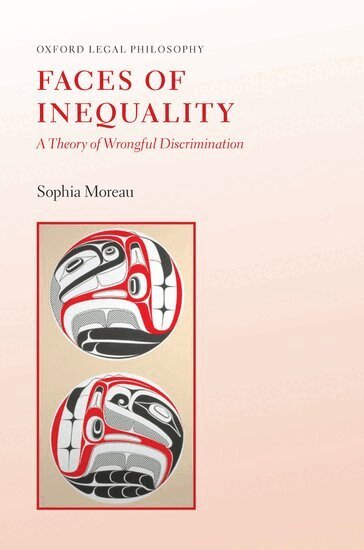
This book defends an original and pluralist theory of when and why discrimination wrongs people. Starting from actual legal cases in which claimants have alleged wrongful discrimination by other people or by the state, Sophia Moreau argues that we can best understand these people's complaints by thinking of them as complaints about different ways in which they have not been treated as equals in their societies--in particular, through unfair subordination, through the violation of their right to a particular deliberative freedom, or through the denial to them of access to a basic good, that is, a good that this person must have access to if they are to be, and to be seen as, an equal in their society. The book devotes a chapter to each of these wrongs, exploring in detail what unfair subordination consists of; what deliberative freedoms are, and when each of us has a right to them; and what it means to deny someone access to a basic good. The author explains why these wrongs are each distinctive, but are each a different way of failing to treat some people as the equals of others. Finally the author argues that both the state and we as individuals have a duty to treat others as equals, in these three specific senses.