Oxford Research Centre in the Humanities/Princeton University Press Lectures in European Culture – serie
Visar alla böcker i serien Oxford Research Centre in the Humanities/Princeton University Press Lectures in European Culture. Handla med fri frakt och snabb leverans.
2 produkter
2 produkter
180 kr
Skickas inom 7-10 vardagar
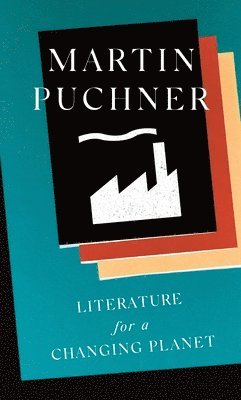
Why we must learn to tell new stories about our relationship with the earth if we are to avoid climate catastropheReading literature in a time of climate emergency can sometimes feel a bit like fiddling while Rome burns. Yet, at this turning point for the planet, scientists, policymakers, and activists have woken up to the power of stories in the fight against global warming. In Literature for a Changing Planet, Martin Puchner ranges across four thousand years of world literature to draw vital lessons about how we put ourselves on the path of climate change—and how we might change paths before it’s too late.From the Epic of Gilgamesh and the West African Epic of Sunjata to the Communist Manifesto, Puchner reveals world literature in a new light—as an archive of environmental exploitation and a product of a way of life responsible for climate change. Literature depends on millennia of intensive agriculture, urbanization, and resource extraction, from the clay of ancient tablets to the silicon of e-readers. Yet literature also offers powerful ways to change attitudes toward the environment. Puchner uncovers the ecological thinking behind the idea of world literature since the early nineteenth century, proposes a new way of reading in a warming world, shows how literature can help us recognize our shared humanity, and discusses the possible futures of storytelling.If we are to avoid environmental disaster, we must learn to tell the story of humans as a species responsible for global warming. Filled with important insights about the fundamental relationship between storytelling and the environment, Literature for a Changing Planet is a clarion call for readers and writers who care about the fate of life on the planet.
235 kr
Skickas inom 7-10 vardagar
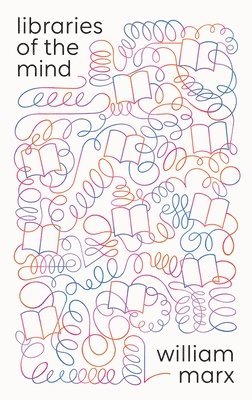
How we build our invisible libraries Erich Auerbach wrote his classic work Mimesis, a history of narrative from Homer to Proust, based largely on his memory of past reading. Having left his physical library behind when he fled to Istanbul to escape the Nazis, he was forced to rely on the invisible library of his mind. Each of us has such a library—if not as extensive as Auerbach’s—even if we are unaware of it. In this erudite and provocative book, William Marx explores our invisible libraries—how we build them and how we should expand them.Libraries, Marx tells us, are mental realities, and, conversely, our minds are libraries. We never read books apart from other texts. We take them from mental shelves filled with a variety of works that help us understand what we are reading. And yet the libraries in our mind are not always what they should be. The selection on our mental shelves—often referred to as canon, heritage, patrimony, or tradition—needs to be modified and expanded. Our intangible libraries should incorporate what Marx calls the dark matter of literature: the works that have been lost, that exist only in fragments, that have been repurposed by their authors, or were never written in the first place. Marx suggests methods for recovering this missing literature, but he also warns us that adding new titles to our libraries is not enough. We must also adopt a new attitude, one that honors the diversity and otherness of literary works. We must shed our preconceptions and build within ourselves a mental world library.