Oxford Series in Behavioral Neuroendocrinology – Serie
Visar alla böcker i serien Oxford Series in Behavioral Neuroendocrinology. Handla med fri frakt och snabb leverans.
7 produkter
7 produkter
1 523 kr
Skickas inom 5-8 vardagar
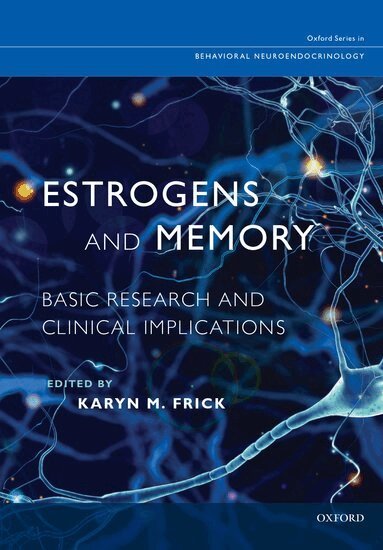
Estrogens are key modulators of brain regions that mediate learning and memory formation. This regulation has significant translational implications, as estrogens contribute to age-related memory decline and dementia, emotional disorders, addiction, and recovery from brain injury. Although the importance of estrogens for memory formation has been well accepted within the behavioral neuroendocrinology community, it has yet to be fully appreciated by neuroscientists outside of the discipline.Recent National Institutes of Health policies on the inclusion of sex as a biological variable in grant applications will force thousands of researchers to consider hormonal regulation of memory for the first time. However, the majority of these researchers are not trained endocrinologists, and no previous monograph comprehensively encompasses the breadth of basic and clinical research on this subject. Thus, this book provides a vital resource for non-endocrinologists and endocrinologists alike.Estrogens and Memory: Basic Research and Clinical Implications provides a compendium of cutting-edge basic and clinical research describing the ways in which estrogens regulate memory in a variety of species. Chapters are written by leading experts whose work is on the forefront of this exciting field. Three fundamental discussions focus on: effects of estrogens on the hippocampus and other brain regions central to memory, effects of estrogens on memory and related cognitive processes throughout the lifespan, and translational implications of estrogenic regulation of memory for aging and disease.
1 347 kr
Skickas inom 7-10 vardagar
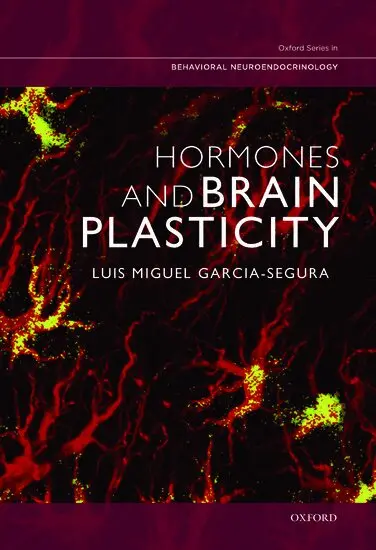
The nervous system has a remarkable capacity for self-reorganization, and in this first systematic analysis of the interaction between hormones and brain plasticity, Luis Miguel Garcia-Segura proposes that hormones modulate metaplasticity in the brain. He covers a wide variety of hormones, brain regions, and neuroplastic events, and also provides a new theoretical background with which to interpret the interaction of hormones and brain remodeling throughout the entire life of the organism. Garcia-Segura argues that hormones are indispensable for adequately adapting the endogenous neuroplastic activity of the brain to the incessant modifications in external and internal environments. Their regulation of neuroplastic events in a given moment predetermines new neuroplastic responses that will occur in the future, adapting brain reorganization to changing physiological and behavioral demands throughout the life of the organism. The cross-regulation of brain plasticity and hormones integrates information originated in multiple endocrine glands and body organs with information coming from the external world in conjunction with the previous history of the organism. Multiple hormonal signals act in concert to regulate the generation of morphological and functional changes in neural cells, as well as the replacement of neurons, glial, and endothelial cells in neural networks. Brain remodeling, in turn, is involved in controlling the activity of the endocrine glands and regulating hormonal secretions. This bidirectional adjustment of brain plasticity in response to hormonal inputs, and adjustment of hormonal concentrations in response to neuroplastic events are crucial for maintaining the stability of the inner milieu and for the generation of adequate behavioral responses in anticipation of--and in adaptation to--new social and environmental circumstances and life events, including pathological conditions.
Tempests, Poxes, Predators, and People
Stress in Wild Animals and How They Cope
Inbunden, Engelska, 2015
1 944 kr
Skickas inom 5-8 vardagar
Although scientists have discovered many fundamental physiological and behavioral mechanisms that comprise the stress response, most of current knowledge is based on laboratory experiments using domesticated or captive animals. Scientists are only beginning, however, to understand how stress impacts wild animals - by studying the nature of the stressful stimuli that animals in their natural environments have adapted to for survival, and what the mechanisms that allow that survival might be. This book summarizes, for the first time, several decades of work on understanding stress in natural contexts. The aim is two-fold. The first goal of this work is to place modern stress research into an evolutionary context. The stress response clearly did not evolve to cause disease, so that studying how animals use the stress response to survive in the wild should provide insight into why mechanisms evolved the way that they did. The second goal is to provide predictions on how wild animals might cope with the Anthropocene, the current period of Earth's history characterized by the massive human remodeling of habitats on a global scale. Conservation of species will rely upon how wild animals use their stress response to successfully cope with human-created stressors.
984 kr
Skickas inom 5-8 vardagar
In this fascinating book, Jacques Balthazart presents a simple description of the biological mechanisms that are involved in the determination of sexual orientation in animals and also presumably in humans. Using scientific studies published over the last few decades, he argues that sexual orientation, both homosexual and heterosexual, is under the control of embryonic endocrine and genetic phenomena in which there is little room for individual choice. The author begins with animal studies of the hormonal and neural mechanisms that control the so-called instinctive behaviors and analyzes how this animal work may potentially apply to humans. The book does not focus exclusively on homosexuality, however. Instead, the book acts as a broader guide to the biological basis of sexual orientation, and also discusses important gender differences that may influence sexual orientation. While firmly grounded in the scientific literature, this text is developed for a broader audience and will be of interest to psychologists, researchers, students, and anyone interested in the biological factors that determine our sexuality.
1 944 kr
Skickas inom 5-8 vardagar
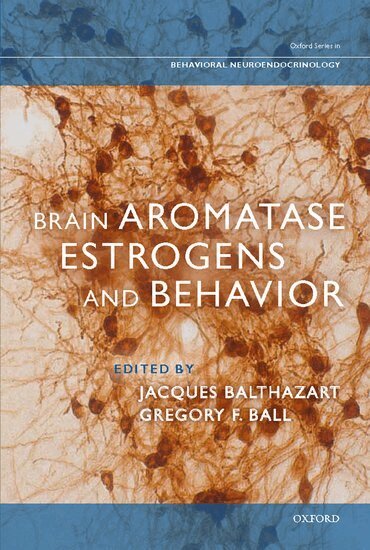
It is well known that the class of steroid hormones known as estrogens have powerful effects on organs related to reproduction such as the uterus and the breast. What is less well known is that estrogens also profoundly modulate brain function and behavior. Estrogens, such as estradiol, can occur in brain as the result of ovarian secretion of the hormone into the blood that then finds its way to the brain. In male vertebrates, the testes secrete androgens, such as testosterone, into the blood and this class of steroid hormones can be converted into estrogens in the brain via the action of the enzyme aromatase which is expressed in the male brain in many species. Finally estradiol can be synthesized de novo from cholesterol as it has been shown in a variety of species that all the enzymes required to synthesize estrogens are expressed in the brain. This book collects chapters by experts in the field that considers, how estradiol is synthesized in the brain and what its effects are on a variety of behaviors. Special attention is paid to the enzyme aromatase that is distributed in discrete regions of the brain and is highly regulated in a sex specific and seasonal specific manner. Recently it has become clear that estrogens can act in the brain at two very different time scales, one is rather long lasting (days to weeks) and involves the modulation of gene transcription by the hormone-receptor complex. A second mode of action is much quicker and involves the action of estrogens on cell membranes that can result in effects on second messenger systems and ultimately behavior within minutes. Thus this book highlights novel views of estrogen action that are still under-appreciated namely that estrogens have significant effects on the male brain and that they can act on two very different times scales. This volume will be of interest to both basic researchers and clinicians interested in the action of estrogens.
Losing Our Minds
How Environmental Pollution Impairs Human Intelligence and Mental Health
Inbunden, Engelska, 2014
1 110 kr
Skickas inom 5-8 vardagar
The global prevalence of neurodevelopmental disorders is accelerating. Numbers of children affected by an autism spectrum disorder (ASD) in the United States have reached 1 in 88 -- 1 in 56 among boys -- and even more children have developed attention deficit/hyperactivity disorders (ADHD). The burden of these disorders to individuals and society overall is enormous; ASD alone costs the United States a staggering $130 billion, with ADHD costs reaching similar heights.Genetic causes of these neurodevelopmental disorders cannot account for such radically increased rates of incidence. The causes must also implicate environmental chemicals, many of which have been shown to disrupt normal thyroid function. In this book, Barbara Demeneix makes the case that thyroid hormone signaling bridges the environment and gene programs needed for brain development--and that environmental chemicals that disrupt normal thyroid function pose significant risks to the inherited intelligence and mental health of future generations. The first chapter provides an historical overview of documented cases in which environmental pollution has caused IQ loss across populations. The following chapters explain the physiology of thyroid hormone action, the importance of iodine and selenium for thyroid hormone signaling and brain development, and why thyroid hormone is such a sensitive target for environmental pollution. The final chapters discuss the role of gene-environment interactions in neurodevelopmental disorders and address what can and must be done by individuals, associations, and decision-makers to staunch these epidemics.
1 585 kr
Skickas inom 3-6 vardagar
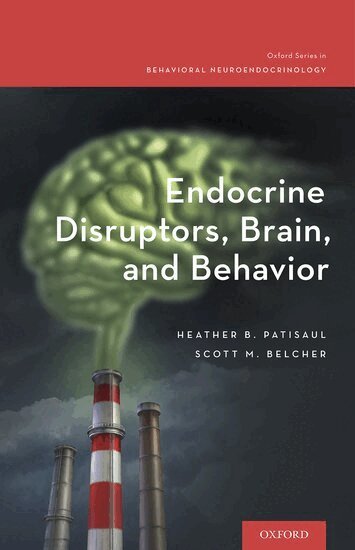
Our world and bodies are becoming increasingly polluted with chemicals capable of interfering with our hormones and thus, possibly, our present and future neural and mental health. As authors Heather Patisaul and Scott Belcher outline, there is a large lack of data and evidence in this causal relationship, which begs a need for further study to accelerate progress in the endocrinology and neuroendocrinology fields.Endocrine Disruptors, Brain, and Behavior focuses on if and how these chemicals, known as endocrine disrupting compounds (EDCs), affect the development and function of the brain and might be contributing to neural disorders rapidly rising in prevalence. The book provides an overall synthesis of the EDC field, including its historical roots, major hypotheses, key findings, and research gaps. The authors explain why even the concept of endocrine disruption is controversial in some circles, how differing definitions of endocrine disruption and what constitutes an "adverse" outcome on the brain shape public policy, and where the current capacity by different stakeholders (industry, academia, regulatory agencies) to evaluate chemicals for safety in a regulatory context begins and ends. The book concludes with suggestions for future research needs and a summary of emerging technology which might prove capable of more effectively evaluating existing and emerging chemicals for endocrine disrupting properties. As such, it provides the context for interdisciplinary and innovative input from a broad spectrum of fields, including those well-schooled in neuroscience, evolutionary biology, brain, behavior, sex differences, and neuroendocrinology.