Oxford Studies in Migration and Citizenship - Böcker
Visar alla böcker i serien Oxford Studies in Migration and Citizenship. Handla med fri frakt och snabb leverans.
8 produkter
8 produkter
823 kr
Skickas
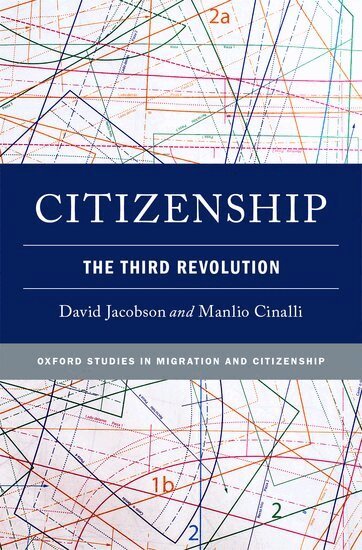
The emergence of citizenship, some 4,000 years ago, was a hinge moment in human history. Instead of the reign of blood descent, questions regarding who rules and who belongs were opened up. Yet purportedly primordial categories, such as sex and race, have constrained the emergence of a truly civic polity ever since. Untying this paradox is essential to overcoming the crisis afflicting contemporary democracies. Why does citizenship emerge, historically, and why does it maintain traction, even if in compromised forms? How can citizenship and democracy be revived? Learning from history and building on emerging social and political developments, David Jacobson and Manlio Cinalli provide the foundations for citizenship's third revolution.Citizenship: The Third Revolution considers three revolutionary periods for citizenship, from the ancient and classical worlds; to the flourishing of guilds and city republics from 1,000 CE; and to the unfinished revolution of human rights from the post-World War II period. Through historical enquiry, this book reveals the underlying principles of citizenship-and its radical promise. Jacobson and Cinalli demonstrate how the effective functioning of citizenship depends on human connections that are relational and non-contractual, not transactional. They illustrate how rights, paradoxically, can undermine as well as reinforce civic society. Looking forward, the book documents the emerging foundations of a "21st century guild" as a basis for repairing our democracies. The outcome of this scholarship is an innovative re-conceptualization of core ideas to engender more authentic civic collectivities.
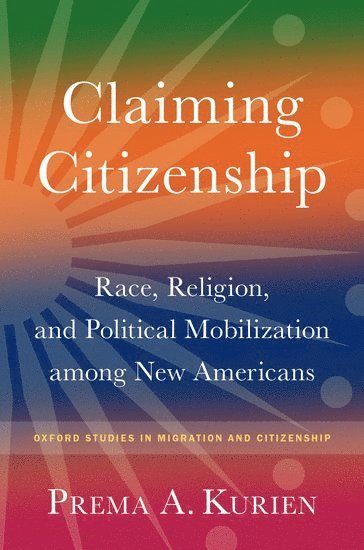
Claiming Citizenship
Race, Religion, and Political Mobilization among New Americans
Inbunden, Engelska, 2025
969 kr
Skickas inom 7-10 vardagar
Large-scale international immigration has transformed the political contours of Western societies over the last few decades. The political mobilization of ethnic groups has prompted questions about nationhood, citizenship, and secularism, as well as what it means to institutionalize pluralism.Claiming Citizenship looks at Indian Americans, currently the second-largest group of immigrants in the United States, and a group that has seen significant representation in the three most recent presidential administrations. Prema Kurien asks how Indian Americans have become a rising political force given that they have not followed the traditional, recommended model of political influence. She examines the dialectical process through which immigrants conform to the structures and cultures of the society to which they have immigrated, but also work to transform their adopted homelands to accommodate their unique needs.
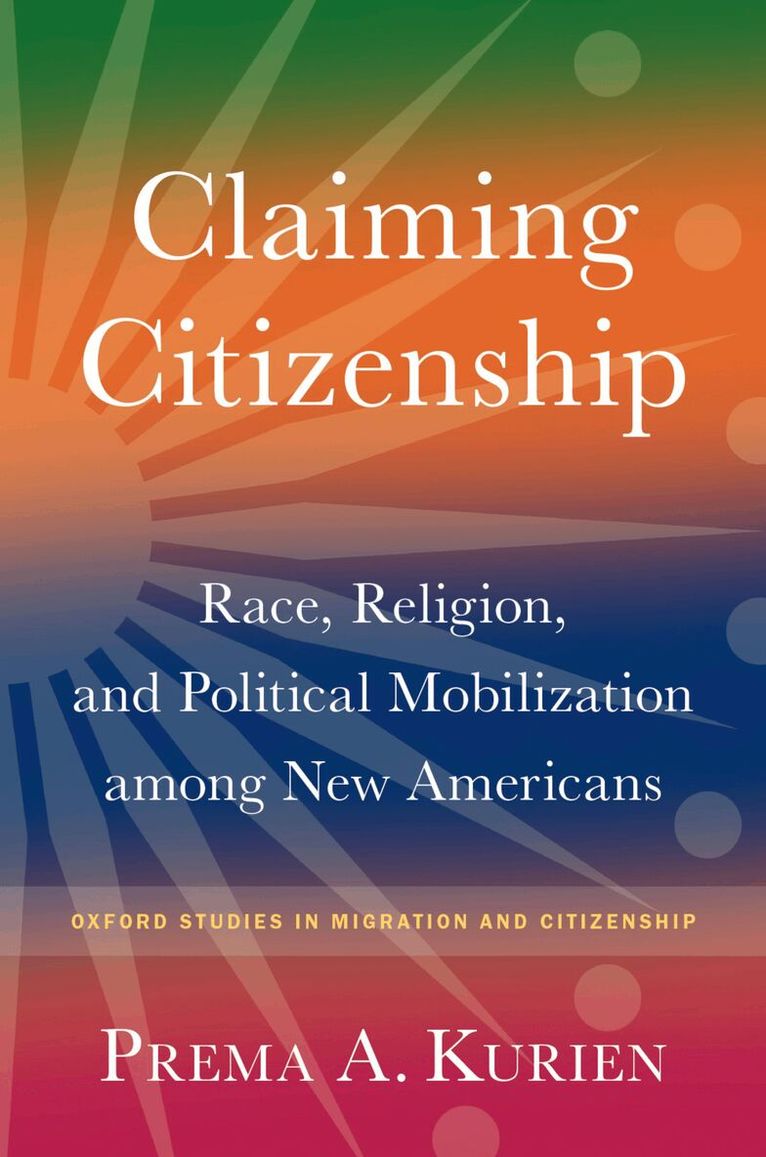
Claiming Citizenship
Race, Religion, and Political Mobilization among New Americans
Häftad, Engelska, 2025
278 kr
Skickas inom 5-8 vardagar
Large-scale international immigration has transformed the political contours of Western societies over the last few decades. The political mobilization of ethnic groups has prompted questions about nationhood, citizenship, and secularism, as well as what it means to institutionalize pluralism.Claiming Citizenship looks at Indian Americans, currently the second-largest group of immigrants in the United States, and a group that has seen significant representation in the three most recent presidential administrations. Prema Kurien asks how Indian Americans have become a rising political force given that they have not followed the traditional, recommended model of political influence. She examines the dialectical process through which immigrants conform to the structures and cultures of the society to which they have immigrated, but also work to transform their adopted homelands to accommodate their unique needs.
875 kr
Skickas inom 5-8 vardagar
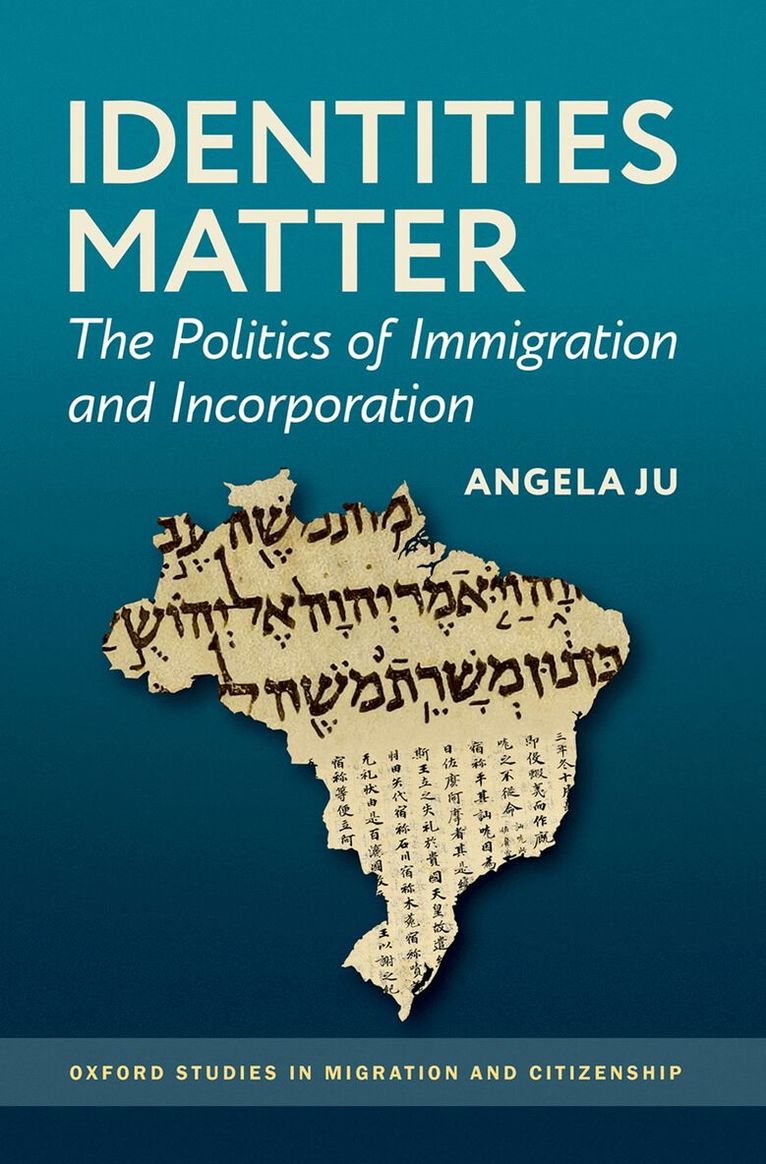
Grandchildren of immigrants belonging to groups that have achieved high socioeconomic status choose which identities to leverage in the host country's political arena. The scholarship about political incorporation often assumes that immigrant groups and their descendants find it in their best interest to pursue mainstream political incorporation. Those immigrants who belong to ethnic minority groups might choose to engage politically in a number of ways, depending on their racial or economic status; Identities Matter: The Politics of Immigration and Incorporation looks at how descendants of minoritized groups who have achieved, generally speaking, high socioeconomic status choose to identify politically in their adopted nations. Contrary to many expectations about political and social incorporation of immigrants, it finds that assimilation is not necessarily advantageous for groups who are from or associated with countries that are more economically developed than their host country. When this is the case, these immigrant communities may choose to strategically associate themselves with the heritage country over the one in which they reside. The book draws on original research among third-generation Japanese and Jewish Brazilians to determine the seemingly paradoxical ways in which the descendants of immigrants choose which identities to emphasize in the political arena. It shows that immigrant communities' strategies of political incorporation and social integration are framed within where they fall in existing ethno-racial and socioeconomic hierarchies, and that perceptions of discrimination drive third-generation descendants to vote in line with their ethnic interests. One particularly interesting finding is that in Brazil, a country that suffers from high levels of political corruption, Japanese Brazilian politicians are often incentivized to emphasize their Japanese-ness over their Brazilian-ness to convey to voters that they are more honest as political candidates than their "more Brazilian" opponents. Finally, ethnic community-based organizations allow these groups to leverage their identities transnationally.
1 173 kr
Skickas inom 7-10 vardagar
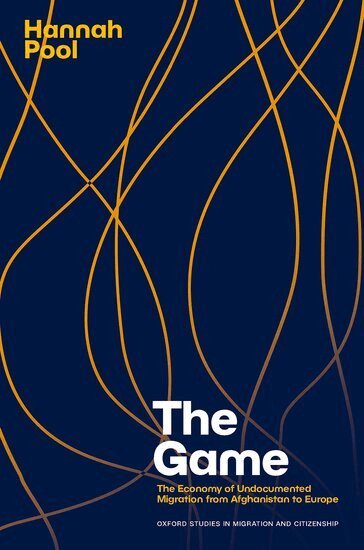
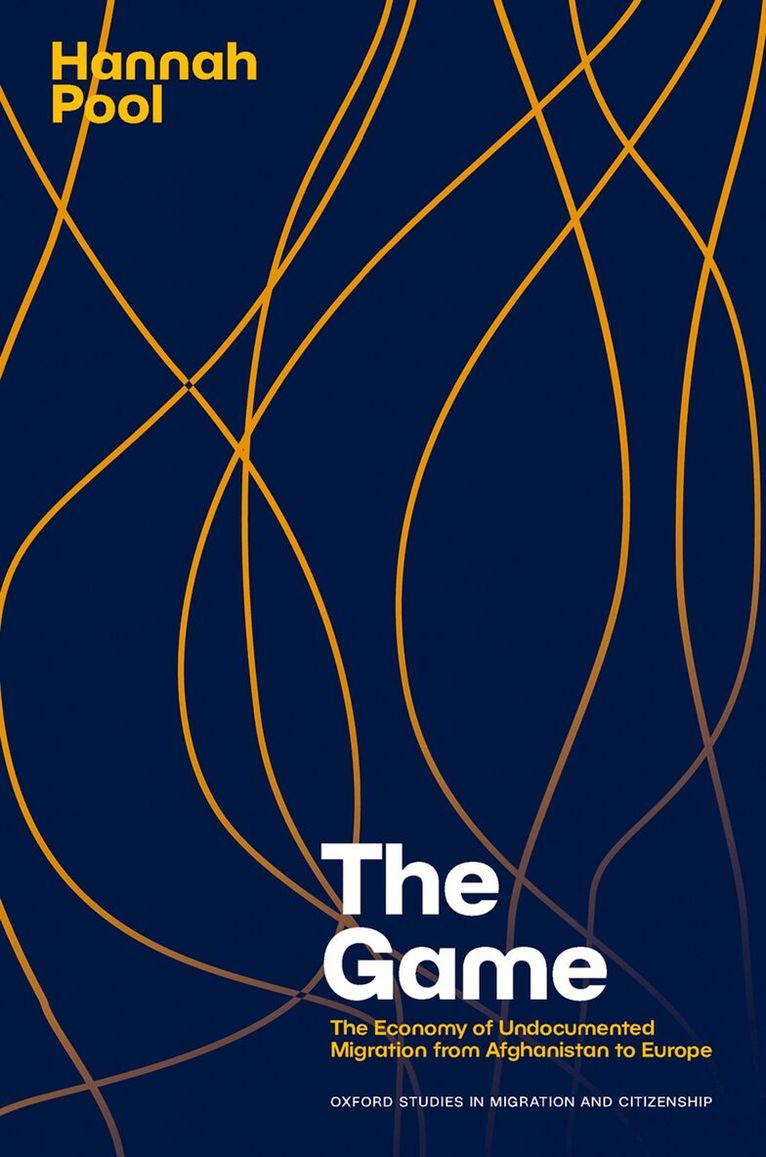
To seek asylum, people often have to cross borders undocumented, embarking on perilous trajectories. Due to the war in Afghanistan, the rule of the Taliban, and severe human rights violations, over the past decades thousands of people have risked their lives to seek safety. By what means do they make these journeys, especially when they lack money and passports?Over the course of three years, Hannah Pool accompanied a group of Afghan friends and families as they attempted "The Game" - Game zadan: the route to Europe to seek asylum. The resulting ethnography follows them across their entire trajectories: through Iran, Turkey, Greece, and along the so-called Balkan route. In each place, Pool details the economic interactions and social relationships essential for acquiring, saving, borrowing, spending, and exchanging money to facilitate their undocumented migration routes.The Game bridges economic sociology and migration studies to illustrate how migrants decide to trust people to facilitate their movement along these routes, focusing particularly on debt, special monies, bribes, donations, and gift-giving. Throughout the migration trajectory, relationships with family, fellow migrants, smugglers, humanitarian actors, and border control officials shape and are shaped by access to financial resources. Ultimately, the book highlights the dangers in undocumented border-crossing and delves into the core of what it means to flee: Who has the means to escape dangerous conditions to seek asylum?
278 kr
Skickas inom 5-8 vardagar
To seek asylum, people often have to cross borders undocumented, embarking on perilous trajectories. Due to the war in Afghanistan, the rule of the Taliban, and severe human rights violations, over the past decades thousands of people have risked their lives to seek safety. By what means do they make these journeys, especially when they lack money and passports?Over the course of three years, Hannah Pool accompanied a group of Afghan friends and families as they attempted "The Game" - Game zadan: the route to Europe to seek asylum. The resulting ethnography follows them across their entire trajectories: through Iran, Turkey, Greece, and along the so-called Balkan route. In each place, Pool details the economic interactions and social relationships essential for acquiring, saving, borrowing, spending, and exchanging money to facilitate their undocumented migration routes.The Game bridges economic sociology and migration studies to illustrate how migrants decide to trust people to facilitate their movement along these routes, focusing particularly on debt, special monies, bribes, donations, and gift-giving. Throughout the migration trajectory, relationships with family, fellow migrants, smugglers, humanitarian actors, and border control officials shape and are shaped by access to financial resources. Ultimately, the book highlights the dangers in undocumented border-crossing and delves into the core of what it means to flee: Who has the means to escape dangerous conditions to seek asylum?
1 141 kr
Kommande
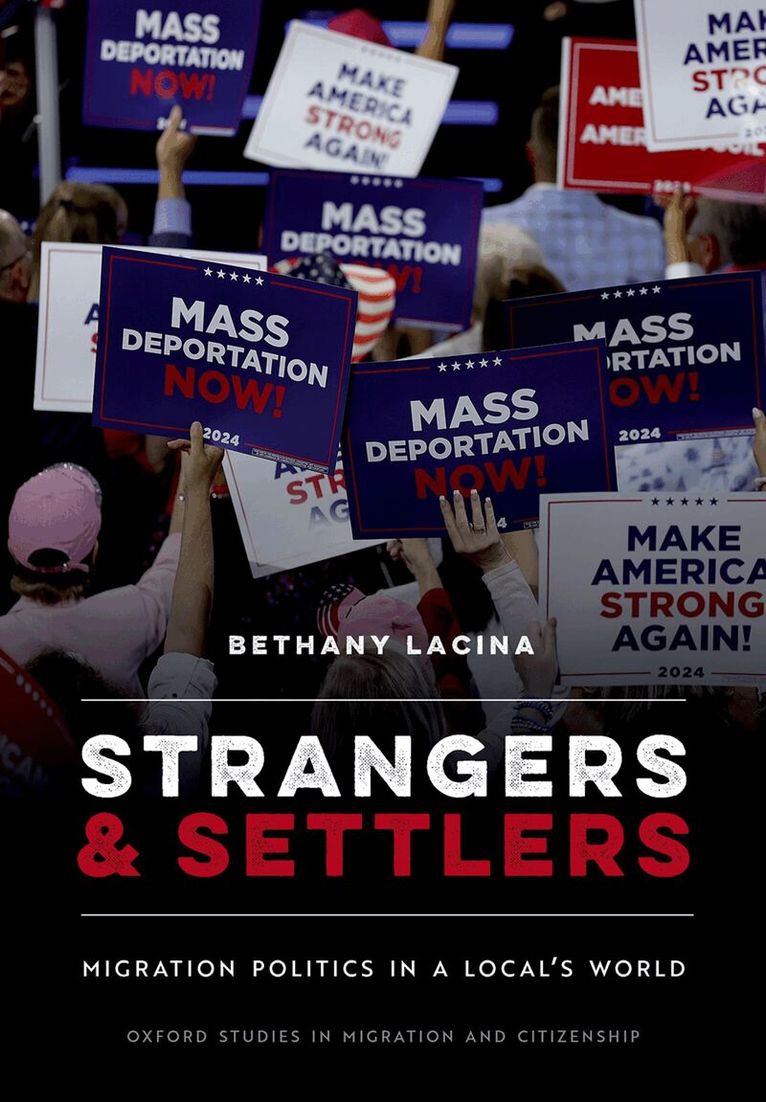
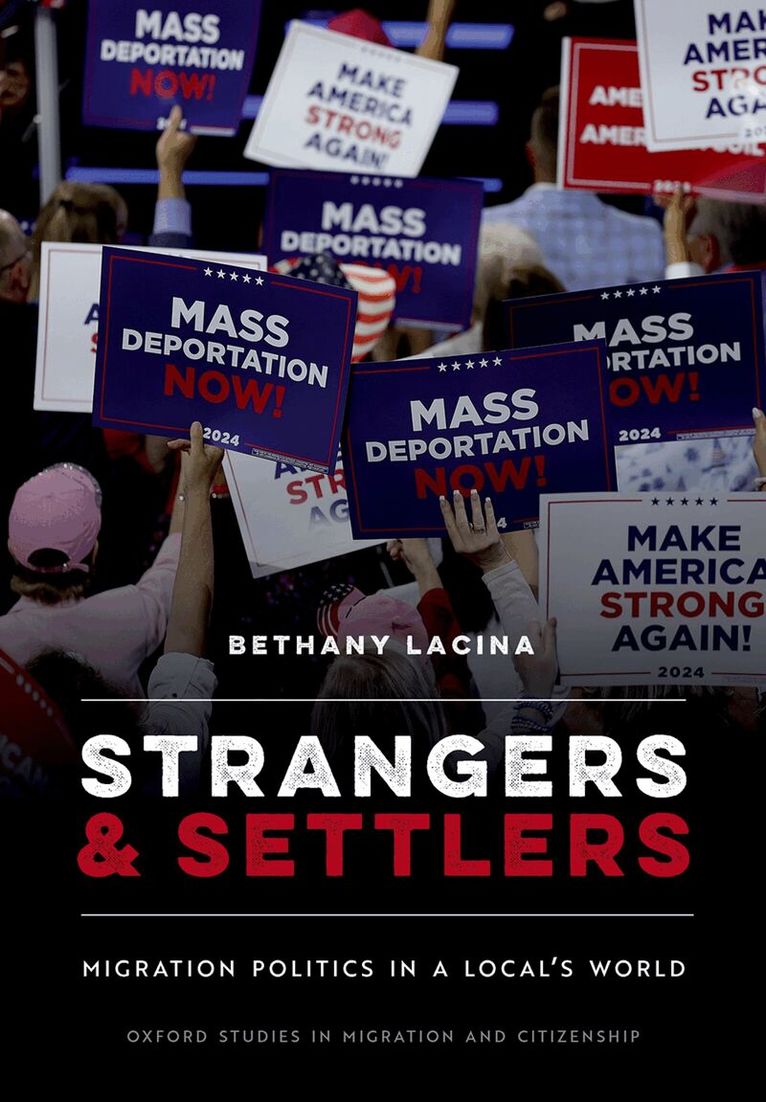
Do people have special rights in a place if they are one of the locals there? The belief that they do is common worldwide. Yet, entitlement to place has little role in most accounts of migration politics. Instead, migration politics commentary is a showdown between culture and economics, in-group identities and material incentives. In Strangers and Settlers, Bethany Lacina provides the first global study of nativism that features a unified account of the drivers of backlash against international and domestic migration. Drawing from forty years of global public opinion surveys conducted in 146 countries; detailed census records from 70 countries spanning the mid-1950s to now; and a wealth of comparative information on both migration policy and nativist activism, Lacina describes a world of nested hierarchies of locals, offering new insights about migration politics. As she shows, both domestic and international migration politics take place within a nativist status quo. Being local is normative even within national and ethnic groups and when the material stakes of migration are low. Governments use a range of policies to ensure locals maintain political and economic superiority over newcomers, particularly international migrants. An unprecedentedly comprehensive study, Strangers and Settlers shows that the status quo throughout the world is nativism, but the key to making sense of its variety is understanding whether and how regimes, residents, and newcomers clash over controlling who is local.
293 kr
Kommande
Do people have special rights in a place if they are one of the locals there? The belief that they do is common worldwide. Yet, entitlement to place has little role in most accounts of migration politics. Instead, migration politics commentary is a showdown between culture and economics, in-group identities and material incentives. In Strangers and Settlers, Bethany Lacina provides the first global study of nativism that features a unified account of the drivers of backlash against international and domestic migration. Drawing from forty years of global public opinion surveys conducted in 146 countries; detailed census records from 70 countries spanning the mid-1950s to now; and a wealth of comparative information on both migration policy and nativist activism, Lacina describes a world of nested hierarchies of locals, offering new insights about migration politics. As she shows, both domestic and international migration politics take place within a nativist status quo. Being local is normative even within national and ethnic groups and when the material stakes of migration are low. Governments use a range of policies to ensure locals maintain political and economic superiority over newcomers, particularly international migrants. An unprecedentedly comprehensive study, Strangers and Settlers shows that the status quo throughout the world is nativism, but the key to making sense of its variety is understanding whether and how regimes, residents, and newcomers clash over controlling who is local.