Oxford Studies in Recorded Jazz - Böcker
Visar alla böcker i serien Oxford Studies in Recorded Jazz. Handla med fri frakt och snabb leverans.
16 produkter
16 produkter
1 289 kr
Skickas inom 5-8 vardagar
Dave Brubeck's Time Out ranks among the most popular, successful, and influential jazz albums of all time. Released by Columbia in 1959 alongside such other landmark albums as Miles Davis's Kind of Blue and Charles Mingus's Mingus Ah Um, Time Out became the first jazz album to be certified platinum, while its featured track, "Take Five" became the first jazz single to surpass one million copies sold. In addition to its commercial successes, the album is widely recognized as a pioneering endeavor into the use of odd meters in jazz. With its opening track, "Blue Rondo a la Turk" written in 9/8, its hit single "Take Five" in 5/4, and equally innovative plays on the more common 3/4 and 4/4 meters on other tracks, Take Five has played an important role in the development of modern jazz. In this book, author Stephen A. Crist draws on nearly ten years of archival research to offer the most thorough examination to date of this seminal jazz album. Supplementing his research with interviews with key individuals, including Brubeck's widow Iola and daughter Catherine, as well as interviews conducted with Brubeck himself prior to his passing in 2012, Crist paints a complete picture of the album's origins, creation, and legacy. Couching careful analysis of each of the album's seven tracks within historical and cultural context, he offers fascinating insights into the composition and development of some of the albums best known songs. From Brubeck's 1958 State Department-sponsored tour of Turkey during which he first encountered the aksak rhythms that would from the basis of "Blue Rondo a la Turk" to the backstage jam session that laid the seeds for "Take Five", Crist sheds an exciting new light on one of the most significant albums in jazz history.
284 kr
Skickas inom 5-8 vardagar
Dave Brubeck's Time Out ranks among the most popular, successful, and influential jazz albums of all time. Released by Columbia in 1959 alongside such other landmark albums as Miles Davis's Kind of Blue and Charles Mingus's Mingus Ah Um, Time Out became the one of the first jazz albums to be certified platinum, while its featured track, "Take Five," became the best-selling jazz single of the twentieth century, surpassing one million copies. In addition to its commercial successes, the album is widely recognized as a pioneering endeavor into the use of odd meters in jazz. With its opening track, "Blue Rondo a la Turk" written in 9/8, its hit single "Take Five" in 5/4, and equally innovative uses of the more common 3/4 and 4/4 meters on other tracks, Time Out has played an important role in the development of modern jazz. In this book, author Stephen A. Crist draws on nearly fifteen years of archival research to offer the most thorough examination to date of this seminal jazz album. Supplementing his research with interviews with key individuals, including Brubeck's widow Iola and daughter Catherine, as well as interviews conducted with Brubeck himself prior to his passing in 2012, Crist paints a complete picture of the album's origins, creation, and legacy. Couching careful analysis of each of the album's seven tracks within historical and cultural contexts, he offers fascinating insights into the composition and development of some of the albums best known tunes. From Brubeck's 1958 State Department-sponsored tour, during which he first encountered the Turkish aksak rhythms that would form the basis of "Blue Rondo a la Turk," to the backstage jam session that planted the seeds for "Take Five," Crist sheds an exciting new light on one of the most significant albums in jazz history.
270 kr
Skickas inom 5-8 vardagar
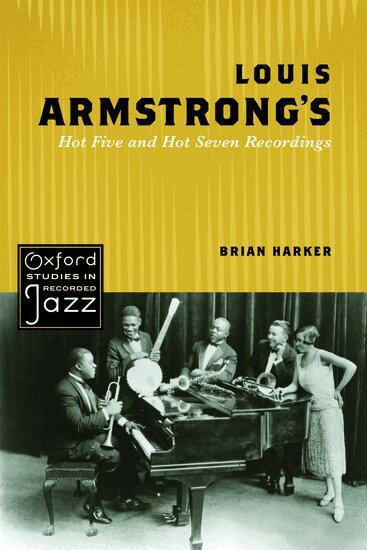
For jazz historians, Louis Armstrong's Hot Five and Hot Seven recordings mark the first revolution in the history of a music riven by upheaval. Yet few traces of this revolution can be found in the historical record of the late 1920s, when the records were made. Even black newspapers covered Armstrong as just one name among many, and descriptions of his playing, while laudatory, bear little resemblance to those of today. For this reason, the perspective of Armstrong's first listeners is usually regarded as inadequate, as if they had missed the true significance of his music. This attitude overlooks the possibility that those early listeners might have heard something valuable on its own terms, something we ourselves have lost. If we could somehow recapture their perspective-without abandoning our own-how might it change our understanding of these seminal recordings? In Louis Armstrong's Hot Five and Hot Seven Recordings, Harker selects seven exceptional records to study at length: "Cornet Chop Suey," "Big Butter and Egg Man," "Potato Head Blues," "S.O.L. Blues"/"Gully Low Blues," "Savoy Blues," and "West End Blues." The world of vaudeville and show business provide crucial context, revealing how the demands of making a living in a competitive environment could catalyze Armstrong's unique artistic gifts. Technical achievements such as virtuosity, structural coherence, harmonic improvisation, and high-register playing are all shown to have a basis in the workaday requirements of Armstrong's profession. Invoking a breadth of influences ranging from New Orleans clarinet style to Guy Lombardo, and from tap dancing to classical music, this book offers bold insights, fresh anecdotes, and, ultimately, a new interpretation of Louis Armstrong and his most influential body of recordings.
1 487 kr
Skickas inom 5-8 vardagar
For jazz historians, Louis Armstrong's Hot Five and Hot Seven recordings mark the first revolution in the history of a music riven by upheaval. Yet few traces of this revolution can be found in the historical record of the late 1920s, when the records were made. Even black newspapers covered Armstrong as just one name among many, and descriptions of his playing, while laudatory, bear little resemblance to those of today. For this reason, the perspective of Armstrong's first listeners is usually regarded as inadequate, as if they had missed the true significance of his music. This attitude overlooks the possibility that those early listeners might have heard something valuable on its own terms, something we ourselves have lost. If we could somehow recapture their perspective-without abandoning our own-how might it change our understanding of these seminal recordings? In Louis Armstrong's Hot Five and Hot Seven Recordings, Harker selects seven exceptional records to study at length: "Cornet Chop Suey," "Big Butter and Egg Man," "Potato Head Blues," "S.O.L. Blues"/"Gully Low Blues," "Savoy Blues," and "West End Blues." The world of vaudeville and show business provide crucial context, revealing how the demands of making a living in a competitive environment could catalyze Armstrong's unique artistic gifts. Technical achievements such as virtuosity, structural coherence, harmonic improvisation, and high-register playing are all shown to have a basis in the workaday requirements of Armstrong's profession. Invoking a breadth of influences ranging from New Orleans clarinet style to Guy Lombardo, and from tap dancing to classical music, this book offers bold insights, fresh anecdotes, and, ultimately, a new interpretation of Louis Armstrong and his most influential body of recordings.
1 989 kr
Skickas inom 5-8 vardagar
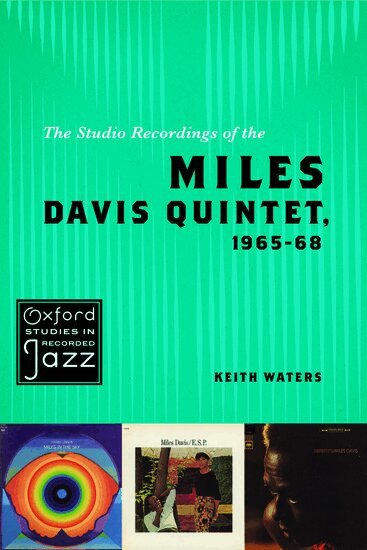
The influence of Miles Davis's "second great quintet," consisting of Davis (trumpet), Wayne Shorter (tenor saxophone), Herbie Hancock (piano), Ron Carter (bass), and Tony Williams (drums) continues to resonate. Jazz musicians, historians, and critics have celebrated the group for its improvisational communication, openness, and its transitional status between hard bop and the emerging free jazz of the 1960s, creating a synthesis described by one quintet member as "controlled freedom." The book provides a critical analytical study of the Davis quintet studio recordings released between 1965-68, including E.S.P., Miles Smiles, Sorcerer, Nefertiti, Miles in the Sky, and Filles de Kilimanjaro. In contrast to the quintet's live recordings, which included performances of older jazz standards, the studio recordings offered an astonishing breadth of original compositions. Many of these compositions have since become jazz standards, and all of them played a central role in the development of contemporary jazz composition. Using transcription and analysis, author Keith Waters illuminates the compositional, improvisational, and collective achievements of the group. With additional sources, such as rehearsal takes, alternate takes, session reels, and copyright deposits of lead sheets, he shows how the group in the studio shaped and altered features of the compositions. Despite the earlier hard bop orientation of the players, the Davis quintet compositions offered different responses to questions of form, melody, and harmonic structure, and they often invited other improvisational paths, ones that relied on an uncanny degree of collective rapport. And given the spontaneity of the recorded performances-often undertaken with a minimum of rehearsal-the players responded with any number of techniques to address formal, harmonic, or metrical discrepancies that arose while the tape was rolling. The book provides an invaluable resource for those interested in Davis and his sidemen, as well as in jazz of the 1960s. It serves as a reference for jazz musicians and educators, with detailed transcriptions and commentary on compositions and improvisations heard on the studio recordings.
294 kr
Skickas inom 5-8 vardagar
The influence of Miles Davis's "second great quintet," consisting of Davis (trumpet), Wayne Shorter (tenor saxophone), Herbie Hancock (piano), Ron Carter (bass), and Tony Williams (drums) continues to resonate. Jazz musicians, historians, and critics have celebrated the group for its improvisational communication, openness, and its transitional status between hard bop and the emerging free jazz of the 1960s, creating a synthesis described by one quintet member as "controlled freedom." The book provides a critical analytical study of the Davis quintet studio recordings released between 1965-68, including E.S.P., Miles Smiles, Sorcerer, Nefertiti, Miles in the Sky, and Filles de Kilimanjaro. In contrast to the quintet's live recordings, which included performances of older jazz standards, the studio recordings offered an astonishing breadth of original compositions. Many of these compositions have since become jazz standards, and all of them played a central role in the development of contemporary jazz composition. Using transcription and analysis, author Keith Waters illuminates the compositional, improvisational, and collective achievements of the group. With additional sources, such as rehearsal takes, alternate takes, session reels, and copyright deposits of lead sheets, he shows how the group in the studio shaped and altered features of the compositions. Despite the earlier hard bop orientation of the players, the Davis quintet compositions offered different responses to questions of form, melody, and harmonic structure, and they often invited other improvisational paths, ones that relied on an uncanny degree of collective rapport. And given the spontaneity of the recorded performances-often undertaken with a minimum of rehearsal-the players responded with any number of techniques to address formal, harmonic, or metrical discrepancies that arose while the tape was rolling. The book provides an invaluable resource for those interested in Davis and his sidemen, as well as in jazz of the 1960s. It serves as a reference for jazz musicians and educators, with detailed transcriptions and commentary on compositions and improvisations heard on the studio recordings.
1 379 kr
Skickas inom 5-8 vardagar
On January 16, 1938 Benny Goodman brought his swing orchestra to America's venerated home of European classical music, Carnegie Hall. The resulting concert - widely considered one of the most significant events in American music history - helped to usher jazz and swing music into the American cultural mainstream. This reputation has been perpetuated by Columbia Records' 1950 release of the concert on LP. Now, in Benny Goodman's Famous 1938 Carnegie Hall Jazz Concert, jazz scholar and musician Catherine Tackley provides the first in depth, scholarly study of this seminal concert and recording. Combining rigorous documentary and archival research with close analysis of the recording, Tackley strips back the accumulated layers of interpretation and meaning to assess the performance in its original context, and explore what the material has come to represent in its recorded form. Taking a complete view of the concert, she examines the rich cultural setting in which it took place, and analyzes the compositions, arrangements and performances themselves, before discussing the immediate reception, and lasting legacy and impact of this storied event and album. As the definitive study of one of the most important recordings of the twentieth-century, Benny Goodman's Famous 1938 Carnegie Hall Jazz Concert is a must-read for all serious jazz fans, musicians and scholars.
278 kr
Skickas inom 5-8 vardagar
On January 16, 1938 Benny Goodman brought his swing orchestra to America's venerated home of European classical music, Carnegie Hall. The resulting concert - widely considered one of the most significant events in American music history - helped to usher jazz and swing music into the American cultural mainstream. This reputation has been perpetuated by Columbia Records' 1950 release of the concert on LP. Now, in Benny Goodman's Famous 1938 Carnegie Hall Jazz Concert, jazz scholar and musician Catherine Tackley provides the first in depth, scholarly study of this seminal concert and recording. Combining rigorous documentary and archival research with close analysis of the recording, Tackley strips back the accumulated layers of interpretation and meaning to assess the performance in its original context, and explore what the material has come to represent in its recorded form. Taking a complete view of the concert, she examines the rich cultural setting in which it took place, and analyzes the compositions, arrangements and performances themselves, before discussing the immediate reception, and lasting legacy and impact of this storied event and album. As the definitive study of one of the most important recordings of the twentieth-century, Benny Goodman's Famous 1938 Carnegie Hall Jazz Concert is a must-read for all serious jazz fans, musicians and scholars.
1 110 kr
Skickas inom 5-8 vardagar
Andy Kirk's Clouds of Joy came from Kansas City to find nationwide fame in the later 1930s. The many records they made between 1929 and 1949 came to exemplify the Kansas City style of jazz, but they were also criticized for their populism and inauthenticity. In The Recordings of Andy Kirk' and his Clouds of Joy, George Burrows considers these records as representing negotiations over racialized styles between black jazz musicians and the racist music industry during a vital period of popularity and change for American jazz. The book explores the way that these reformative negotiations shaped and can be heard in the recorded music. By comparing the band's appropriation of musical styles to the manipulation of masks in black forms of blackface performance--both signifying and subverting racist conceptions of black authenticity--it reveals how the dynamic between black musicians, their audiences and critics impacted upon jazz as a practice and conception.
330 kr
Skickas inom 5-8 vardagar
Andy Kirk's Clouds of Joy came from Kansas City to find nationwide fame in the later 1930s. The many records they made between 1929 and 1949 came to exemplify the Kansas City style of jazz, but they were also criticized for their populism and inauthenticity. In The Recordings of Andy Kirk' and his Clouds of Joy, George Burrows considers these records as representing negotiations over racialized styles between black jazz musicians and the racist music industry during a vital period of popularity and change for American jazz. The book explores the way that these reformative negotiations shaped and can be heard in the recorded music. By comparing the band's appropriation of musical styles to the manipulation of masks in black forms of blackface performance--both signifying and subverting racist conceptions of black authenticity--it reveals how the dynamic between black musicians, their audiences and critics impacted upon jazz as a practice and conception.
1 307 kr
Skickas inom 5-8 vardagar
In early 2005, an engineer at the Library of Congress accidentally discovered, in an unmarked box, the recording of Thelonious Monk's and John Coltrane's performance at a 1957 benefit concert at Carnegie Hall. Long considered one of the most important musical meetings in modern jazz, Monk's and Coltrane's work together during a scant few months in 1957 had, until this discovery, been thought to be almost entirely undocumented.In this book, Gabriel Solis provides an historical, cultural, and analytical study of this landmark recording, which was released by Blue Note records later in 2005. Taking a wide-ranging approach to the recording, Solis addresses issues of "liveness," jazz teaching and learning, enculturation, and historiography. Because nearly a half century passed between when the recording was made and its public release, it is a particularly interesting lens through which to view jazz both as a historical tradition and as a contemporary cultural form. Most importantly Solis accounts for the music itself. Offering in depth analytical discussions of each composition, as well as Monk's and Coltrane's improvisational performances he provides insight into Monk's impact on Coltrane as he developed his signature "sheets of sound" style, as well as into the influence of a strong side-man, like Coltrane, on Monk at his creative and professional peak. The first study of one of the most significant jazz releases of the twenty-first century, Thelonious Monk Quartet with John Coltrane at Carnegie Hall is essential reading for all jazz scholars, students, musicians, and fans.
270 kr
Skickas inom 5-8 vardagar
In early 2005, an engineer at the Library of Congress accidentally discovered, in an unmarked box, the recording of Thelonious Monk's and John Coltrane's performance at a 1957 benefit concert at Carnegie Hall. Long considered one of the most important musical meetings in modern jazz, Monk's and Coltrane's work together during a scant few months in 1957 had, until this discovery, been thought to be almost entirely undocumented.In this book, Gabriel Solis provides an historical, cultural, and analytical study of this landmark recording, which was released by Blue Note records later in 2005. Taking a wide-ranging approach to the recording, Solis addresses issues of "liveness," jazz teaching and learning, enculturation, and historiography. Because nearly a half century passed between when the recording was made and its public release, it is a particularly interesting lens through which to view jazz both as a historical tradition and as a contemporary cultural form. Most importantly Solis accounts for the music itself. Offering in depth analytical discussions of each composition, as well as Monk's and Coltrane's improvisational performances he provides insight into Monk's impact on Coltrane as he developed his signature "sheets of sound" style, as well as into the influence of a strong side-man, like Coltrane, on Monk at his creative and professional peak. The first study of one of the most significant jazz releases of the twenty-first century, Thelonious Monk Quartet with John Coltrane at Carnegie Hall is essential reading for all jazz scholars, students, musicians, and fans.
1 379 kr
Skickas inom 5-8 vardagar
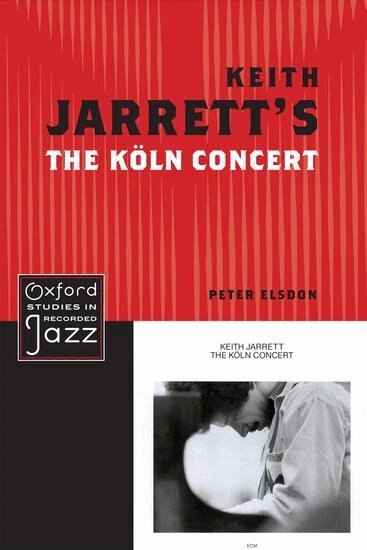
Keith Jarrett ranks among the most accomplished and influential pianists in jazz history. His Köln Concert stands among the most important jazz recordings of the past four decades, not only because of the music on the record, but also because of the remarkable reception it has received from musicians and lay-listeners alike. Since the album's 1975 release, it has sold over three million copies: a remarkable achievement for any jazz record, but an unprecedented feat for a two-disc set of solo piano performances featuring no well-known songs. In Keith Jarrett's The Köln Concert, author Peter Elsdon seeks to uncover what it is about this recording, about Keith Jarrett's performance, that elicits such success. Recognizing The Köln Concert as a multi-faceted text, Elsdon engages with it musically, culturally, aesthetically, and historically in order to understand the concert and album as a means through which Jarrett articulated his own cultural and musical outlook, and establish himself as a serious artist. Through these explorations of the concert as text, of the recording and of the live performance, Keith Jarrett's The Köln Concert fills a major hole in jazz scholarship, and is essential reading for jazz scholars and musicians alike, as well as Keith Jarrett's many fans.
377 kr
Skickas inom 7-10 vardagar
Keith Jarrett ranks among the most accomplished and influential pianists in jazz history. His Köln Concert stands among the most important jazz recordings of the past four decades, not only because of the music on the record, but also because of the remarkable reception it has received from musicians and lay-listeners alike. Since the album's 1975 release, it has sold over three million copies: a remarkable achievement for any jazz record, but an unprecedented feat for a two-disc set of solo piano performances featuring no well-known songs. In Keith Jarrett's The Köln Concert, author Peter Elsdon seeks to uncover what it is about this recording, about Keith Jarrett's performance, that elicits such success. Recognizing The Köln Concert as a multi-faceted text, Elsdon engages with it musically, culturally, aesthetically, and historically in order to understand the concert and album as a means through which Jarrett articulated his own cultural and musical outlook, and establish himself as a serious artist. Through these explorations of the concert as text, of the recording and of the live performance, Keith Jarrett's The Köln Concert fills a major hole in jazz scholarship, and is essential reading for jazz scholars and musicians alike, as well as Keith Jarrett's many fans.
310 kr
Skickas inom 5-8 vardagar
The guitarist and composer Pat Metheny ranks among the most popular and innovative jazz musicians of all time. In Pat Metheny: The ECM Years, 1975-1984, Mervyn Cooke offers the first in-depth account of Metheny's early creative period, during which he recorded eleven stunningly varied albums for the pioneering European record label ECM (Edition of Contemporary Music). This impressive body of recordings encompasses both straight-ahead jazz playing with virtuosic small ensembles and the increasingly complex textures and structures of the Pat Metheny Group, a hugely successful band also notable for its creative exploration of advanced music technologies which were state-of-the-art at the time.Metheny's music in all its shapes and forms broke major new ground in its refusal to subscribe to either of the stylistic poles of bebop and jazz-rock fusion which prevailed in the late 1970s. Through a series of detailed analyses based on a substantial body of new transcriptions from the recordings, this study reveals the close interrelationship of improvisation and pre-composition which lies at the very heart of the music. Furthermore, these analyses vividly demonstrate how Metheny's music is often conditioned by a strongly linear narrative model: both its story-telling characteristics and atmospheric suggestiveness have sometimes been compared to those of film music, a genre in which the guitarist also became active during this early period. The melodic memorability for which Metheny's compositions and improvisations have long been world-renowned is shown to be just one important element in an unusually rich and flexible musical language that embraces influences as diverse as bebop, free jazz, rock, pop, country & western, Brazilian music, classical music, minimalism, and the avant-garde. These elements are melded into a uniquely distinctive soundworld which, above all, directly reflects Metheny's passionate belief in the need to refashion jazz in ways which can allow it to speak powerfully to each new generation of youthful listeners.
1 182 kr
Skickas inom 5-8 vardagar
The guitarist and composer Pat Metheny ranks among the most popular and innovative jazz musicians of all time. In Pat Metheny: The ECM Years, 1975-1984, Mervyn Cooke offers the first in-depth account of Metheny's early creative period, during which he recorded eleven stunningly varied albums for the pioneering European record label ECM (Edition of Contemporary Music). This impressive body of recordings encompasses both straight-ahead jazz playing with virtuosic small ensembles and the increasingly complex textures and structures of the Pat Metheny Group, a hugely successful band also notable for its creative exploration of advanced music technologies which were state-of-the-art at the time.Metheny's music in all its shapes and forms broke major new ground in its refusal to subscribe to either of the stylistic poles of bebop and jazz-rock fusion which prevailed in the late 1970s. Through a series of detailed analyses based on a substantial body of new transcriptions from the recordings, this study reveals the close interrelationship of improvisation and pre-composition which lies at the very heart of the music. Furthermore, these analyses vividly demonstrate how Metheny's music is often conditioned by a strongly linear narrative model: both its story-telling characteristics and atmospheric suggestiveness have sometimes been compared to those of film music, a genre in which the guitarist also became active during this early period. The melodic memorability for which Metheny's compositions and improvisations have long been world-renowned is shown to be just one important element in an unusually rich and flexible musical language that embraces influences as diverse as bebop, free jazz, rock, pop, country & western, Brazilian music, classical music, minimalism, and the avant-garde. These elements are melded into a uniquely distinctive soundworld which, above all, directly reflects Metheny's passionate belief in the need to refashion jazz in ways which can allow it to speak powerfully to each new generation of youthful listeners.