Oxford Studies In The New Medieval History – serie
Visar alla böcker i serien Oxford Studies In The New Medieval History. Handla med fri frakt och snabb leverans.
2 produkter
2 produkter
1 620 kr
Skickas inom 5-8 vardagar
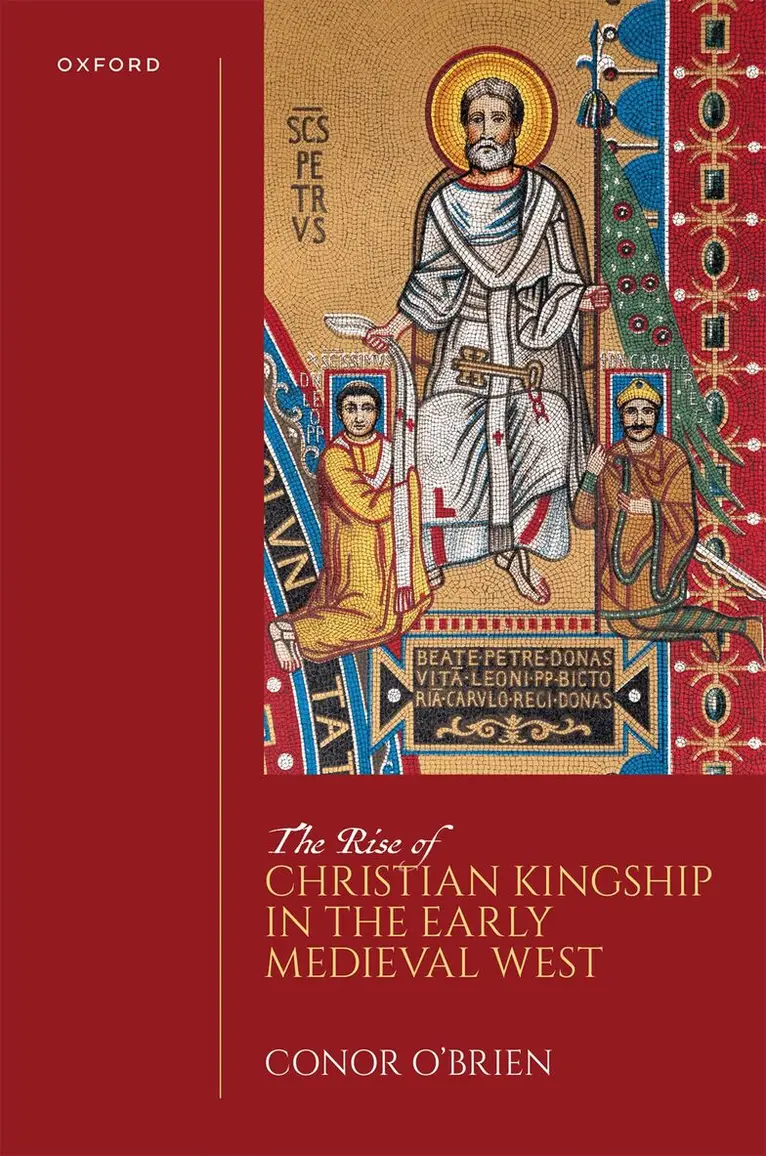
Over the course of the early Middle Ages, Christianity changed politics and politics changed Christianity. Christianity emerged in the pagan Roman Empire and early Christians, consequently, developed a 'secular' understanding of politics, where the religious identity of their ruler was irrelevant; by the time the synthesis of early medieval Christianity was achieved in the ninth-century Carolingian Empire, however, a new model of 'Christian kingship' had emerged, linking the legitimacy of a ruler to the quality of their Christianity. Conor O'Brien traces the slow, complex, and only ever partial way in which the concept of 'Christian kingship' arose in the Latin West over the five centuries up to 840.Taking a comparative approach that is sensitive to regional variation and the interconnected nature of the post-imperial Latin West, the book presents a novel overview of the transformations of both religion and politics in the early Middle Ages. Drawing on recent anthropology and global history approaches to sacred kingship, it takes seriously both continuity and change over time to show how the relationship between early medieval Christianity and kingship was, above all, driven by people's search for good government. Christian kingship arose in societies where it proved a useful mechanism for addressing the relationship between the ruler and the ruled. In doing so, The Rise of Christian Kingship in the Early Medieval West provides not just a rich reconstruction, grounded in the primary evidence, of changes in political thought and practice in the early Middle Ages, but also contributes to wider historical discussions about secularity, sacred kingship and the relationship between politics and religion.
Constructing the Medieval Maritime State
Identity, Violence, and Connection in the Mediterranean
Inbunden, Engelska, 2026
1 180 kr
Kommande
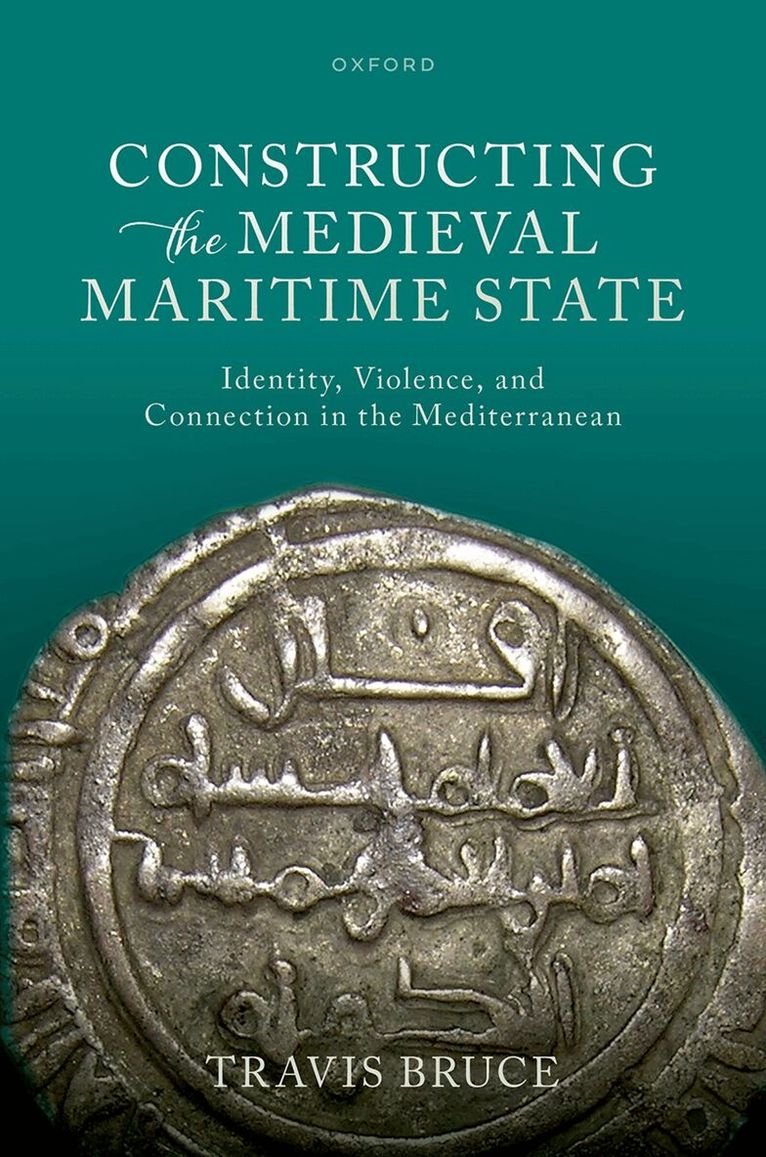
Constructing the Medieval Maritime State: Identity, Violence, and Connection in the Mediterranean explores how the small medieval kingdom of Denia in Spain became a powerful maritime state after the collapse of the Umayyad Caliphate. Its rulers built authority, not only through war and seafaring raids but also by connecting Denia to wider Mediterranean trade, diplomacy, and culture.The rise and evolution of the taifa of Denia is a powerful case study for understanding the construction of medieval maritime states in the Mediterranean. Travis Bruce situates Denia within the collapse of the Umayyad Caliphate and explores how its rulers forged legitimacy through identity formation, maritime violence, and regional connectivity. Denia's identity was negotiated through rulership, unfreedom, and cultural hybridity, and violence ^—^particularly predatory warfare and maritime jihad ^—^ functioned as both statecraft and economic extraction. At the same time, Denia's entanglement in commercial, diplomatic, and intellectual networks positioned it as a key node linking the Islamic Mediterranean and the Latin West. The state's trajectory cannot be reduced to narratives of decline or simple religious conflict but instead reveals a process of negotiation shaped by mobility, interdependence, and the fluid boundaries between public and private power. This narrative reframes Mediterranean history beyond Eurocentric paradigms and underscores the significance of Islamic maritime states within the wider medieval world.