Oxford Theory in Ethnomusicology - Böcker
Visar alla böcker i serien Oxford Theory in Ethnomusicology. Handla med fri frakt och snabb leverans.
6 produkter
6 produkter
1 054 kr
Kommande
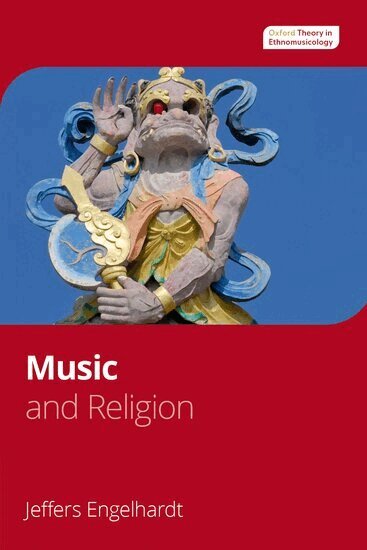
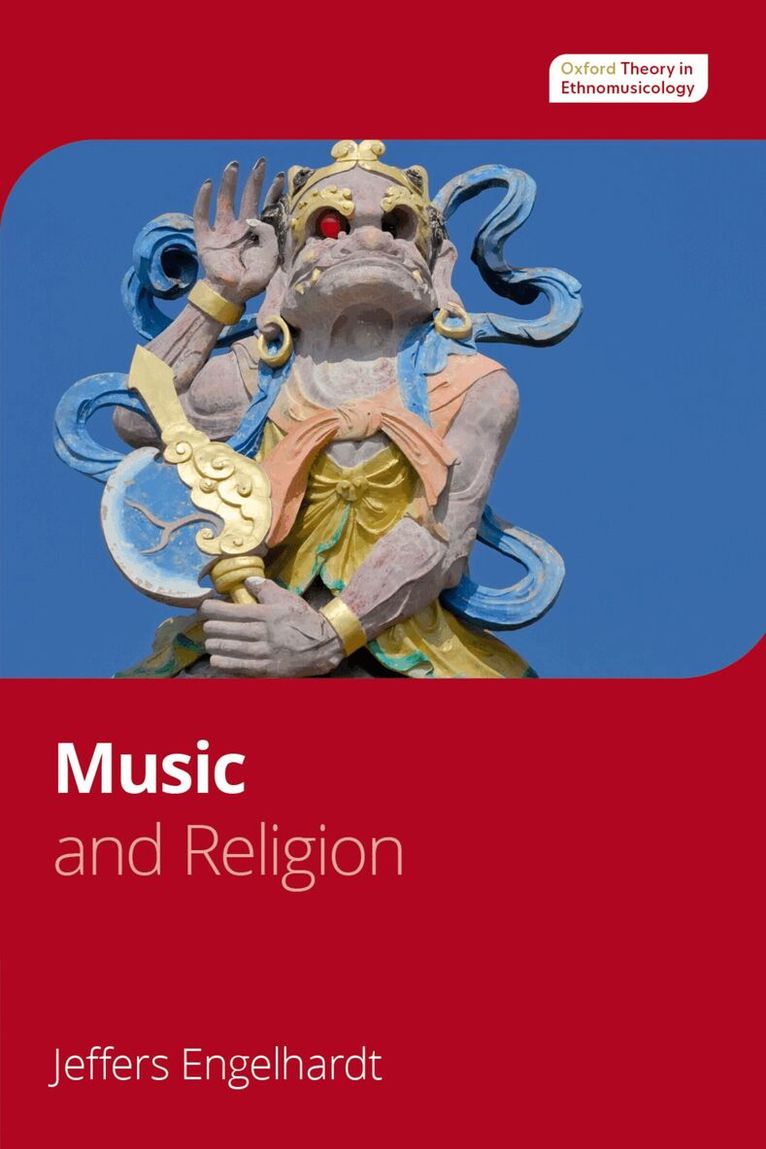
Why do we disentangle music and religion? How are music and religion entangled in the worlds of practitioners and scholars? What can ethnomusicologists offer to all students of religion by attending to religion's audibility or inaudibility? In this book, author Jeffers Engelhardt engages generations-old interdisciplinary debates to highlight scholars' changing relationships with other-than-human beings in the religious worlds they study.In the history of ethnomusicology, there is a degree of discomfort with other-than-human agency and theologically grounded methods. However, in recent years, ethnomusicologists have recognized the limits of secular models that favor sonic data over divine knowledge. This moment is marked by a resurgence of sacred musicologies that predate ethnomusicology as a field and by ethnomusicologists' commitments to decolonizing the discipline. The resulting scholarship incorporates both secular, cultural approaches and non-secular, entangled approaches to the study of music and religion. Music and Religion critically examines how scholars navigate these approaches to sound and other-than-human agency. Engelhardt provides ethnographic case studies and surveys key texts from the eighteenth century to the present day to address questions that have occupied scholars for generations. In doing so, he invites readers to embrace new ways of thinking about and listening to the world around them.
245 kr
Kommande
Why do we disentangle music and religion? How are music and religion entangled in the worlds of practitioners and scholars? What can ethnomusicologists offer to all students of religion by attending to religion's audibility or inaudibility? In this book, author Jeffers Engelhardt engages generations-old interdisciplinary debates to highlight scholars' changing relationships with other-than-human beings in the religious worlds they study.In the history of ethnomusicology, there is a degree of discomfort with other-than-human agency and theologically grounded methods. However, in recent years, ethnomusicologists have recognized the limits of secular models that favor sonic data over divine knowledge. This moment is marked by a resurgence of sacred musicologies that predate ethnomusicology as a field and by ethnomusicologists' commitments to decolonizing the discipline. The resulting scholarship incorporates both secular, cultural approaches and non-secular, entangled approaches to the study of music and religion. Music and Religion critically examines how scholars navigate these approaches to sound and other-than-human agency. Engelhardt provides ethnographic case studies and surveys key texts from the eighteenth century to the present day to address questions that have occupied scholars for generations. In doing so, he invites readers to embrace new ways of thinking about and listening to the world around them.
1 054 kr
Skickas inom 7-10 vardagar
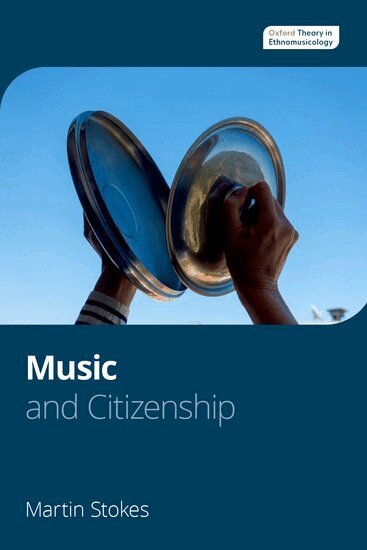
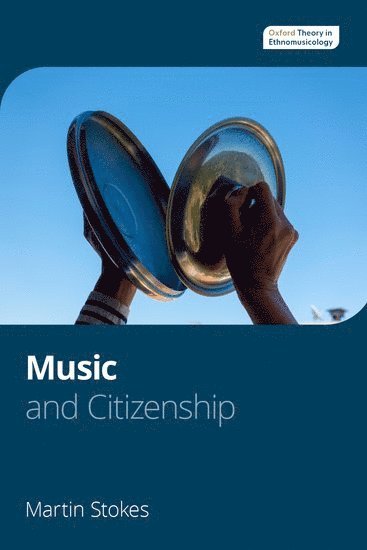
Critical citizenship practices and the language of today's populism have never been more sharply opposed. Today's insistent efforts to anchor citizenship narratives in national belonging now confront a variety of 'flexible' or 'differentiated' citizenships - plural, performative, and decentered practices of rights claiming mutually defining 'the political', its subjects, and its others on a variety of scales. They confront, too, critiques of citizenship in totalitarian or neoliberal governmentality that derive from Foucault, Agamben, and Arendt and have become pressing today in proliferating states of emergency and exception and the growing ranks of non-citizens.How should these debates be configured now? And what place does music have in them? In Music and Citizenship, author Martin Stokes argues that music has for a long time been entangled with debates about citizenship and citizenly identities, though for various reasons this entanglement has been insufficiently recognized. Citizenship and citizenly identity debates, for their part, have important implications for the way we think about music in relation to politics, identity, and scholarly practice. Stokes's particular claim is that ethnomusicology has for too long configured relationships between music, society, and reflective and critical practice in terms of identity paradigms. The rejection of these identity paradigms in recent years has taken the form of a post- or anti-humanism that is equally problematic. This book challenges the conventional understanding of citizenship in terms of nationalism and national identity though the examination of case studies from across Latin America, Africa, Asia, and Europe. In this way, this volume departs from an earlier ethnomusicology preoccupied with belonging and cultural participation in the nation-state. Citizenship-the fantasy, according to some definitions, of political community without outsiders-suggests, in this book, a different space in which one might configure such relations, one more satisfactorily, and energetically, oriented to questions about musical ecology, sustainability, democracy, and inclusivity.
250 kr
Skickas inom 7-10 vardagar
Critical citizenship practices and the language of today's populism have never been more sharply opposed. Today's insistent efforts to anchor citizenship narratives in national belonging now confront a variety of 'flexible' or 'differentiated' citizenships - plural, performative, and decentered practices of rights claiming mutually defining 'the political', its subjects, and its others on a variety of scales. They confront, too, critiques of citizenship in totalitarian or neoliberal governmentality that derive from Foucault, Agamben, and Arendt and have become pressing today in proliferating states of emergency and exception and the growing ranks of non-citizens.How should these debates be configured now? And what place does music have in them? In Music and Citizenship, author Martin Stokes argues that music has for a long time been entangled with debates about citizenship and citizenly identities, though for various reasons this entanglement has been insufficiently recognized. Citizenship and citizenly identity debates, for their part, have important implications for the way we think about music in relation to politics, identity, and scholarly practice. Stokes's particular claim is that ethnomusicology has for too long configured relationships between music, society, and reflective and critical practice in terms of identity paradigms. The rejection of these identity paradigms in recent years has taken the form of a post- or anti-humanism that is equally problematic. This book challenges the conventional understanding of citizenship in terms of nationalism and national identity though the examination of case studies from across Latin America, Africa, Asia, and Europe. In this way, this volume departs from an earlier ethnomusicology preoccupied with belonging and cultural participation in the nation-state. Citizenship-the fantasy, according to some definitions, of political community without outsiders-suggests, in this book, a different space in which one might configure such relations, one more satisfactorily, and energetically, oriented to questions about musical ecology, sustainability, democracy, and inclusivity.
1 054 kr
Skickas inom 7-10 vardagar
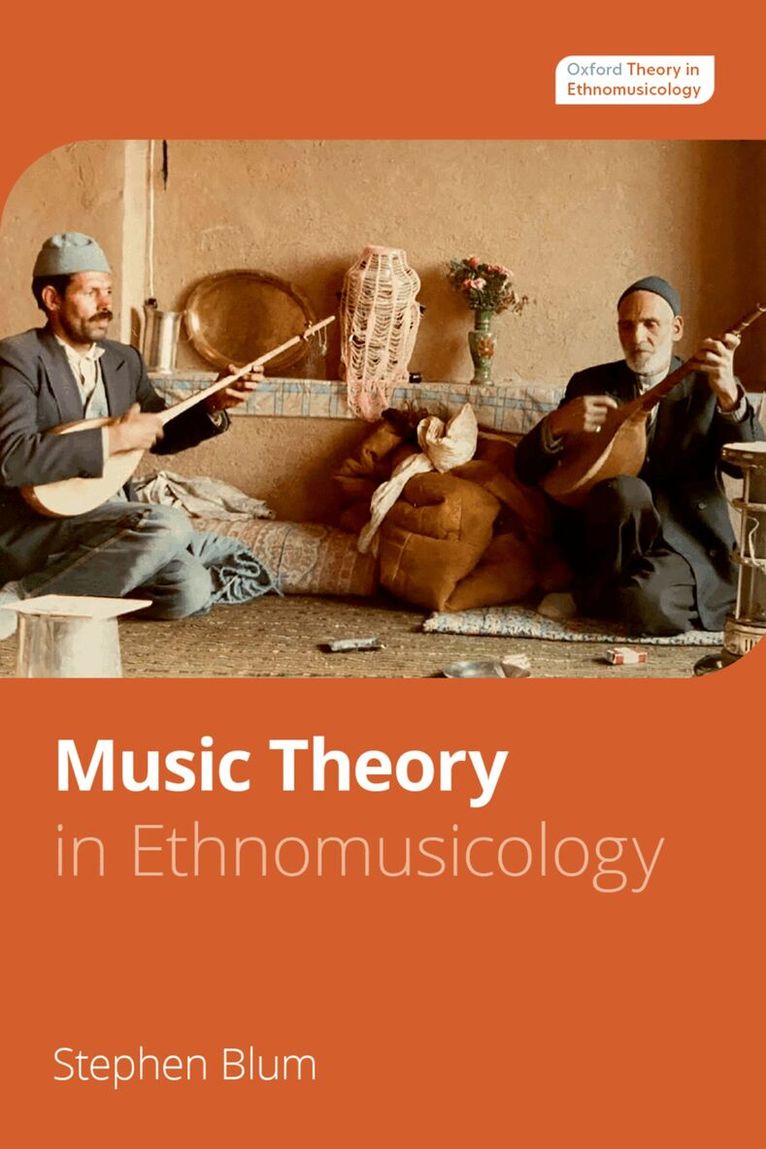
During the 1960s and 70s some ethnomusicologists formed relationships with music-makers and ritual specialists in an attempt to interpret how they understood their musical actions. Subsequently ethnomusicologists have studied the respects in which explicit and implicit theory is involved in communication of musical knowledge. They have observed the production of music theory in institutions of modern nation-states and have sought out groups and individuals whose theorizing is not constrained by existing institutions. They are assessing the extent to which musical terminologies of diverse languages can be interpreted in relation to general concepts without imposing the assumptions and biases of one body of existing theory. That exercise is increasingly recognized as a necessary effort of decolonization. A thorough yet concise introduction to this field, Music Theory in Ethnomusicology outlines a conception of music theory suited to cross-cultural research on musical practices.
258 kr
Skickas inom 7-10 vardagar
During the 1960s and 70s some ethnomusicologists formed relationships with music-makers and ritual specialists in an attempt to interpret how they understood their musical actions. Subsequently ethnomusicologists have studied the respects in which explicit and implicit theory is involved in communication of musical knowledge. They have observed the production of music theory in institutions of modern nation-states and have sought out groups and individuals whose theorizing is not constrained by existing institutions. They are assessing the extent to which musical terminologies of diverse languages can be interpreted in relation to general concepts without imposing the assumptions and biases of one body of existing theory. That exercise is increasingly recognized as a necessary effort of decolonization. A thorough yet concise introduction to this field, Music Theory in Ethnomusicology outlines a conception of music theory suited to cross-cultural research on musical practices.