Patristic Studies - Böcker
Visar alla böcker i serien Patristic Studies. Handla med fri frakt och snabb leverans.
5 produkter
5 produkter
Gnosis, Theophany, Theosis
Studies in Clement of Alexandria's Appropriation of His Background
Inbunden, Engelska, 2002
638 kr
Tillfälligt slut
939 kr
Skickas inom 5-8 vardagar
Del 8 - Patristic Studies
Ignatius and Concord
The Background and Use of the Language of Concord in the Letters of Ignatius of Antioch
Inbunden, Engelska, 2007
742 kr
Tillfälligt slut
Del 10 - Patristic Studies
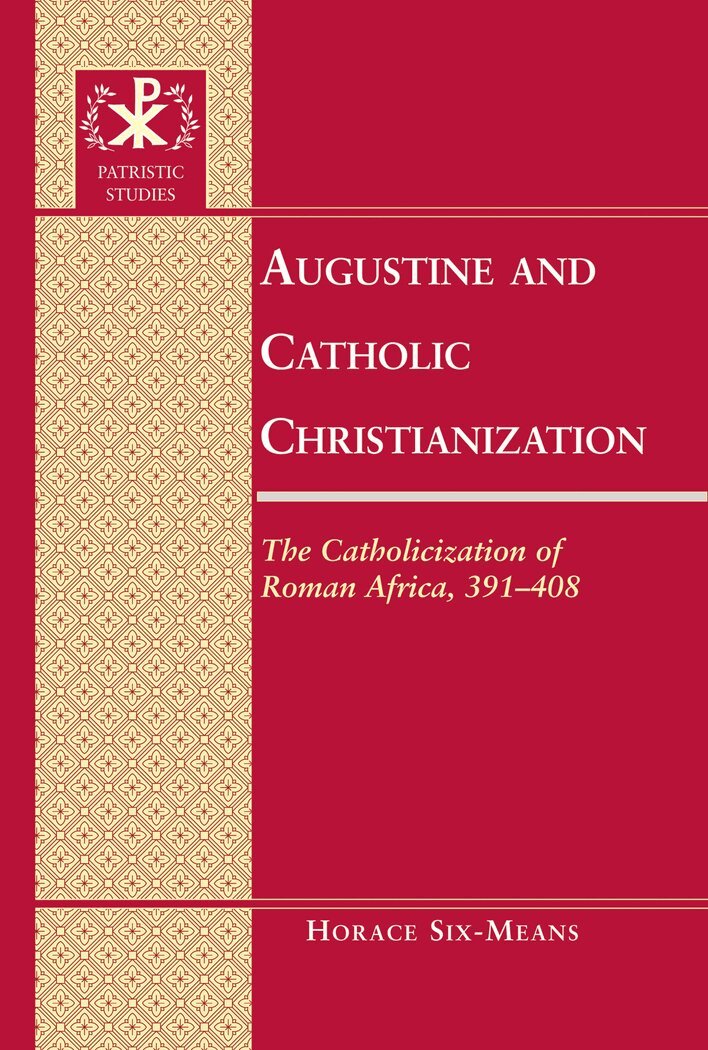
Augustine and Catholic Christianization
The Catholicization of Roman Africa, 391-408
Inbunden, Engelska, 2011
924 kr
Skickas inom 5-8 vardagar
A religious reformation occurred in the Roman Empire of the fourth and fifth centuries which scholars often call Christianization. Examining evidence relevant to Roman Africa of this period, this book sharpens understanding of this religious revolution. Focusing on the activities of Augustine and his colleagues from Augustine’s ordination as a priest in 391, to the fall of the Emperor Honorius’ master of soldiers, Stilicho, in 408, it proposes Catholicization as a term to more precisely characterize the process of change observed. Augustine and Catholic Christianization argues that at the end of the fourth and beginning of the fifth century Augustine emerged as the key manager in the campaign to Catholicize Roman Africa by virtue of a comprehensive strategy to persuade or suppress rivals, which notably included Donatists, Arians, Manichees, and various kinds of polytheism. Select sermons from 403 and 404 reveal that Augustine’s rhetoric was multivalent. It addressed the populus and the elite, Christians and non-Christians, Catholics, and Donatists.Key sources examined are selected laws of the Theodosian Code, the Canons of the African Council of Catholic Bishops, Augustine’s Dolbeau sermons (discovered in 1990), Contra Cresconium, as well as other sermons, letters, and treatises of Augustine. This book clarifies our perception of Augustine and Christianity in the socio-religious landscape of Late Roman Africa in at least three ways. First, it combines theological investigation of the sources and development of Augustine’s ecclesiology with sociohistorical tracing of the process of Catholicization. Second, an account of the evolution of Augustine’s self-understanding as a bishop is given along with the development of his strategy for Catholicization. Third, Augustine is identified as resembling modern political «spin-doctors» in that he was a brilliant spokesperson, but he did not work alone; he was a team player. In brief, Augustine influenced and was influenced by his fellow bishops within Catholic circles.
Del 11 - Patristic Studies
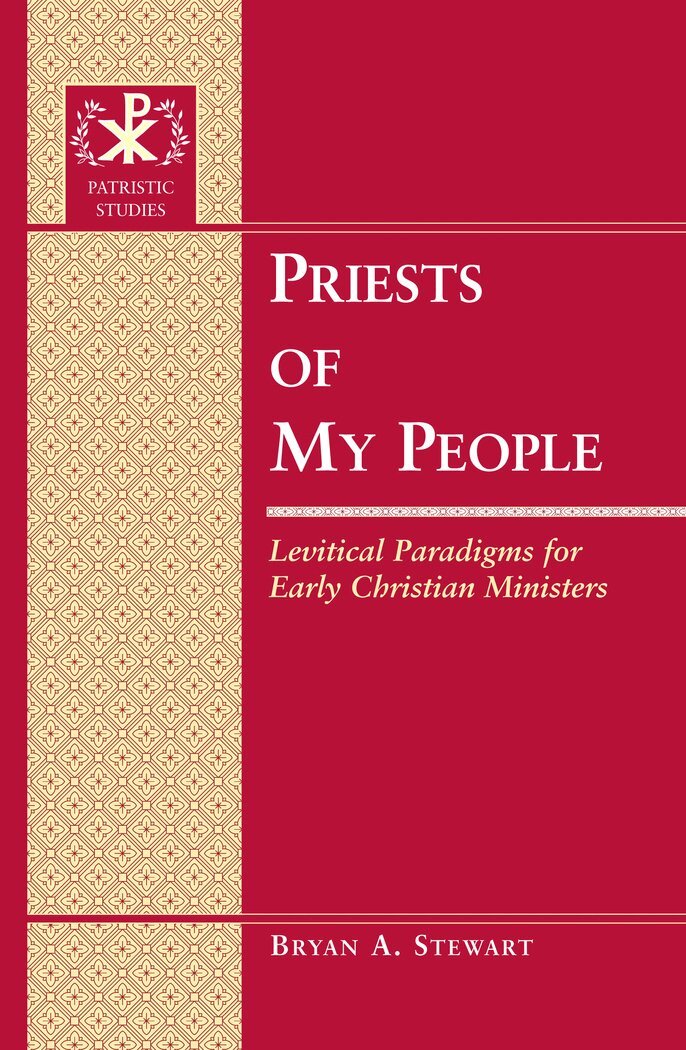
Priests of My People
Levitical Paradigms for Early Christian Ministers
Inbunden, Engelska, 2015
1 014 kr
Skickas inom 5-8 vardagar
This book offers an innovative examination of the question: why did early Christians begin calling their ministerial leaders «priests» (using the terms hiereus/sacerdos)? Scholarly consensus has typically suggested that a Christian «priesthood» emerged either from an imitation of pagan priesthood or in connection with seeing the Eucharist as a sacrifice over which a «priest» must preside. This work challenges these claims by exploring texts of the third and fourth century where Christian bishops and ministers are first designated «priests»: Tertullian and Cyprian of Carthage, Origen of Alexandria, Eusebius of Caesarea, and the church orders Apostolic Tradition and Didascalia Apostolorum. Such an examination demonstrates that the rise of a Christian ministerial priesthood grew more broadly out of a developing «religio-political ecclesiology». As early Christians began to understand themselves culturally as a unique polis in their own right in the Greco-Roman world, they also saw themselves theologically and historically connected with ancient biblical Israel. This religio-political ecclesiology, sharpened by an emerging Christian material culture and a growing sense of Christian «sacred space», influenced the way Christians interpreted the Jewish Scriptures typologically. In seeing the nation of Israel as a divine nation corresponding to themselves, Christians began appropriating the Levitical priesthood as a figure or «type» of the Christian ministerial office. Such a study helpfully broadens our understanding of the emergence of a Christian priesthood beyond pagan imitation or narrow focus on the sacrificial nature of the Eucharist, and instead offers a more comprehensive explanation in connection with early Christian ecclesiology.