Peculiar Bodies: Stories and Histories – Serie
Visar alla böcker i serien Peculiar Bodies: Stories and Histories. Handla med fri frakt och snabb leverans.
8 produkter
8 produkter
1 004 kr
Skickas inom 5-8 vardagar
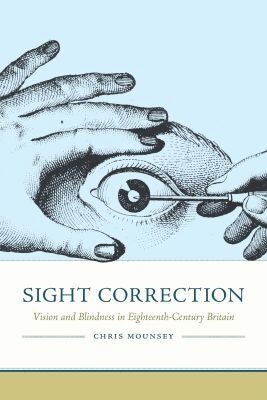
The debut publication in a new Series devoted to the body as an object of historical study, Sight Correction provides an expansive analysis of blindness in eighteenth-century Britain, developing a new methodology for conceptualizing sight impairment. Beginning with a reconsideration of the place of sight correction as both idea and reality in eighteenth-century philosophical debates, Chris Mounsey traces the development of eye surgery by pioneers such as William Read, Mary Cater, and John Taylor, who developed a new idea of medical specialism that has shaped contemporary practices. He then turns to accounts by the visually impaired themselves, exploring how Thomas Gills, John Maxwell, and Priscilla Pointon deployed literature strategically as a necessary response to the inadequacies of Poor Laws to support blind people. Situating blindness philosophically, medically, and economically in the eighteenth century, Sight Correction shows how the lives of both the blind and those who sought to treat them redefined blindness in ways that continue to inform our understanding today.
489 kr
Skickas inom 10-15 vardagar
The debut publication in a new Series devoted to the body as an object of historical study, Sight Correction provides an expansive analysis of blindness in eighteenth-century Britain, developing a new methodology for conceptualizing sight impairment. Beginning with a reconsideration of the place of sight correction as both idea and reality in eighteenth-century philosophical debates, Chris Mounsey traces the development of eye surgery by pioneers such as William Read, Mary Cater, and John Taylor, who developed a new idea of medical specialism that has shaped contemporary practices. He then turns to accounts by the visually impaired themselves, exploring how Thomas Gills, John Maxwell, and Priscilla Pointon deployed literature strategically as a necessary response to the inadequacies of Poor Laws to support blind people. Situating blindness philosophically, medically, and economically in the eighteenth century, Sight Correction shows how the lives of both the blind and those who sought to treat them redefined blindness in ways that continue to inform our understanding today.
Sapphic Crossings
Cross-Dressing Women in Eighteenth-Century British Literature
Inbunden, Engelska, 2021
1 361 kr
Skickas inom 10-15 vardagar
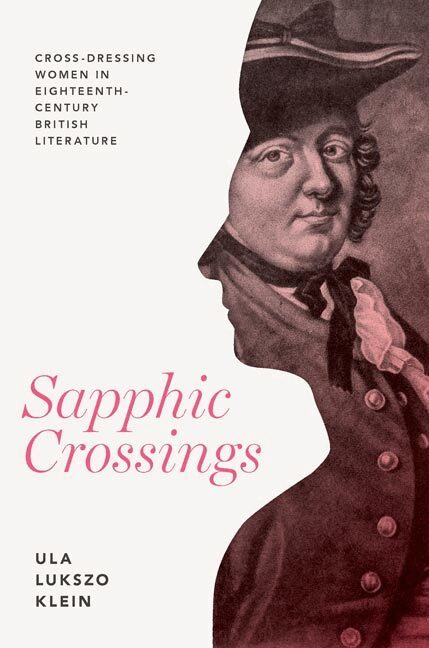
Across the eighteenth century in Britain, readers, writers, and theater-goers were fascinated by women who dressed in men's clothing from actresses on stage who showed their shapely legs to advantage in men's breeches to stories of valiant female soldiers and ruthless female pirates. Spanning genres from plays, novels, and poetry to pamphlets and broadsides, the cross-dressing woman came to signal more than female independence or unconventional behaviors; she also came to signal an investment in female same-sex intimacies and sapphic desires. Sapphic Crossings reveals how various British texts from the period associate female cross-dressing with the exciting possibility of intimate, embodied same-sex relationships. Ula Lukszo Klein reconsiders the role of lesbian desires and their structuring through cross-gender embodiments as crucial not only to the history of sexuality but to the rise of modern concepts of gender, sexuality, and desire. She prompts readers to rethink the roots of lesbianism and transgender identities today and introduces new ways of thinking about embodied sexuality in the past.
Sapphic Crossings
Cross-Dressing Women in Eighteenth-Century British Literature
Häftad, Engelska, 2021
438 kr
Skickas inom 10-15 vardagar
Across the eighteenth century in Britain, readers, writers, and theater-goers were fascinated by women who dressed in men's clothing from actresses on stage who showed their shapely legs to advantage in men's breeches to stories of valiant female soldiers and ruthless female pirates. Spanning genres from plays, novels, and poetry to pamphlets and broadsides, the cross-dressing woman came to signal more than female independence or unconventional behaviors; she also came to signal an investment in female same-sex intimacies and sapphic desires. Sapphic Crossings reveals how various British texts from the period associate female cross-dressing with the exciting possibility of intimate, embodied same-sex relationships. Ula Lukszo Klein reconsiders the role of lesbian desires and their structuring through cross-gender embodiments as crucial not only to the history of sexuality but to the rise of modern concepts of gender, sexuality, and desire. She prompts readers to rethink the roots of lesbianism and transgender identities today and introduces new ways of thinking about embodied sexuality in the past.
1 274 kr
Skickas inom 10-15 vardagar
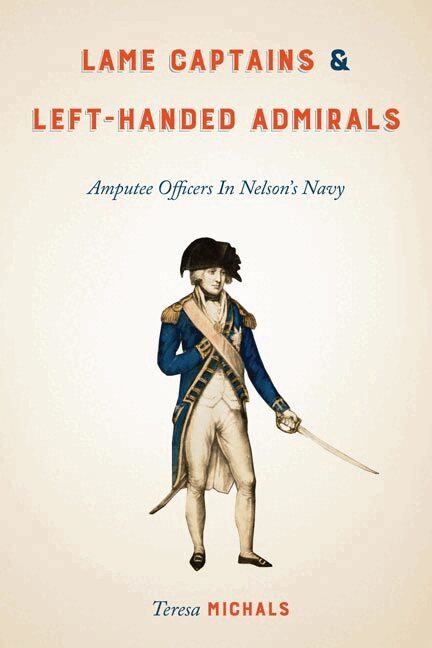
Throughout the Revolutionary and Napoleonic Wars, the Royal Navy had a peculiar problem: it had too many talented and ambitious officers, all competing for a limited number of command positions. Given this surplus, we might expect that a major physical impairment would automatically disqualify an officer from consideration. To the contrary, after the loss of a limb, at least twenty-six such officers reached the rank of commander or higher through continued service. Losing a limb in battle often became a mark of honor, one that a hero and his friends could use to increase his chances of winning further employment at sea.Lame Captains and Left-Handed Admirals focuses on the lives and careers of four particularly distinguished officers who returned to sea and continued to fight and win battles after losing an arm or a leg: the famous admiral Lord Horatio Nelson, who fought all of his most historically significant battles after he lost his right arm and the sight in one eye, and his lesser-known fellow amputee admirals, Sir Michael Seymour, Sir Watkin Owen Pell, and Sir James Alexander Gordon. Their stories shed invaluable light on the historical effects of physical impairment and this underexamined aspect of maritime history.
489 kr
Skickas inom 10-15 vardagar
Throughout the Revolutionary and Napoleonic Wars, the Royal Navy had a peculiar problem: it had too many talented and ambitious officers, all competing for a limited number of command positions. Given this surplus, we might expect that a major physical impairment would automatically disqualify an officer from consideration. To the contrary, after the loss of a limb, at least twenty-six such officers reached the rank of commander or higher through continued service. Losing a limb in battle often became a mark of honor, one that a hero and his friends could use to increase his chances of winning further employment at sea.Lame Captains and Left-Handed Admirals focuses on the lives and careers of four particularly distinguished officers who returned to sea and continued to fight and win battles after losing an arm or a leg: the famous admiral Lord Horatio Nelson, who fought all of his most historically significant battles after he lost his right arm and the sight in one eye, and his lesser-known fellow amputee admirals, Sir Michael Seymour, Sir Watkin Owen Pell, and Sir James Alexander Gordon. Their stories shed invaluable light on the historical effects of physical impairment and this underexamined aspect of maritime history.
1 313 kr
Skickas inom 10-15 vardagar
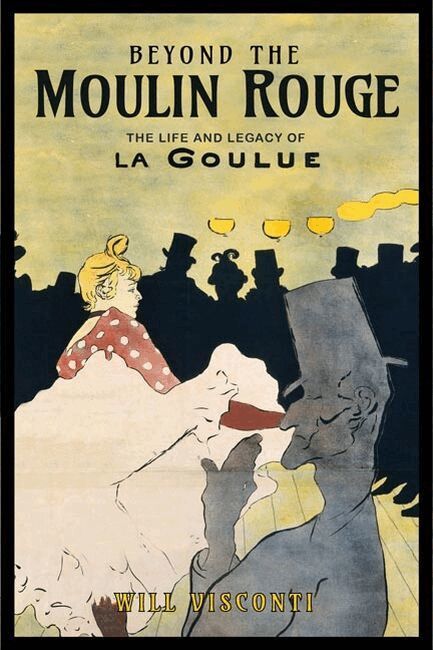
Best known by her stage name, La Goulue (the Glutton), Louise Weber was one of the biggest stars of fin de siècle Paris, renowned as a cancan dancer at the Moulin Rouge. The subject of numerous paintings and photographs, she became an iconic figure of modern art. Her life, however, has consistently been misrepresented and reduced to a footnote in the stories of men such as Henri de Toulouse-Lautrec. Where most accounts dismiss her rise and fall as brief and rapid, the truth is that her career as a performer spanned five decades, during which La Goulue constantly reinvented herself—as a dancer, animal tamer, sideshow performer, and muse of photographers, painters, sculptors, and filmmakers.With Beyond the Moulin Rouge, the first substantive English-language study of La Goulue’s career and posthumous influence, Will Visconti corrects persistent myths. Despite a tumultuous personal life, La Goulue overcame loss, abusive relationships, and poverty to become the very embodiment of nineteenth-century Paris, fêted by royalty and followed as closely as any politician or monarch.Visconti draws on previously overlooked materials, including medical records, media reports across Europe and the United States, and surviving pages from Louise Weber’s diary, to trace the life and impact of a woman whose cultural significance has been ignored in favor of the men around her, and who spent her life upending assumptions about gender, morality, and domesticity in France during the fin de siècle and early twentieth century.
391 kr
Skickas inom 10-15 vardagar
Best known by her stage name, La Goulue (the Glutton), Louise Weber was one of the biggest stars of fin de siècle Paris, renowned as a cancan dancer at the Moulin Rouge. The subject of numerous paintings and photographs, she became an iconic figure of modern art. Her life, however, has consistently been misrepresented and reduced to a footnote in the stories of men such as Henri de Toulouse-Lautrec. Where most accounts dismiss her rise and fall as brief and rapid, the truth is that her career as a performer spanned five decades, during which La Goulue constantly reinvented herself—as a dancer, animal tamer, sideshow performer, and muse of photographers, painters, sculptors, and filmmakers.With Beyond the Moulin Rouge, the first substantive English-language study of La Goulue’s career and posthumous influence, Will Visconti corrects persistent myths. Despite a tumultuous personal life, La Goulue overcame loss, abusive relationships, and poverty to become the very embodiment of nineteenth-century Paris, fêted by royalty and followed as closely as any politician or monarch.Visconti draws on previously overlooked materials, including medical records, media reports across Europe and the United States, and surviving pages from Louise Weber’s diary, to trace the life and impact of a woman whose cultural significance has been ignored in favor of the men around her, and who spent her life upending assumptions about gender, morality, and domesticity in France during the fin de siècle and early twentieth century.