Pension Research Council - Böcker
Visar alla böcker i serien Pension Research Council. Handla med fri frakt och snabb leverans.
2 produkter
2 produkter
1 612 kr
Skickas inom 7-10 vardagar
The 1964 termination of the Studebaker Corporation's pension plan wiped out or significantly reduced the pensions of thousands of the automaker's employees and retirees. In response, the US Congress passed the 1974 Employee Retirement Income Security Act (ERISA), a monumental and revolutionary piece of legislation crafted to address corporate pension underfunding. The bill also set new rules regarding defined benefit (DB) and other retirement plans, and it established the Pension Benefit Guaranty Corporation as a government-run insurer to serve as a backdrop to U.S. corporate pensions. Despite the bill's far-ranging scope, in the decades since its passage, it has become evident that ERISA failed to achieve many of its intended objectives. The corporate pension scene today is in turmoil, and most private employers have terminated or frozen their traditional DB plans. In their place, employers are increasingly substituting defined contribution (DC) retirement saving plans, which pose a new set of responsibilities on employees and their firms. This volume investigates how and why traditional approaches to pension risk management have failed, and we also explore the new mechanisms required to strengthen retirement security for the future. Lessons from international experience are also included, ranging from Singapore to Switzerland, and the Netherlands to Australia.
1 576 kr
Skickas inom 5-8 vardagar
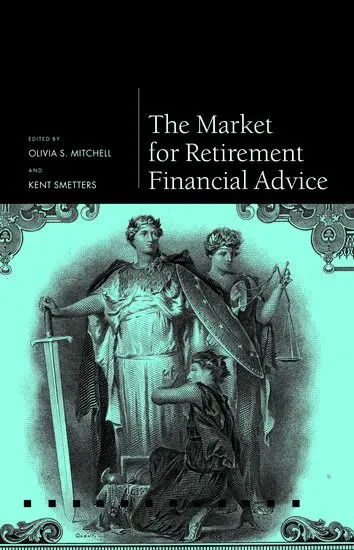
The market for retirement financial advice has never been more important and yet more in flux. The long-term shift away from traditional defined benefit pensions toward defined contribution personal accounts requires all of us to be more sophisticated today than ever before. However, the landscape for financial advice is changing all over the world, with new rules and regulations transforming the financial advice profession. This volume explores the market for retirement financial advice, to explain what financial advisors do and how to measure performance and impact. Who are these professionals and what standards must they abide by? How do they make money and what are their incentives? How can one protect clients from bad advice, and what is good advice? Does advice alone effect changes in personal habits? Answering these questions, along with new technology that will decrease the delivery costs of advice, will play a transformative role in helping more households receive the quality financial advice that they need. Accordingly, this volume illuminates the market and regulatory challenges so as to enhance consumer, plan sponsor, and regulator decisions.