Personal Takes - Böcker
Visar alla böcker i serien Personal Takes. Handla med fri frakt och snabb leverans.
7 produkter
7 produkter
361 kr
Skickas inom 10-15 vardagar
Auerbach examines the writer of depth and recklessness now largely known only as the author of Rebecca, looking at the way her sharp-edged fiction, with its brutal and often perverse family relationships, has been softened in film adaptations of her work. She reads both du Maurier's life in her writings, and the sensibility of a vanished class and time that haunts the fringes of our own age.
323 kr
Skickas inom 10-15 vardagar
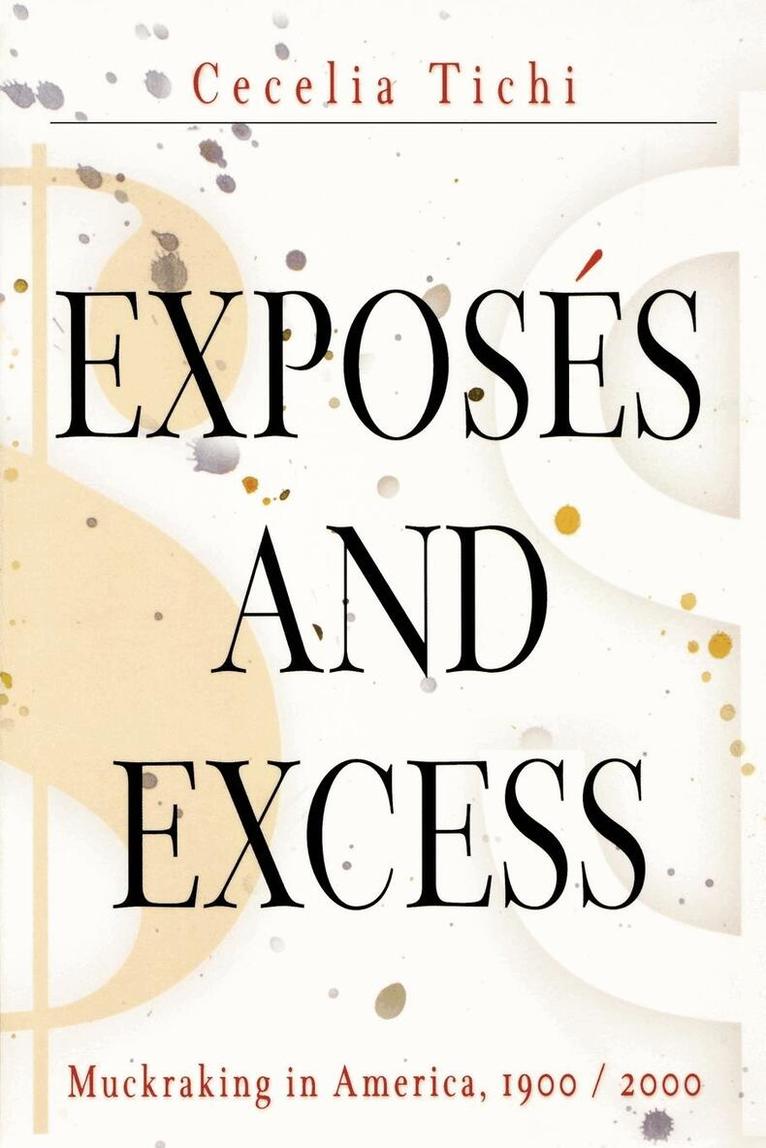
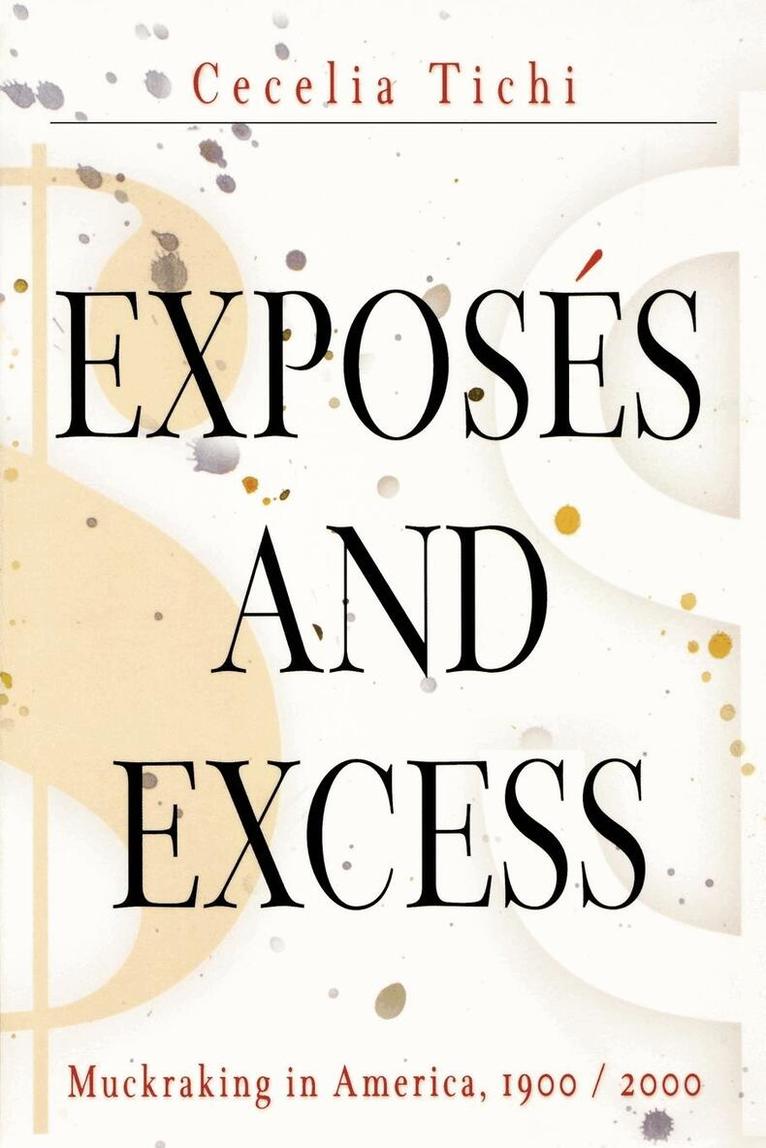
From robber barons to titanic CEOs, from the labor unrest of the 1880s to the mass layoffs of the 1990s, two American Gilded Ages-one in the early 1900s, another in the final years of the twentieth century-mirror each other in their laissez-faire excess and rampant social crises. Both eras have ignited the civic passions of investigative writers who have drafted diagnostic blueprints for urgently needed change. The compelling narratives of the muckrakers-Upton Sinclair, Ida Tarbell, Lincoln Steffens, and Ray Stannard Baker among them-became bestsellers and prizewinners a hundred years ago; today, Cecelia Tichi notes, they have found their worthy successors in writers such as Barbara Ehrenreich, Eric Schlosser, and Naomi Klein.In ExposÉs and Excess Tichi explores the two Gilded Ages through the lens of their muckrakers. Drawing from her considerable and wide-ranging work in American studies, Tichi details how the writers of the first muckraking generation used fact-based narratives in magazines such as McClure's to rouse the U.S. public to civic action in an era of unbridled industrial capitalism and fear of the immigrant "dangerous classes." Offering a damning cultural analysis of the new Gilded Age, Tichi depicts a booming, insecure, fortress America of bulked-up baby strollers, McMansion housing, and an obsession with money-as-lifeline in an era of deregulation, yawning income gaps, and idolatry of the market and its rock-star CEOs.No one has captured this period of corrosive boom more acutely than the group of nonfiction writers who burst on the scene in the late 1990s with their exposÉs of the fast-food industry, the world of low-wage work, inadequate health care, corporate branding, and the multibillion-dollar prison industry. And nowhere have these authors-Ehrenreich, Schlosser, Klein, Laurie Garrett, and Joseph Hallinan-revealed more about their emergence as writers and the connections between journalism and literary narrative than in the rich and insightful interviews that round out the book.With passion and wit, ExposÉs and Excess brings a literary genre up to date at a moment when America has gone back to the future.
354 kr
Skickas inom 3-6 vardagar
The trial of Adolf Eichmann began in 1961 under a deceptively simple label, "criminal case 40/61." Hannah Arendt covered the trial for the New Yorker magazine and recorded her observations in Eichmann in Jerusalem: The Banality of Evil. Harry Mulisch was also assigned to cover the trial for a Dutch news weekly. Arendt would later say in her book's preface that Mulisch was one of the few people who shared her views on the character of Eichmann. At the time, Mulisch was a young and little-known writer; in the years since he has since emerged as an author of major international importance, celebrated for such novels as The Assault and The Discovery of Heaven. Mulisch modestly called his book on case 40/61 a report, and it is certainly that, as he gives firsthand accounts of the trial and its key players and scenes (the defendant's face strangely asymmetric and riddled by tics, his speech absurdly baroque). Eichmann's character comes out in his incessant bureaucratizing and calculating, as well as in his grandiose visions of himself as a Pontius Pilate-like innocent.As Mulisch intersperses his dispatches from Jerusalem with meditative accounts of a divided and ruined Berlin, an eerily rebuilt Warsaw, and a visit to the gas chambers of Auschwitz, Criminal Case 40/61, the Trial of Adolf Eichmann becomes as a disturbing and highly personal essay on the Nazi extermination of European Jews and on the human capacity to commit evil ever more efficiently in an age of technological advancement. Here presented with a foreword by Deborah Dwork and translated for the first time into English, Criminal Case 40/61 provides the reader with an unsettling portrait not only of Eichmann's character but also of technological precision and expertise. It is a landmark of Holocaust writing.
299 kr
Skickas inom 10-15 vardagar
"I have been a character in academic fiction at least twice," Elaine Showalter writes, "once a voluptuous, promiscuous, drug-addicted bohemian, once a prudish, dumpy, judgmental frump. I hope I am not too easily identified in either of these guises . . . although I can tell you that I preferred being cast as the luscious Concord grape to my role as the withered prune."In the days before there were handbooks, self-help guides, or advice columns for graduate students and junior faculty, there were academic novels teaching us how a proper professor should speak, behave, dress, think, write, love, and (more than occasionally) solve murders. If many of these books are wildly funny, others paint pictures of failure and pain, of lives wasted or destroyed. Like the suburbs, Elaine Showalter notes, the campus can be the site of pastoral and refuge. But even ivory towers can be structurally unsound, or at least built with glass ceilings. Though we love to read about them, all is not well in the faculty towers, and the situation has been worsening.In Faculty Towers, Showalter takes a personal look at the ways novels about the academy have charted changes in the university and society since 1950. With her readings of C. P. Snow's idealized world of Cambridge dons, the globe-trotting antics of David Lodge's Morris Zapp, the sleuthing Kate Fansler in Amanda Cross's best-selling mystery series, or the recent spate of bitter novels in which narratives of sexual harassment seem to serve as fables of power, anger, and desire, Showalter holds a mirror up to the world she has inhabited over the course of a distinguished and often controversial career.
437 kr
Skickas inom 10-15 vardagar
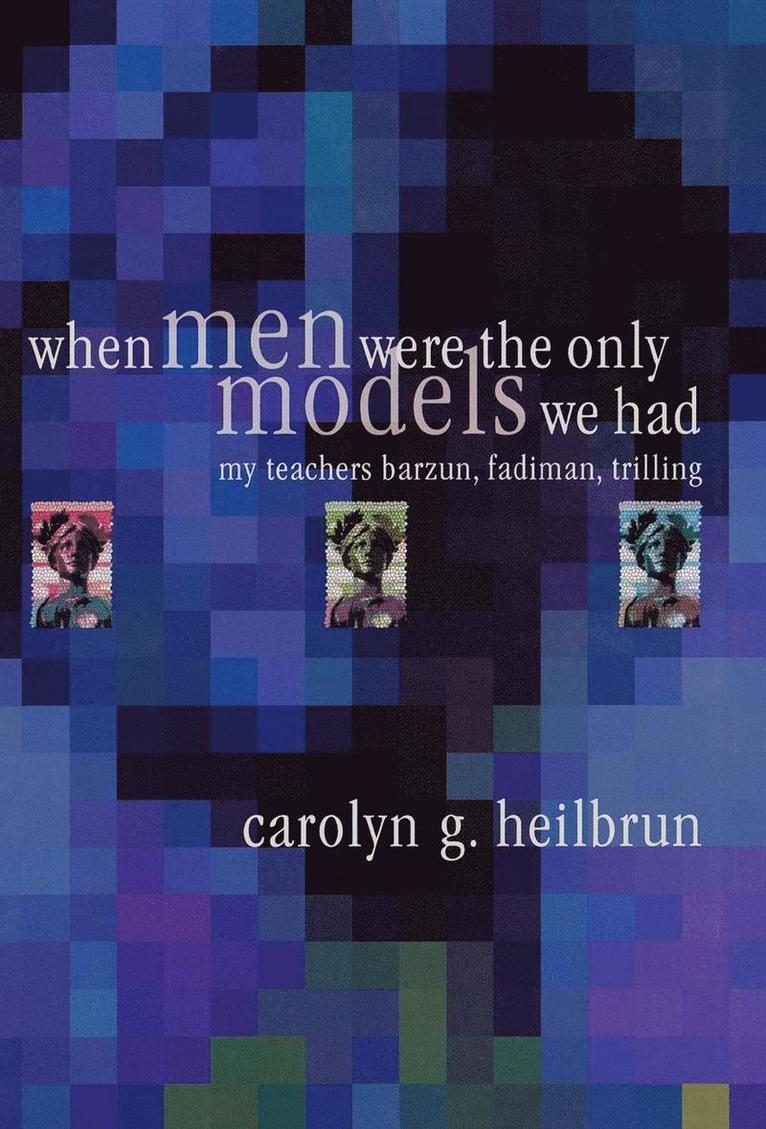
"Once upon a time there were three men who exemplified, without knowing it, my ideal in life. All of them became famous as writers, influential thinkers, and public figures. Their names are Clifton Fadiman, Lionel Trilling, and Jacques Barzun. They met in college, they remained aware of one another as friends or, if less than friends, companions and fellow crusaders on behalf of similar ideals. Although one of them never knew of my existence, the second ignored it, and the third treated me with formal kindness, without them I would have had no concrete model in my youth of what I wanted to become. Theirs was the universe in which I wished to have my being."With these words, Carolyn Heilbrun begins a personal, pointed, and surprisingly moving account of how a woman, destined to become one of the leading feminist critics of her day as well as one of our most popular mystery novelists, found the models for the life she aspired to in men who neither imagined nor countenanced women as their equals or colleagues. Remembering these three figures as they were when she hung upon their printed words and professorial presences, reappraising them now half a century later, Heilbrun vividly evokes what these remarkable individuals had to offer to an admiring young woman who could not acknowledge-and later would not accept-the impossibility of following in their paths.In the admired anthologies, magazine articles, and introductions through which Fadiman transmitted the world of high culture to an educated general public, he indicated no devotion to questions of female destiny; yet long before Heilbrun could imagine the life in the academy that was denied to Fadiman but would eventually be hers, his was the career to which she privately aspired. Later, in her days as a graduate student at Columbia, it was Trilling who would have the most powerful intellectual effect upon her, formulating as he did the tensions inherent in the desire to salvage what was of worth from a sad, almost moribund culture, even if he frankly admitted to no interest in teaching women or in considering their destinies beyond the domestic sphere. Only the courtly Barzun, also a mentor at Columbia, seemed capable of respecting female accomplishment and eschewing stereotyped views of women. Yet together, all three men unconsciously made Heilbrun's life as a feminist possible, by representing both what she wished to join and what she needed to struggle against.When Men Were the Only Models We Had is a loving, admiring, but stringent account of youthful enthusiasms, of the romance of ideas, of the intellectual brilliance of three unwitting mentors, and of the hopelessness of female ambition in the years before the feminist movement of the last three decades of the last century. And it is, in the end, a book that offers splendid proof that the models we once had are no longer the only ones before us.
347 kr
Skickas inom 10-15 vardagar
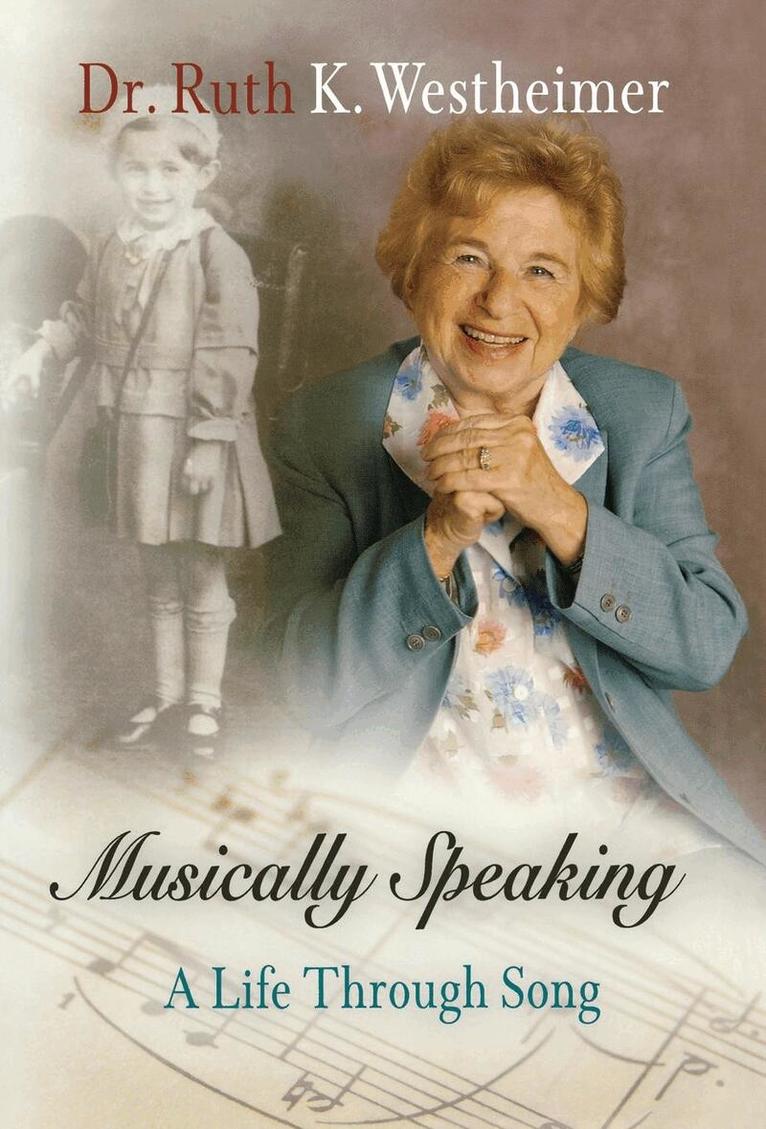
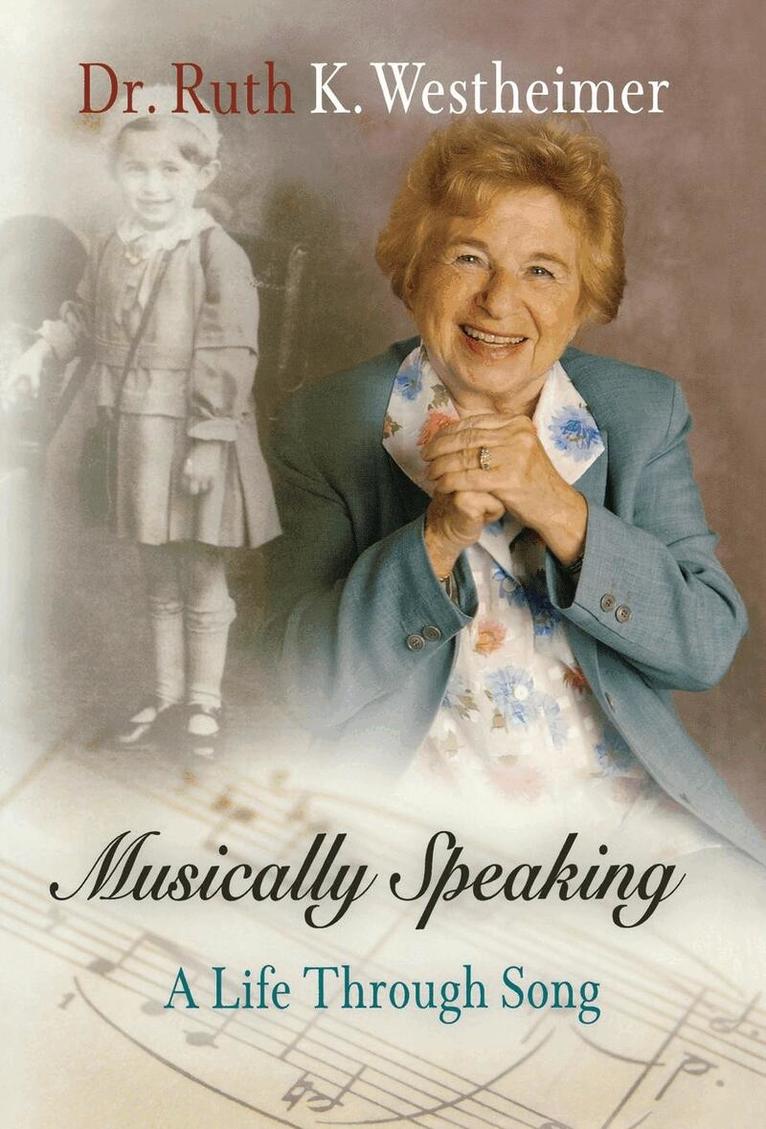
"Music, I have come to realize, is for me a kind of golden thread running through my life. It has helped maintain my connection with the past that otherwise might have been severed by catastrophe and time. I am often asked-indeed, I often wonder myself-why it is that I should always have had such joie de vivre in the face of the losses and dislocations I had to endure in my early years. The answer I always gave was that the warmth and security of my early childhood had a remarkable power and influence. This is certainly true. But now I have realized that there is another part to the answer. And that is music."-from the introductionWho among us does not have a song that triggers vivid memories-of jubilation, of belonging, of sorrow, of love? In Musically Speaking, Dr. Ruth K. Westheimer, one of America's most beloved personalities, has written a warm and contemplative book about the role music has played in her life and the ineradicable traces it has left on her thoughts, emotions, her very being.In this memoir through song, Dr. Ruth invites us to share her story from a uniquely musical perspective. By the time she was thirty, Ruth Westheimer had lived in five countries, each with a distinctive musical culture, each with a different hold on her sensibility. For the first ten years of her life, the comforting melodies of childhood helped drown out the anthems of Nazism to be heard elsewhere in her native Germany; as an adolescent refugee in Switzerland, she came to be aware that, however loudly she sang the patriotic songs of the land that gave her shelter, she could never truly be at home there.Present at the creation of the modern state of Israel, she sang and danced to the new music of a new nation; as a young woman eagerly absorbing all that Paris had to offer in the way of romance and worldliness in the early 1950s, the songs of Edith Piaf, Mouloudji, and Yves Montand were her tutors. An almost accidental emigration to America brought new challenges and new stability, as she became a wife, mother, and professional; tremendous and unforeseen celebrity came later, and with it the giddy opportunity to indulge her love of music as never before.Always, the classical repertoire of Mozart, Haydn, Beethoven, and Brahms has drawn Westheimer to a German culture that has belonged-and not belonged-to her throughout her life. And always, the music of the Jewish tradition has given her strength and comfort beyond words.Affording a view of Dr. Ruth from a rare private vantage point, Musically Speaking offers wondrous testimony to the resilience of the human spirit. This is a book full of color, verve, humor, and wisdom, unfolding gracefully through the beloved music of the Jewish holidays, the lullabies of childhood, the songs that sustained an orphan and roused the courage of a young woman, the melodies that enable a widow grieving for her husband to recall, from deep within the years of love, companionship, and happiness.
370 kr
Skickas inom 7-10 vardagar
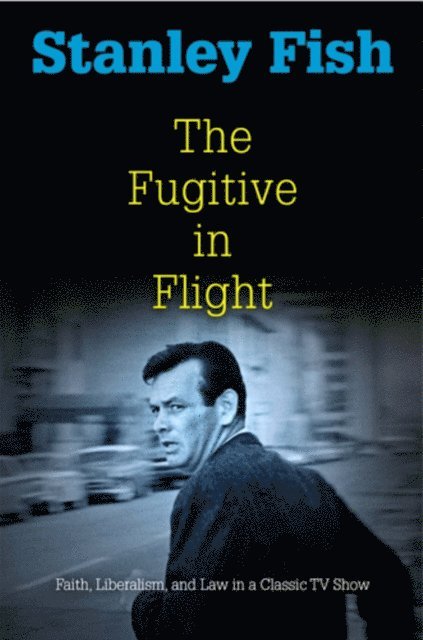
"In the 1990s when I was watching reruns of The Fugitive on the Arts and Entertainment Network twice a day, I couldn't take my eyes off it. . . . No one in The Fugitive ever relaxes as you watch and you can't relax either, even though for long stretches absolutely nothing happens. It was the combination of nonstop tension with the (relative) absence of slam-bang action that attracted me, and as I now reflect on it, the same combination characterizes the literary works I have been reading and writing about for more than forty-five years."-Stanley Fish, from the IntroductionIn the stark television drama The Fugitive, Dr. Richard Kimble, an innocent man convicted of murder, is on the run from the police and in pursuit of the real killer. The award-winning show, which aired on ABC from 1963 to 1967 and inspired a 1993 blockbuster movie, still has many devoted fans, none more passionate than literary and legal theorist and intellectual provocateur Stanley Fish. In The Fugitive in Flight, Fish examines the moral structure of the long-running series and explains why he thinks this may well be the greatest show ever aired on American network television.Analyzing key episodes, The Fugitive in Flight goes beyond plot summaries and behind-the-scenes stories. For Fish, the real action of The Fugitive takes place in confined spaces where the men and women Richard Kimble encounters are forced to choose what kind of person they will be for the rest of their lives. Kimble is the catalyst of such choices and changes, but he himself never changes. Breaking free from the political and social problems of his time, he is always the bearer and exemplar of the very middle-class values informing the system that has misjudged him. Kimble is the perfect representative of a mid-twentieth-century liberalism that values above all independence, personal integrity, and the refusal to surrender oneself to obsessions or causes. He is so consistently faithful to his liberal vision of life that he displays both its virtues and its dark side, the side that flees attachments, entanglements, responsibilities, and human connections. Stanley Fish's Richard Kimble is the ultimate man in a gray flannel suit, even when he is wearing a windbreaker and walking down a dark, lonely road.