Philosophy in Transit – serie
Visar alla böcker i serien Philosophy in Transit. Handla med fri frakt och snabb leverans.
5 produkter
5 produkter
E-bok
Engelska, 2014102 kr
Läs direkt efter köp
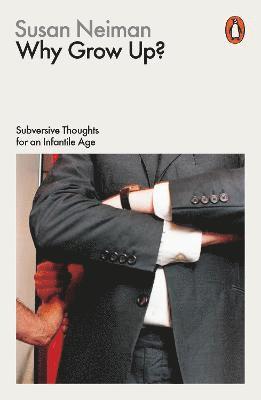
In Why Grow Up, the latest volume in the Philosophy in Transit series, world-renowned philosopher Susan Neiman looks at growing up as an ideal with urgent relevance todayBecoming an adult today can seem a grim prospect. As you grow up, you are told to renounce most of the hopes and dreams of your youth, and resign yourself to a life that will be a pale dilution of the adventurous, important and enjoyable life you once expected. But who wants to do any of that? No wonder we live in a culture of rampant immaturity, argues internationally-renowned philosopher Susan Neiman, when maturity looks so boring.In Why Grow Up, Neiman explores the forces that are arrayed against maturity, and shows how philosophy can help us want to grow up. Travel, both literally and as a metaphor, has been seen as a crucial step to coming of age by thinkers as diverse as Kant, Rousseau, Hume and Simone de Beauvoir. Neiman discusses childhood, adolescence, sex, and culture, and asks how the idea of travel can help us build a model of maturity that makes growing up a good option and leaves space in our culture for grown-ups. Refuting the widespread belief that the best time of your life is the decade between sixteen and twenty-six, she argues that being grown-up is itself an ideal: one that is rarely achieved in its entirety, but all the more worth striving for.Susan Neiman is an American moral philosopher who has taught at Yale and Tel Aviv University. She currently lives in Germany, where she is the Director of the Einstein Forum in Potsdam.
Häftad, Engelska, 2016
146 kr
Skickas
In Why Grow Up, the latest volume in the Philosophy in Transit series, world-renowned philosopher Susan Neiman looks at growing up as an ideal with urgent relevance todayBecoming an adult today can seem a grim prospect. As you grow up, you are told to renounce most of the hopes and dreams of your youth, and resign yourself to a life that will be a pale dilution of the adventurous, important and enjoyable life you once expected. But who wants to do any of that? No wonder we live in a culture of rampant immaturity, argues internationally-renowned philosopher Susan Neiman, when maturity looks so boring.In Why Grow Up, Neiman explores the forces that are arrayed against maturity, and shows how philosophy can help us want to grow up. Travel, both literally and as a metaphor, has been seen as a crucial step to coming of age by thinkers as diverse as Kant, Rousseau, Hume and Simone de Beauvoir. Neiman discusses childhood, adolescence, sex, and culture, and asks how the idea of travel can help us build a model of maturity that makes growing up a good option and leaves space in our culture for grown-ups. Refuting the widespread belief that the best time of your life is the decade between sixteen and twenty-six, she argues that being grown-up is itself an ideal: one that is rarely achieved in its entirety, but all the more worth striving for.
E-bok
Engelska, 2013102 kr
Läs direkt efter köp
In the first in a new series of easily digestible, commute-lengthbooks of original philosophy, renowned thinker John D. Caputo explores the many notions of 'truth', and what it really meansRiding to work in the morning has has become commonplace. We ride everywhere. Physicians and public health officials plead with us to get out and walk, to get some exercise. People used to live within walking distance to the fields in which they worked, or they worked in shops attached to their homes. Now we ride to work, and nearly everywhere else. Which may seem an innocent enough point, and certainly not one on which we require instruction from the philosophers. But, truth be told, it has in fact precipitated a crisis in our understanding of truth. Arguing that our transportation technologies are not merely transient phenomena but the vehicle for an important metaphor about postmodernism, or even constitutive of postmodernism, John D. Caputo explores the problems posited by the way in which science, ethics, politics, art and religion all claim to offer us (the) "truth", defending throughout a "postmodern", or "hermeneutic" theory of truth, and posits his own surprising theory of the many notions of truth.John D. Caputo is a specialist in contemporary hermeneutics and deconstruction with a special interest in religion in the postmodern condition. The Thomas J. Watson Professor of Religion Emeritus at Syracuse University and the David R. Cook Professor of Philosophy Emeritus at Villanova University, he has spearheaded an idea he calls weak theology.
E-bok
Engelska, 2014102 kr
Läs direkt efter köp
In the third in a new series of short, provoking books of original philosophy, acclaimed thinker Barry Dainton takes us through the nature of SelfWhen you think 'What am I?', what's actually doing the thinking? Is it a soul, or some other kind of mental entity separate from your body, or are 'you' just a collection of nerve-endings and narratives? In the third in a new series of short, provoking books of original philosophy, acclaimed thinker Barry Dainton takes us through the nature of Self and its relation to the rest of reality. Starting his journey with Descartes' claim that we are non-physical beings (even if it seems otherwise), and Locke's view that a person is self-conscious matter (though not necessarily in human form), Dainton explores how today's rapid movement of people, and information affects our understanding of self. When technology re-configures our minds, will it remake us, or kill us? If teleportation becomes possible, would it be rational to use it? Could we achieve immortality by uploading ourselves into virtual worlds? Far-reaching and witty, Self is a spirited exploration of the idea that in a constantly-changing world, we and our bodies can go their separate ways.
Häftad, Engelska, 2013
125 kr
Skickas
What is 'truth' in today's freewheeling, pluralistic world, without certainties or fixed ideas? Does it lie in the Reason of Descartes and Kant? Is it Derrida's idea of an event, still being made? Or, according to Nietzsche, an ensemble of fictions? Internationally renowned philosopher John D. Caputo explores truth in the postmodern age.