Susan Neiman – författare
128 kr
Skickas
232 kr
Skickas inom 5-8 vardagar
177 kr
Skickas
102 kr
Läs direkt efter köp
146 kr
Skickas
102 kr
Läs direkt efter köp
245 kr
Skickas inom 3-6 vardagar
393 kr
Skickas inom 5-8 vardagar
245 kr
Skickas inom 3-6 vardagar
255 kr
Kommande
294 kr
Läs direkt efter köp
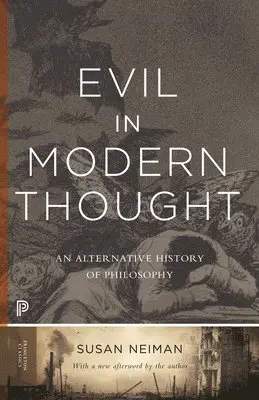
A compelling look at the problem of evil in modern thought, from the Inquisition to global terrorismEvil threatens human reason, for it challenges our hope that the world makes sense. For eighteenth-century Europeans, the Lisbon earthquake was manifest evil. Today we view evil as a matter of human cruelty, and Auschwitz as its extreme incarnation. Examining our understanding of evil from the Inquisition to contemporary terrorism, Susan Neiman explores who we have become in the three centuries that separate us from the early Enlightenment. In the process, she rewrites the history of modern thought and points philosophy back to the questions that originally animated it.Whether expressed in theological or secular terms, evil poses a problem about the world''s intelligibility. It confronts philosophy with fundamental questions: Can there be meaning in a world where innocents suffer? Can belief in divine power or human progress survive a cataloging of evil? Is evil profound or banal? Neiman argues that these questions impelled modern philosophy. Traditional philosophers from Leibniz to Hegel sought to defend the Creator of a world containing evil. Inevitably, their efforts—combined with those of more literary figures like Pope, Voltaire, and the Marquis de Sade—eroded belief in God''s benevolence, power, and relevance, until Nietzsche claimed He had been murdered. They also yielded the distinction between natural and moral evil that we now take for granted. Neiman turns to consider philosophy''s response to the Holocaust as a final moral evil, concluding that two basic stances run through modern thought. One, from Rousseau to Arendt, insists that morality demands we make evil intelligible. The other, from Voltaire to Adorno, insists that morality demands that we don''t.Beautifully written and thoroughly engaging, this book tells the history of modern philosophy as an attempt to come to terms with evil. It reintroduces philosophy to anyone interested in questions of life and death, good and evil, suffering and sense. Featuring a substantial new afterword by Neiman that raises provocative questions about Hannah Arendt''s take on Adolf Eichmann and the rationale behind the Hiroshima bombing, this Princeton Classics edition introduces a new generation of readers to this eloquent and thought-provoking meditation on good and evil, life and death, and suffering and sense.
140 kr
Läs direkt efter köp
186 kr
Läs direkt efter köp
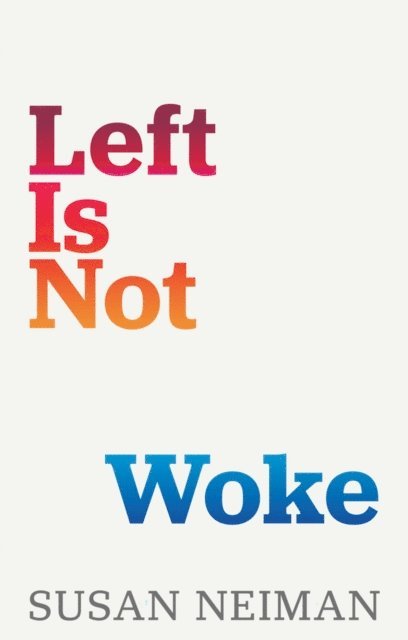
If you’re woke, you’re left. If you’re left, you’re woke. We blur the terms, assuming that if you’re one you must be the other. That, Susan Neiman argues, is a dangerous mistake.
The confusion arises because woke is fuelled by traditionally leftwing emotions: the wish to stand with the oppressed and marginalized, to address historic crimes. But those emotions are undermined by widespread philosophical assumptions with reactionary sources. As a result, wokeism conflicts with ideas that have guided the left for more than 200 years: a commitment to universalism, a firm distinction between justice and power, and a belief in the possibility of progress. Without these ideas, the woke will continue to undermine their own goals and drift, inexorably and unintentionally, towards the right.One of the world’s leading philosophical voices, Neiman calls with passion and power for the left to return to the ideals that built the best of the modern world.
Also available as an audiobook narrated by the author.
145 kr
Skickas
70 kr
Läs direkt efter köp
269 kr
Skickas inom 3-6 vardagar
1 351 kr
Skickas inom 5-8 vardagar
1 839 kr
Skickas inom 5-8 vardagar
1 874 kr
Läs direkt efter köp
This collection demonstrates the range of approaches that some of the leading scholars of our day take to basic questions at the intersection of the natural and human worlds. The essays focus on three interlocking categories: Reason stakes a bigger territory than the enclosed yard of universal rules. Nature expands over a far larger region than an eternal category of the natural. And history refuses to be confined to claims of an unencumbered truth of how things happened.
1 857 kr
Läs direkt efter köp
This collection demonstrates the range of approaches that some of the leading scholars of our day take to basic questions at the intersection of the natural and human worlds. The essays focus on three interlocking categories: Reason stakes a bigger territory than the enclosed yard of universal rules. Nature expands over a far larger region than an eternal category of the natural. And history refuses to be confined to claims of an unencumbered truth of how things happened.
155 kr
Skickas inom 3-6 vardagar
303 kr
Skickas inom 3-6 vardagar
235 kr
Skickas inom 3-6 vardagar
42 kr
Läs direkt efter köp
272 kr
Läs direkt efter köp