Played in Britain – Serie
Visar alla böcker i serien Played in Britain. Handla med fri frakt och snabb leverans.
4 produkter
4 produkter
202 kr
Tillfälligt slut
Del 10 - Played in Britain
British Olympics
Britain's Olympic Heritage 1612-2012
Häftad, Engelska, 2011
270 kr
Skickas inom 7-10 vardagar
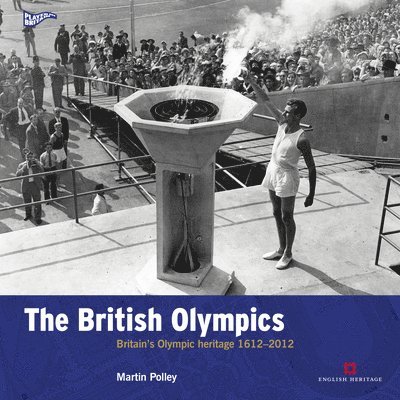
History records that the Olympic Games originated in ancient Greece nearly three thousand years ago, died out around 393 AD, and were triumphantly reborn in 1896, in the Greek capital of Athens. Rather less well known is how, during the intervening centuries, an assortment of British writers, romantics, sportsmen and visionaries helped nurture that revival. Indeed, as sports historian Dr Martin Polley argues in this, the 12th book in the acclaimed Played in Britain series, our nation’s fascination with all things Olympian has played a pivotal role in shaping the Games as we know them today, culminating in London becoming in 2012 the first city ever to stage a third modern Olympiad. Consider, for example, that the first published use of the word ‘Olympian’ in the English language dates from around 1590. Its author? William Shakespeare. And that the first games of the post-classical era to adopt the formal title ‘Olympick’ took place in the Cotswolds village of Chipping Campden in 1612. It was an English traveller, Richard Chandler, who rediscovered the lost site of Olympia in 1766, and a Shropshire doctor, William Penny Brookes, who, in 1850, founded the Much Wenlock Olympian Games, an annual community festival that inspired Pierre de Coubertin to revive the Games at an international level. Other Olympic festivals surfaced in London (to celebrate Queen Victoria’s accession), in Liverpool, and in the north-east town of Morpeth, while the words ‘Olympic’ and ‘Olympian’ became steadily more ingrained in the popular imagination throughout the Victorian era. Britain’s Olympic heritage gained added momentum in the 20th century. At White City in 1908, London built the world’s first modern, purpose-built Olympic stadium, while in 1948 London stepped in to save the Games by offering Wembley Stadium. Also in the late 1940s, at Stoke Mandeville hospital in Buckinghamshire, the modern Paralympics were born when sporting contests were organised for injured servicemen. Thus the 2012 Games represent the culmination of over four hundred years of British enthusiasm and ingenuity; an attachment that has left in its wake a trail of fascinating stories, characters, sites, buildings and artefacts. Leading the reader on a marathon journey, The British Olympics charts them all, making this a vital and entertaining source for anyone with an interest in the Games, in sport, and in the wider narrative of Britain’s social and cultural heritage.
346 kr
Skickas
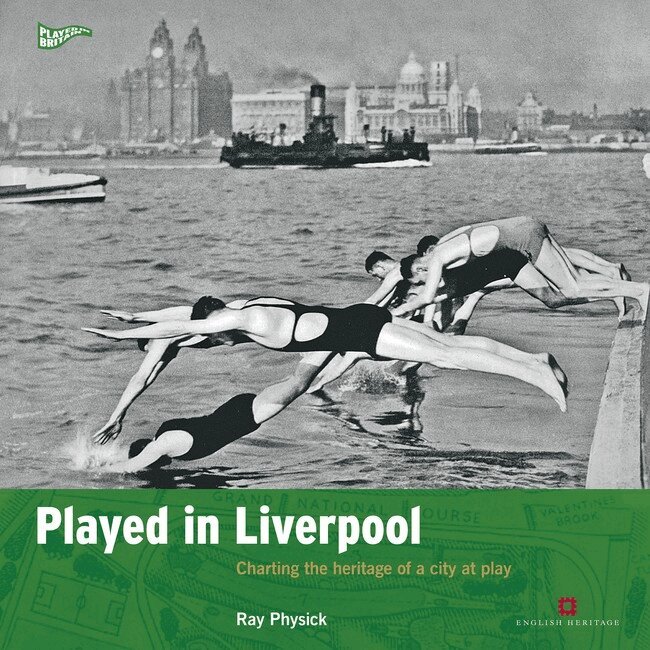
Becher’s Brook at Aintree, the legendary Kop at Anfield, the 18th tee at Hoylake – just three hallowed Liverpool landmarks on the map of international sport. But sporting heritage on Merseyside permeates the entire region and its unique cultural legacy. In Played in Liverpool, the fourth of English Heritage’s groundbreaking Played in Britain series, social historian Ray Physick guides the reader on an intimate tour of the city’s lesser known sporting treasures; from the site of the 19th century Liverpool Olympics on Mount Vernon and the dockside location of Britain’s first municipal swimming baths, to the football giants Liverpool and Everton confronting each other across the expanse of Stanley Park. It was in Liverpool that a canny city engineer designed football’s original goal nets in the early 1890s. Vast offices belonging to the likes of Littlewoods, Vernons and Zetters housed the headquarters of the British football pools industry. At Goodison Park we learn about the origins of the Toffee Lady, dispenser of sweets to the Everton faithful before every match. Among the old gymnasiums of Little Italy and the Victorian Lads Clubs of Toxteth – the famous and now threatened Florrie Institute to name but one – lie the seeds of a thriving, bruising boxing scene. On the Mersey we sail in the wake of intrepid swimmers and rowers. On the Wirral coast and on the links leading from the Liverpool docks to the refined seaside resort of Southport we visit Art Deco golf clubhouses and suburban tennis clubs. The Cavern Club, that ferry across the Mersey, and Scouse humour have long been celebrated in popular British culture. Now, as Liverpool prepares to act as City of Culture for 2007, it’s time to reveal its sporting secrets. Hold on to your bobble hats for a story that has never been told.
329 kr
Skickas inom 7-10 vardagar
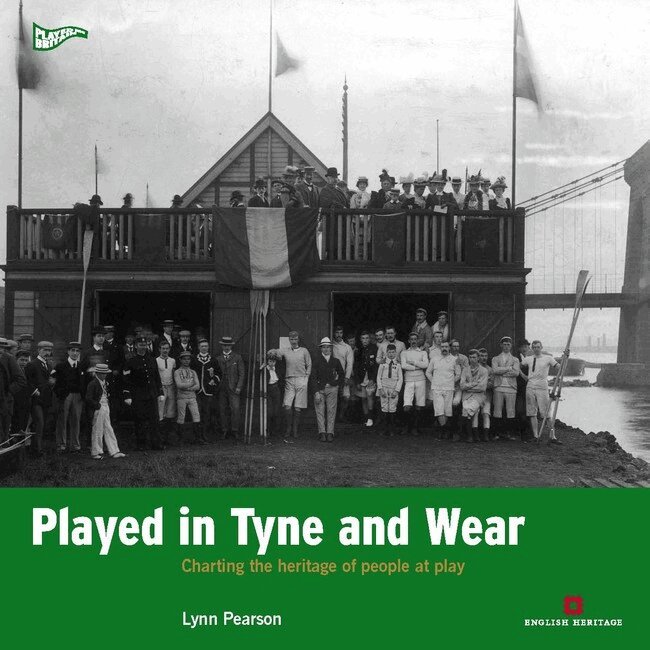
It used to be said that whenever a football manager needed a goal scorer all he had to do was travel to the North East, call down a mineshaft and up would pop a centre forward. But while the careers of Alan Shearer, Raich Carter, Bobby Robson, Brian Clough and Jackie Milburn all attest to the famous description of the North East as 'the hotbed of football', the region's miners and shipbuilders were just as likely to be formidable boxers, rowers, runners, cricketers or pigeon-racers. In "Played in Tyne and Wear", the 16th book in English Heritage's groundbreaking "Played in Britain" series, architectural historian Lynn Pearson guides the reader on an intimate tour of the area's sporting treasures; from the site of the celebrated Blaydon Races in Newcastle to a cockfighting pit in Tynemouth, and from the cantilevered heights of Sunderland's Stadium of Light to the homespun delights of Britain's only listed pigeon cree in Ryhope. On Newcastle's Town Moor - on of the great open spaces of urban Britain - Pearson traces the path of the Toon's old racecourse and the haunts of strong-armed pot-share bowlers (whose matches drew tens of thousands of gamblers in the 19th century), while an echo from the other side of the Moor recalls the smoky clamour of the 5,000 capacity St James' Hall, where the likes of 'Seaman' Tommy Watson and Jack Casey 'the Sunderland Assassin' drew massive crowds between the wars. The River Tyne itself has witnessed many an epic rowing battle, not least featuring the legendary oarsman Harry Clasper, whose funeral drew an estimated 100,000 to the streets in 1870. More recently the likes of Brendan Foster and Steve Cram have continued the North East's reputation for great athletes and for great events, such as the Great North Run and the now annual Gateshead Grand Prix. Lesser known gems from the Victorian era include the Ashbrooke sports ground in Sunderland, a real tennis court at Jesmnd, and a handball wall in Wallsend, while the region is dotted with charming bowls and tennis pavilions, golf courses and cricket grounds. Profusely illustrated with archive images, specially commissioned contemporary photography and detailed mapping, Pearson's study may not get Geordies and Mackems to bury the past, but it shows they have sporting heritage aplenty to share as neighbours.