Pocket Poets Series - Böcker
Visar alla böcker i serien Pocket Poets Series. Handla med fri frakt och snabb leverans.
4 produkter
4 produkter
258 kr
Skickas inom 3-6 vardagar
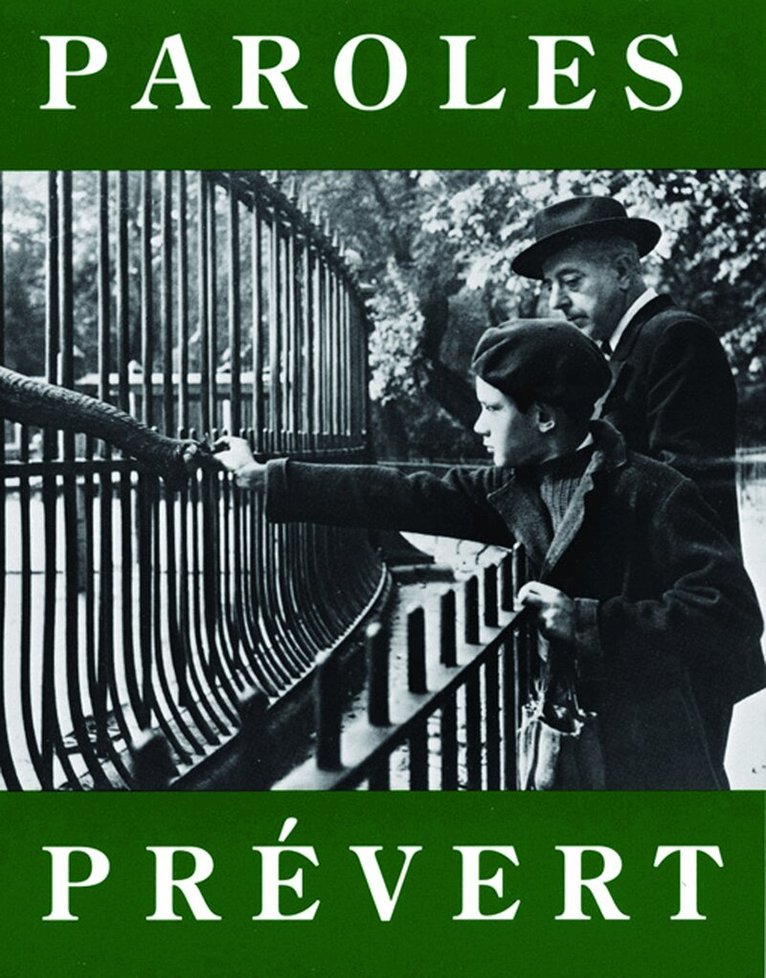
In the years immediately following World War II, Jacques Prevert spoke directly to and for the French who had come of age during the German Occupation. First published in 1946 by Les Editions de Minuit, a press with its origins in the Underground, PAROLES met with enormous success, and there were several hundred thousand copies in print by the time these first translations in English were published by City Lights in 1958. Today Prevert speaks out in a voice still attuned to our times, for the human condition (which is always his focus) has not changed. In fact, man's inhumanity to man would seem to have intensified, making these poems ever more touching, ever more prescient. Jacques Prevert (1900-1977) was a French poet and screenwriter. His poetry is popular in French education and is films formed a part of the poetic realist movement.
238 kr
Skickas inom 3-6 vardagar
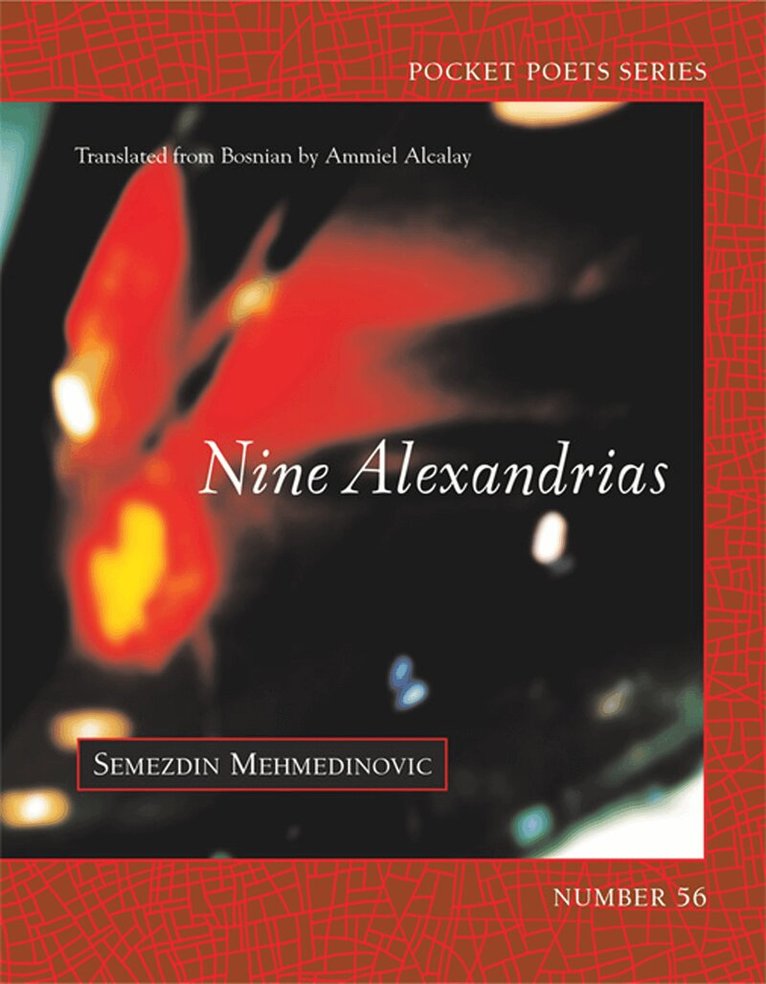
Translated from the Bosnian with an introduction by Ammiel Alcalay Following his depiction of Bosnia under siege in the much celebrated Sarajevo Blues, Semezdin Mehmedinovic' now explores the vast space of his new continent. Mostly written in response to a cross-country journey by train in post 9-11 America, Mehmedinovic"s Nine Alexandrias provides a poetry of witness and testimony of a very different order. In this nightmarish and exhilarating odyssey, Mehmedinovic"s political acuity is displayed everywhere but barely pronounced. In Washington, D.C., his new home, the graphic and tactile affirmation of life amidst horror depicted so masterfully in Sarajevo Blues, turns into an eerie silence that permeates both the expanse of the land and the heart of the American empire. Praise for Semezdin Mehmedinovic"s Sarajevo Blues: "A memorable literary achievement."-Library Journal "Sarajevo Blues is widely considered here to be the best piece of writing to emerge from the besieged capital since Bosnia's war erupted in April 1992."-The Washington Post "In poems, micro-essays, and prose vignettes, Semezdin Mehmedinovic' charts the collapse of a world with clear-eyed passion for the truth that one finds in the young Hemingway, the Hemingway of In Our Time."-Paul Auster Semezdin Mehmedinovic' was born in Tuzla, Bosnia in 1960 and is the author of five books. Mehmedinovic' -arrived in the U.S. as a political refugee in 1996, and he is currently living in Alexandria, Virginia.
138 kr
Skickas inom 5-8 vardagar
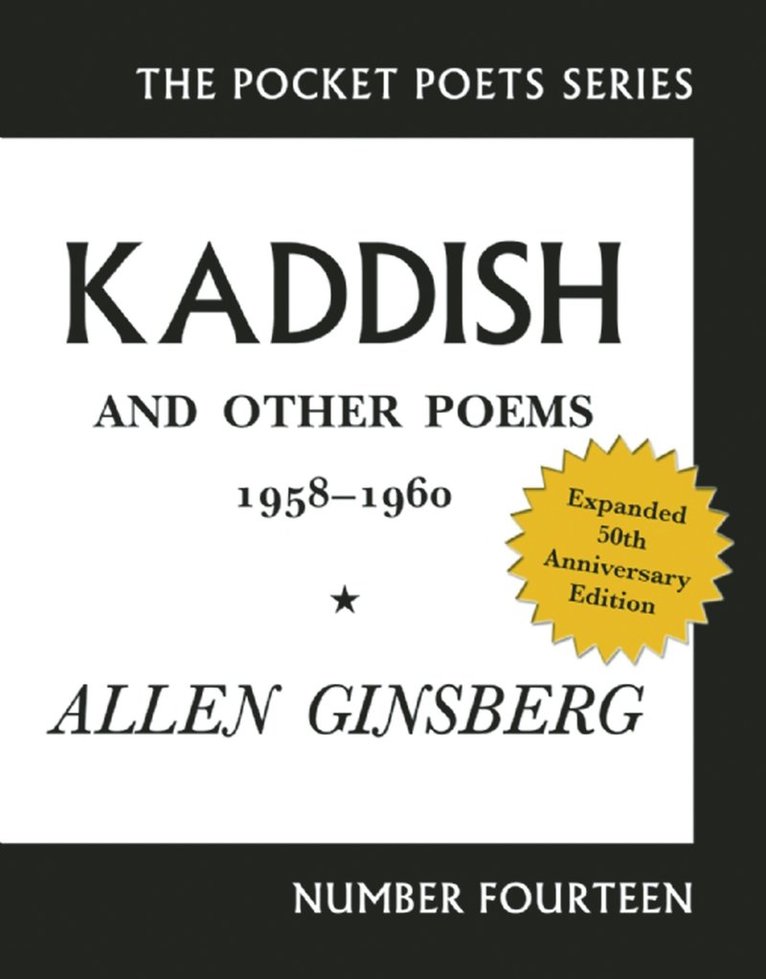
"As a pandemic rages and we are unable to gather to celebrate our dead, make our minyans, or hold one another’s hands, have our seders, I think of Ginsberg writing Kaddish for his mother. I think of him imagining a journey from bondage to freedom. . . . Kaddish is the perfect poem for these times."—Laurel Brett, The ForwardAllen Ginsberg's "Kaddish," a poem about the death of his mother, Naomi, is one of his major works. This special fiftieth anniversary edition of Kaddish and Other Poems features an illuminating afterword by Ginsberg biographer Bill Morgan, along with previously unpublished photographs, documents, and letters relating to the composition of the poem.Allen Ginsberg, founding father of the Beat Generation, inspired the American counterculture of the second half of the twentieth century with his groundbreaking poems.Bill Morgan is the author of I Celebrate Myself: The Somewhat Private Life of Allen Ginsberg. He lives in New York City and Bennington, Vermont."In the midst of the broken consciousness of mid-twentieth century suffering anguish of separation from my own body and its natural infinity of feeling its own self one with all self, I instinctively seeking to reconstitute that blissful union which I experience so rarely. I took it to be supernatural and gave it holy Name thus made hymn laments of longing and litanies of triumphancy of Self over mind-illusion mechano-universe of un-feeling Time in which I saw my self my own mother and my very nation trapped desolate our worlds of consciousness homeless and at war except for the original trembling of bliss in breast and belly of every body that nakedness rejected in suits of fear that familiar defenseless living hurt self which is myself same as all others abandoned scared to own unchanging desire for each other."—Allen Ginsberg from Kaddish"Kaddish, Ginsberg's ode to his mother after her death, is streaked with references to Judaism and to the funerary prayer recited by a male mourner for the passing of a parent or relative. Like the prayer, Ginsberg’s poem is a celebration of his mother, but it also delves into—and, indeed, dwells on—the darker side of her life. . . . Ginsberg bears witness to his mother's pain and struggles; he intones her name—another act of remembrance—over and over again as if to deify her."—Maria Eliades, Ploughshares"Kaddish, Allen Ginsberg's most stunning and emotional poem, tells a story that is entirely true. As a young boy growing up in Paterson, New Jersey, Allen watched his mother succumb to a series of psychotic episodes that grew progressively worse despite desperate attempts at treatment."—Levi Asher, Literary KicksKaddish, which Ginsberg wrote between 1957 and 1959 and published in 1961, is, at its core, a poem about a son learning to grieve for his mother. But Ginsberg's emotional and intellectual rawness make this poem an investigation about what it means to grieve, or even to be a son or mother. A deeply intimate portrait of his family's life, Kaddish nonetheless embeds itself in specific historical contexts: of Jewish life in the United States and after the Holocaust, of left-wing political activism before and during the Cold War, of a fiercely independent woman who died as second-wave feminism was only just beginning to be formulated."—Joshua Logan Wall, The Yiddish Book Center's "Great Jewish Books, Teacher Resources" "Ginsberg’s long, graphic, lamenting elegy for his mother is one of the most shattering poems written in this century. Harrowing. Grotesque. Hilarious. Non-stop in its verbal energy....I love these little City Lights collections—they’re certainly more fun than the big Collected Poems (Harper), easier to carry, easier to hold, and easier to read."—Lloyd Schwartz, Grolier Poetry Book Shop
176 kr
Skickas inom 5-8 vardagar
New York Times Best Poetry Book of the YearAmerican Library Association Notable Book of the YearBest Translated Book of the Year, Longlist, National Book Critics Circle PrizeWorld Literature Today Best Translated Book of the YearBooklist Magazine's Editors' Choice Words Without Borders Favorite Reads of the YearLit Hub's most Anticipated Poetry Books !Like Mandelstam, Akhmatova, and Vallejo, Gazan poet Nasser Rabah embodies the magnificent possibilities of the human spirit and imagination under extreme conditions."Nasser Rabah is my favorite living poet in Palestine. The musicality of his lines could replace my heartbeats and I would feel more than alive."—Mosab Abu Toha, author of Things You May Find Hidden In My EarBorn in Gaza in 1963, Rabah spent some of his formative years in Egypt, before returning to Gaza in his early twenties, where he has lived ever since. There, among the generations who built its neighborhoods and populate its villages, in a place of great natural beauty and vibrant cities, living under constant surveillance, military occupation, blockade, siege and regular attack, in a culture steeped in literary and spiritual tradition, Rabah developed his distinctively singular vision and poetics.This is Rabah's first book in English translation. The poems include a selection from three of his published collections, along with new poems written after October 2023, during the full-scale Israeli assault on Gaza. Throughout, we find a combination of irreverence and fidelity to tradition, a sense of surrealism infusing the depiction of everyday incomprehensibilities, and an unsettling, delicate tenderness always on edge in an atmosphere of sensory inundation and emotional saturation. Rabah's poems can be raw and uninhibited by social or literary conventions, exploring and questioning one's relationship to divinity in absurd circumstances while confronting the sacred cows of his own society, along with the sometimes voyeuristic interest from those on the outside of it. His poetry constantly interrogates—sometimes playfully and sometimes in utter existential despair—the paradoxes and difficulties of expression and of writing itself. Nasser Rabah is a poet we have much to learn from.This is a bi-lingual edition and includes the original versions in Arabic.