Politics and Culture in the Twentieth-Century South Series – serie
565 kr
Läs direkt efter köp
While traditional industries like textile or lumber mills have received a majority of the scholarly attention devoted to southern economic development, Faith in Bikinis presents an untold story of the New South, one that explores how tourism played a central role in revitalizing the southern economy and transforming southern culture after the Civil War. Along the coast of the American South, a culture emerged that negotiated the more rigid religious, social, and racial practices of the inland cotton country and the more indulgent consumerism of vacationers, many from the North, who sought greater freedom to enjoy sex, gambling, alcohol, and other pleasures. On the shoreline, the Sunbelt South—the modern South—first emerged.This book examines those tensions and how coastal southerners managed to placate both. White supremacy was supported, but the resorts’ dependence on positive publicity gave African Americans leverage to pursue racial equality, including access to beaches often restored through the expenditure of federal tax dollars. Displays of women clad in scanty swimwear served to market resorts via pamphlets, newspaper promotions, and film. Yet such marketing of sexuality was couched in the form of carefully managed beauty contests and the language of Christian wholesomeness widely celebrated by resort boosters. Prohibition laws were openly flaunted in Galveston, Biloxi, Myrtle Beach, Virginia Beach, and elsewhere. Yet revenue from sales taxes made states reluctant to rein in resort activities. This revenue bridged the divide between the coastal resorts and agricultural interests, creating a space for the New South to come into being.
931 kr
Läs direkt efter köp
This study details how the development and maturation of New Negro politics and thought were shaped not only by New York–based intellectuals and revolutionary transformations in Europe, but also by people, ideas, and organizations rooted in the South. Claudrena N. Harold probes into critical events and developments below the Mason-Dixon Line, sharpening our understanding of how many black activists—along with particular segments of the white American Left—arrived at their views on the politics of race, nationhood, and the capitalist political economy.Focusing on Garveyites, A. Philip Randolph’s militant unionists, and black anti-imperialist protest groups, among others, Harold argues that the South was a largely overlooked “incubator of black protest activity” between World War I and the Great Depression. The activity she uncovers had implications beyond the region and adds complexity to a historical moment in which black southerners provided exciting organizational models of grassroots labor activism, assisted in the revitalization of black nationalist politics, engaged in robust intellectual arguments on the future of the South, and challenged the governance of historically black colleges.To uplift the race and by extension transform the world, New Negro southerners risked social isolation, ridicule, and even death. Their stories are reminders that black southerners played a crucial role not only in African Americans’ revolutionary quest for political empowerment, ontological clarity, and existential freedom but also in the global struggle to bring forth a more just and democratic world free from racial subjugation, dehumanizing labor practices, and colonial oppression.
1 268 kr
Läs direkt efter köp
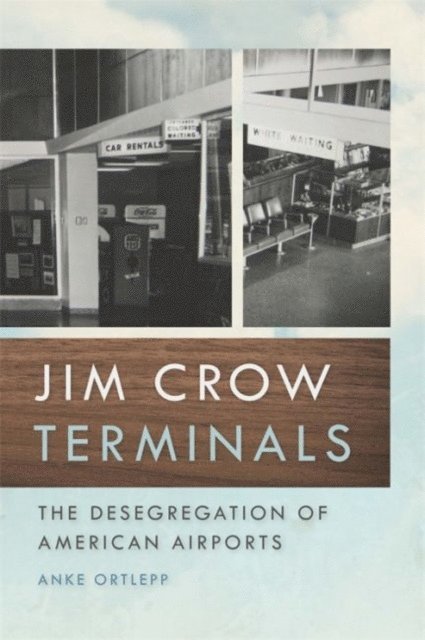
Historical accounts of racial discrimination in transportation have focused until now on trains, buses, and streetcars and their respective depots, terminals, stops, and other public accommodations. It is essential to add airplanes and airports to this narrative, says Anke Ortlepp. Air travel stands at the center of the twentieth century’s transportation revolution, and airports embodied the rapidly mobilizing, increasingly prosperous, and cosmopolitan character of the postwar United States. When segregationists inscribed local definitions of whiteness and blackness onto sites of interstate and even international transit, they not only brought the incongruities of racial separation into sharp relief but also obligated the federal government to intervene.Ortlepp looks at African American passengers; civil rights organizations; the federal government and judiciary; and airport planners, architects, and managers as actors in shaping aviation’s legal, cultural, and built environments. She relates the struggles of black travelers—to enjoy the same freedoms on the airport grounds that they enjoyed in the aircraft cabin—in the context of larger shifts in the postwar social, economic, and political order. Jim Crow terminals, Ortlepp shows us, were both spatial expressions of sweeping change and sites of confrontation over the renegotiation of racial identities. Hence, this new study situates itself in the scholarly debate over the multifaceted entanglements of “race” and “space.”
962 kr
Läs direkt efter köp
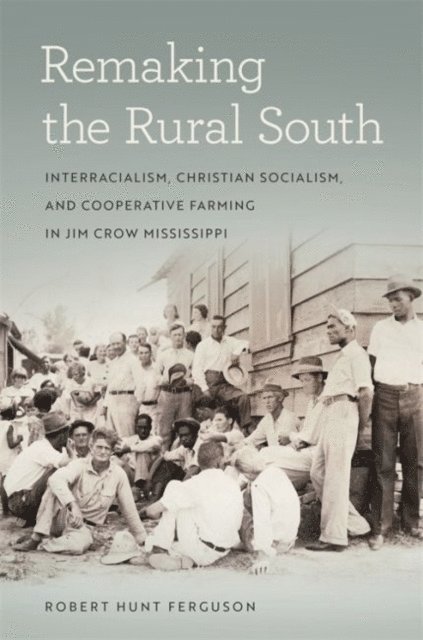
This is the first book-length study of Delta Cooperative Farm (1936–42) and its descendant, Providence Farm (1938–56). The two intentional communities drew on internationalist practices of cooperative communalism and pragmatically challenged Jim Crow segregation and plantation labor. In the winter of 1936, two dozen black and white ex-sharecropping families settled on some two thousand acres in the rural Mississippi Delta, one of the most insular and oppressive regions in the nation. Thus began a twenty-year experiment—across two communities—in interracialism, Christian socialism, cooperative farming, and civil and economic activism.Robert Hunt Ferguson recalls the genesis of Delta and Providence: how they were modeled after cooperative farms in Japan and Soviet Russia and how they rose in reaction to the exploitation of small- scale, dispossessed farmers. Although the staff, volunteers, and residents were very much everyday people—a mix of Christian socialists, political leftists, union organizers, and sharecroppers—the farms had the backing of such leading figures as philanthropist Sherwood Eddy, who purchased the land, and educator Charles Spurgeon Johnson and theologian Reinhold Niebuhr, who served as trustees. On these farms, residents developed a cooperative economy, operated a desegregated health clinic, held interracial church services and labor union meetings, and managed a credit union. Ferguson tells how a variety of factors related to World War II forced the closing of Delta, while Providence finally succumbed to economic boycotts and outside threats from white racists.Remaking the Rural South shows how a small group of committed people challenged hegemonic social and economic structures by going about their daily routines. Far from living in a closed society, activists at Delta and Providence engaged in a local movement with national and international roots and consequences.
1 680 kr
Läs direkt efter köp
With the nation reeling from the cultural and political upheavals of the 1960s era, imaginings of the white South as a place of stability represented a bulwark against unsettling problems, from suburban blandness and empty consumerism to race riots and governmental deceit. A variety of individuals during and after the civil rights era, including writers, journalists, filmmakers, musicians, and politicians, envisioned white southernness as a manly, tradition-loving, communal, authentic—and often rural or small-town—notion that both symbolized a refuge from modern ills and contained the tools for combating them. The South of the Mind tells this story of how many Americans looked to the country’s most maligned region to save them during the 1960s and 1970s.In this interdisciplinary work, Zachary J. Lechner bridges the fields of southern studies, southern history, and post–World War II American cultural and popular culture history in an effort to discern how conceptions of a tradition-bound, “timeless” South shaped Americans’ views of themselves and their society’s political and cultural fragmentations. Wide-ranging chapters detail the iconography of the white South during the civil rights movement; hippies’ fascination with white southern life; the Masculine South of George Wallace, Walking Tall, and Deliverance; the differing southern rock stylings of the Allman Brothers Band and Lynyrd Skynyrd; and the healing southernness of Jimmy Carter. The South of the Mind demonstrates that we cannot hope to understand recent U.S. history without exploring how people have conceived the South, as well as what those conceptualizations have omitted.
1 680 kr
Läs direkt efter köp
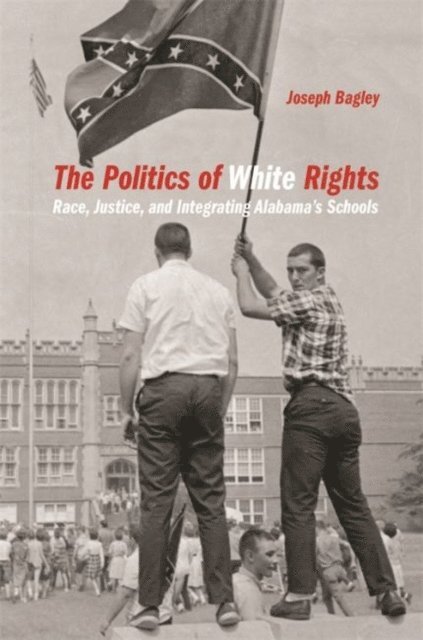
In The Politics of White Rights, Joseph Bagley recounts the history of school desegregation litigation in Alabama, focusing on the malleability and durability of white resistance. He argues that the litigious battles of 1954–73 taught Alabama’s segregationists how to fashion a more subtle defense of white privilege, placing them in the vanguard of a new conservatism oriented toward the Sunbelt, not the South.Scholars have recently begun uncovering the ways in which segregationists abandoned violent backlash and overt economic reprisal and learned how to rearticulate their resistance and blind others to their racial motivations. Bagley is most interested in a creedal commitment to maintaining “law and order,” which lay at the heart of this transition. Before it was a buzz phrase meant to conjure up fears of urban black violence, “law and order” represented a politics that allowed self-styled white moderates to begrudgingly accept token desegregation and to begin to stake their own claims to constitutional rights without forcing them to repudiate segregation or white supremacy.Federal courts have, as recently as 2014, agreed that Alabama’s property tax system is crippling black education. Bagley argues that this is because, in the late 1960s, the politics of law and order became a politics of white rights, which supported not only white flight to suburbs and private schools but also nominally color-blind changes in the state’s tax code. These changes were designed to shield white money from the needs of increasingly black public education. Activists and courts have been powerless to do anything about them, because twenty years of desperate litigious combat finally taught Alabama lawmakers how to erect constitutional bulwarks that could withstand a legal assault.
504 kr
Läs direkt efter köp
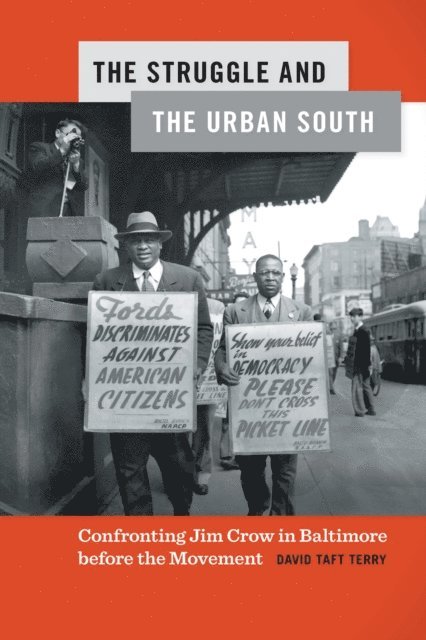
Through the example of Baltimore, Maryland, David Taft Terry explores the historical importance of African American resistance to Jim Crow laws in the South’s largest cities. Terry also adds to our understanding of the underexplored historical period of the civil rights movement, prior to the 1960s.Baltimore, one of the South largest cities, was a crucible of segregationist laws and practices. In response, from the 1890s through the 1950s, African Americans there (like those in the South’s other major cities) shaped an evolving resistance to segregation across three themes. The first theme involved black southerners’ development of a counter-narrative to Jim Crow’s demeaning doctrines about them. Second, through participation in a national antisegregation agenda, urban South blacks nurtured a dynamic tension between their local branches of social justice organizations and national offices, so that southern blacks retained self-determination while expanding local resources for resistance. Third, with the rise of new antisegregation orthodoxies in the immediate post-World War II years, the urban South’s black leaders, citizens, and students and their allies worked ceaselessly to instigate confrontations between southern white transgressors and federal white enforcers. Along the way, African Americans worked to define equality for themselves and to gain the required power to demand it. They forged the protest traditions of an enduring black struggle for equality in the urban South. By 1960 that struggle had inspired a national civil rights movement.