Praeger Studies on the 21st Century - Böcker
Visar alla böcker i serien Praeger Studies on the 21st Century. Handla med fri frakt och snabb leverans.
6 produkter
6 produkter
Groupware in the 21st Century
Computer Supported Cooperative Working Toward the Millennium
Inbunden, Engelska, 1994
1 039 kr
Skickas inom 10-15 vardagar
As the 21st century nears, networked computing is becoming the essence of computing itself. Alternative phrases abound--collaborative work, computer supported cooperative work, simultaneous/concurrent engineering, multimedia real-time interactive work--but the neatest, shortest, and simplest catch-all term was coined in 1978: groupware. The two visionaries who coined the term, Peter and Trudy Johnson-Lenz, are among the 42 expert contributors to Groupware in the 21st Century. Other contributors to the volume include Microsoft's Bill Gates, professors Jay Nunamaker and Tom Malone, and management author Robert Heller. As with most technological sea-changes, the groupware revolution is having its impact first on business, where enhanced interaction between an organization's members, strategic allies, suppliers, and customers can help ensure that it remains dynamic and competitive. Anyone who wants to know about the future of information technology and group processes will want to read this book which brings perspective and clarity to these new technologies.
809 kr
Skickas inom 10-15 vardagar
This book represents the first calm, detailed, and rational description of the imminent end of western industrial civilization as we know it. Despite this alarming premise Gimpel is far from pessimistic, save in the short term: with the sure hand of the historian, he emphasizes how humanity has always recovered from its previous collapses in the past, and will certainly do so again. The unique value of this book is that it gives us a baseline from which we can now work into the future.This book represents the first calm, detailed, and rational description of the coming end of our current world culture. The author seeks to show that, particularly when we compare actual technological reality in the 1990s with the heady predictions of futurologists back in the 1960s, technology has levelled off, reached a plateau—even in the leading-edge areas like infomatics, space, and medicine.Even that plateau will prove to be temporary, claims Gimpel, and the end of western industrial society as we know it will inevitably ensue. However exceptional, our civilization has no reason to expect that it will evolve any differently from every civilization before it: decadence and decay have engulfed them all, one after the other. The unique value of this book is that it gives us a baseline from which we can now work into the future. The conclusion, which is not pessimistic—save in the short term—points out that humanity has always recovered from such collapses, and gone on again to reach new heights. By way of making his case, Gimpel leaves us with a final simple thought: The future, he asserts, is China.
1 009 kr
Skickas inom 10-15 vardagar
The author has found the true villain of the 20th century, and it is a concept—bigness. The answer to such disparate questions as why do we experience global wars, mass dictatorships, economic tornadoes, a population explosion and a mounting resource environment crisis lie, according to Papworth, far back in history. They are the direct result, he attempts to show, of the forces unleashed by the collapse in the 16th century of the laws against usury. Having diagnosed this problem as stemming from this destruction of the power of people to control their work, Papworth goes on to propound a new politics which is the politics of Small is Powerful—a new and hopeful approach to the problems of modern politics which merits the careful consideration of every person with any claim to political literacy.The author asserts that the way forward is not bigger units of government or, indeed, in any other units, but rather that all units which represent power in whatever form should be reduced to a size which makes them susceptible to genuine democratic citizen control. Mass society must be dismantled, local communities must be rebuilt in their stead, but above all people must take the power back that they have lost to the Giant State. Giant States have failed their inhabitants, Papworth contends, with records on human rights, economic well-being, and on general stability inferior to the records of the smaller nations of Europe. The way forward, according to Small is Powerful, is to restore localized community life, the extended family, the nuclear family, and thereby civilization itself through deliberately empowering people through neighborhood communities.
488 kr
Skickas inom 10-15 vardagar
The future is the last frontier where nonwestern societies are still free—free to envision desirable futures based on their own worldviews, cultures, and traditions. Yet the discipline of futures studies, this volume argues, has abandoned its goal of exploring such diverse and alternative futures in favor of a single, myopic vision that is incapable of seeing outside the framework of western thought and action. Its overemphasis on forecasting and prediction, its overpreoccupation with technology, and its neglect of nonwestern cultures and concerns have transformed the discipline into an instrument for the colonization of the future. Distinguished contributors from a variety of cultural and disciplinary backgrounds discuss ways of bringing multiculturalism and plurality to the heart of futures studies and point towards new, decolonizing directions.This groundbreaking text will be essential reading for all those interested in helping shape more pluralistic and humane futures.
1 177 kr
Skickas inom 5-8 vardagar
What is Future Studies? What are the theories and methods underlying the field? What are its basic concepts, and how is it related to other academic fields? Why does Future Studies still struggle for institutional acceptance? These are the questions addressed in this work.
930 kr
Skickas inom 10-15 vardagar
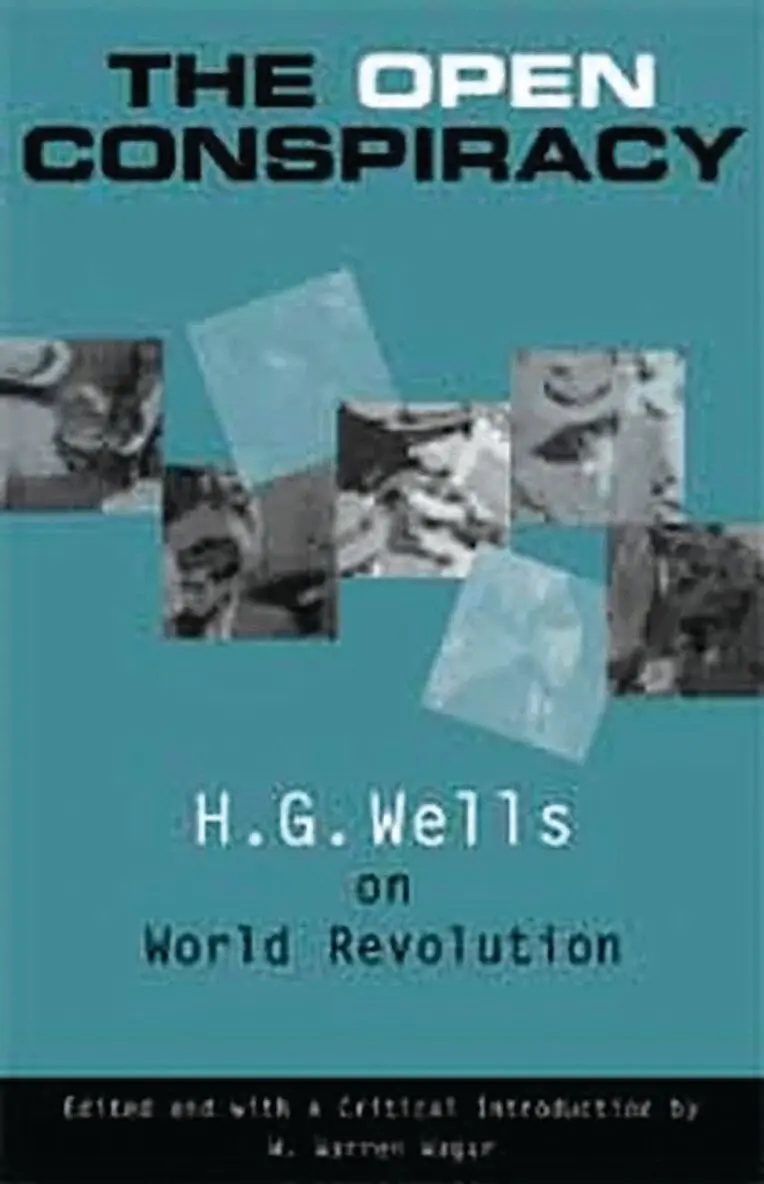
H.G. Wells was acclaimed during his lifetime as one of the most original and creative thinkers of the 20th century, and retains to this day a position of considerable importance in the history of ideas. In 1928 when he wrote this cry for a new age of worldwide knowledge networking, there was no Internet. Yet Wells was already convinced that if only thinking people across the planet could somehow pull together and pool their expertise, energy, and insights into sort of cerebrum for humanity, then the world would be a saner, safer, better, fairer place. Anyone aware of how the Internet already reflects both the vices and the virtues of society and wonders how a world-renowned visionary like H.G. Wells envisaged knowledge networking as working in practice will enjoy this book. It is a hymn to the practical possibilities of world group action.