Prairie View a&M University Series - Böcker
Visar alla böcker i serien Prairie View a&M University Series. Handla med fri frakt och snabb leverans.
7 produkter
7 produkter
217 kr
Skickas inom 7-10 vardagar
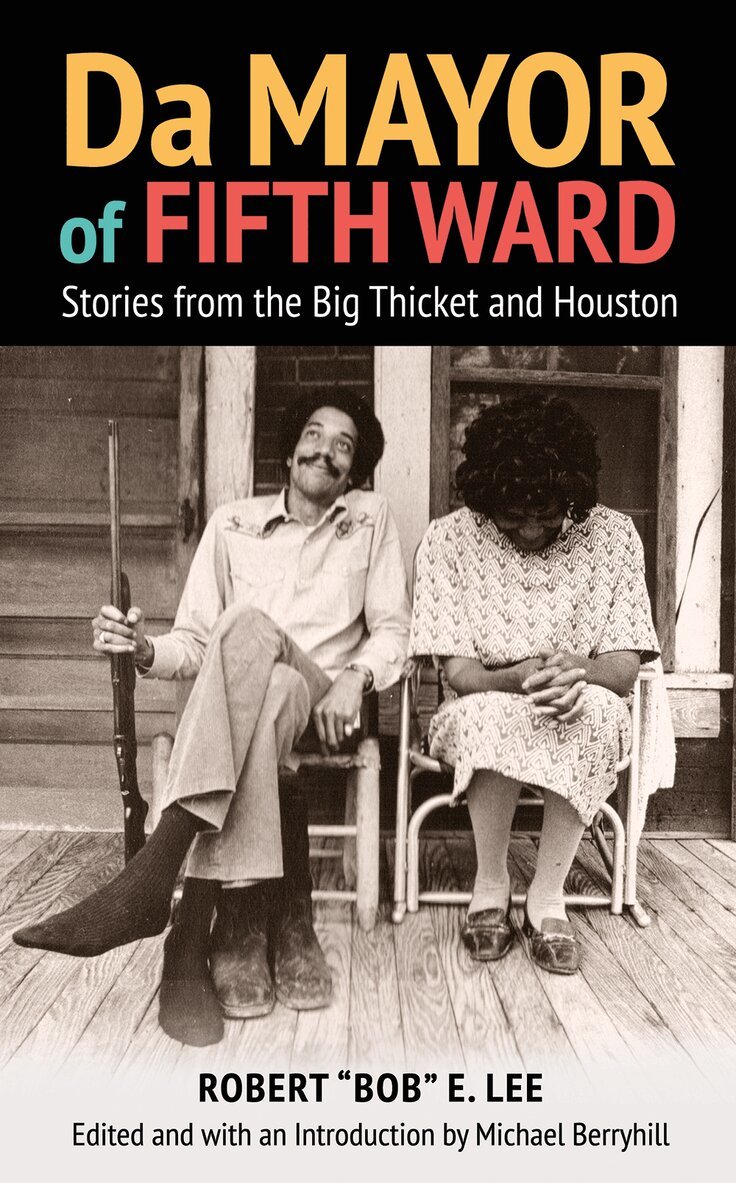
In March 2017, Bob Lee—freelance writer, community organizer, social worker, social justice warrior, child of Houston’s Fifth Ward and its advocate, former Chicago Black Panther—died at the age of 74. Alongside his larger legacy, he left behind this collection of fourteen stories published in the Houston Chronicle’s Sunday Texas Magazine between 1989 and 2000.Framed by journalist and scholar Michael Berryhill, these youthful recollections and tales of his East Texas relatives reveal Lee’s shock at learning that his elderly aunt and uncle, who lived in Jasper, Texas, were lifelong Republicans; recount his discovery at the age of 19 that white people, too, could be poor; recall integrating a small-town restaurant with the help of the white rancher who hired him; explore the world of Black longshoremen and offer meditations on the mysteries of death. As he lay suffering from cancer, Lee told Berryhill that he wasn’t thinking about dying, but focusing on love. Berryhill, who was Lee’s first editor at the Houston Chronicle, has lovingly collected and edited Lee’s stories, which are complemented by an introduction and biographical essay. Treasured storyteller Bob Lee’s essays offer to readers the experience of Black history in both urban and rural settings by invoking the simple details and events of everyday life.
African American State Volunteers in the New South
Race, Masculinity, and the Militia in Georgia, Texas, and Virginia, 1871-1906
Inbunden, Engelska, 2022
442 kr
Skickas inom 7-10 vardagar
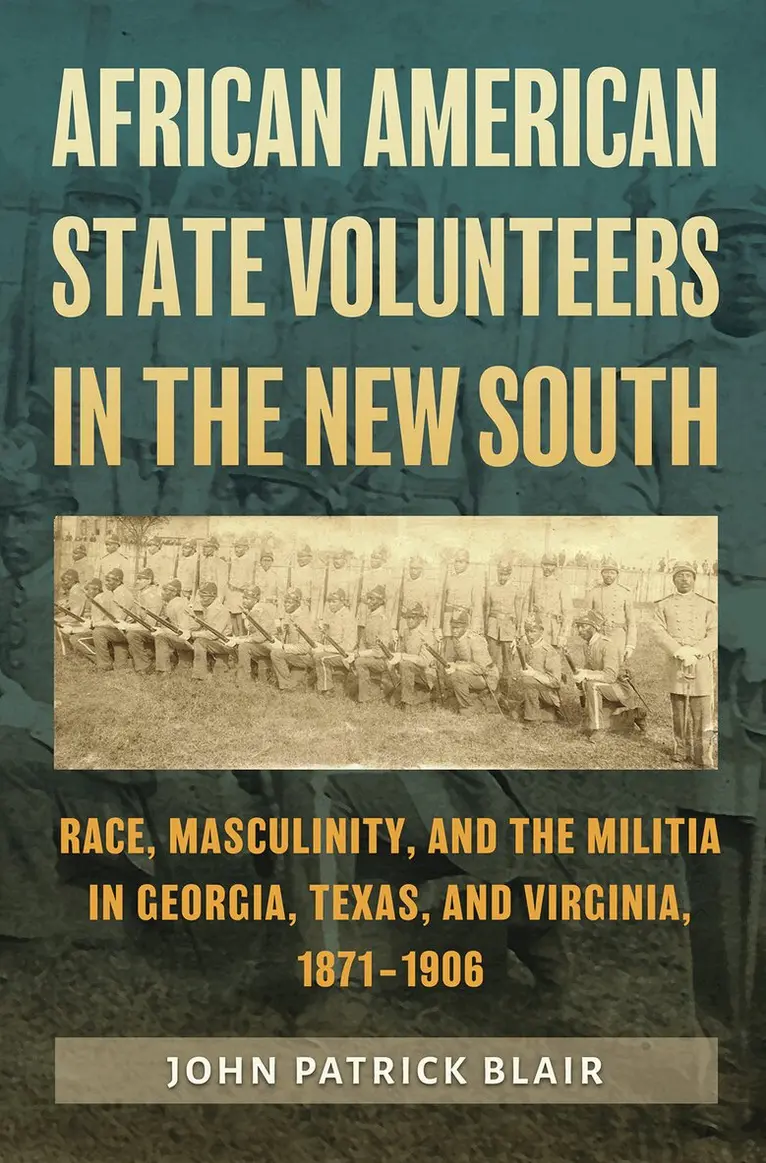
In the immediate aftermath of the Civil War, a turbulent period fraught with violence, struggle, and uncertainty, a forgotten few African Americans banded together as men to assert their rights as citizens. Following emancipation, the nation’s newest citizens established churches, entered the political arena, created educational and business opportunities, and even formed labor organizations, but it was through state militia service, with the prestige and heightened status conveyed by their affiliation, that they displayed their loyalty, discipline, and more importantly, their manliness within the public sphere. In African American State Volunteers in the New South, John Patrick Blair offers a comparative examination of the experiences and activities of African American men as members in the state volunteer military organizations of Georgia, Texas, and Virginia, including the complicated relationships between state government and military officials—many of them former Confederate officers—and the leaders of the Black militia volunteers. This important new study expands understanding of racial accommodation, however minor, toward the African American military, confirmed not only in the actions of state government and military officials to arm, equip, and train these Black troops, but also in the acceptance of clearly visible and authorized military activities by these very same volunteers. In doing so, it adds significant layers to our knowledge of racial politics as they developed during Reconstruction, and prompts us to consider a broader understanding of the history of the South into the twentieth century.
496 kr
Skickas inom 7-10 vardagar
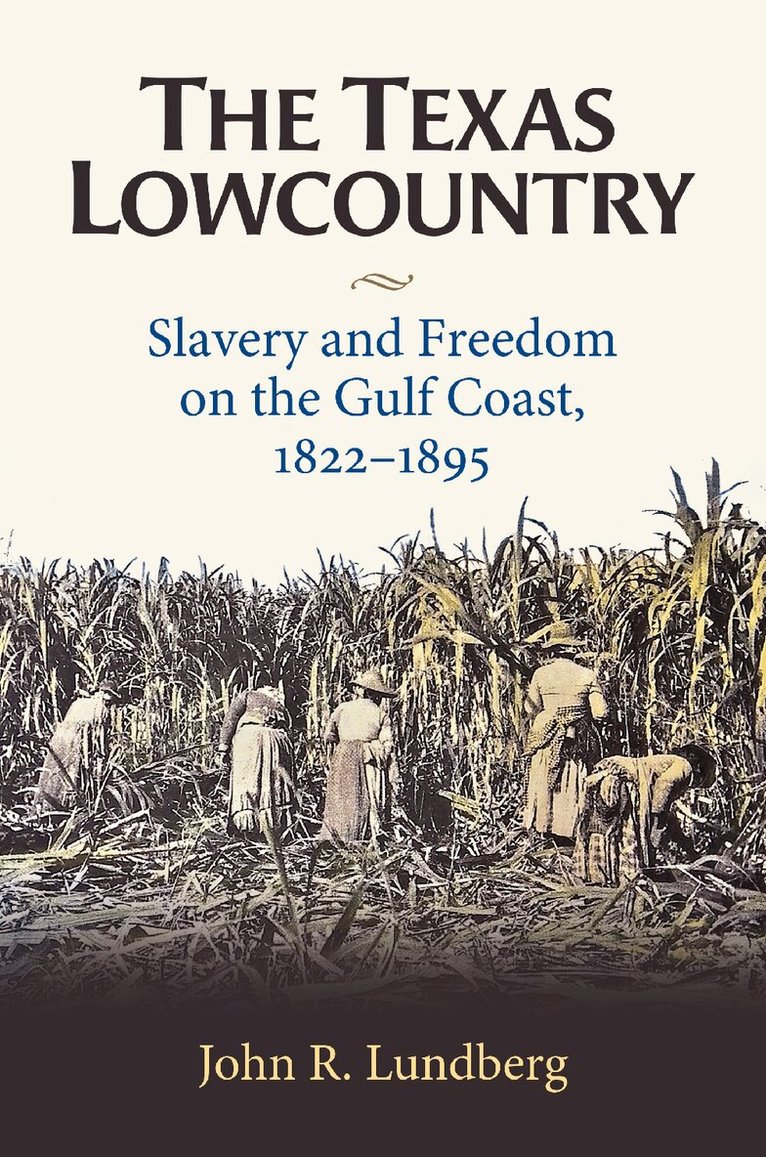
In The Texas Lowcountry: Slavery and Freedom on the Gulf Coast, 1822–1895, author John R. Lundberg examines slavery and Reconstruction in a region of Texas he terms the lowcountry—an area encompassing the lower reaches of the Brazos and Colorado Rivers and their tributaries as they wend their way toward the Gulf of Mexico through what is today Brazoria, Fort Bend, Matagorda, and Wharton Counties.In the two decades before the Civil War, European immigrants, particularly Germans, poured into Texas, sometimes bringing with them cultural ideals that complicated the story of slavery throughout large swaths of the state. By contrast, 95 percent of the white population of the lowcountry came from other parts of the United States, predominantly the slaveholding states of the American South. By 1861, more than 70 percent of this regional population were enslaved people—the heaviest such concentration west of the Mississippi. These demographics established the Texas Lowcountry as a distinct region in terms of its population and social structure.Part one of The Texas Lowcountry explores the development of the region as a borderland, an area of competing cultures and peoples, between 1822 and 1840. The second part is arranged topically and chronicles the history of the enslavers and the enslaved in the lowcountry between 1840 and 1865. The final section focuses on the experiences of freed people in the region during the Reconstruction era, which ended in the lowcountry in 1895.In closely examining this unique pocket of Texas, Lundberg provides a new and much needed region-specific study of the culture of enslavement and the African American experience.
340 kr
Skickas inom 7-10 vardagar
Using the lens of arguably the state’s most popular sport, Blinded by the Lights: Texas High School Football and the Myth of Integration describes the highs and lows in the ongoing battle for equal educational opportunities for all Texas students. According to former Texas A&M athletic recruiter Don Albrecht, the high school football team, often the most visible symbol of the community, was frequently caught in the historic crossfire in local struggles over segregation. While noting the importance of the courageous individuals who fought to desegregate Texas public schools, Albrecht examines how the progress made in the 1950s and ’60s has largely been eroded. He argues that Texas schools are more segregated today than they were in the 1970s, when Brown v. Board of Education had been the law of the land for 16 years. “Texas schools were separate and unequal in the 1950s,” he says, and continues, “Texas schools are unequal today.” Based on interviews occurring over a 30-year period coupled with extensive statistical analysis, Albrecht demonstrates that the balance of power in Texas high school football has shifted toward wealthy suburban schools that tend to be predominately white. These schools are also producing more students who are attending and graduating from college, becoming successful doctors, lawyers, and engineers. In contrast, students attending the disadvantaged schools, with student bodies made almost entirely of minorities and individuals living at or below the poverty line, are struggling in everything from football to academics. “All of us,” he says, “are paying the costs resulting from providing an inadequate education for large segments of the population.” Blinded by the Lights: Texas High School Football and the Myth of Integration provides a powerful new perspective on the consequences of institutionalized inequality in education.
536 kr
Skickas inom 3-6 vardagar
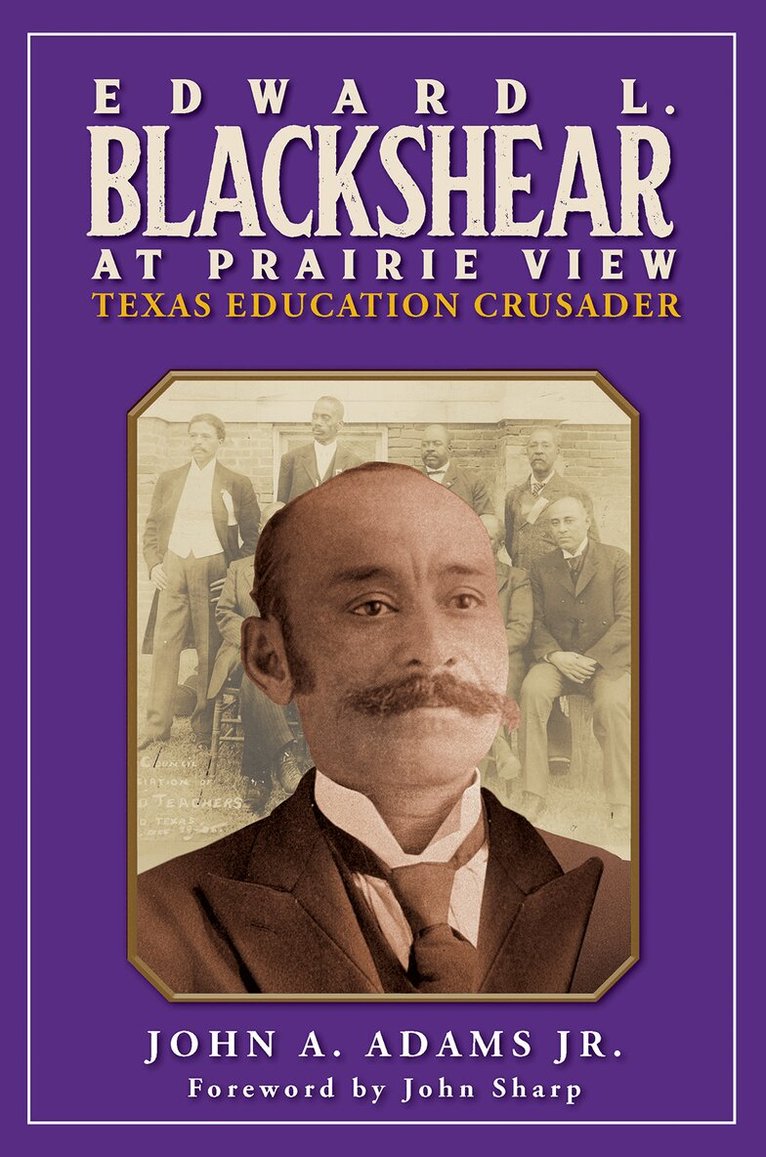
Many Texans will recognize schools and buildings across Texas bearing the name “Blackshear,” but few know the story of the man behind the name. Author John A. Adams Jr. seeks to rectify that in the first full-length biography of Edward L. Blackshear, bringing to light previously unexplored aspects of the life and work of a man Adams characterizes as “a pivotal leader, educator, strategist, essayist, poet, agriculturist, and advocate in the struggle to advance opportunities for Blacks across Texas in spite of a rigid, post-war white power structure.”Born to enslaved parents in 1862, Edward Lavoisier Blackshear seized every opportunity he had to learn, succeed, and raise others up with him as he became a leader and legislative activist for Black education in Texas. In a period deemed as the “New South” by historians, Blackshear distinguished himself as a foundational leader in Black education: teaching at historically Black schools and colleges in Dallas and Austin; serving as the supervisor of all African American schools in Austin; and appointed by Governor Charles Culberson as principal of what was then known as Prairie View Normal and Industrial College from 1896 to 1915. His tenure at Prairie View—now Prairie View A&M University—was characterized by leadership and wisdom during tumultuous times. He often worked quietly with Texas’s power brokers to ensure that the University received the necessary support.Adams’s research, focused on archival records and previously unpublished documents, reveals the lengths Blackshear went to help not just the students and faculty of Prairie View, but African Americans across Texas, succeed in a starkly segregated society. Students and scholars alike will be fascinated by this wealth of important material that expands our knowledge of this influential, yet heretofore scantly chronicled educational and social pioneer.
389 kr
Kommande
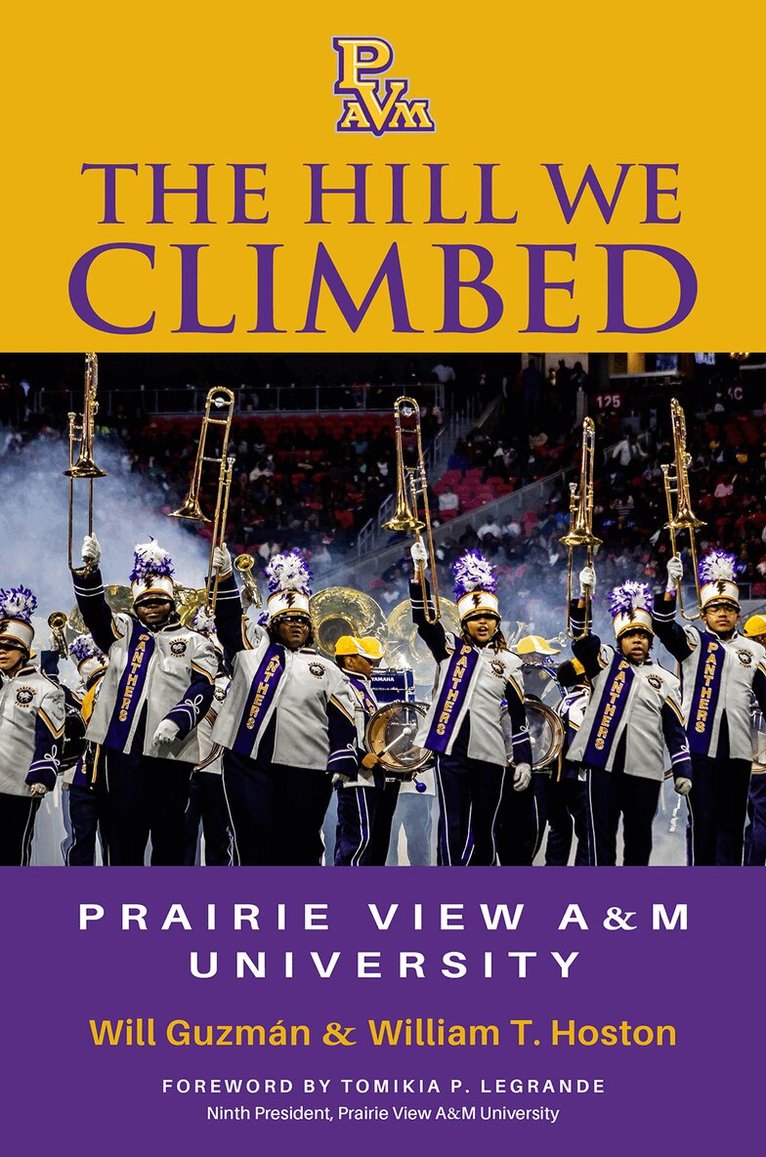
Founded in 1876, Prairie View A&M University is the second-oldest public institution of higher learning in Texas, one of two Texas land-grant universities, and an "institution of the first class" within the Texas A&M University System. It is also the first public historically Black college or university (HBCU) in Texas. Prairie View A&M has played a pivotal role in the educational and economic experiences of African American Texans. As the university celebrates its sesquicentennial in 2026, editors Will Guzmán and William T. Hoston document and interpret the actions of important individuals, campus institutions, and cultural traditions that made Prairie View A&M what it is today.The Hill We Climbed: Prairie View A&M University complements former Prairie View professor George R. Woolfolk's classic 1962 work Prairie View: A Study in Public Conscience, 1878–1946 and Michael Nojeim's 2011 Down that Road: A Pictorial History of Prairie View A&M University to further contextualize Prairie View A&M's place among HBCUs, higher education in general, and Texas Black life in particular. Prairie View A&M University has a long and rich history, of which past literature provides only a small sampling. In celebrating the 150–year anniversary of the founding of this historically Black institution, The Hill We Climbed documents how the university continues to fulfill its historic mission, encapsulating PVAMU's motto: "Prairie View produces productive people."
503 kr
Skickas inom 10-15 vardagar
In 1962, George Ruble Woolfolk, perhaps the foremost Black historian in Texas at the time, published his most well-known work Prairie View: A Study in Public Conscience, 1878–1946, a history of the state's first institution of higher education for African Americans. Recording the university's first six decades of existence, Woolfolk's book also chronicled the many social and educational challenges faced by Black Texans during what was still the Jim Crow Era in Texas and the American South.Now, historian and scholar Ronald E. Goodwin has edited and annotated Woolfolk's influential book, making it available and accessible to current scholars and students, as well as those interested in the early history of not only Prairie View A&M University but also of historically Black colleges and universities. Students and scholars in African American studies or the history of education will find Goodwin's updated edition a valuable resource for study, research, and a more complete understanding of the historical contexts of higher education for people of color.Published in coordination with the sesquicentennial of Prairie View A&M University, this new edition of Woolfolk's classic work reintroduces a new generation of scholars and students to a vital and foundational work.