Premodern East Asia: New Horizons – serie
Visar alla böcker i serien Premodern East Asia: New Horizons. Handla med fri frakt och snabb leverans.
8 produkter
8 produkter
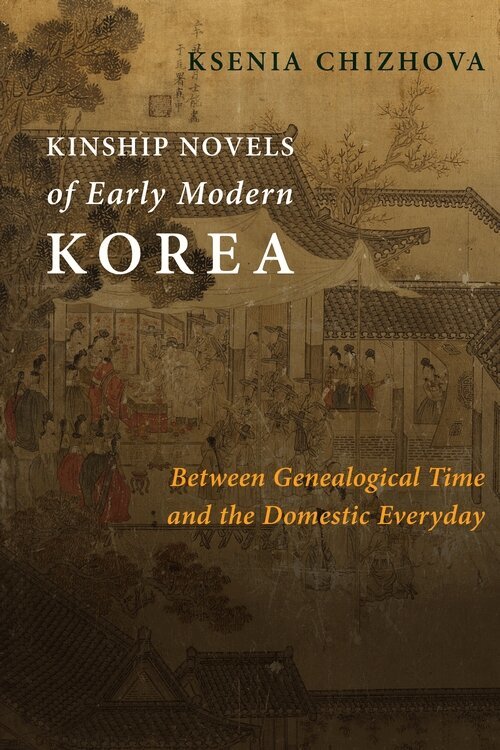
Kinship Novels of Early Modern Korea
Between Genealogical Time and the Domestic Everyday
Inbunden, Engelska, 2021
1 281 kr
Skickas inom 7-10 vardagar
The lineage novel flourished in Korea from the late seventeenth to the early twentieth century. These vast works unfold genealogically, tracing the lives of several generations. New storylines, often written by different authors, follow the lives of the descendants of the original protagonists, offering encyclopedic accounts of domestic life cycles and relationships. Elite women transcribed these texts—which span tens and even hundreds of volumes—in exquisite vernacular calligraphy and transmitted them through generations in their families.In Kinship Novels of Early Modern Korea, Ksenia Chizhova foregrounds lineage novels and the domestic world in which they were read to recast the social transformations of Chosŏn Korea and the development of early modern Korean literature. She demonstrates women’s centrality to the creation of elite vernacular Korean practices and argues that domestic-focused genres such as lineage novels, commemorative texts, and family tales shed light on the emergence and perpetuation of patrilineal kinship structures. The proliferation of kinship narratives in the Chosŏn period illuminates the changing affective contours of familial bonds and how the domestic space functioned as a site of their everyday experience. Drawing on an archive of women-centered elite vernacular texts, Chizhova uncovers the structures of feelings and conceptions of selfhood beneath official genealogies and legal statutes, revealing that kinship is as much a textual as a social practice. Shedding new light on Korean literary history and questions of Korea’s modernity, this book also offers a broader lens on the global rise of the novel.
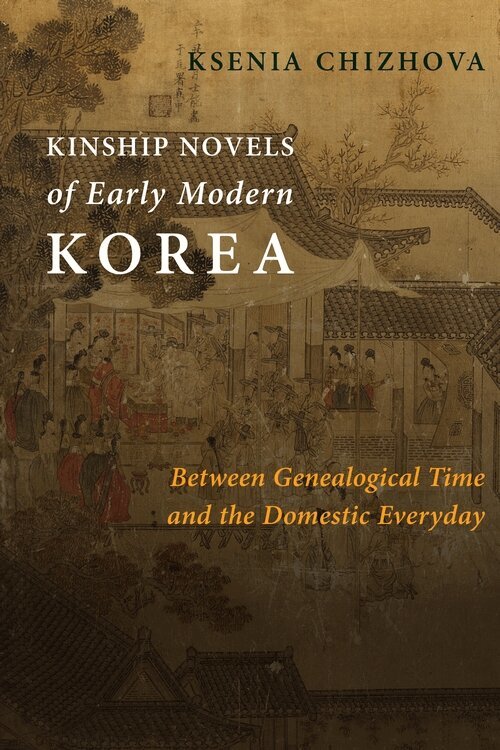
Kinship Novels of Early Modern Korea
Between Genealogical Time and the Domestic Everyday
Häftad, Engelska, 2021
309 kr
Skickas
The lineage novel flourished in Korea from the late seventeenth to the early twentieth century. These vast works unfold genealogically, tracing the lives of several generations. New storylines, often written by different authors, follow the lives of the descendants of the original protagonists, offering encyclopedic accounts of domestic life cycles and relationships. Elite women transcribed these texts—which span tens and even hundreds of volumes—in exquisite vernacular calligraphy and transmitted them through generations in their families.In Kinship Novels of Early Modern Korea, Ksenia Chizhova foregrounds lineage novels and the domestic world in which they were read to recast the social transformations of Chosŏn Korea and the development of early modern Korean literature. She demonstrates women’s centrality to the creation of elite vernacular Korean practices and argues that domestic-focused genres such as lineage novels, commemorative texts, and family tales shed light on the emergence and perpetuation of patrilineal kinship structures. The proliferation of kinship narratives in the Chosŏn period illuminates the changing affective contours of familial bonds and how the domestic space functioned as a site of their everyday experience. Drawing on an archive of women-centered elite vernacular texts, Chizhova uncovers the structures of feelings and conceptions of selfhood beneath official genealogies and legal statutes, revealing that kinship is as much a textual as a social practice. Shedding new light on Korean literary history and questions of Korea’s modernity, this book also offers a broader lens on the global rise of the novel.
1 272 kr
Skickas inom 7-10 vardagar
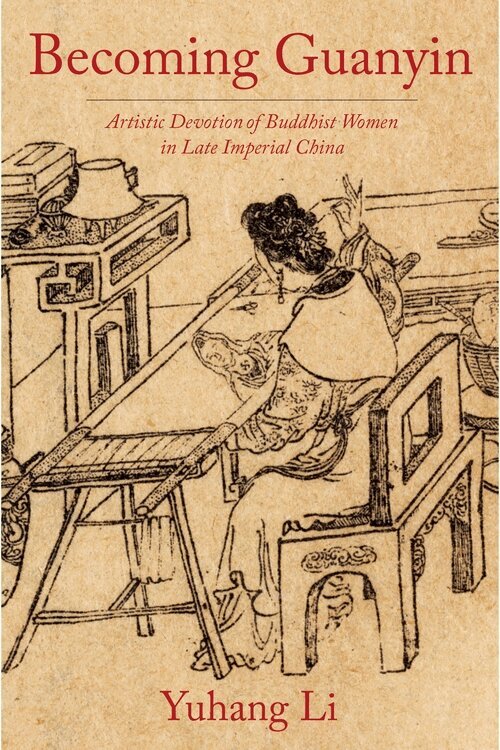
Winner, 2024 Geiss-Hsu Book Prize for Best First Book, Society for Ming StudiesThe goddess Guanyin began in India as the bodhisattva Avalokiteśvara, originally a male deity. He gradually became indigenized as a female deity in China over the span of nearly a millennium. By the Ming (1358–1644) and Qing (1644–1911) periods, Guanyin had become the most popular female deity in China. In Becoming Guanyin, Yuhang Li examines how lay Buddhist women in late imperial China forged a connection with the subject of their devotion, arguing that women used their own bodies to echo that of Guanyin.Li focuses on the power of material things to enable women to access religious experience and transcendence. In particular, she examines how secular Buddhist women expressed mimetic devotion and pursued religious salvation through creative depictions of Guanyin in different media such as painting and embroidery and through bodily portrayals of the deity using jewelry and dance. These material displays expressed a worldview that differed from yet fit within the Confucian patriarchal system. Attending to the fabrication and use of “women’s things” by secular women, Li offers new insight into the relationships between worshipped and worshipper in Buddhist practice. Combining empirical research with theoretical insights from both art history and Buddhist studies, Becoming Guanyin is a field-changing analysis that reveals the interplay between material culture, religion, and their gendered transformations.
323 kr
Skickas inom 7-10 vardagar
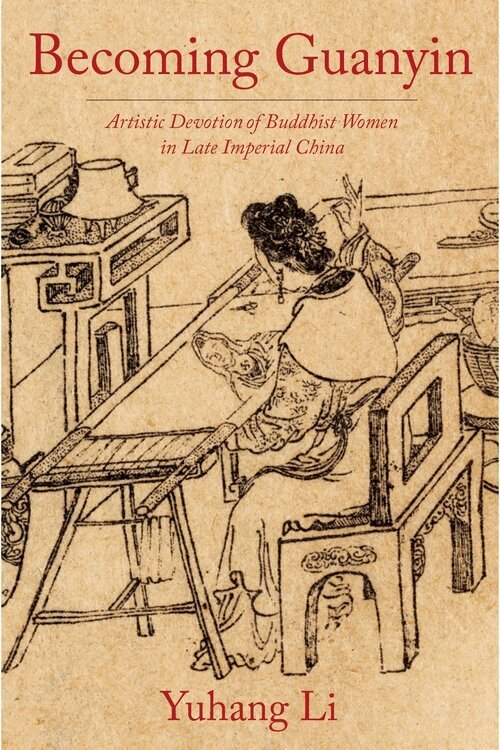
Winner, 2024 Geiss-Hsu Book Prize for Best First Book, Society for Ming StudiesThe goddess Guanyin began in India as the bodhisattva Avalokiteśvara, originally a male deity. He gradually became indigenized as a female deity in China over the span of nearly a millennium. By the Ming (1358–1644) and Qing (1644–1911) periods, Guanyin had become the most popular female deity in China. In Becoming Guanyin, Yuhang Li examines how lay Buddhist women in late imperial China forged a connection with the subject of their devotion, arguing that women used their own bodies to echo that of Guanyin.Li focuses on the power of material things to enable women to access religious experience and transcendence. In particular, she examines how secular Buddhist women expressed mimetic devotion and pursued religious salvation through creative depictions of Guanyin in different media such as painting and embroidery and through bodily portrayals of the deity using jewelry and dance. These material displays expressed a worldview that differed from yet fit within the Confucian patriarchal system. Attending to the fabrication and use of “women’s things” by secular women, Li offers new insight into the relationships between worshipped and worshipper in Buddhist practice. Combining empirical research with theoretical insights from both art history and Buddhist studies, Becoming Guanyin is a field-changing analysis that reveals the interplay between material culture, religion, and their gendered transformations.
1 281 kr
Skickas inom 7-10 vardagar
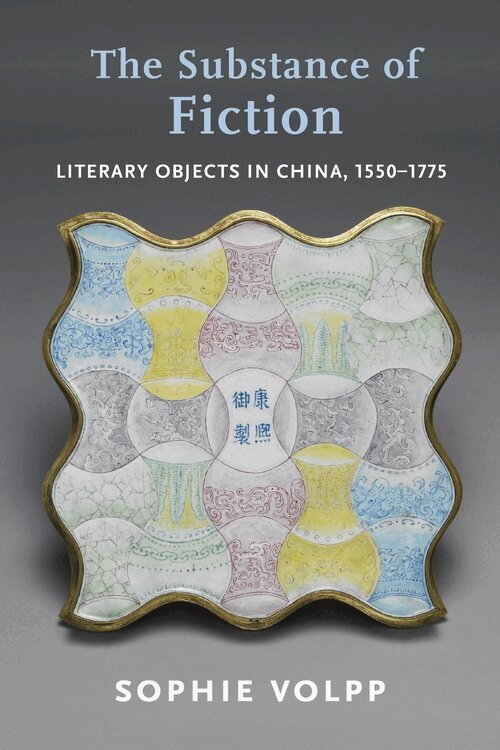
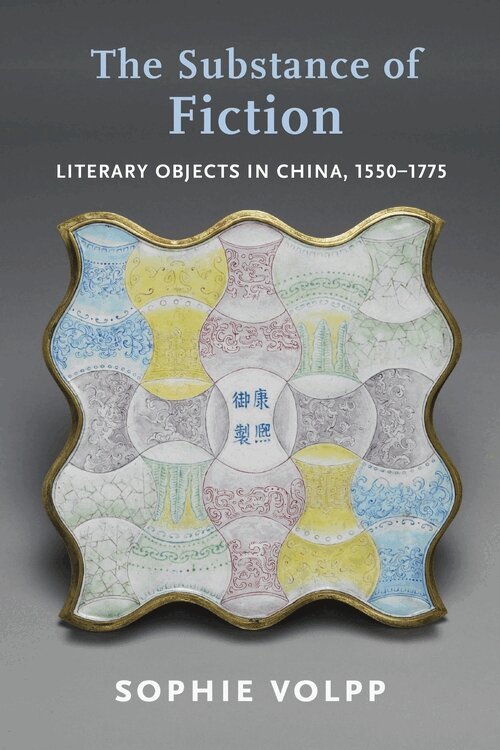
Do the portrayals of objects in literary texts represent historical evidence about the material culture of the past? Or are things in books more than things in the world? Sophie Volpp considers fictional objects of the late Ming and Qing that defy being read as illustrative of historical things. Instead, she argues, fictional objects are often signs of fictionality themselves, calling attention to the nature of the relationship between literature and materiality.Volpp examines a series of objects—a robe, a box and a shell, a telescope, a plate-glass mirror, and a painting—drawn from the canonical works frequently mined for information about late imperial material culture, including the novels The Plum in the Golden Vase and The Story of the Stone as well as the short fiction of Feng Menglong, Ling Mengchu, and Li Yu. She argues that although fictional objects invite readers to think of them as illustrative, in fact, inconsistent and discontinuous representation disconnects the literary object from potential historical analogues. The historical resonances of literary objects illuminate the rhetorical strategies of individual works of fiction and, more broadly, conceptions of fictionality in the Ming and Qing. Rather than offering a transparent lens on the past, fictional objects train the reader to be aware of the fallibility of perception. A deeply insightful analysis of late Ming and Qing texts and reading practices, The Substance of Fiction has important implications for Chinese literary studies, history, and art history, as well as the material turn in the humanities.
326 kr
Skickas inom 7-10 vardagar
Do the portrayals of objects in literary texts represent historical evidence about the material culture of the past? Or are things in books more than things in the world? Sophie Volpp considers fictional objects of the late Ming and Qing that defy being read as illustrative of historical things. Instead, she argues, fictional objects are often signs of fictionality themselves, calling attention to the nature of the relationship between literature and materiality.Volpp examines a series of objects—a robe, a box and a shell, a telescope, a plate-glass mirror, and a painting—drawn from the canonical works frequently mined for information about late imperial material culture, including the novels The Plum in the Golden Vase and The Story of the Stone as well as the short fiction of Feng Menglong, Ling Mengchu, and Li Yu. She argues that although fictional objects invite readers to think of them as illustrative, in fact, inconsistent and discontinuous representation disconnects the literary object from potential historical analogues. The historical resonances of literary objects illuminate the rhetorical strategies of individual works of fiction and, more broadly, conceptions of fictionality in the Ming and Qing. Rather than offering a transparent lens on the past, fictional objects train the reader to be aware of the fallibility of perception. A deeply insightful analysis of late Ming and Qing texts and reading practices, The Substance of Fiction has important implications for Chinese literary studies, history, and art history, as well as the material turn in the humanities.
Boundless Winds of Empire
Rhetoric and Ritual in Early Choson Diplomacy with Ming China
Inbunden, Engelska, 2023
1 281 kr
Skickas inom 7-10 vardagar
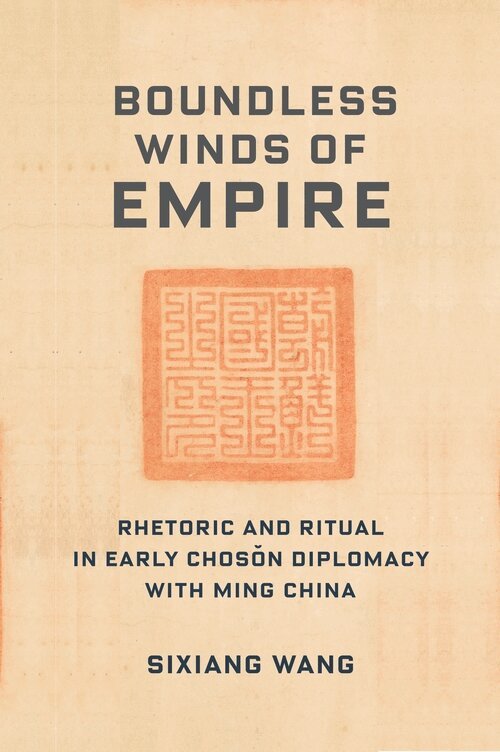
Winner, 2025 James B. Palais Prize, Association for Asian StudiesWinner, 2024 UC Berkeley Hong Yung Lee Book Award, Center for Korean Studies at UC BerkeleyFor more than two hundred years after its establishment in 1392, the Chosŏn dynasty of Korea enjoyed generally peaceful and stable relations with neighboring Ming China, which dwarfed it in size, population, and power. This remarkably long period of sustained peace was not an inevitable consequence of Chinese cultural and political ascendancy. In this book, Sixiang Wang demonstrates how Chosŏn political actors strategically deployed cultural practices, values, and narratives to carve out a place for Korea within the Ming imperial order.Boundless Winds of Empire is a cultural history of diplomacy that traces Chosŏn’s rhetorical and ritual engagement with China. Chosŏn drew on classical Chinese paradigms of statecraft, political legitimacy, and cultural achievement. It also paid regular tribute to the Ming court, where its envoys composed paeans to Ming imperial glory. Wang argues these acts were not straightforward affirmations of Ming domination; instead, they concealed a subtle and sophisticated strategy of diplomatic and cultural negotiation. He shows how Korea’s rulers and diplomats inserted Chosŏn into the Ming Empire’s legitimating strategies and established Korea as a stakeholder in a shared imperial tradition. Boundless Winds of Empire recasts a critical period of Sino-Korean relations through the Korean perspective, emphasizing Korean agency in the making of East Asian international relations.
Boundless Winds of Empire
Rhetoric and Ritual in Early Choson Diplomacy with Ming China
Häftad, Engelska, 2023
326 kr
Skickas inom 7-10 vardagar
Winner, 2025 James B. Palais Prize, Association for Asian StudiesWinner, 2024 UC Berkeley Hong Yung Lee Book Award, Center for Korean Studies at UC BerkeleyFor more than two hundred years after its establishment in 1392, the Chosŏn dynasty of Korea enjoyed generally peaceful and stable relations with neighboring Ming China, which dwarfed it in size, population, and power. This remarkably long period of sustained peace was not an inevitable consequence of Chinese cultural and political ascendancy. In this book, Sixiang Wang demonstrates how Chosŏn political actors strategically deployed cultural practices, values, and narratives to carve out a place for Korea within the Ming imperial order.Boundless Winds of Empire is a cultural history of diplomacy that traces Chosŏn’s rhetorical and ritual engagement with China. Chosŏn drew on classical Chinese paradigms of statecraft, political legitimacy, and cultural achievement. It also paid regular tribute to the Ming court, where its envoys composed paeans to Ming imperial glory. Wang argues these acts were not straightforward affirmations of Ming domination; instead, they concealed a subtle and sophisticated strategy of diplomatic and cultural negotiation. He shows how Korea’s rulers and diplomats inserted Chosŏn into the Ming Empire’s legitimating strategies and established Korea as a stakeholder in a shared imperial tradition. Boundless Winds of Empire recasts a critical period of Sino-Korean relations through the Korean perspective, emphasizing Korean agency in the making of East Asian international relations.