
Presenting the Past – serie
Visar alla böcker i serien Presenting the Past. Handla med fri frakt och snabb leverans.
3 produkter
3 produkter
Del 3 - Presenting the Past
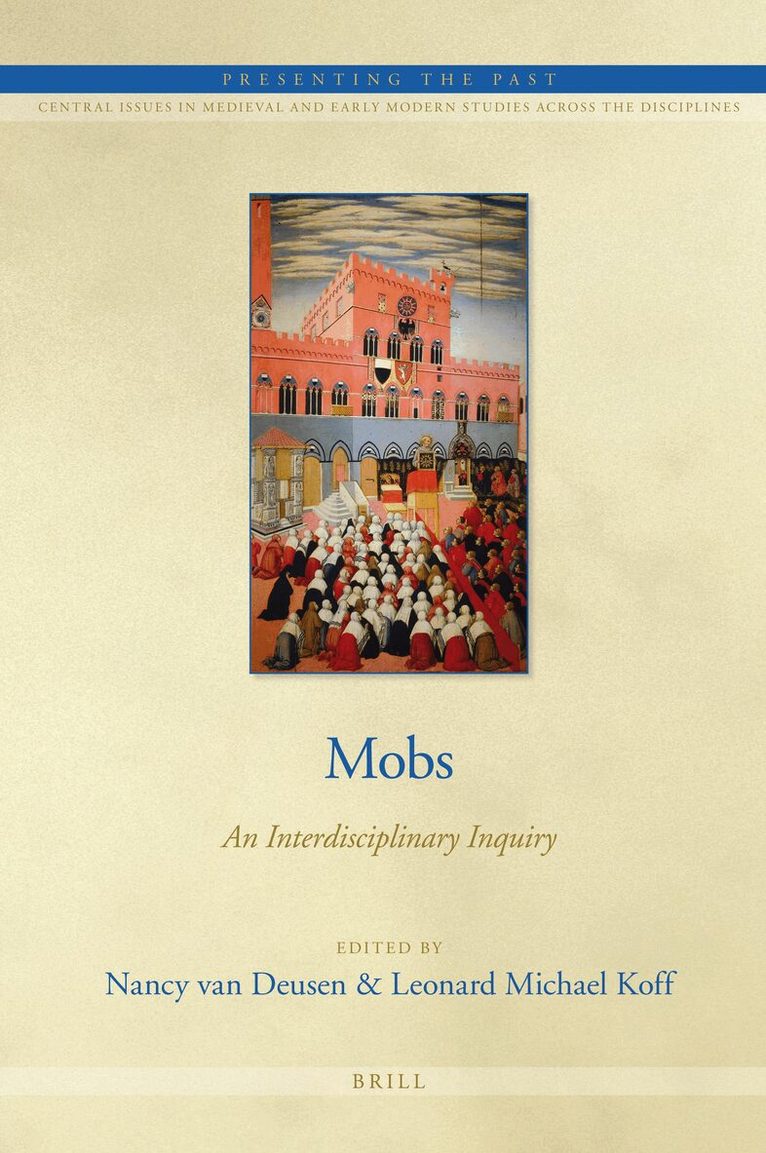
Mobs
An Interdisciplinary Inquiry
Inbunden, Engelska, 2011
3 092 kr
Skickas inom 5-8 vardagar
The topic of mobs has resonances in a remarkable number of disciplines and provides a link between past and present—mobs are clearly of much importance today. The idea of mobs provides the context for all the essays and topics in this volume — from Heraclitus to the writings of Elias Canetti to the notion of internet mobs. The essays here speak to the complex nature of the mob: its defining characteristics and the varying consequences of its behavior. Mobs as a book brings wide-ranging clarity to a topic that touches such disciplines as medieval studies, literature, musicology, theology and philosophy, history, social theory, the development of the early university, and theatre.Contributors are (in order within the volume): Leonard M. Koff, Ben Schomakers, Bernard S. Bachrach, Nancy van Deusen, Paul W. Knoll, Charlotte Bauer, Andrew Galloway, Robert W. Hanning, Terence Tunberg, Peter Howard, Cornelia Oefelein, Teofilo Ruiz, Richard Taruskin, David B. Rosen, Aino Paasonen and Richard Sogliuzzo.
Del 4 - Presenting the Past
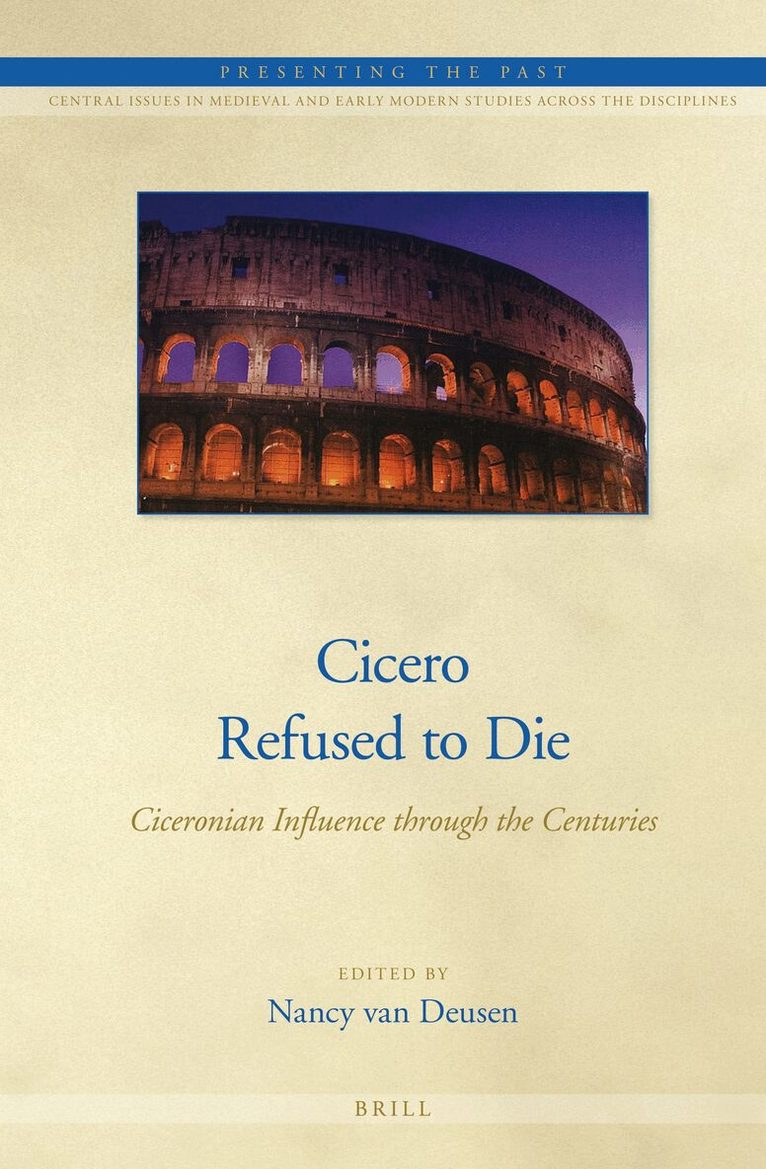
Cicero Refused to Die
Ciceronian Influence through the Centuries
Inbunden, Engelska, 2013
2 375 kr
Skickas inom 5-8 vardagar
Cicero has indeed refused to die, despite the fact that he, in the year 43 BC, was savagely put to death, a preposterous event that brought an end to the long and illustrious career of a lawyer, politician, statesman, praetor, consul, and above all, intellectual, philosopher, writer. His works on The Ideal Orator, On Law, On Academic Life, On Supreme Good and Evil, The Nature of Gods, Foretelling the Future, Destiny, and Duties constituted the basis of a thorough study of Latin for many centuries of students. One might also, however, conclude that, with the virtual disappearance of Latin as a language that is commonly taught, Cicero might be seen to have suffered a second death; but this is by no means the case. This timely volume explores the many aspects of Ciceronian influence through the Middle Ages—and beyond—on education, literature, and legal training. Contributors are Christopher S. Celenza, Frank Coulson, Nancy van Deusen, George L. Gorse, Michael Herren, Leonard Michael Koff, Valery Rees, Timothy A. Shonk, Terence Tunberg, and John O. Ward.
Del 5 - Presenting the Past
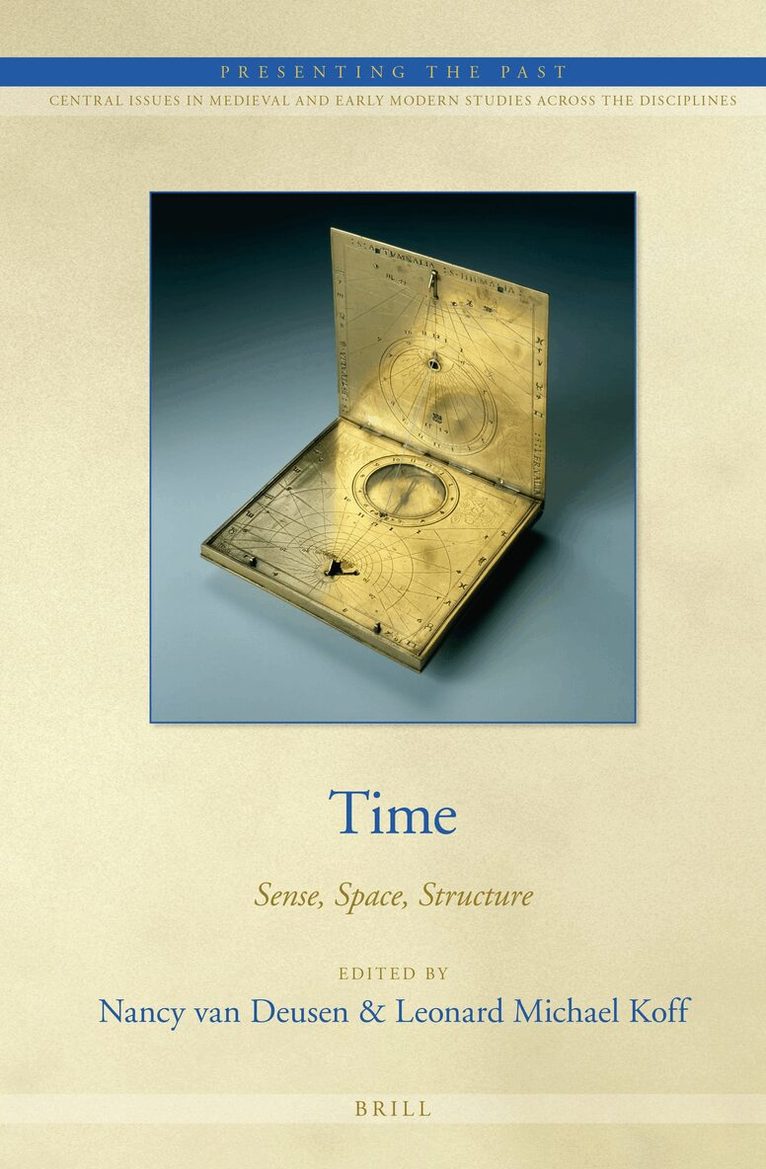
Time: Sense, Space, Structure
Inbunden, Engelska, 2016
3 717 kr
Skickas inom 5-8 vardagar
The essays in this volume explore the nature of time, our God-given medium of ascent, known, as Augustine puts it, through the ordered study of the “liberal disciplines that carry the mind to the divine (disciplinae liberales intellectum efferunt ad divina)”: grammar and dialectic, for example, to promote thinking; geometry and astronomy to grasp the dimensions of our reality; music, an invisible substance like time itself, as an exemplary bridge to the unseen substance of thoughts, ideas, and the nature of God (theology). This ascending course of study rests on procedure, progress, and attainment — on before, following, and afterwards — whose goal is an ascending erudition that lets us finally contemplate, as Augustine says in De ordine, our invisible medium — time — within time itself: time is immaterial, but experienced as substantial. The essays here look at projects that chronicle time “from the beginning,” that clarify ideas of creation “in time” and “simultaneous times,” and the interrelationships between measured time and eternity, including “no-time.” Essays also examine time as revealed in social and political contexts, as told by clocks, as notated in music and embodied in memorializing stone. In the final essays of this volume, time is understood as the subject and medium of consciousness. As Adrian Bardon says, “time is not so much a ‘what’ as a ‘how’”: a solution to “organizing experience and modeling events.”Contributors are (in order within the volume) Jesse W. Torgerson, Ken A. Grant, Danielle B. Joyner, Nancy van Deusen, Peter Casarella, Aaron Canty, Jordan Kirk, Vera von der Osten-Sacken, Gerhard Jaritz, Jason Aleksander, Sara E. Melzer, Mark Howard, Andrew Eschelbacher, Hans J. Rindisbacher, James F. Knapp, Peggy A. Knapp, Raymond Knapp, Michael Cole, Ike Kamphof and Leonard Michael Koff.