Presidential Briefings Series - Böcker
Visar alla böcker i serien Presidential Briefings Series. Handla med fri frakt och snabb leverans.
14 produkter
14 produkter
2 113 kr
Skickas inom 10-15 vardagar
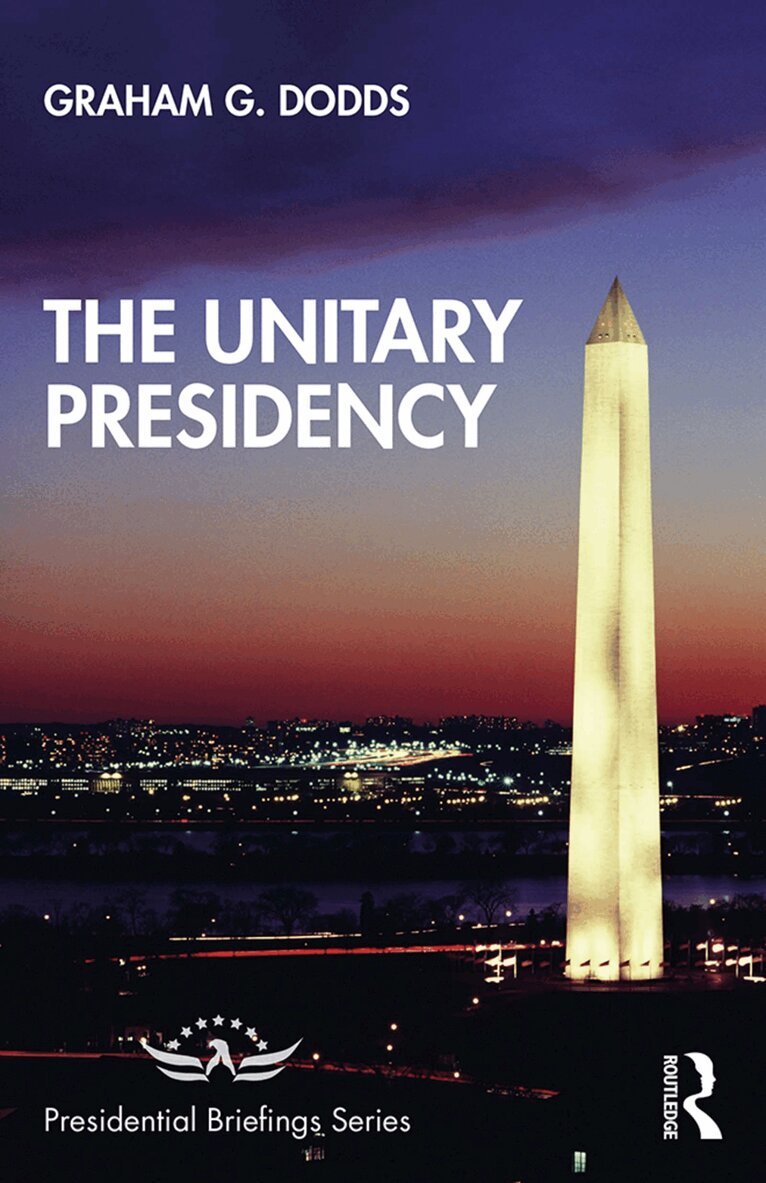
The theory of the unitary executive is one of the most controversial and significant constitutional doctrines of the past several decades. It holds that the U.S. president alone embodies all executive power and therefore has unlimited ability to direct the many people and institutions within the federal government’s vast executive branch. It thus justifies the president’s prerogative to organize the executive branch and to direct its activities, to tell executive personnel what to do and to fire them if desired, to control the flow of information, and to issue signing statements that make judgments about constitutionality and determine the extent to which laws will be implemented. In some versions, it also endorses implied or inherent powers and permits the president to completely control foreign policy and military action. Proponents say this conception of the presidential office is faithful to the Constitution, facilitates the sort of energetic executive that Alexander Hamilton argued for, and enhances administrative efficacy and political accountability for governance. Critics say this arrangement is constitutionally inaccurate, is belied by historical practice and legal precedents, and is dangerously close to the monarchical power that provoked the American Revolution – and can be especially threatening in the era of Donald Trump. This book examines how controversies about unitary executive power have played out from the founding era to the present day with a focus on recent presidents, it explores arguments both for and against the unitary executive theory, and it looks ahead to future implications for American politics.
578 kr
Skickas inom 10-15 vardagar
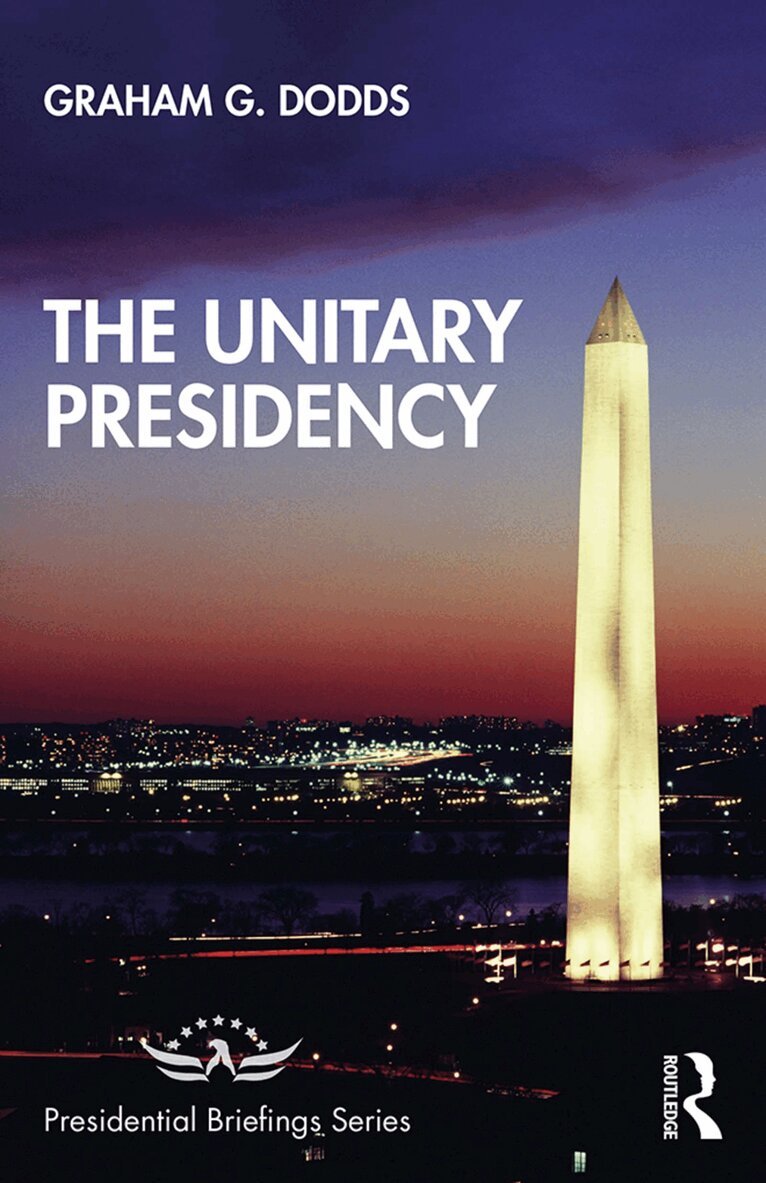
The theory of the unitary executive is one of the most controversial and significant constitutional doctrines of the past several decades. It holds that the U.S. president alone embodies all executive power and therefore has unlimited ability to direct the many people and institutions within the federal government’s vast executive branch. It thus justifies the president’s prerogative to organize the executive branch and to direct its activities, to tell executive personnel what to do and to fire them if desired, to control the flow of information, and to issue signing statements that make judgments about constitutionality and determine the extent to which laws will be implemented. In some versions, it also endorses implied or inherent powers and permits the president to completely control foreign policy and military action. Proponents say this conception of the presidential office is faithful to the Constitution, facilitates the sort of energetic executive that Alexander Hamilton argued for, and enhances administrative efficacy and political accountability for governance. Critics say this arrangement is constitutionally inaccurate, is belied by historical practice and legal precedents, and is dangerously close to the monarchical power that provoked the American Revolution – and can be especially threatening in the era of Donald Trump. This book examines how controversies about unitary executive power have played out from the founding era to the present day with a focus on recent presidents, it explores arguments both for and against the unitary executive theory, and it looks ahead to future implications for American politics.
2 113 kr
Skickas inom 10-15 vardagar
A military is the most significant tool of a nation’s foreign policy, and (hopefully) the tool of last resort. Yet the control a civilian leader has over the military is, in many respects, an encumbered and fractured control. The military’s organizational culture, role in society, size, and considerable autonomy are potential obstacles to true civilian control over the military even in peacetime. A brief but historically informed text intended for students of the presidency or national security, Governing the Military addresses the gamut of challenges a new U.S. President faces as commander-in-chief.
578 kr
Skickas inom 10-15 vardagar
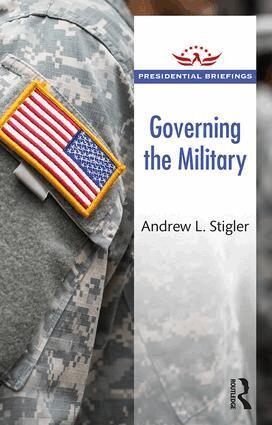
A military is the most significant tool of a nation’s foreign policy, and (hopefully) the tool of last resort. Yet the control a civilian leader has over the military is, in many respects, an encumbered and fractured control. The military’s organizational culture, role in society, size, and considerable autonomy are potential obstacles to true civilian control over the military even in peacetime. A brief but historically informed text intended for students of the presidency or national security, Governing the Military addresses the gamut of challenges a new U.S. President faces as commander-in-chief.
686 kr
Skickas inom 10-15 vardagar
Rhetoric is among the most important and least understood elements of presidential leadership. Presidents have always wielded rhetoric as one tool of governance—and that rhetoric was always intended to facilitate political ends, such as image building, persuasion of the mass public, and inter-branch government persuasion. But as mass media has grown and then fragmented, as the federal bureaucracy has continued to both expand and calcify, and as partisanship has heightened tensions both within Congress and between Congress and the Executive, rhetoric is an increasingly important element of presidential governance.Scholars have derived ways to explain how these developments and the presidents' use of rhetoric have contributed to and detracted from the health of American democracy. This briefing book offers a succinct reflection on the ways in which historical developments have encouraged the use of political rhetoric. It explores strategies of "going public" to provide some leverage over the political system and the lessons one might derive from these choices.This essential analysis, written for lay readers, scholars, students, and future presidents, is the first in Transaction's innovative Presidential Briefings series. Mary E. Stuckey covers the scholarly literature with authority and offers examples of rhetoric that have lasting influence.
2 113 kr
Skickas inom 10-15 vardagar
Rhetoric is among the most important and least understood elements of presidential leadership. Presidents have always wielded rhetoric as one tool of governance—and that rhetoric was always intended to facilitate political ends, such as image building, persuasion of the mass public, and inter-branch government persuasion. But as mass media has grown and then fragmented, as the federal bureaucracy has continued to both expand and calcify, and as partisanship has heightened tensions both within Congress and between Congress and the Executive, rhetoric is an increasingly important element of presidential governance.Scholars have derived ways to explain how these developments and the presidents' use of rhetoric have contributed to and detracted from the health of American democracy. This briefing book offers a succinct reflection on the ways in which historical developments have encouraged the use of political rhetoric. It explores strategies of "going public" to provide some leverage over the political system and the lessons one might derive from these choices.This essential analysis, written for lay readers, scholars, students, and future presidents, is the first in Transaction's innovative Presidential Briefings series. Mary E. Stuckey covers the scholarly literature with authority and offers examples of rhetoric that have lasting influence.
2 113 kr
Skickas inom 10-15 vardagar
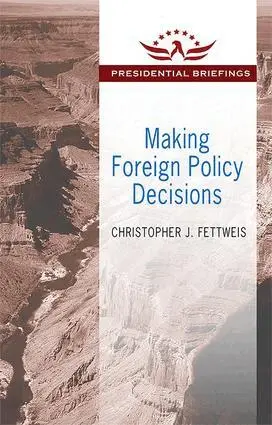
It is often said that voters hold presidents responsible for two things: the economy and foreign policy. Economic performance is generally beyond presidential control, but foreign policy is defined by the president. The White House is justifiably blamed or credited for how it manages relations with the outside world.How, then, can presidents maximize their chances to achieve successful foreign policies? What kinds of considerations should they bear in mind as they make important decisions for their country? Foreign policy begins with the process of making decisions. This briefing book examines foreign policy decision-making, and offers advice to current and future presidents drawn from fields ranging from political science and history, to psychology and economics. It identifies basic guidelines that presidents should consider when making choices. Such guidelines apply to almost any area of human endeavour, and they are certainly central to choices made in and outside of the Oval Office.When the strong make mistakes, the weak often suffer. As the strongest country in the history of the world, the United States has a special responsibility to run a sagacious foreign policy. This briefing book will benefit students, policy makers, and the general public.
2 113 kr
Skickas inom 10-15 vardagar
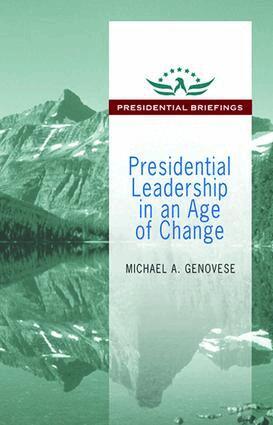
The American public hungers for a heroic leader. From John F. Kennedy to George W. Bush, every American president has left office either under a cloud or as a failed leader. Michael A. Genovese argues that presidents are set up for failure; it is not specific presidents but the presidency itself that is the problem.The presidency was designed to prevent tyranny through a system of separation of powers that inhibits presidents from exercising sufficient power to meet the demands and expectations that developed over time. Each new president dreams of success, only to be crushed by the paralytic weight of vetoes and roadblocks. As they fail to meet expectations, Americans turn on them, making their already precarious position much worse. Given the perilous nature of the office, Genovese examines the skills required to achieve success and the roles of power and persuasion. He also examines how globalization and the rapid pace of change contribute to the decline of presidential power.This accessible synthesis of scholarship is geared toward an audience that is hungry to unravel the dilemmas of presidential leadership. Students of the presidency will find it insightful; general readers will find it illuminating.
713 kr
Skickas inom 10-15 vardagar
The American public hungers for a heroic leader. From John F. Kennedy to George W. Bush, every American president has left office either under a cloud or as a failed leader. Michael A. Genovese argues that presidents are set up for failure; it is not specific presidents but the presidency itself that is the problem.The presidency was designed to prevent tyranny through a system of separation of powers that inhibits presidents from exercising sufficient power to meet the demands and expectations that developed over time. Each new president dreams of success, only to be crushed by the paralytic weight of vetoes and roadblocks. As they fail to meet expectations, Americans turn on them, making their already precarious position much worse. Given the perilous nature of the office, Genovese examines the skills required to achieve success and the roles of power and persuasion. He also examines how globalization and the rapid pace of change contribute to the decline of presidential power.This accessible synthesis of scholarship is geared toward an audience that is hungry to unravel the dilemmas of presidential leadership. Students of the presidency will find it insightful; general readers will find it illuminating.
713 kr
Skickas inom 10-15 vardagar
It is often said that voters hold presidents responsible for two things: the economy and foreign policy. Economic performance is generally beyond presidential control, but foreign policy is defined by the president. The White House is justifiably blamed or credited for how it manages relations with the outside world.How, then, can presidents maximize their chances to achieve successful foreign policies? What kinds of considerations should they bear in mind as they make important decisions for their country? Foreign policy begins with the process of making decisions. This briefing book examines foreign policy decision-making, and offers advice to current and future presidents drawn from fields ranging from political science and history, to psychology and economics. It identifies basic guidelines that presidents should consider when making choices. Such guidelines apply to almost any area of human endeavour, and they are certainly central to choices made in and outside of the Oval Office.When the strong make mistakes, the weak often suffer. As the strongest country in the history of the world, the United States has a special responsibility to run a sagacious foreign policy. This briefing book will benefit students, policy makers, and the general public.
2 113 kr
Skickas inom 10-15 vardagar
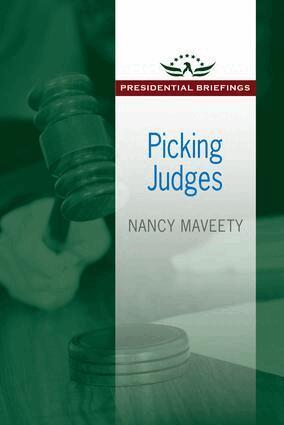
What defines a president? Is it policymaking? A good relationship with the American people? Or is it legacy? Most would argue that legacy imprints a president in the American consciousness. A president's federal judicial appointees may be his or her most lasting political legacy. Because federal judges serve for life, their legal policymaking endures long after a president's term in office is over. Presidents who care about serving their mandate, who desire to maximize their policy agenda, and who wish to influence the nation's constitutional fabric appoint as many federal judges as possible.This new volume in the Presidential Briefings series shows how the president's appointment power has expanded beyond its bare constitutional outlines. In exercising their constitutional powers while paying heed to political opportunities, presidents and the Senate have together created our modern judicial appointment politics. Presidents consider a host of demographic and ideological factors, candidate qualities, and electoral politics.Nancy Maveety examines the dynamics of screening and choosing judicial nominees and analyses the institutional calculus in securing their confirmation in the face of senatorial obstruction. Maveety shows how a president can adapt to particular circumstances and provides an outline for synergistically staffing the federal judiciary, thus securing a legacy for all time.
686 kr
Skickas inom 10-15 vardagar
What defines a president? Is it policymaking? A good relationship with the American people? Or is it legacy? Most would argue that legacy imprints a president in the American consciousness. A president's federal judicial appointees may be his or her most lasting political legacy. Because federal judges serve for life, their legal policymaking endures long after a president's term in office is over. Presidents who care about serving their mandate, who desire to maximize their policy agenda, and who wish to influence the nation's constitutional fabric appoint as many federal judges as possible.This new volume in the Presidential Briefings series shows how the president's appointment power has expanded beyond its bare constitutional outlines. In exercising their constitutional powers while paying heed to political opportunities, presidents and the Senate have together created our modern judicial appointment politics. Presidents consider a host of demographic and ideological factors, candidate qualities, and electoral politics.Nancy Maveety examines the dynamics of screening and choosing judicial nominees and analyses the institutional calculus in securing their confirmation in the face of senatorial obstruction. Maveety shows how a president can adapt to particular circumstances and provides an outline for synergistically staffing the federal judiciary, thus securing a legacy for all time.
2 113 kr
Skickas inom 10-15 vardagar
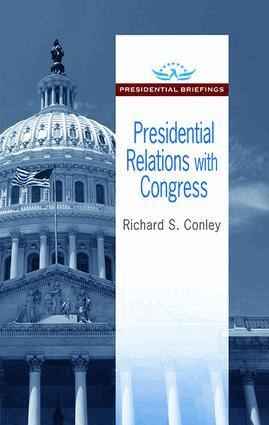
The presidential-congressional relationship is the most important and vivid of all the inter-branch relationships. It defines presidential activities, priorities, and successes. No president, from Eisenhower to Nixon to Reagan, has been able to ignore or denigrate that relationship. Presidential Relations with Congress provides a succinct analysis of contemporary presidential-congressional relations in the post-World War II era. Richard S. Conley underscores what scholars have learned about presidents' interactions with Congress over time, the factors that account for success, and the methodologies that can measure success. He weaves the "bargaining", "institutional constraint", and "personality" perspectives of presidential relations with Congress alongside case studies of individual presidents' approaches, including agenda success, veto politics, and Supreme Court nominations. Presidential Relations with Congress emphasizes the changing nature of internal dynamics in Congress, as well as the importance of party control of both the White House and Capitol Hill. This engaging addition to the Presidential Briefings series provides students, scholars, and observers of presidential politics with an accessible and readable tool for analyzing and evaluating presidents' varied styles, successes, and failures in their relationships with Congress. Each chapter features specific examples of past presidents' approaches to influencing Congress.
564 kr
Skickas inom 10-15 vardagar
The presidential-congressional relationship is the most important and vivid of all the inter-branch relationships. It defines presidential activities, priorities, and successes. No president, from Eisenhower to Nixon to Reagan, has been able to ignore or denigrate that relationship. Presidential Relations with Congress provides a succinct analysis of contemporary presidential-congressional relations in the post-World War II era. Richard S. Conley underscores what scholars have learned about presidents' interactions with Congress over time, the factors that account for success, and the methodologies that can measure success. He weaves the "bargaining", "institutional constraint", and "personality" perspectives of presidential relations with Congress alongside case studies of individual presidents' approaches, including agenda success, veto politics, and Supreme Court nominations. Presidential Relations with Congress emphasizes the changing nature of internal dynamics in Congress, as well as the importance of party control of both the White House and Capitol Hill. This engaging addition to the Presidential Briefings series provides students, scholars, and observers of presidential politics with an accessible and readable tool for analyzing and evaluating presidents' varied styles, successes, and failures in their relationships with Congress. Each chapter features specific examples of past presidents' approaches to influencing Congress.