Primers in Biomedical Imaging Devices and Systems - Böcker
946 kr
Skickas inom 7-10 vardagar
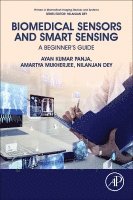
Biomedical Sensors and Smart Sensing: A Beginner's Guide, a book in the 10-volume Primers in Biomedical Imaging Devices and Systems series, covers a wide range of interdisciplinary applications in imaging modalities, nuclear medicine, computed tomographic systems, x-ray systems, magnetic resonance imaging, ultrasound, and virtual reality. The series explores the essential fundamental techniques required to analyze and process signals and images for diagnosis, scientific discovery and medical applications. Volumes in this series cover a wide range of interdisciplinary areas, combining foundational content with practical case studies to demonstrate the applications of these technologies in real-world situations.
In addition, the 10-volume series considers various medical devices, electronics, circuits, sensors and algorithms. Several applications ranging from basic biological science to clinical practice are included to facilitate ongoing research.
Covers a variety of sensing and signal processing techniques Introduces different approaches relating to communication and intelligent data processing for early detection and prediction of diseases Includes practical case studies974 kr
Skickas inom 7-10 vardagar
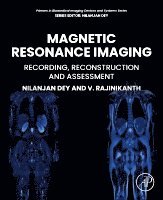
Magnetic Resonance Imaging: Recording, Reconstruction and Assessment gives a detailed overview of magnetic resonance imaging (MRI), along with its applications and challenges. The book explores the abnormalities in internal human organs using MRI techniques while also featuring case studies that illustrate measures used. In addition, it explores precautionary measures used during MRI based imaging, the selection of appropriate contrast agents, and the selection of the appropriate modality during the image registration. Sections introduce medical imaging, the use of MRI in brain, cardiac, lung and kidney detection, and also discuss both 2D and 3D imaging techniques and various MRI modalities.
This volume will be of interest to researchers, engineers and medical professionals involved in the development and use of MRI systems.
Discusses challenges and issues faced, as well as safety precautions to be followed Features case studies with benchmark MRIs existing in the literature Introduces computer-based assessment (Machine Learning and Deep Learning) of the MRI based on its 2D slices1 000 kr
Skickas inom 7-10 vardagar
946 kr
Skickas inom 7-10 vardagar
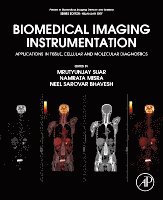
Biomedical Imaging Instrumentation
Applications in Tissue, Cellular and Molecular Diagnostics
971 kr
Skickas inom 7-10 vardagar
Biomedical Imaging Instrumentation: Applications in Tissue, Cellular and Molecular Diagnostics provides foundational information about imaging modalities, reconstruction and processing, and their applications. The book provides insights into the fundamental of the important techniques in the biomedical imaging field and also discusses the various applications in the area of human health. Each chapter summarizes the overview of the technique, the various applications, and the challenges and recent innovations occurring to further improve the technique.
Chapters include Biomedical Techniques in Cellular and Molecular Diagnostics, The Role of CT Scan in Medical and Dental Imaging, Ultrasonography - Technology & Applications in Clinical Radiology, Magnetic Resonance Imaging, Instrumentation and Utilization of PET-CT Scan in Oncology, Gamma Camera and SPECT, Sentinel of Breast Cancer Screening; Hyperspectral Imaging; PA Imaging; NIR Spectroscopy, and The Advances in Optical Microscopy and its Applications in Biomedical Research.
This book is ideal for supporting learning, and is a key resource for students and early career researchers in fields such as medical imaging and biomedical instrumentation.
A basic, fundamental, easy to understand introduction to medical imaging techniques Each technique is accompanied with detailed discussion on the application in the biomedical field in an accessible and easy to understand way Provides insights into the limitations of each technology and innovations that are occurring related to that technology1 000 kr
Skickas inom 7-10 vardagar
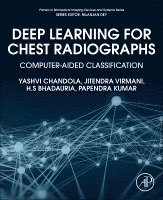
Deep Learning for Chest Radiographs enumerates different strategies implemented by the authors for designing an efficient convolution neural network-based computer-aided classification (CAC) system for binary classification of chest radiographs into "Normal" and "Pneumonia." Pneumonia is an infectious disease mostly caused by a bacteria or a virus. The prime targets of this infectious disease are children below the age of 5 and adults above the age of 65, mostly due to their poor immunity and lower rates of recovery. Globally, pneumonia has prevalent footprints and kills more children as compared to any other immunity-based disease, causing up to 15% of child deaths per year, especially in developing countries. Out of all the available imaging modalities, such as computed tomography, radiography or X-ray, magnetic resonance imaging, ultrasound, and so on, chest radiographs are most widely used for differential diagnosis between Normal and Pneumonia. In the CAC system designs implemented in this book, a total of 200 chest radiograph images consisting of 100 Normal images and 100 Pneumonia images have been used. These chest radiographs are augmented using geometric transformations, such as rotation, translation, and flipping, to increase the size of the dataset for efficient training of the Convolutional Neural Networks (CNNs). A total of 12 experiments were conducted for the binary classification of chest radiographs into Normal and Pneumonia. It also includes in-depth implementation strategies of exhaustive experimentation carried out using transfer learning-based approaches with decision fusion, deep feature extraction, feature selection, feature dimensionality reduction, and machine learning-based classifiers for implementation of end-to-end CNN-based CAC system designs, lightweight CNN-based CAC system designs, and hybrid CAC system designs for chest radiographs.
This book is a valuable resource for academicians, researchers, clinicians, postgraduate and graduate students in medical imaging, CAC, computer-aided diagnosis, computer science and engineering, electrical and electronics engineering, biomedical engineering, bioinformatics, bioengineering, and professionals from the IT industry.
Provides insights into the theory, algorithms, implementation, and application of deep-learning techniques for medical images such as transfer learning using pretrained CNNs, series networks, directed acyclic graph networks, lightweight CNN models, deep feature extraction, and conventional machine learning approaches for feature selection, feature dimensionality reduction, and classification using support vector machine, neuro-fuzzy classifiers Covers the various augmentation techniques that can be used with medical images and the CNN-based CAC system designs for binary classification of medical images focusing on chest radiographs Investigates the development of an optimal CAC system design with deep feature extraction and classification of chest radiographs by comparing the performance of 12 different CAC system designs