Psychological Perspectives on Contemporary Educational Issues – serie
Visar alla böcker i serien Psychological Perspectives on Contemporary Educational Issues. Handla med fri frakt och snabb leverans.
12 produkter
12 produkter
Häftad, Engelska, 2005
529 kr
Skickas inom 5-8 vardagar
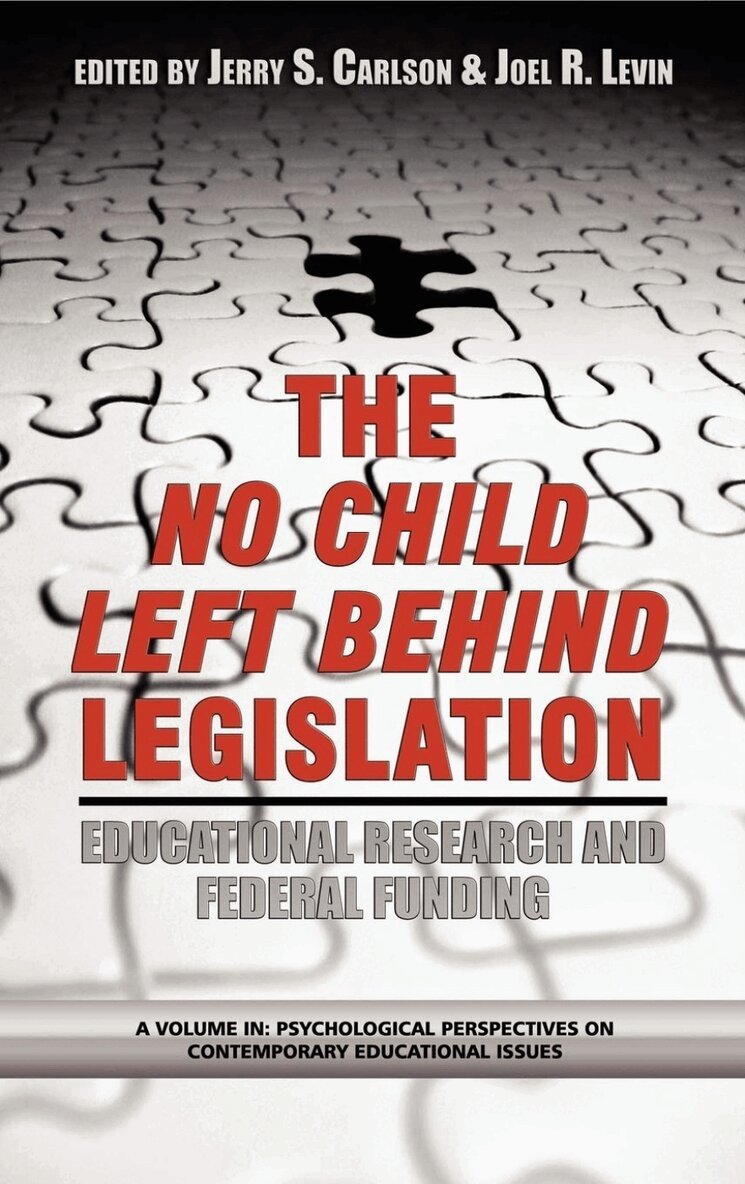
With the publication of this book, the scholarly journal Issues in Education: Contributions from Educational Psychology is moving to a book series publication format. Carlson (University of California-Riverside) and Levin (University of Arizona) present material on aspects of the No Child Left Behind legislation.
Inbunden, Engelska, 2005
985 kr
Skickas inom 5-8 vardagar
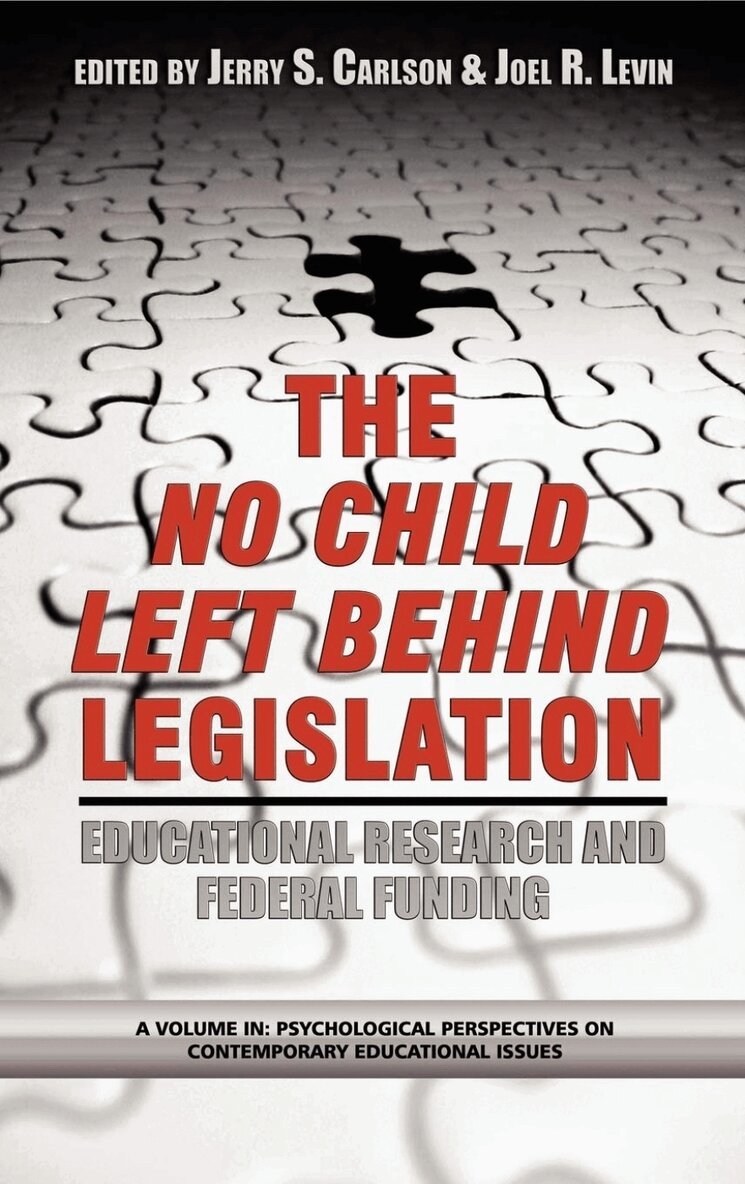
With the publication of this book, the scholarly journal Issues in Education: Contributions from Educational Psychology is moving to a book series publication format. Carlson (University of California-Riverside) and Levin (University of Arizona) present material on aspects of the No Child Left Behind legislation.
Häftad, Engelska, 2007
529 kr
Skickas inom 5-8 vardagar
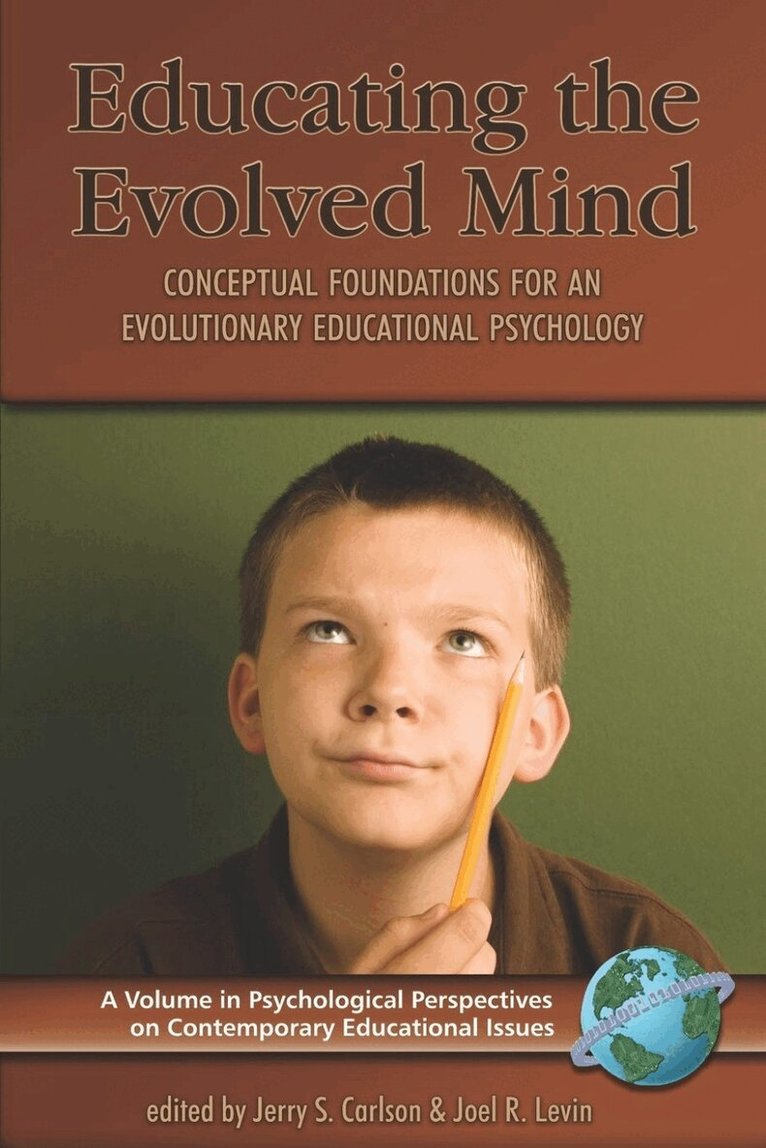
In this volume, David Geary provides a comprehensive theory that brings children’s education into the 21st century, and provides directions for the development of a new discipline, “evolutionary educational psychology.” Geary presents the case that a scientifically grounded approach to children’s schooling and, to a lesser degree, their later occupational interests can be informed by recent advances in the application of evolutionary theory to the understanding of the human brain, mind, and its development. He develops a taxonomy of evolved cognitive abilities and describes how, from an evolutionary perspective, these abilities are modified and refined during childhood. From there, he lays the framework for understanding the relation between evolved abilities, such as language, and the non-evolved competencies that are built from them with schooling, such as reading. Geary describes the mechanisms, such as working memory, that enable humans to transform evolved cognitive abilities into culturally important, school taught competencies. These are integrated with discussion of human intellectual history and cultural evolution, and the sources of children’s motivation to learn inside and outside of the classroom. In all, this may well be the most revolutionary theory of children’s schooling since Rousseau.
Inbunden, Engelska, 2007
985 kr
Skickas inom 5-8 vardagar
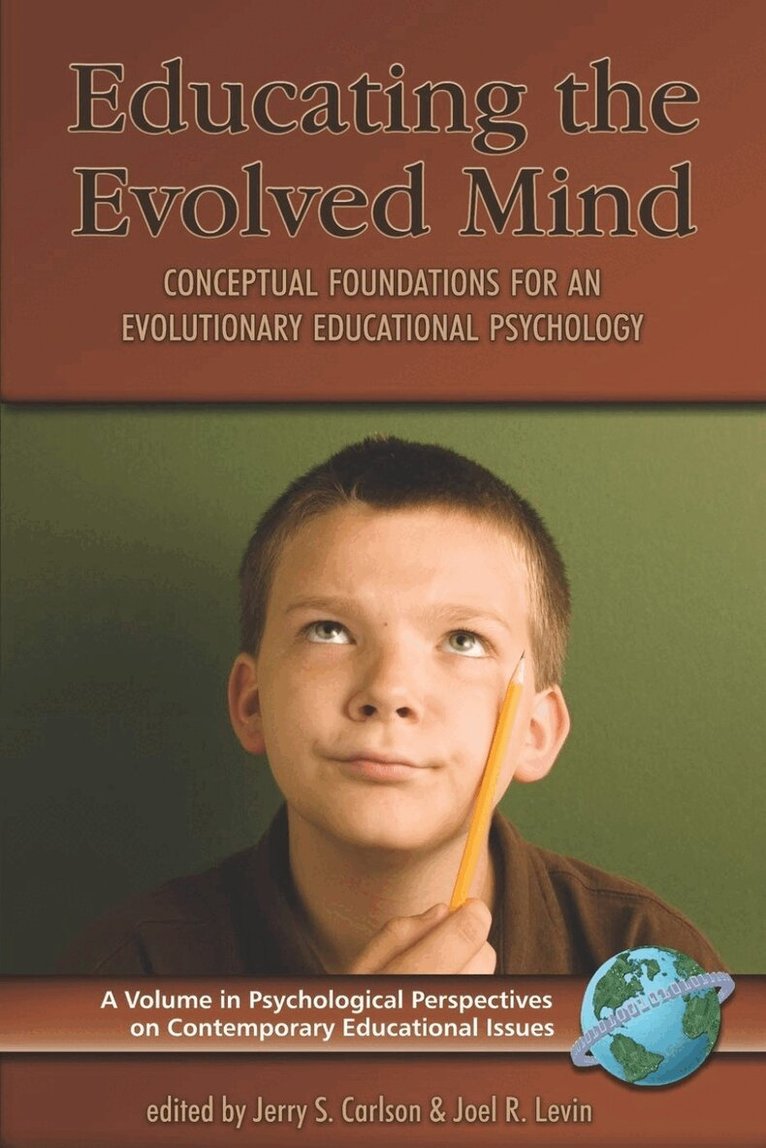
In this volume, David Geary provides a comprehensive theory that brings children’s education into the 21st century, and provides directions for the development of a new discipline, “evolutionary educational psychology.” Geary presents the case that a scientifically grounded approach to children’s schooling and, to a lesser degree, their later occupational interests can be informed by recent advances in the application of evolutionary theory to the understanding of the human brain, mind, and its development. He develops a taxonomy of evolved cognitive abilities and describes how, from an evolutionary perspective, these abilities are modified and refined during childhood. From there, he lays the framework for understanding the relation between evolved abilities, such as language, and the non-evolved competencies that are built from them with schooling, such as reading. Geary describes the mechanisms, such as working memory, that enable humans to transform evolved cognitive abilities into culturally important, school taught competencies. These are integrated with discussion of human intellectual history and cultural evolution, and the sources of children’s motivation to learn inside and outside of the classroom. In all, this may well be the most revolutionary theory of children’s schooling since Rousseau.
Häftad, Engelska, 2012
529 kr
Skickas inom 5-8 vardagar
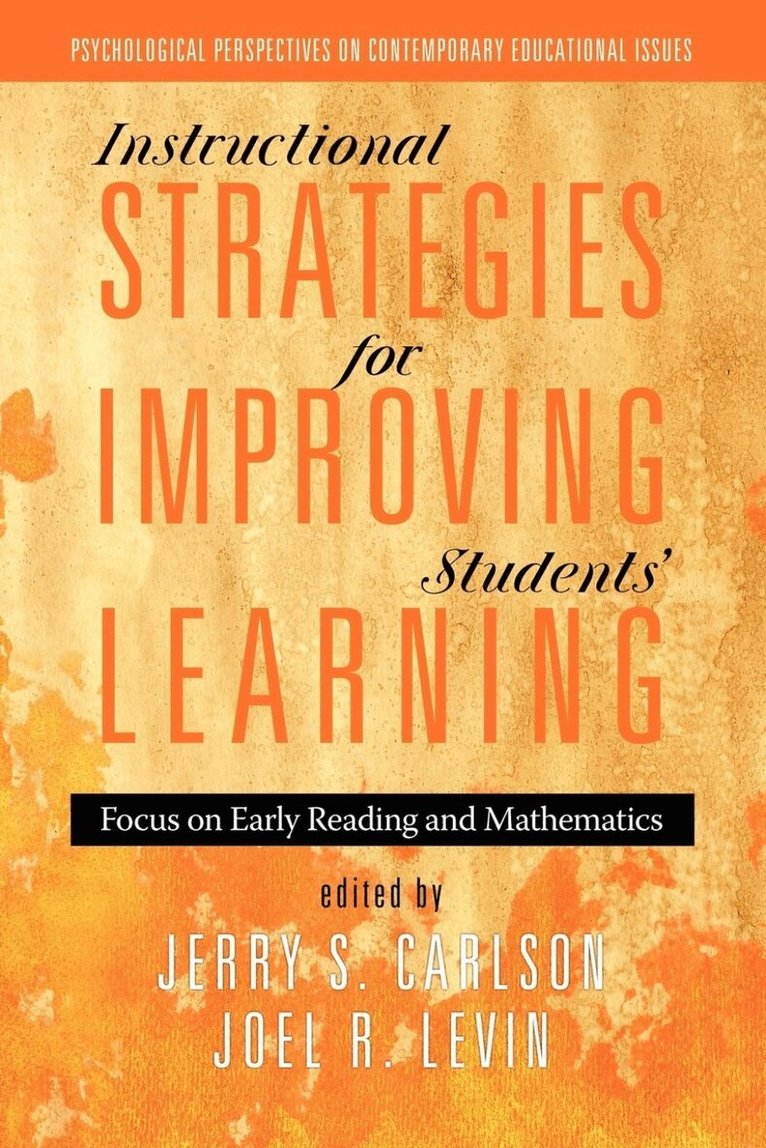
The twin objectives of the series Psychological Perspectives on Contemporary Educational Issues are: (1) to identify issues in education that are relevant to professional educators and researchers; and (2) to address those issues from research and theory in educational psychology, psychology, and related disciplines.The present volume, consisting of two focal chapters, commentaries, and final responses targets instructional strategies for improving students’ learning in two of the traditional “three R” areas, reading and 'rithmetic (mathematics), in the elementary school grades. The focal chapters in those two skill areas are written by leading contributors to the reading and mathematics research literatures, Cathy Collins Block for the reading section and Douglas Clements and Julie Sarama for the mathematics section. Few would dispute the essentiality of these two curricular domains in laying the foundation for the development of students’ competencies in a vast array of academic disciplines in both the in- and out-of-school years that lie ahead.The present volume is intended for practitioners and researchers who are seeking the latest instructional research-based strategies for improving students’ early reading and mathematics performance.
Inbunden, Engelska, 2012
985 kr
Skickas inom 5-8 vardagar
The twin objectives of the series Psychological Perspectives on Contemporary Educational Issues are: (1) to identify issues in education that are relevant to professional educators and researchers; and (2) to address those issues from research and theory in educational psychology, psychology, and related disciplines.The present volume, consisting of two focal chapters, commentaries, and final responses targets instructional strategies for improving students’ learning in two of the traditional “three R” areas, reading and 'rithmetic (mathematics), in the elementary school grades. The focal chapters in those two skill areas are written by leading contributors to the reading and mathematics research literatures, Cathy Collins Block for the reading section and Douglas Clements and Julie Sarama for the mathematics section. Few would dispute the essentiality of these two curricular domains in laying the foundation for the development of students’ competencies in a vast array of academic disciplines in both the in- and out-of-school years that lie ahead.The present volume is intended for practitioners and researchers who are seeking the latest instructional research-based strategies for improving students’ early reading and mathematics performance.
Häftad, Engelska, 2017
594 kr
Skickas inom 5-8 vardagar
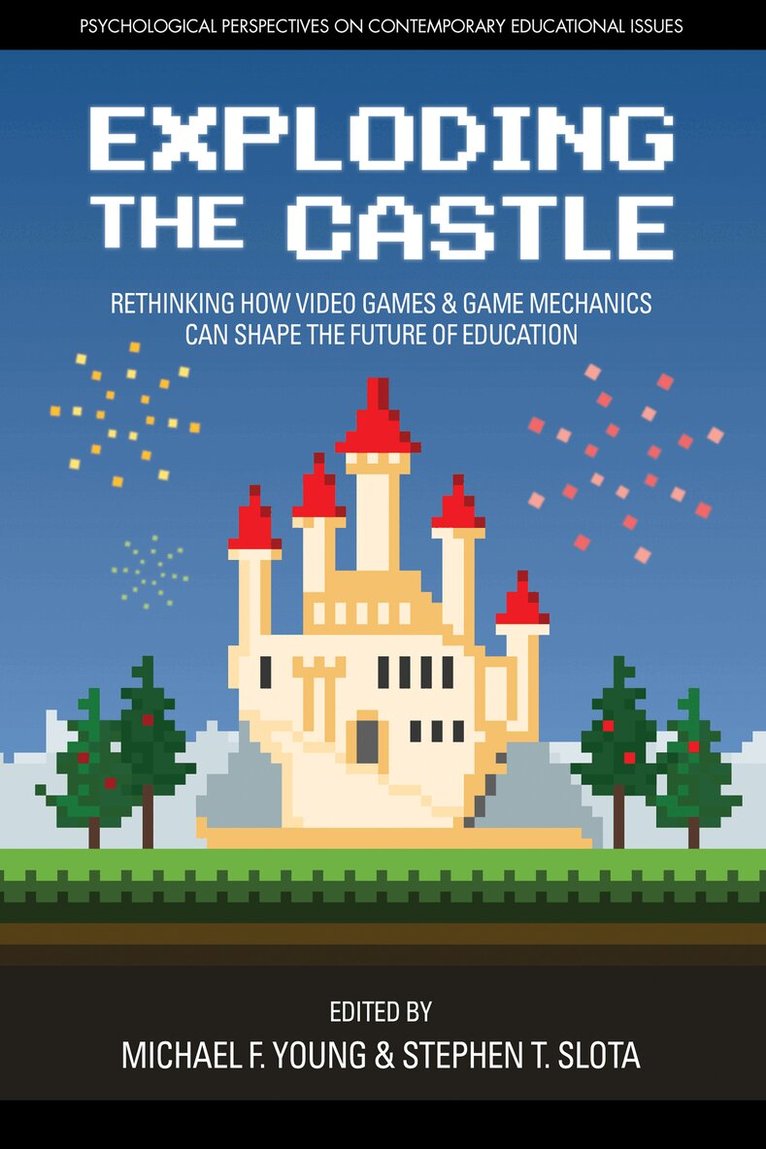
Lacking a digital crystal ball, we cannot predict the future of education or the precise instructional role games will have going forward. Yet we can safely say that games will play some role in the future of K-12 and higher education, and members of the games community will have to choose between being passive observers or active, progressive contributors to the complex and often political process of weaving together pedagogy, technology, and culture. This will involve agreeing that games—or, more specifically, game mechanics and the engagement in joyful learning that they engender—are not only critical for shaping online and classroom instruction but also the evolution of schooling as a whole. Likewise, it will involve a hard push beyond questions like “Are video games ‘good’ or ‘bad’ for education?” and “Are games ‘better’ for all students than traditional face-to-face teaching” to unpack how game experiences vary with individual learner goals as an interaction with the parameters of an educational environment. Simply put, we need to form a cohesive, compelling argument in support of the notion that games are entire learning ecologies in and of themselves.This edited volume is designed to anchor collective thinking with respect to the value-added nature of games for learning and the complexities involved in player experience, narrative context, and environmental-player interactions. As could be expected, we are not interested in debates about “gamification,” game violence, individual game quality, and other topics that have become standard fare in extant games literature. Instead, we seek to emphasize issues of scalability, the induction of player goal adoption, affordances of game-based instructional environments, relationships between play and transfer, and the value of games as part of an ecopsychological worldview. As long-time contributors in a field that has made a habit of playing it safe—pun intended—we seek to bring the dialogue in a more nuanced and meaningful direction that will reach teachers, researchers, designers, and players alike.
Inbunden, Engelska, 2017
1 050 kr
Skickas inom 5-8 vardagar
Lacking a digital crystal ball, we cannot predict the future of education or the precise instructional role games will have going forward. Yet we can safely say that games will play some role in the future of K-12 and higher education, and members of the games community will have to choose between being passive observers or active, progressive contributors to the complex and often political process of weaving together pedagogy, technology, and culture. This will involve agreeing that games—or, more specifically, game mechanics and the engagement in joyful learning that they engender—are not only critical for shaping online and classroom instruction but also the evolution of schooling as a whole. Likewise, it will involve a hard push beyond questions like “Are video games ‘good’ or ‘bad’ for education?” and “Are games ‘better’ for all students than traditional face-to-face teaching” to unpack how game experiences vary with individual learner goals as an interaction with the parameters of an educational environment. Simply put, we need to form a cohesive, compelling argument in support of the notion that games are entire learning ecologies in and of themselves.This edited volume is designed to anchor collective thinking with respect to the value-added nature of games for learning and the complexities involved in player experience, narrative context, and environmental-player interactions. As could be expected, we are not interested in debates about “gamification,” game violence, individual game quality, and other topics that have become standard fare in extant games literature. Instead, we seek to emphasize issues of scalability, the induction of player goal adoption, affordances of game-based instructional environments, relationships between play and transfer, and the value of games as part of an ecopsychological worldview. As long-time contributors in a field that has made a habit of playing it safe—pun intended—we seek to bring the dialogue in a more nuanced and meaningful direction that will reach teachers, researchers, designers, and players alike.
Inbunden, Engelska, 2025
855 kr
Skickas inom 5-8 vardagar
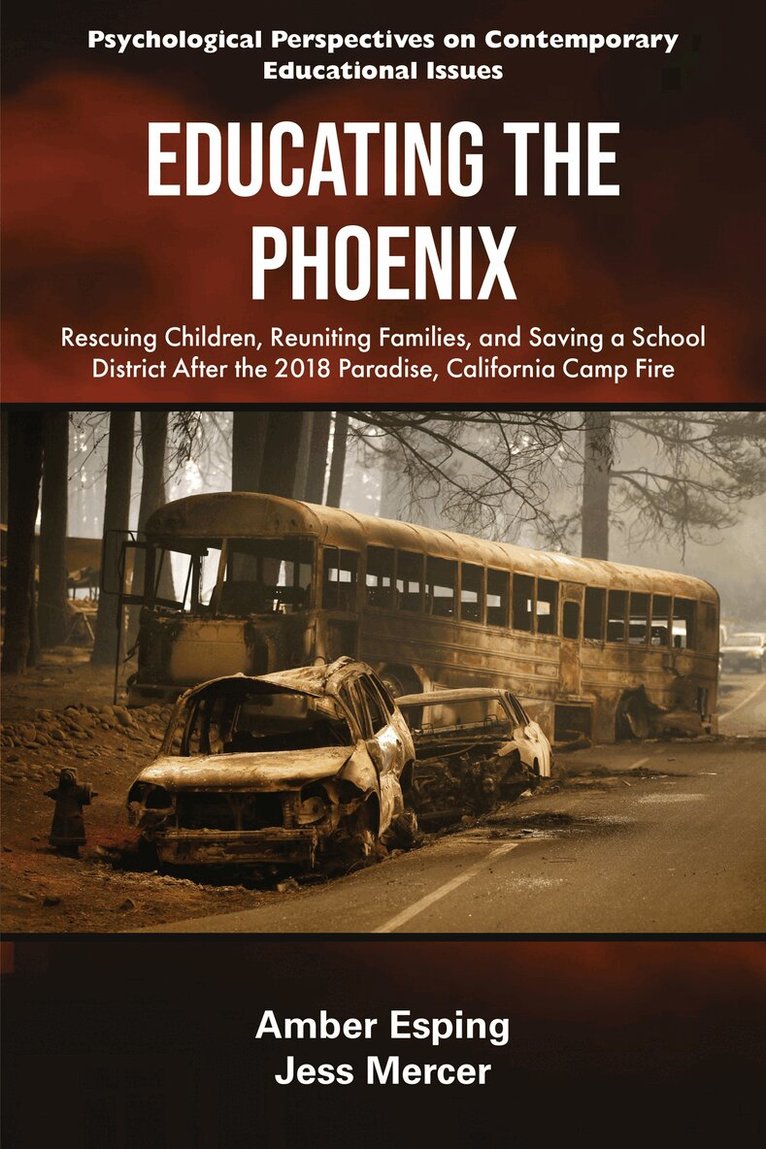
Educating the Phoenix focuses on the rebuild of an entire school system in the wake of absolute physical devastation and population diaspora from wildfire. When school started on November 8, 2018, the Paradise Unified School District (PUSD) boasted a thriving network of eleven campuses housing 3,401 students and 390 full-time employees. Four hours later, the Camp Fire had reduced three schools to ash, and all PUSD power, communications and maintenance infrastructures were wiped out. The food service warehouse and offices were gone. The transportation office was gone. Seventeen buses were damaged or converted to melted, sooty shells. The remaining eight campuses were in various states of ruin, from smoke damage only (one school and the District Office) to partially or mostly destroyed (seven schools). Nearly all of the students and seventy percent of PUSD employees also lost their homes. Meanwhile, some teachers, bus drivers, administrators, and other school personnel shepherded thousands of children to safety in a small, spontaneous Dunkirk of the Sierra Nevada foothills. Many of their colleagues stayed at the campuses, checking every cranny in every school to make sure no one was left behind. It may be the most dramatic story of in loco parentis ever recorded.California law required that the PUSD shut down, perhaps permanently, but this is not what the students or their parents said they wanted. When PUSD leadership visited with families, the message was clear: These children had already lost nearly everything else that was stable in their lives, and dispersing them to unfamiliar schools would be another blow. They wanted to be together with their friends and their teachers. Hearing this feedback, Superintendent Michelle John O’Neal led the charge to keep the PUSD intact. She prevailed, and many kids came back, even if that meant their first “classroom” was an aisle in an empty hardware store in a nearby city. By the fifth anniversary of the Fire, PUSD had rebuilt a dynamic, fully functioning district with six beautiful campuses and an e-learning academy.This book uses interviews with key personnel to tell the remarkable story of how the people of the PUSD made this happen.
Häftad, Engelska, 2025
461 kr
Skickas
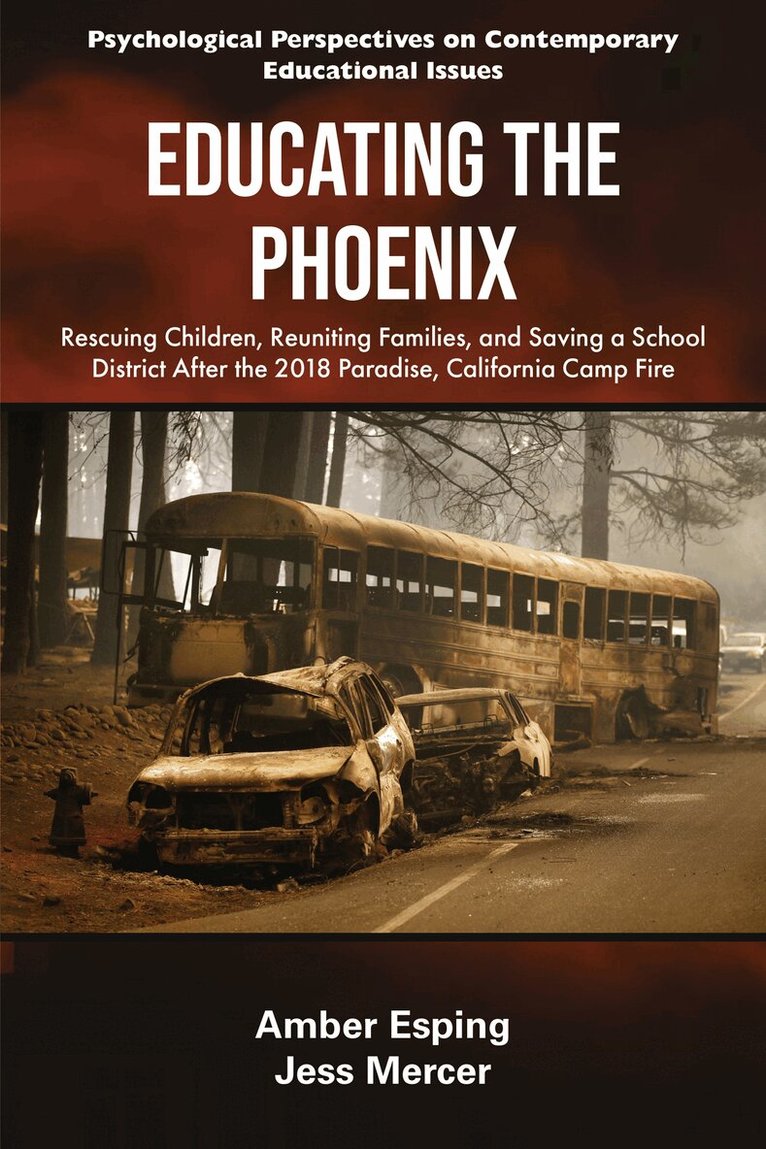
Educating the Phoenix focuses on the rebuild of an entire school system in the wake of absolute physical devastation and population diaspora from wildfire. When school started on November 8, 2018, the Paradise Unified School District (PUSD) boasted a thriving network of eleven campuses housing 3,401 students and 390 full-time employees. Four hours later, the Camp Fire had reduced three schools to ash, and all PUSD power, communications and maintenance infrastructures were wiped out. The food service warehouse and offices were gone. The transportation office was gone. Seventeen buses were damaged or converted to melted, sooty shells. The remaining eight campuses were in various states of ruin, from smoke damage only (one school and the District Office) to partially or mostly destroyed (seven schools). Nearly all of the students and seventy percent of PUSD employees also lost their homes. Meanwhile, some teachers, bus drivers, administrators, and other school personnel shepherded thousands of children to safety in a small, spontaneous Dunkirk of the Sierra Nevada foothills. Many of their colleagues stayed at the campuses, checking every cranny in every school to make sure no one was left behind. It may be the most dramatic story of in loco parentis ever recorded.California law required that the PUSD shut down, perhaps permanently, but this is not what the students or their parents said they wanted. When PUSD leadership visited with families, the message was clear: These children had already lost nearly everything else that was stable in their lives, and dispersing them to unfamiliar schools would be another blow. They wanted to be together with their friends and their teachers. Hearing this feedback, Superintendent Michelle John O’Neal led the charge to keep the PUSD intact. She prevailed, and many kids came back, even if that meant their first “classroom” was an aisle in an empty hardware store in a nearby city. By the fifth anniversary of the Fire, PUSD had rebuilt a dynamic, fully functioning district with six beautiful campuses and an e-learning academy.This book uses interviews with key personnel to tell the remarkable story of how the people of the PUSD made this happen.
Inbunden, Engelska, 2026
1 050 kr
Skickas inom 5-8 vardagar
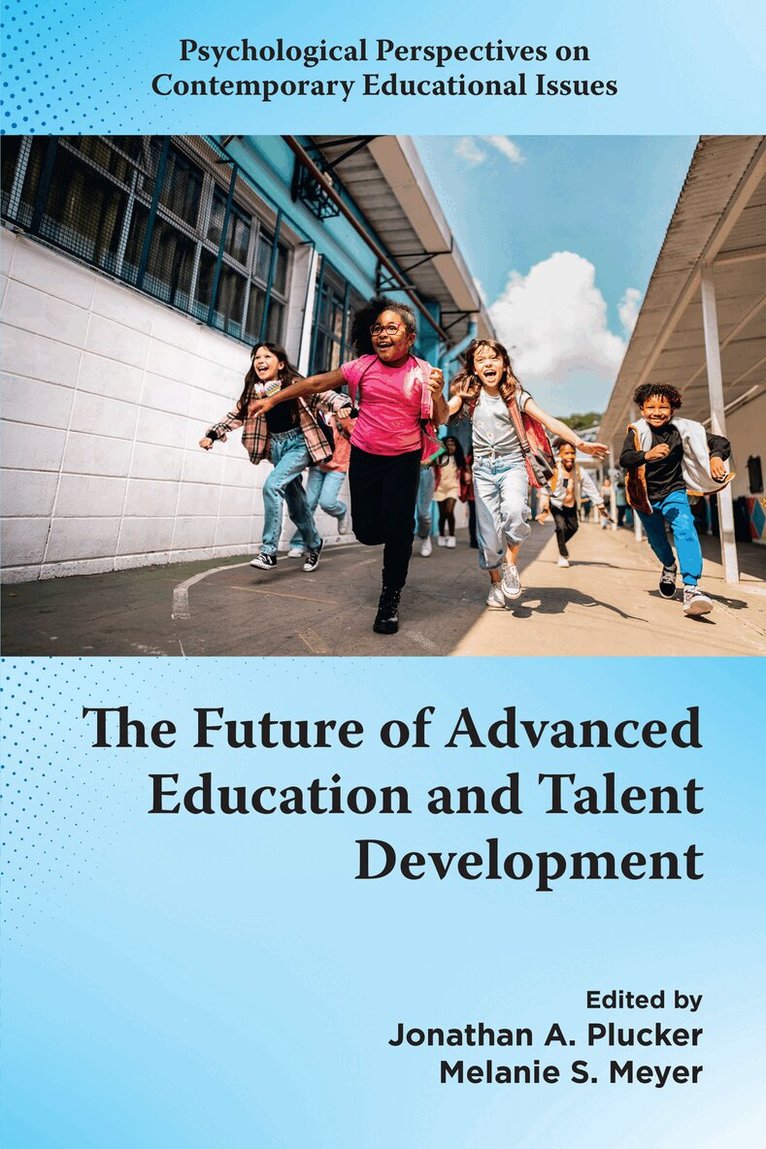
In an era where advanced education is gaining unprecedented attention from educators, policymakers, and families, the landscape of learning is evolving rapidly. Over the past 15 years, significant strides have been made in theory, research, and practice, transforming classrooms around the globe. This progress not only enhances the quality of advanced education but also increases the number of students excelling at higher levels. As the spotlight on advanced students intensifies, there is a growing call for innovative and comprehensive approaches to talent development. The Future of Advanced Education and Talent Development brings together insightful essays from leading scholars and practitioners worldwide, offering a deep dive into current practices and envisioning future directions for advanced learning. This compelling collection covers traditional topics such as identification, acceleration, and social and emotional development. It also explores the expansive nature of the field, addressing after-school and summer programs, technology integration, and career and technical education, among other critical areas. Each essay presents thought-provoking ideas and actionable recommendations, sparking meaningful discussions about the future of advanced education. Whether you are an educator or policymaker, this book provides a comprehensive overview of the latest advancements and future possibilities in advanced education and talent development.
Häftad, Engelska, 2026
594 kr
Skickas inom 5-8 vardagar
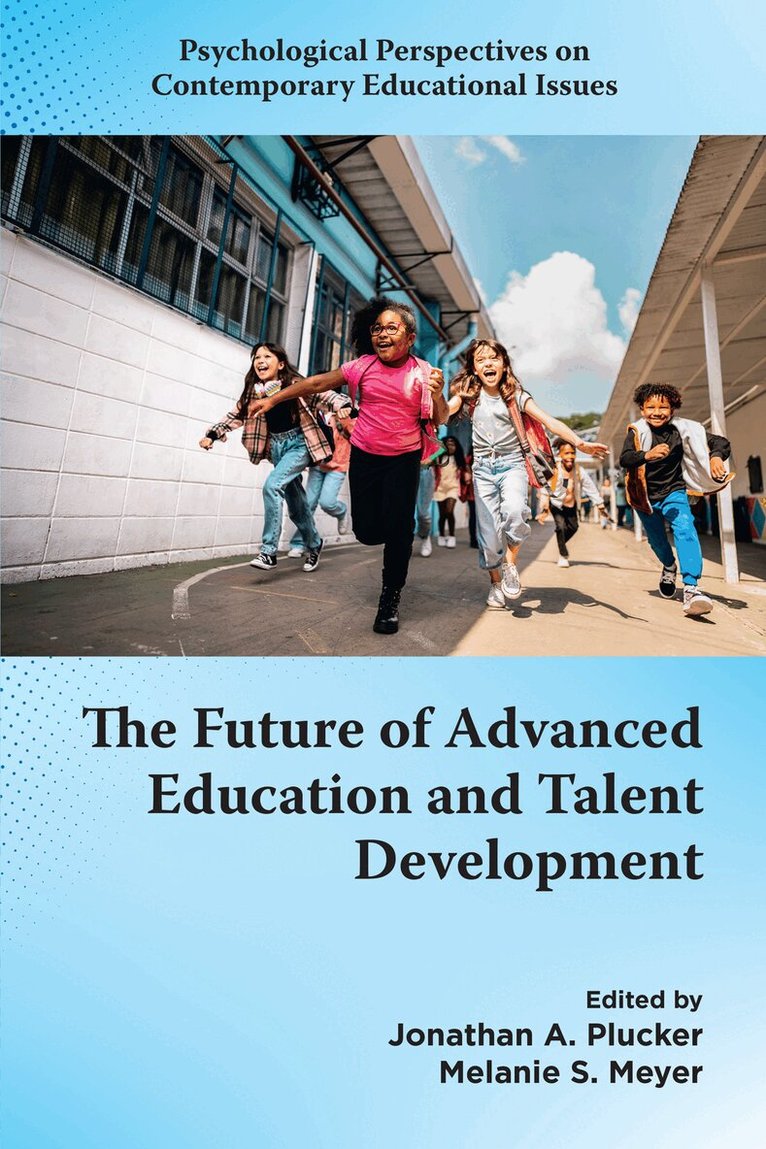
In an era where advanced education is gaining unprecedented attention from educators, policymakers, and families, the landscape of learning is evolving rapidly. Over the past 15 years, significant strides have been made in theory, research, and practice, transforming classrooms around the globe. This progress not only enhances the quality of advanced education but also increases the number of students excelling at higher levels. As the spotlight on advanced students intensifies, there is a growing call for innovative and comprehensive approaches to talent development. The Future of Advanced Education and Talent Development brings together insightful essays from leading scholars and practitioners worldwide, offering a deep dive into current practices and envisioning future directions for advanced learning. This compelling collection covers traditional topics such as identification, acceleration, and social and emotional development. It also explores the expansive nature of the field, addressing after-school and summer programs, technology integration, and career and technical education, among other critical areas. Each essay presents thought-provoking ideas and actionable recommendations, sparking meaningful discussions about the future of advanced education. Whether you are an educator or policymaker, this book provides a comprehensive overview of the latest advancements and future possibilities in advanced education and talent development.