Public Culture Book - Böcker
Visar alla böcker i serien Public Culture Book. Handla med fri frakt och snabb leverans.
8 produkter
8 produkter
1 184 kr
Skickas inom 7-10 vardagar
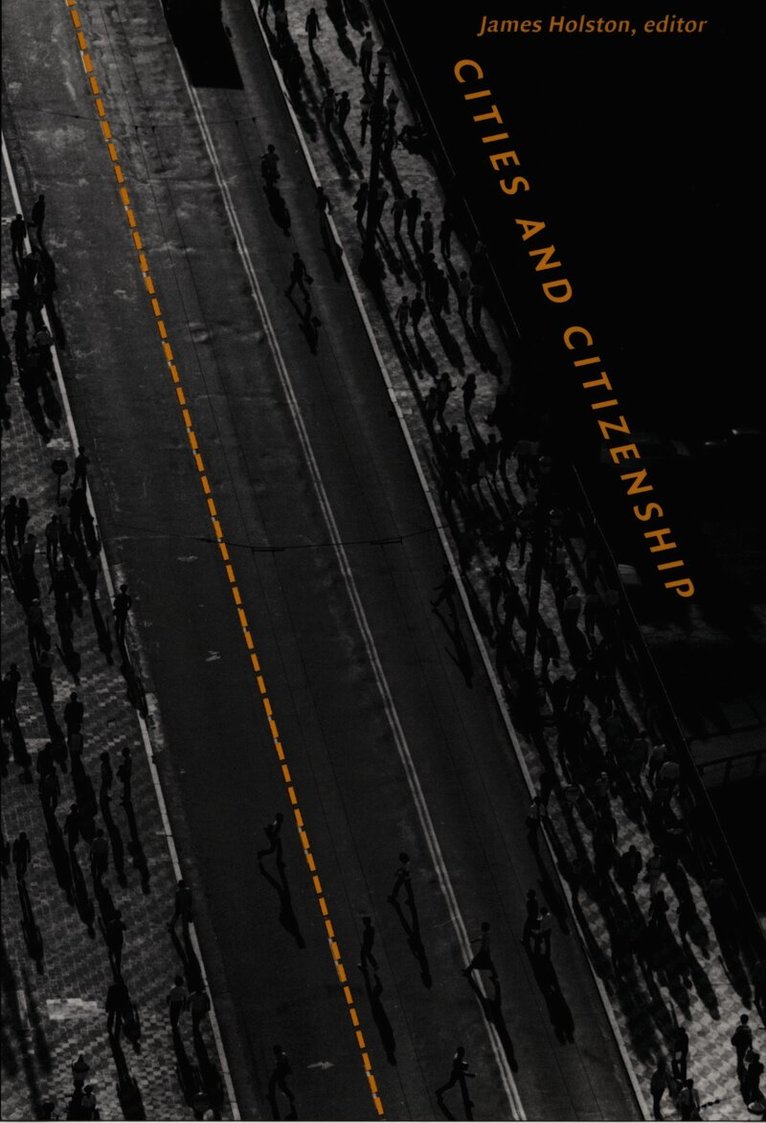
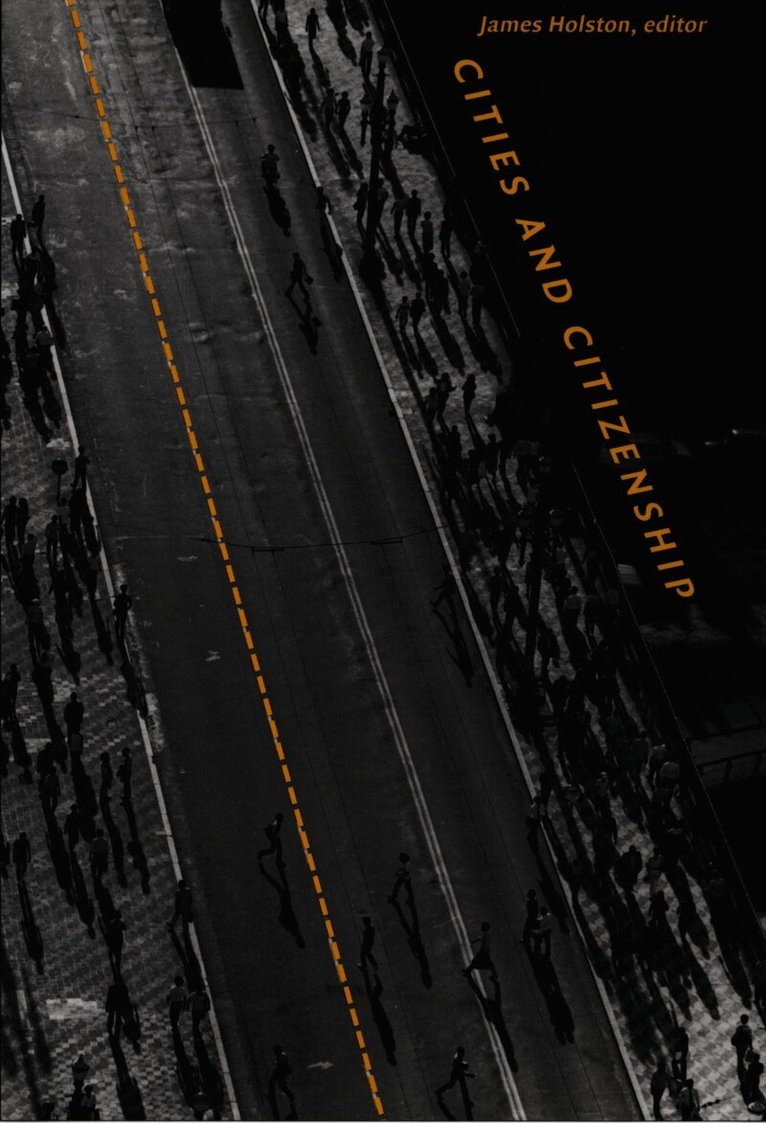
Cities and Citizenship is a prize-winning collection of essays that considers the importance of cities in the making of modern citizens. For most of the modern era the nation and not the city has been the principal domain of citizenship. This volume demonstrates, however, that cities are especially salient sites for examining the current renegotiations of citizenship, democracy, and national belonging. Just as relations between nations are changing in the current phase of global capitalism, so too are relations between nations and cities. Written by internationally prominent scholars, the essays in Cities and Citizenship propose that “place” remains fundamental to these changes and that cities are crucial places for the development of new alignments of local and global identity. Through case studies from Africa, Europe, Latin America, and North America, the volume shows how cities make manifest national and transnational realignments of citizenship and how they generate new possibilities for democratic politics that transform people as citizens. Previously published as a special issue of Public Culture that won the 1996 Best Single Issue of a Journal Award from the Professional/Scholarly Publishing Division of the Association of American Publishers, the collection showcases a photo essay by Cristiano Mascaro, as well as two new essays by James Holston and Thomas Bender.Cities and Citizenship will interest students and scholars of anthropology, geography, sociology, planning, and urban studies, as well as globalization and political science.Contributors. Arjun Appadurai, Etienne Balibar, Thomas Bender, Teresa P. R. Caldeira, Mamadou Diouf, Dilip Parameshwar Gaonkar, James Holston, Marco Jacquemet, Christopher Kamrath, Cristiano Mascaro, Saskia Sassen, Michael Watts, Michel Wieviorka
360 kr
Skickas inom 7-10 vardagar
Cities and Citizenship is a prize-winning collection of essays that considers the importance of cities in the making of modern citizens. For most of the modern era the nation and not the city has been the principal domain of citizenship. This volume demonstrates, however, that cities are especially salient sites for examining the current renegotiations of citizenship, democracy, and national belonging. Just as relations between nations are changing in the current phase of global capitalism, so too are relations between nations and cities. Written by internationally prominent scholars, the essays in Cities and Citizenship propose that “place” remains fundamental to these changes and that cities are crucial places for the development of new alignments of local and global identity. Through case studies from Africa, Europe, Latin America, and North America, the volume shows how cities make manifest national and transnational realignments of citizenship and how they generate new possibilities for democratic politics that transform people as citizens. Previously published as a special issue of Public Culture that won the 1996 Best Single Issue of a Journal Award from the Professional/Scholarly Publishing Division of the Association of American Publishers, the collection showcases a photo essay by Cristiano Mascaro, as well as two new essays by James Holston and Thomas Bender.Cities and Citizenship will interest students and scholars of anthropology, geography, sociology, planning, and urban studies, as well as globalization and political science.Contributors. Arjun Appadurai, Etienne Balibar, Thomas Bender, Teresa P. R. Caldeira, Mamadou Diouf, Dilip Parameshwar Gaonkar, James Holston, Marco Jacquemet, Christopher Kamrath, Cristiano Mascaro, Saskia Sassen, Michael Watts, Michel Wieviorka
1 236 kr
Skickas inom 7-10 vardagar
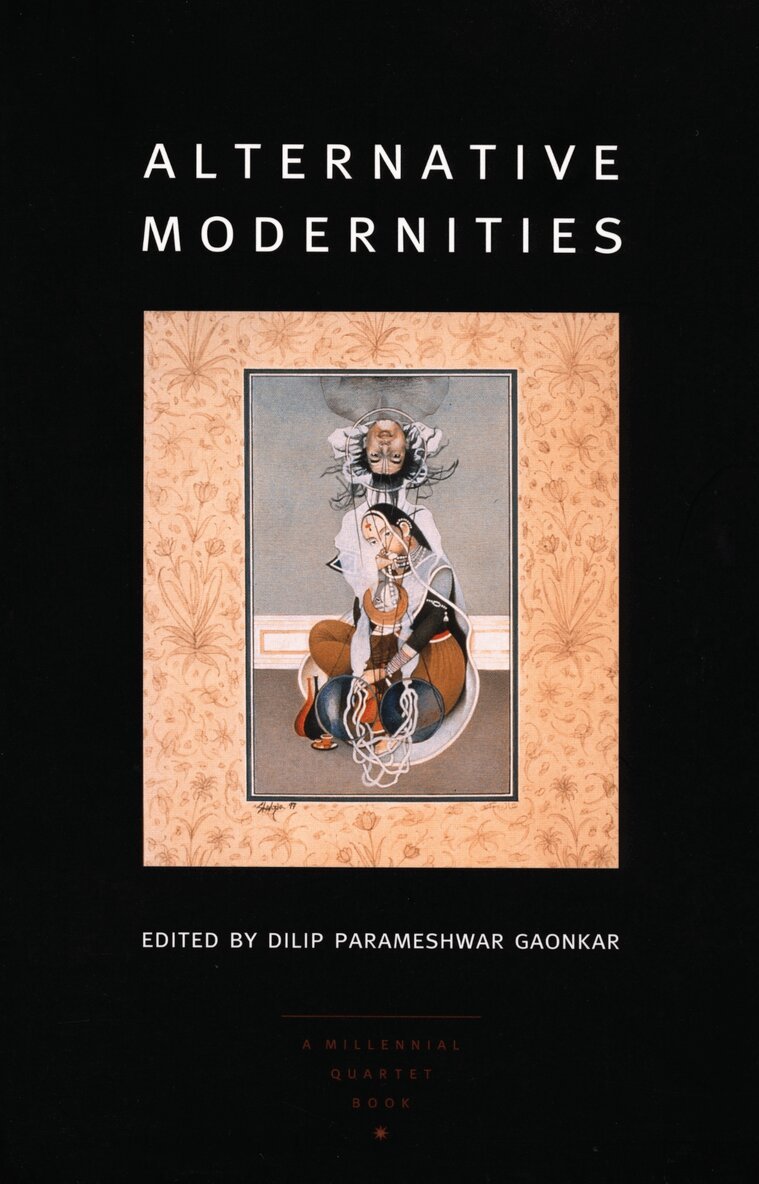
To think in terms of “alternative modernities” is to admit that modernity is inescapable and to desist from speculations about modernity’s end. Modernity today is global and multiple and no longer has a Western “governing center” to accompany it. The essays in this collection, therefore, approach the dilemmas of modernity from transnational and transcultural perspectives.The idea of “alternative modernities” holds that modernity always unfolds within specific cultures or civilizations and that different starting points of the transition to modernity lead to different outcomes. Without abandoning the Western discourse on the subject, the contributors to this volume write from the standpoint that modernity is in truth a richly mulitiplicitous concept. Believing that the language and lessons of Western modernity must be submitted to comparative study of its global receptions, they focus on such sites as China, Russia, India, Trinidad, and Mexico. Other essays treat more theoretical aspects of modernity, such as its self-understanding and the potential reconcilability of cosmopolitanism and diversity.Contributors. Homi Bhabha, William Cunningham Bissell, Dipesh Chakrabarty, Dilip Parameshwar Gaonkar, Michael Hanchard, Beatriz Jaguaribe, Leo Ou-fan Lee, Claudio Lomnitz, Thomas McCarthy, Tejaswini Niranjana, Elizabeth A. Povinelli, Shahzia Sikander, Charles Taylor, Andrew Wachtel
412 kr
Skickas inom 7-10 vardagar
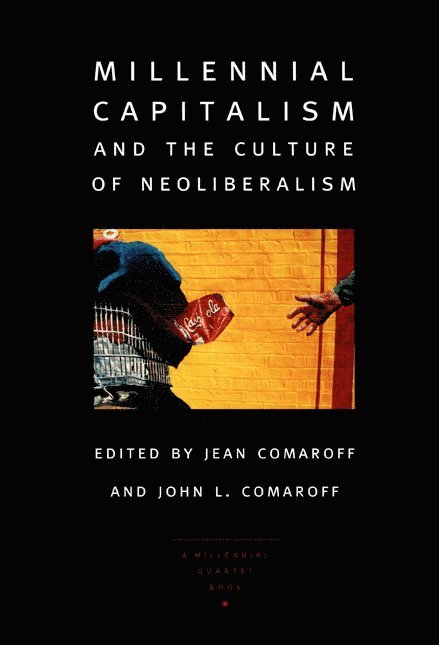
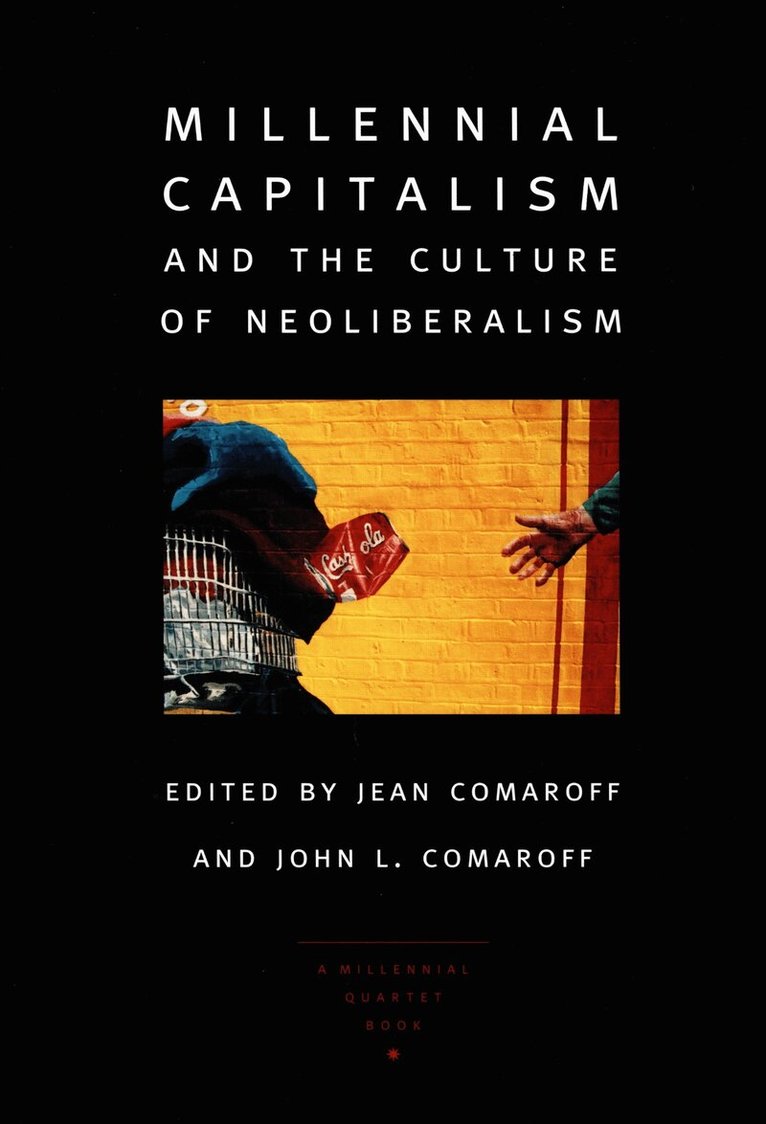
The essays in Millennial Capitalism and the Culture of Neoliberalism pose a series of related questions: How are we to understand capitalism at the millennium? Is it a singular or polythetic creature? What are we to make of the culture of neoliberalism that appears to accompany it, taking on simultaneously local and translocal forms? To what extent does it make sense to describe the present juncture in world history as an “age of revolution,” one not unlike 1789–1848 in its transformative potential? In exploring the material and cultural dimensions of the Age of Millennial Capitalism, the contributors interrogate the so-called crisis of the nation-state, how the triumph of the free market obscures rising tides of violence and cultures of exclusion, and the growth of new forms of identity politics. The collection also investigates the tendency of neoliberal capitalism to produce a world of increasing differences in wealth, environmental catastrophes, heightened flows of people and value across space and time, moral panics and social impossibilities, bitter generational antagonisms and gender conflicts, invisible class distinction, and “pariah” forms of economic activity. In the process, the volume opens up an empirically grounded, conceptual discussion about the world-at-large at a particularly momentous historical time-when the social sciences and humanities are in danger of ceding intellectual initiative to the masters of the market and the media.In addition to its crossdisciplinary essays, Millennial Capitalism and the Culture of Neoliberalism-originally the third installment of the journal Public Culture’s “Millennial Quartet”-features several photographic essays. The book will interest anthropologists, political geographers, economists, sociologists, and political theorists.Contributors. Scott Bradwell, Jean Comaroff, John L. Comaroff, Fernando Coronil, Peter Geschiere, David Harvey, Luiz Paulo Lima, Caitrin Lynch, Rosalind C. Morris, David G. Nicholls, Francis Nyamnjoh, Elizabeth A. Povinelli, Paul Ryer, Allan Sekula, Irene Stengs, Michael Storper, Seamus Walsh, Robert P. Weller, Hylton White, Melissa W. Wright, Jeffrey A. Zimmerman
1 681 kr
Skickas inom 7-10 vardagar
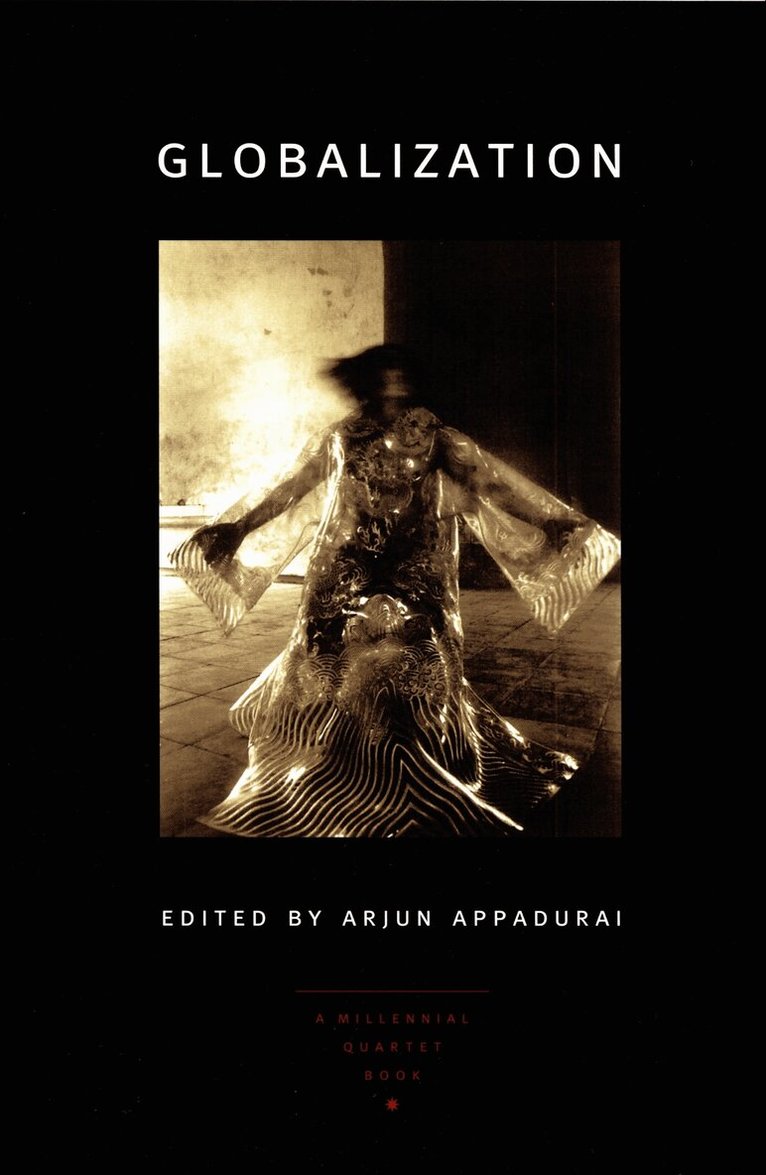
Edited by one of the most prominent scholars in the field and including a distinguished group of contributors, this collection of essays makes a striking intervention in the increasingly heated debates surrounding the cultural dimensions of globalization. While including discussions about what globalization is and whether it is a meaningful term, the volume focuses in particular on the way that changing sites-local, regional, diasporic-are the scenes of emergent forms of sovereignty in which matters of style, sensibility, and ethos articulate new legalities and new kinds of violence.Seeking an alternative to the dead-end debate between those who see globalization as a phenomenon wholly without precedent and those who see it simply as modernization, imperialism, or global capitalism with a new face, the contributors seek to illuminate how space and time are transforming each other in special ways in the present era. They examine how this complex transformation involves changes in the situation of the nation, the state, and the city. While exploring distinct regions-China, Africa, South America, Europe-and representing different disciplines and genres-anthropology, literature, political science, sociology, music, cinema, photography-the contributors are concerned with both the political economy of location and the locations in which political economies are produced and transformed. A special strength of the collection is its concern with emergent styles of subjectivity, citizenship, and mobilization and with the transformations of state power through which market rationalities are distributed and embodied locally.Contributors. Arjun Appadurai, Jean FranÇois Bayart, JÉrÔme BindÉ, NÉstor GarcÍa Canclini, Leo Ching, Steven Feld, Ralf D. Hotchkiss, Wu Hung, Andreas Huyssen, Boubacar TourÉ MandÉmory, Achille Mbembe, Philipe Rekacewicz, Saskia Sassen, Fatu Kande Senghor, Seteney Shami, Anna Tsing, Zhang Zhen
540 kr
Skickas inom 3-6 vardagar
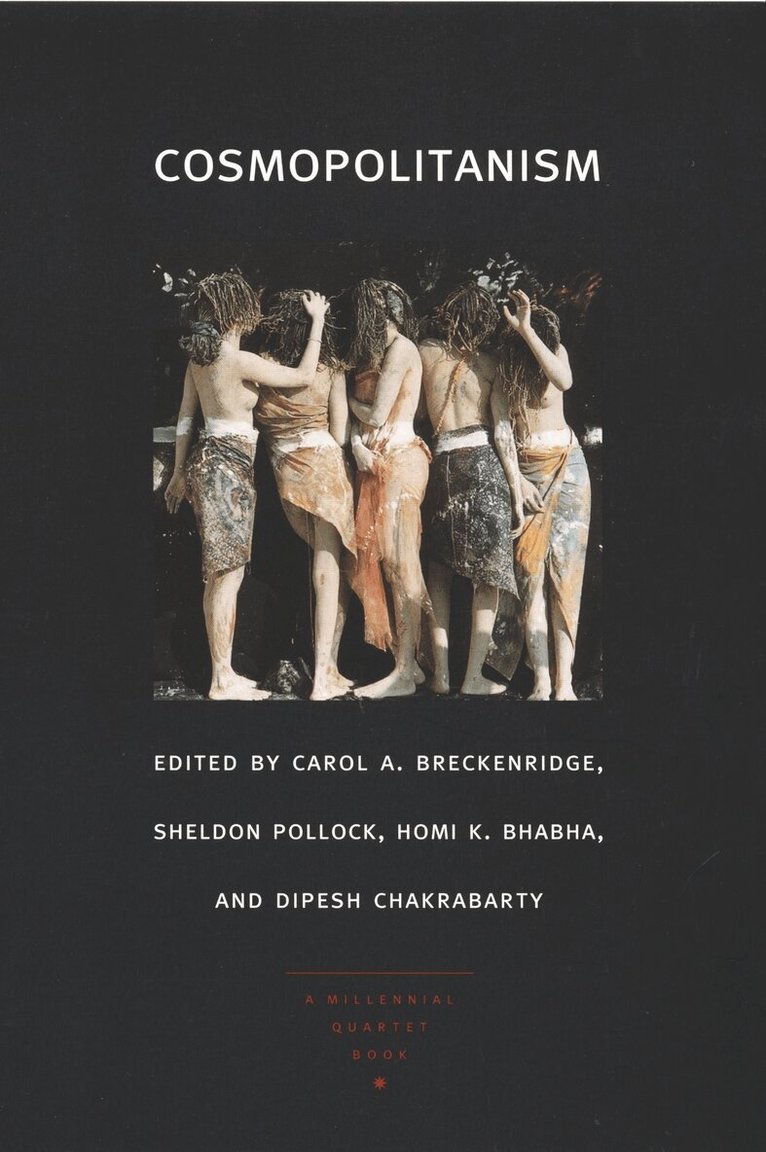
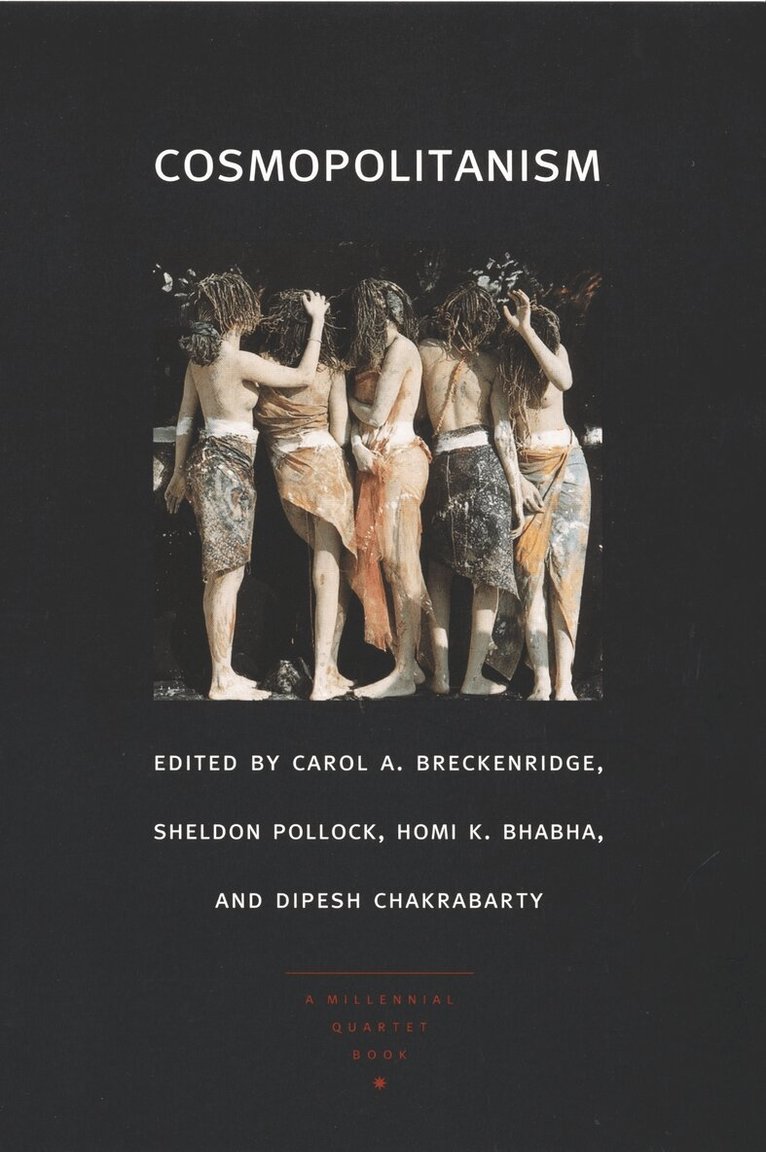
As the final installment of Public Culture’s Millennial Quartet, Cosmopolitanism assesses the pasts and possible futures of cosmopolitanism-or ways of thinking, feeling, and acting beyond one’s particular society. With contributions from distinguished scholars in disciplines such as literary studies, art history, South Asian studies, and anthropology, this volume recenters the history and theory of translocal political aspirations and cultural ideas from the usual Western vantage point to areas outside Europe, such as South Asia, China, and Africa. By examining new archives, proposing new theoretical formulations, and suggesting new possibilities of political practice, the contributors critically probe the concept of cosmopolitanism. On the one hand, cosmopolitanism may be taken to promise a form of supraregional political solidarity, but on the other, these essays argue, it may erode precisely those intimate cultural differences that derive their meaning from particular places and traditions. Given that most cosmopolitan political formations-from the Roman empire and European imperialism to contemporary globalization-have been coercive and unequal, can there be a noncoercive and egalitarian cosmopolitan politics? Finally, the volume asks whether cosmopolitanism can promise any universalism that is not the unwarranted generalization of some Western particular.Contributors. Ackbar Abbas, Arjun Appadurai, Homi K. Bhabha, T. K. Biaya, Carol A. Breckenridge, Dipesh Chakrabarty, Ousame Ndiaye Dago, Mamadou Diouf, Wu Hung, Walter D. Mignolo, Sheldon Pollock, Steven Randall
1 315 kr
Skickas inom 7-10 vardagar
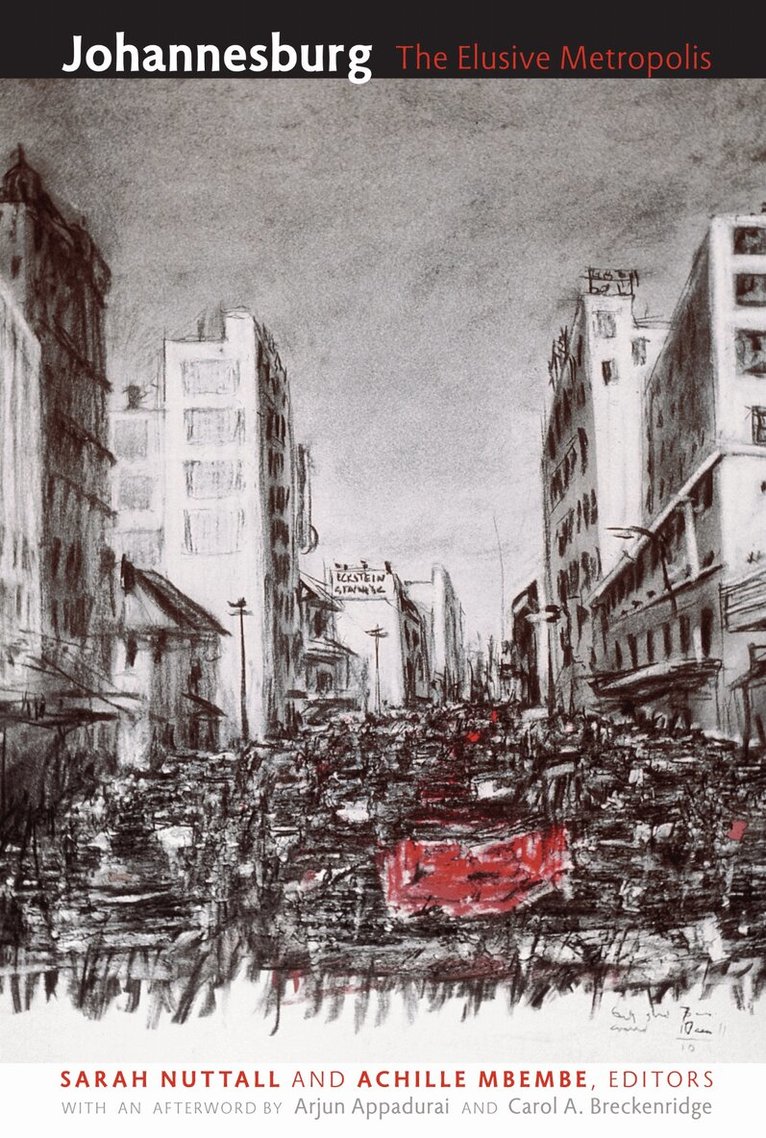
Johannesburg: The Elusive Metropolis is a pioneering effort to insert South Africa’s largest city into urban theory, on its own terms. Johannesburg is Africa’s premier metropolis. Yet theories of urbanization have cast it as an emblem of irresolvable crisis, the spatial embodiment of unequal economic relations and segregationist policies, and a city that responds to but does not contribute to modernity on the global scale. Complicating and contesting such characterizations, the contributors to this collection reassess classic theories of metropolitan modernity as they explore the experience of “city-ness” and urban life in post-apartheid South Africa. They portray Johannesburg as a polycentric and international city with a hybrid history that continually permeates the present. Turning its back on rigid rationalities of planning and racial separation, Johannesburg has become a place of intermingling and improvisation, a city that is fast developing its own brand of cosmopolitan culture.The volume’s essays include an investigation of representation and self-stylization in the city, an ethnographic examination of friction zones and practices of social reproduction in inner-city Johannesburg, and a discussion of the economic and literary relationship between Johannesburg and Maputo, Mozambique’s capital. One contributor considers how Johannesburg’s cosmopolitan sociability enabled the anticolonial projects of Mohandas Ghandi and Nelson Mandela. Journalists, artists, architects, writers, and scholars bring contemporary Johannesburg to life in ten short pieces, including reflections on music and megamalls, nightlife, built spaces, and life for foreigners in the city.Contributors: Arjun Appadurai, Carol A. Breckenridge, Lindsay Bremner, David Bunn, Fred de Vries, Nsizwa Dlamini, Mark Gevisser, Stefan Helgesson, Julia Hornberger, Jonathan Hyslop, Grace Khunou, FrÉdÉric Le Marcis, Xavier Livermon, John Matshikiza, Achille Mbembe, Robert Muponde, Sarah Nuttall, Tom Odhiambo, Achal Prabhala, AbdouMaliq Simone
412 kr
Skickas inom 7-10 vardagar
Johannesburg: The Elusive Metropolis is a pioneering effort to insert South Africa’s largest city into urban theory, on its own terms. Johannesburg is Africa’s premier metropolis. Yet theories of urbanization have cast it as an emblem of irresolvable crisis, the spatial embodiment of unequal economic relations and segregationist policies, and a city that responds to but does not contribute to modernity on the global scale. Complicating and contesting such characterizations, the contributors to this collection reassess classic theories of metropolitan modernity as they explore the experience of “city-ness” and urban life in post-apartheid South Africa. They portray Johannesburg as a polycentric and international city with a hybrid history that continually permeates the present. Turning its back on rigid rationalities of planning and racial separation, Johannesburg has become a place of intermingling and improvisation, a city that is fast developing its own brand of cosmopolitan culture.The volume’s essays include an investigation of representation and self-stylization in the city, an ethnographic examination of friction zones and practices of social reproduction in inner-city Johannesburg, and a discussion of the economic and literary relationship between Johannesburg and Maputo, Mozambique’s capital. One contributor considers how Johannesburg’s cosmopolitan sociability enabled the anticolonial projects of Mohandas Ghandi and Nelson Mandela. Journalists, artists, architects, writers, and scholars bring contemporary Johannesburg to life in ten short pieces, including reflections on music and megamalls, nightlife, built spaces, and life for foreigners in the city.Contributors: Arjun Appadurai, Carol A. Breckenridge, Lindsay Bremner, David Bunn, Fred de Vries, Nsizwa Dlamini, Mark Gevisser, Stefan Helgesson, Julia Hornberger, Jonathan Hyslop, Grace Khunou, FrÉdÉric Le Marcis, Xavier Livermon, John Matshikiza, Achille Mbembe, Robert Muponde, Sarah Nuttall, Tom Odhiambo, Achal Prabhala, AbdouMaliq Simone