Queen’s University Belfast Irish Archaeological Monograph – serie
Visar alla böcker i serien Queen’s University Belfast Irish Archaeological Monograph. Handla med fri frakt och snabb leverans.
3 produkter
3 produkter
Del 1 - Queen’s University Belfast Irish Archaeological Monograph
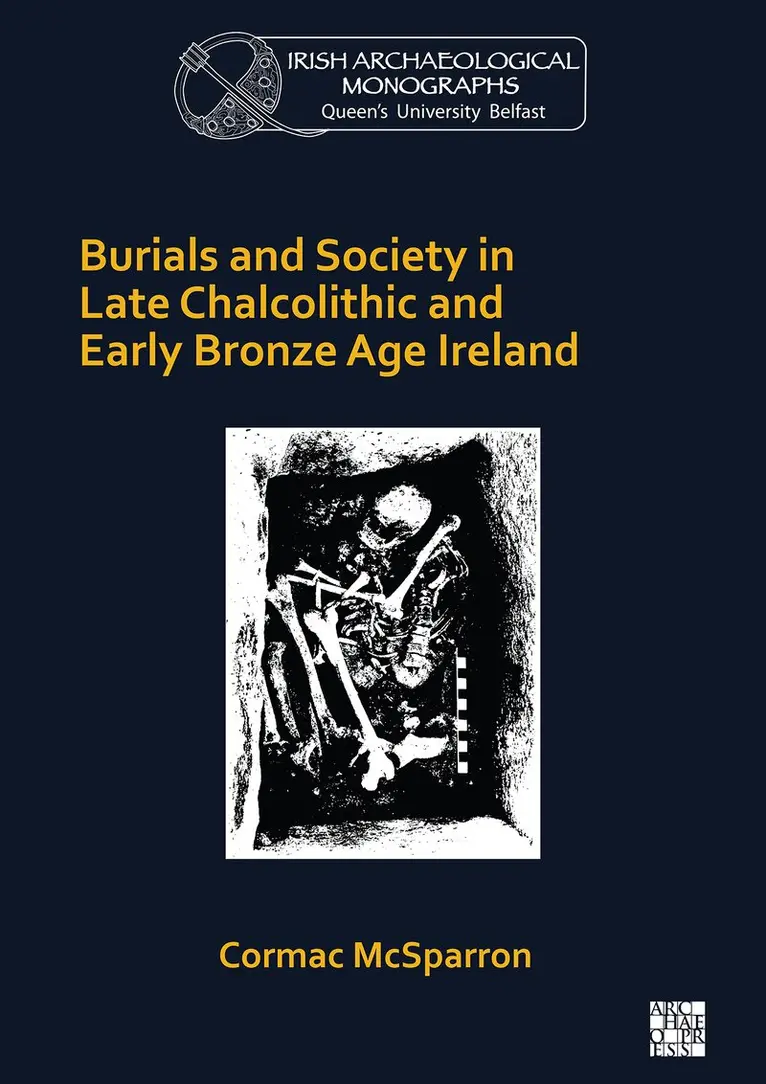
Burials and Society in Late Chalcolithic and Early Bronze Age Ireland
Häftad, Engelska, 2021
531 kr
Skickas
Burials and Society in Late Chalcolithic and Early Bronze Age Ireland describes and analyses the increasing complexity of later Chalcolithic and Early Bronze Age burial in Ireland, using burial complexity as a proxy for increasing social complexity, and as a tool for examining social structure. The book commences with a discussion of theoretical approaches to the study of burials in both anthropology and archaeology and continues with a summary of the archaeological and environmental background to the Irish Chalcolithic and Early Bronze Age. Then a set of criteria for identifying different types of social organisation is proposed, before an in-depth examination of the radiocarbon chronology of Irish Single Burials, which leads to a multifaceted statistical analysis of the Single Burial Tradition burial utilising descriptive and multivariate statistical approaches. A chronological model of the Irish Chalcolithic and Early Bronze Age is then presented which provides the basis for a discussion of increasing burial and social complexity in Ireland over this period, proposing an evolution from an egalitarian society in the later Chalcolithic Period through to a prestige goods chiefdom emerging around 1900 BC. It is suggested that the decline of copper production at Ross Island, Co. Cork after 2000 BC may have led to a ‘copper crisis’ which would have been a profoundly disrupting event, destroying the influence of copper miners and shifting power to copper workers, and those who controlled them. This would have provided a stimulus towards the centralisation of power and the emergence of a ranked social hierarchy. The effects of this ‘copper crisis’ would have been felt in Britain also, where much Ross Island copper was consumed and may have led to similar developments, with the emergence of the Wessex Culture a similar response in Britain to the same stimulus.
Del 2 - Queen’s University Belfast Irish Archaeological Monograph
Irish Late Iron Age Equestrian Equipment in its Insular and Continental Context
Häftad, Engelska, 2021
665 kr
Skickas
Irish Late Iron Age Equestrian Equipment in its Insular and Continental Context is the first practical archaeological study of Irish Iron Age lorinery. The volume examines the bits and bosals (Y-pieces) holistically, using practical stable-yard knowledge merged with archaeological techniques such as morphometrics, use-wear, GIS, functional comparison to European and British equipment and distribution analysis to place it within its time and place. Irish Iron Age artefacts have always been beset by issues of chronology, but by using these various analytical methods, a more precise timeframe for the objects is indicated. A complex relationship with Roman Britain and the Empire also becomes visible, with aspects of identity and belief being expressed through the sophisticated equestrian equipment. The analysis of the bridle components reveal that the Ireland of the first centuries AD shares some characteristics with other boundary zones of the Roman Empire, such as Scotland and northern Germany, but also has its own unique interpretation of introduced technology. The Ireland of the Late Iron Age, then, is a society in flux, picking and choosing which traditions it maintains. The horse and associated equipment were very much at the heart of the social changes set in motion by contact with the Roman Empire, and as such, the examination of the snaffles and bosals allows us to bring the people of the Late Iron Age in Ireland into focus.
Del 3 - Queen’s University Belfast Irish Archaeological Monograph
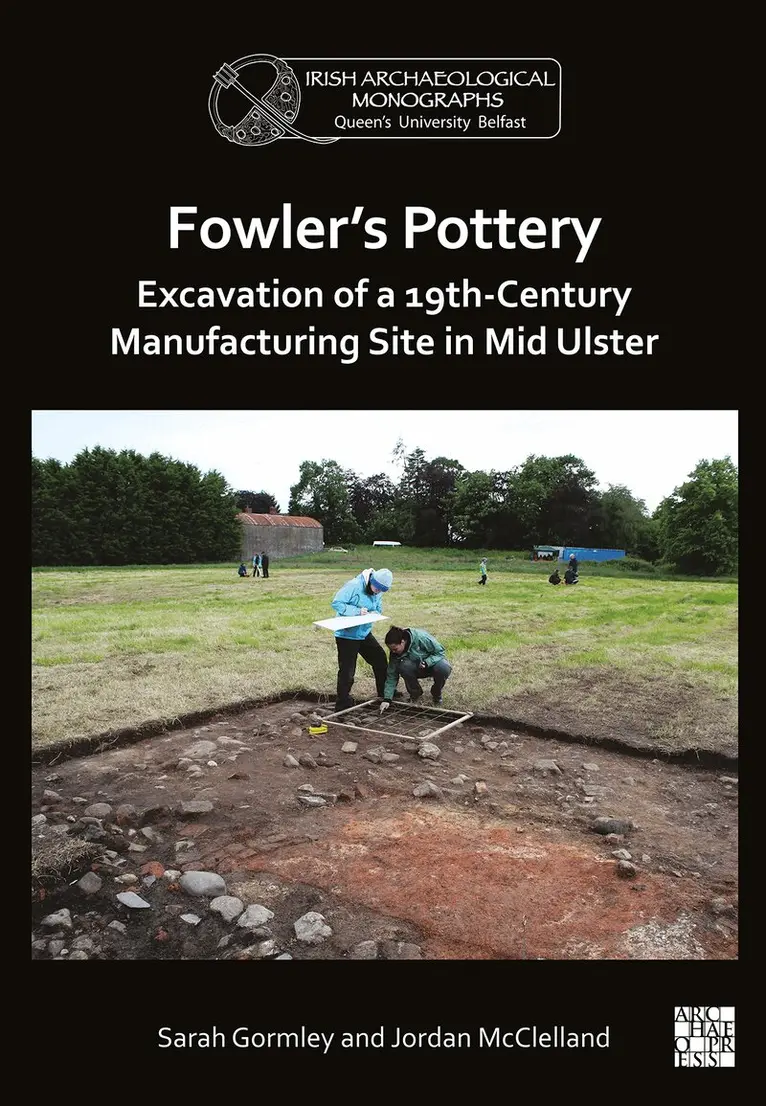
Fowler's Pottery: Excavation of a 19th Century Manufacturing Site in Mid Ulster
Häftad, Engelska, 2026
456 kr
Skickas
This monograph details the 2019 Centre for Community Archaeology excavation of Fowler’s Pottery, a nineteenth century pottery manufacturing site located in the townland of Derrybuoy, just outside Coalisland, Co. Tyrone. The site produced coarse earthenware pottery, a type which has received little academic attention to date, and this publication will therefore be of great use in advancing our limited knowledge of the coarse, utilitarian pottery used every day in nineteenth century households. Four distinct vessel forms were produced in four possible decorative styles, showing a specialised range of production which appears to have primarily targeted the rural market. Several key features of the pottery were also identified and are described at length, including the kiln, drying room and clay extraction pit, as well as large quantities of brick and kiln furniture. The narrative is greatly supplemented by historical records including personal letters, census returns and local testimony which offer a high-resolution view of precisely how and when the pottery operated. While other Post-Medieval pottery production sites have been excavated in Ireland previously, this is the second example of a nineteenth century kiln producing coarse earthenware pottery to be excavated, and the first to receive publication, meaning that this site is of critical importance to advancing our knowledge of local economy and manufacturing in the period.