Radical Black Women Series - Böcker
Visar alla böcker i serien Radical Black Women Series. Handla med fri frakt och snabb leverans.
3 produkter
3 produkter
262 kr
Skickas inom 5-8 vardagar
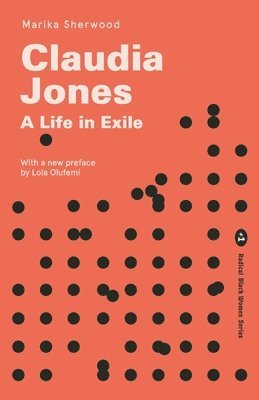
A new edition of the groundbreaking biography of activist, newspaper editor and community organiser, Claudia Jones. Featuring a preface by Black feminist writer, Lola Olufemi, and an appendix compiled by Marika Sherwood. This is the first book in Lawrence Wishart's new Radical Black Women Series.
259 kr
Skickas
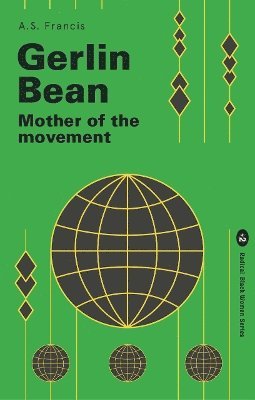
This book recovers the neglected history of Gerlin Bean, an activist and community organiser in the Black radical movement of the 1960s-1980s. Gerlin Bean was one of the movement's most active participants, but like many such women little is documented about her life and work. This is the first book to focus on Gerlin's contributions to Black radical organising, looking at her activism across a number of influential organisations and initiatives, from youth programmes to Black Power politics and autonomous Black women's groups.Based on interviews with people who knew her along with original archival research work, this book explores Gerlin's experiences against the backdrop of the revolutionary potential and vigour of the latter half of the twentieth century, reclaiming her as a critical figure in Black British history. The second title in LW's Radical Black Women series, Gerlin Bean: Mother of the Movement is essential reading for historians of Black Britain, archivists, educators and activists engaged in decolonising British history and culture.
Del 3 - Radical Black Women Series
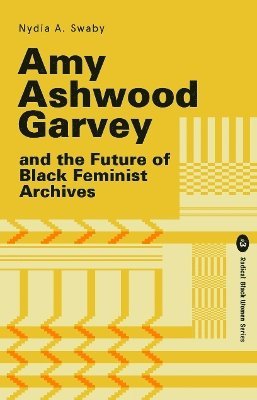
Amy Ashwood Garvey and the Future of Black Feminist Archives
Häftad, Engelska, 2024
259 kr
Skickas
Amy Ashwood Garvey was a committed Pan-Africanist and feminist who moved to the UK from Harlem in the 1930s. Most famous for being the first wife of Marcus Garvey, her contributions to movements for social justice, race equality and in particular Black women’s rights, have been largely forgotten - not least since the scant records of her life and work are spread between the various places she lived: Harlem, New York, London, UK, and Accra, Ghana. Swaby recovers Amy's life and work as an important political activist, cultural producer and Pan-Africanist in her own right, retracing her steps with trips to Harlem, London and West Africa. In addition to conducting traditional archival research, Swaby curates a series of ‘curatorial fabulations’, imagining into the gaps in the archive with autoethnographic practice. Taking Amy’s fragmented archive as her starting point, Swaby asks what the conditions of Amy's archive can tell us about the future of Black feminist research.