Reading the American Landscape - Böcker
Visar alla böcker i serien Reading the American Landscape. Handla med fri frakt och snabb leverans.
4 produkter
4 produkter
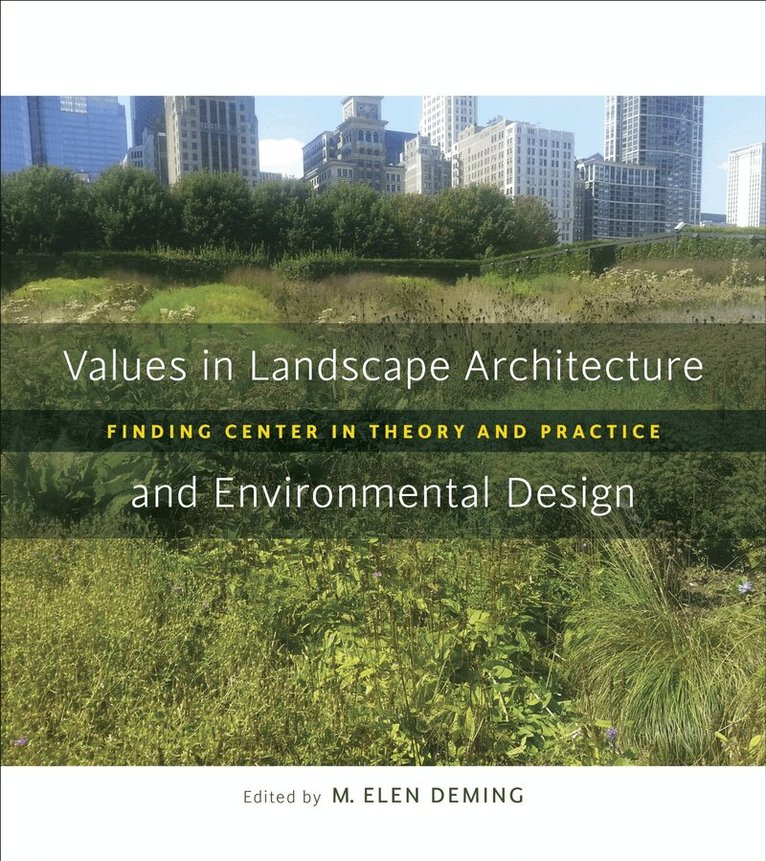
Values in Landscape Architecture and Environmental Design
Finding Center in Theory and Practice
Häftad, Engelska, 2015
371 kr
Skickas inom 7-10 vardagar
The successful realisation of diversity, resilience, usefulness, profitability, or beauty in landscape design requires a firm understanding of the stakeholders' values. This collection, which incorporates a wide variety of geographic locations and cultural perspectives, reinforces the necessity for clear and articulate comprehension of the many factors that guide the design process.As the contributors to this collection reveal, dominant and emerging social, political, philosophical, and economic concerns perpetually assert themselves in designed landscapes, from manifestations of class consciousness in Napa Valley vineyards to recurring themes and conflicts in American commemorative culture as seen in designs for national memorials. One essay demonstrates the lasting impact of the doctrine of Manifest Destiny on the culture and spaces of the Midwest, while another considers the shifting historical narratives that led to the de-domestication and subsequent re-wilding of the Oostvaardersplassen in the Netherlands. These eleven essays help foster the ability to conduct a balanced analysis of various value systems and produce a lucid visualization of the necessary tradeoffs. Offering an array of case studies and theoretical arguments, Values in Landscape Architecture and Environmental Design encourages professionals and educators to bring self-awareness, precision, and accountability to their consideration of landscape designs.
492 kr
Skickas inom 7-10 vardagar
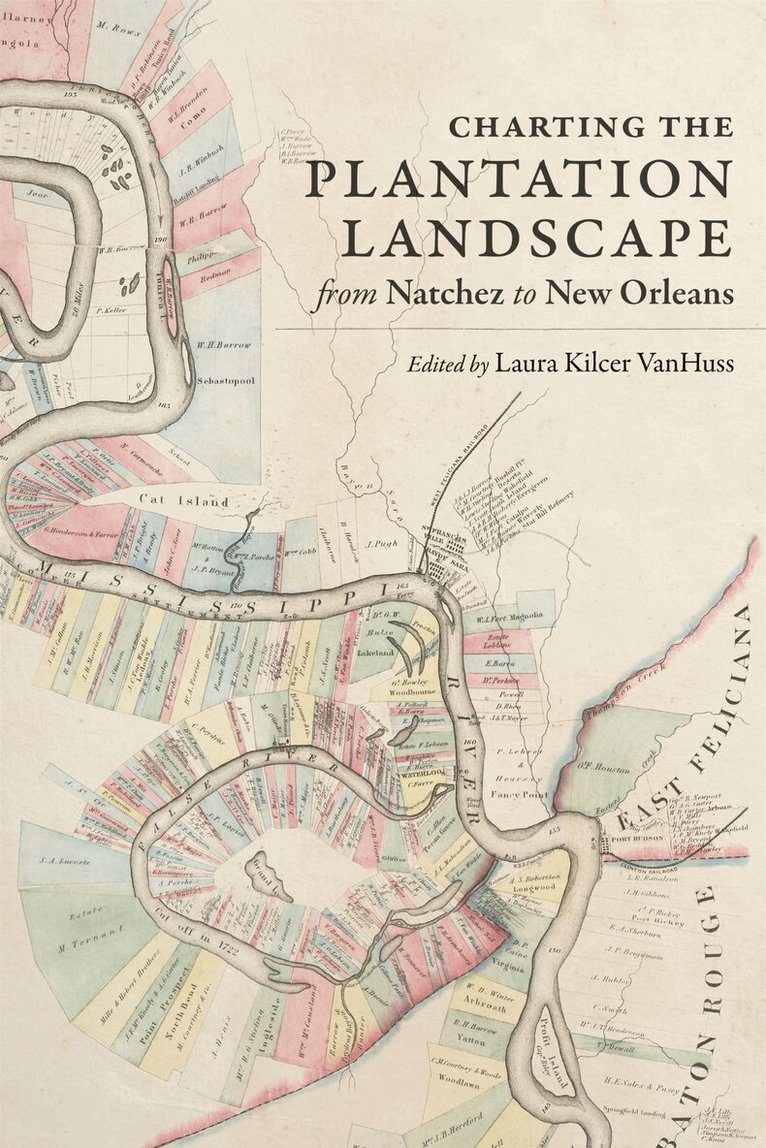
Charting the Plantation Landscape from Natchez to New Orleans examines the hidden histories behind one of the nineteenth-century South's most famous maps: Norman's Chart of the Lower Mississippi River, created by surveyor Marie Adrien Persac before the Civil War and used for decades to guide the pilots of river vessels. Beyond its purely cartographic function, Persac's map depicted a world of accomplishment, prosperity, and wealth, while concealing the enslaved and exploited laborers whose work powered the plantations Persac drew. In this collection, contributors from a variety of disciplines consider the histories that Persac's map omitted, exploring plantations not as sites of ease and plenty, but as complex legal, political, and medical landscapes.Essays by Laura Ewen Blokker and Suzanne Turner consider the built and designed landscapes of plantations as they were structured by the logics and logistics of both slavery and the effort to present a fa?ºade of serenity and wealth. William Horne and Charles D. Chamberlain III delve into the political activity of former slaves and slaveholders respectively, while Christopher Willoughby explores the ways the plantation health system was defined by the agro-industrial environment. Jochen Wierich examines artistic depictions of plantations from the antebellum years through the twentieth century, and Christopher Morris uses the famed Uncle Sam Plantation to explain how plantations have been memorialized, remembered, and preserved.With keen insight into the human cost of the idealized version of the agrarian South depicted in Persac's map, Charting the Plantation Landscape encourages us to see with new eyes and form new definitions of what constitutes the plantation landscape.
425 kr
Skickas inom 7-10 vardagar
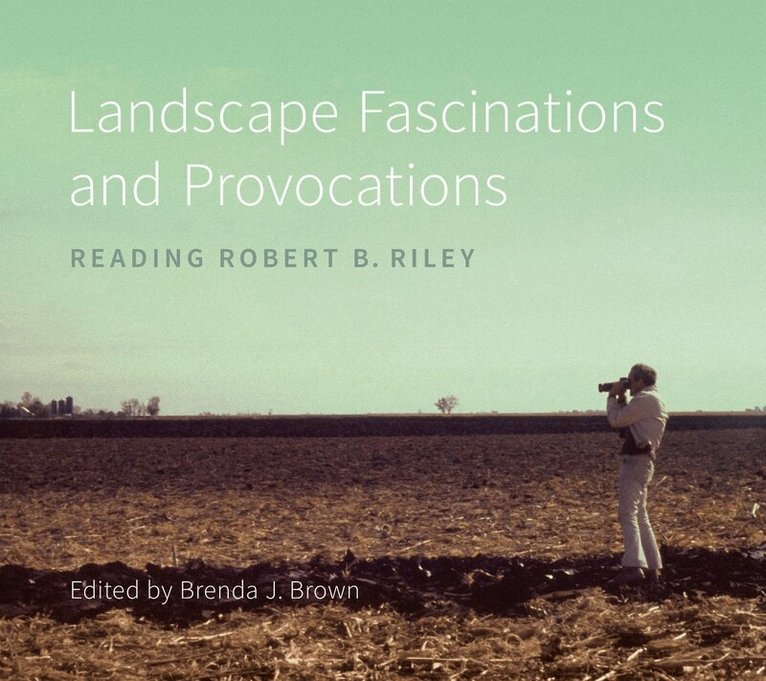
Landscape Fascinations and Provocations reflects and builds on the work of Robert B. Riley (1931–2019), emphasizing his ongoing importance for landscape studies and landscape architecture. The title of the volume represents an attempt to distill Riley's attitude and approach. The book's core consists of fourteen essays—six seminal pieces by Riley alternating with eight new pieces by other authors, each relating to Riley's work in a different way.Riley's singular and important voice survives in his writing: lean, straightforward, erudite, clever, wryly observant, provocative, accessible, and dense. His writings reflect his love of landscapes, his wariness of jargon, and his awareness of academicians' and designers' potential hubris. His essays reveal a lifetime of curious probing and reflection, of serious and critical readings of geographers, anthropologists, psychologists, novelists, and journalists—as well as designers—on landscapes, their design and experience. His subjects include specific North American cultural landscapes; landscapes in literature, memory, and contemporary media; physical landscapes and technology; and the garden, nature, and meaning. Reflecting Riley's eclectic, wide-ranging curiosity and influence, authors of the new essays—Brenda J. Brown, M. Elen Deming, Rosa E. Ficek, Lewis D. Hopkins, Rachel Leibowitz, Achva Benzinberg Stein, Linnaea Tillett, and Vera Vicenzotti—include a cultural anthropologist, a regional planner, a historic preservationist, and a lighting designer as well as landscape architects. The book concludes with short reminiscences, assessments, and appreciations from some of the people who knew Riley (luminaries such as Michael Van Valkenburgh, Randy Hester, John Jakle, and Terry Harkness) and felt his influence as teacher, colleague, editor, mentor, and/or friend. Landscape Fascinations and Provocations demonstrates the ways in which Riley's work continues to provoke others in his field to think and act in directions both new and unexpected.
546 kr
Skickas inom 7-10 vardagar
Empty Pedestals uses a design perspective to explore how monuments to the Confederacy speak to regionalism, racist political agendas, and residual collective pain. Many designers and artists working in the public realm have created innovative projects to replace Confederate memorials, contextualize those that still stand, and foster new conversations about history, race, and justice in America. By drawing lessons from these initiatives and considering the questions that remain, editors Kofi Boone and M. Elen Deming hope to assist educators and students in combating endemic prejudice and other forms of social division.For more than a century, the endurance of Confederate monuments, street names, and other memorials in the United States has permitted proponents to establish false and oppressive arguments in defense of so-called historic preservation. The continued presence of these objects maintains symbolic forms of systemic injustice, exclusionary policies and practices, and erasure of the stories, memories, and values of marginalized populations in the American South. While many of these monuments have been taken down since 2017, they account for only a small percentage of the overall number of Confederate relics on public display.Boone and Deming, along with the volume's fourteen contributors, strive to elevate novel frameworks and shared solutions for the issues that continue to trouble American cultural landscapes. Above all, Empty Pedestals lifts up the voices of people who have confronted hateful narratives and devised strategies that stand up to, and apart from, old mythologies. If and when oppressive symbols such as Confederate monuments are permanently eliminated, design alternatives such as those presented here may offer healing in shared spaces, healthier social discourse, and stronger community resilience.