Rereading Ancient Philosophy - Böcker
Visar alla böcker i serien Rereading Ancient Philosophy. Handla med fri frakt och snabb leverans.
10 produkter
10 produkter
Mortal Imitations of Divine Life
The Nature of the Soul in Aristotle's ""De Anima""
Inbunden, Engelska, 2015
1 077 kr
Skickas inom 10-15 vardagar
In Mortal Imitations of Divine Life, Diamond offers an interpretation of De Anima, which explains how and why Aristotle places souls in a hierarchy of value. Aristotle’s central intention in De Anima is to discover the nature and essence of soul—the principle of living beings. He does so by identifying the common structures underlying every living activity, whether it be eating, perceiving, thinking, or moving through space. As Diamond demonstrates through close readings of De Anima, the nature of the soul is most clearly seen in its divine life, while the embodied soul’s other activities are progressively clear approximations of this principle. This interpretation shows how Aristotle’s psychology and biology cannot be properly understood apart from his theological conception of God as life, and offers a new explanation of De Anima’s unity of purpose and structure.
1 077 kr
Skickas inom 10-15 vardagar
In this interpretive commentary on Theaetetus, Gregory Kirk makes a major contribution to scholarship on Plato by emphasizing the relevance of the interpersonal dynamics between the interlocutors for the interpretation of the dialogue’s central arguments about knowledge. Kirk attends closely to the personalities of the participants in the dialogue, focusing especially on the unique demands faced by a student—in this case, Theaetetus—and the ways in which one can embrace or deflect the responsibilities of learning. Kirk’s approach gives equal consideration to the dual demands of dramatic interpretation and philosophical argument that constitute the unique character of the Platonic text, and he develops an original interpretation of the Theaetetus, concluding that the uncertainty that characterizes wisdom supersedes the certainty of knowledge.
416 kr
Skickas inom 7-10 vardagar
In this interpretive commentary on Theaetetus, Gregory Kirk makes a major contribution to scholarship on Plato by emphasizing the relevance of the interpersonal dynamics between the interlocutors for the interpretation of the dialogue’s central arguments about knowledge. Kirk attends closely to the personalities of the participants in the dialogue, focusing especially on the unique demands faced by a student—in this case, Theaetetus—and the ways in which one can embrace or deflect the responsibilities of learning. Kirk’s approach gives equal consideration to the dual demands of dramatic interpretation and philosophical argument that constitute the unique character of the Platonic text, and he develops an original interpretation of the Theaetetus, concluding that the uncertainty that characterizes wisdom supersedes the certainty of knowledge.
1 077 kr
Skickas inom 10-15 vardagar
The Middle Included is a systematic exploration of the meanings of logos throughout Aristotle’s work. It claims that the basic meaning is “gathering,” in the sense of a relation that holds its terms together without isolating them or collapsing one to the other. This basic meaning applies to logos in the sense of human language as well. Aristotle describes how some animals are capable of understanding non-firsthand experience without being able to relay it, while others relay it without understanding its content. Aygu?n argues that what distinguishes human language, for Aristotle, is its ability to both understand and relay non-firsthand experiences along with firsthand ones. This ability is key to understanding the human condition: science, history, news media, education, propaganda, gossip, utopian fiction, and sophistry, as well as philosophy.Aristotle’s name for this peculiar but crucial human ability of “gathering” firsthand experience with non-firsthand experience, Ömer Aygu?n finds, is logos, and this leads to a claim about the specificity of human rationality and language.
416 kr
Skickas inom 7-10 vardagar
A Companion to Ancient Philosophy is a collection of essays on a broad range of themes and figures spanning the entire period extending from the Pre-Socratics to Plato, Aristotle, and the Hellenistic thinkers. Rather than offering synoptic and summary treatments of preestablished positions and themes, these essays engage with the ancient texts directly, focusing attention on concepts that emerge as urgent in the readings themselves and then clarifying those concepts interpretively. Indeed, this is a companion volume that takes a very serious and considered approach to its designated task—accompanying readers as they move through the most crucial passages of the infinitely rich and compelling texts of the ancients. Each essay provides a tutorial in close reading and careful interpretation. Because it offers foundational treatments of the most important works of ancient philosophy and because it, precisely by doing so, arrives at numerous original interpretive insights and suggests new directions for research in ancient philosophy, this volume should be of great value both to students just starting off reading the ancients and to established scholars still fascinated by philosophy's deepest abiding questions.
1 291 kr
Skickas inom 10-15 vardagar
A Companion to Ancient Philosophy is a collection of essays on a broad range of themes and figures spanning the entire period extending from the Pre-Socratics to Plato, Aristotle, and the Hellenistic thinkers. Rather than offering synoptic and summary treatments of preestablished positions and themes, these essays engage with the ancient texts directly, focusing attention on concepts that emerge as urgent in the readings themselves and then clarifying those concepts interpretively. Indeed, this is a companion volume that takes a very serious and considered approach to its designated task—accompanying readers as they move through the most crucial passages of the infinitely rich and compelling texts of the ancients. Each essay provides a tutorial in close reading and careful interpretation. Because it offers foundational treatments of the most important works of ancient philosophy and because it, precisely by doing so, arrives at numerous original interpretive insights and suggests new directions for research in ancient philosophy, this volume should be of great value both to students just starting off reading the ancients and to established scholars still fascinated by philosophy's deepest abiding questions.
1 077 kr
Skickas inom 10-15 vardagar
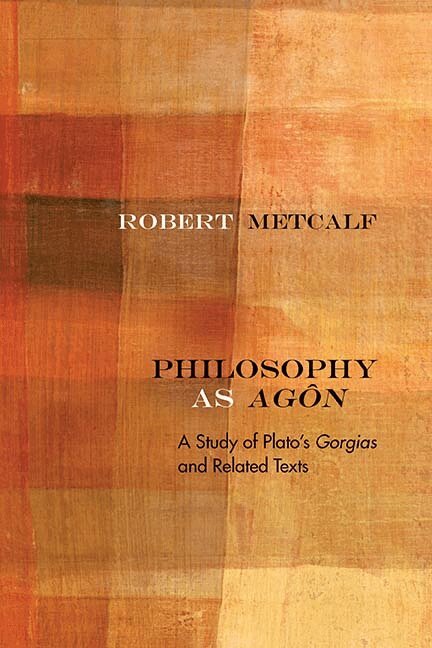
In Philosophy as Agôn: A Study of Plato's Gorgias and Related Texts, Robert Metcalf offers a fresh interpretation of Plato's dialogues as dramatic texts whose philosophy is not so much a matter of doctrine as it is a dynamic, nondogmatic, and open-ended practice of engaging others in agonistic dialogue.Metcalf challenges prevailing interpretations according to which the agôn (contest or struggle) between the interlocutors in the dialogues is inessential to Plato's philosophical purpose, or simply a reflection of the cultural background of ancient Greek life. Instead, he argues that Plato understands philosophy as essentially agonistic—involving the adversarial engagement of others in dialogue such that one's integrity is put to the test through this engagement, and where the agôn is structured so as to draw adversaries together in agreement about the matters at issue, though that agreement is always open to future contest.Based on a careful reading of the Gorgias and related Socratic dialogues, such as Apology and Theaetetus, Metcalf contends that agôn is indispensable to the critique of prevailing opinions, to the transformation of the interlocutor through shame-inducing refutation, and to philosophy as a lifelong training (askêsis) of oneself in relation to others.
368 kr
Skickas inom 10-15 vardagar
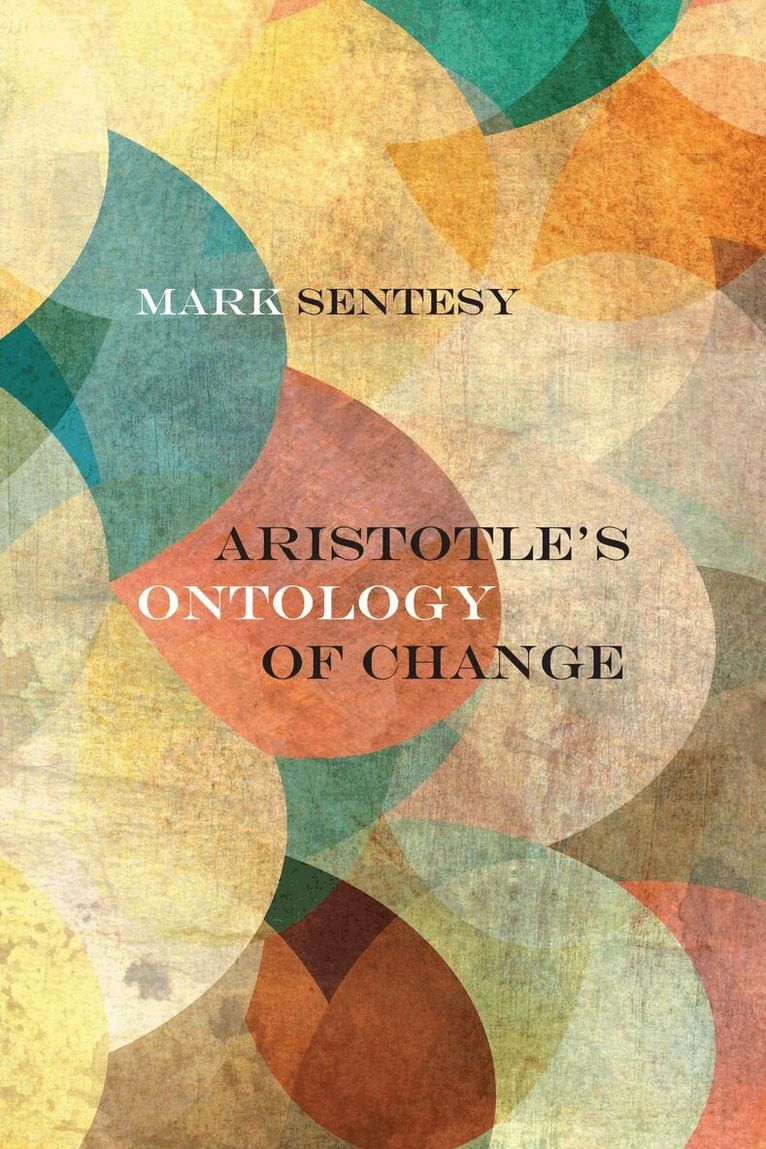
This book investigates what change is, according to Aristotle, and how it affects his conception of being. Mark Sentesy argues that change leads Aristotle to develop first-order metaphysical concepts such as matter, potency, actuality, sources of being, and the teleology of emerging things. He shows that Aristotle’s distinctive ontological claim—that being is inescapably diverse in kind—is anchored in his argument for the existence of change. Aristotle may be the only thinker to have given a noncircular definition of change. When he gave this definition, arguing that change is real was a losing proposition. To show that it exists, he had to rework the way philosophers understood reality. His groundbreaking analysis of change has long been interpreted through a Platonist lens, however, in which being is conceived as unchanging. Offering a comprehensive reexamination of the relationship between change and being in Aristotle, Sentesy makes an important contribution to scholarship on Aristotle, ancient philosophy, the history and philosophy of science, and metaphysics.
1 077 kr
Skickas inom 10-15 vardagar
This book investigates what change is, according to Aristotle, and how it affects his conception of being. Mark Sentesy argues that change leads Aristotle to develop first-order metaphysical concepts such as matter, potency, actuality, sources of being, and the teleology of emerging things. He shows that Aristotle’s distinctive ontological claim—that being is inescapably diverse in kind—is anchored in his argument for the existence of change. Aristotle may be the only thinker to have given a noncircular definition of change. When he gave this definition, arguing that change is real was a losing proposition. To show that it exists, he had to rework the way philosophers understood reality. His groundbreaking analysis of change has long been interpreted through a Platonist lens, however, in which being is conceived as unchanging. Offering a comprehensive reexamination of the relationship between change and being in Aristotle, Sentesy makes an important contribution to scholarship on Aristotle, ancient philosophy, the history and philosophy of science, and metaphysics.
363 kr
Skickas inom 7-10 vardagar
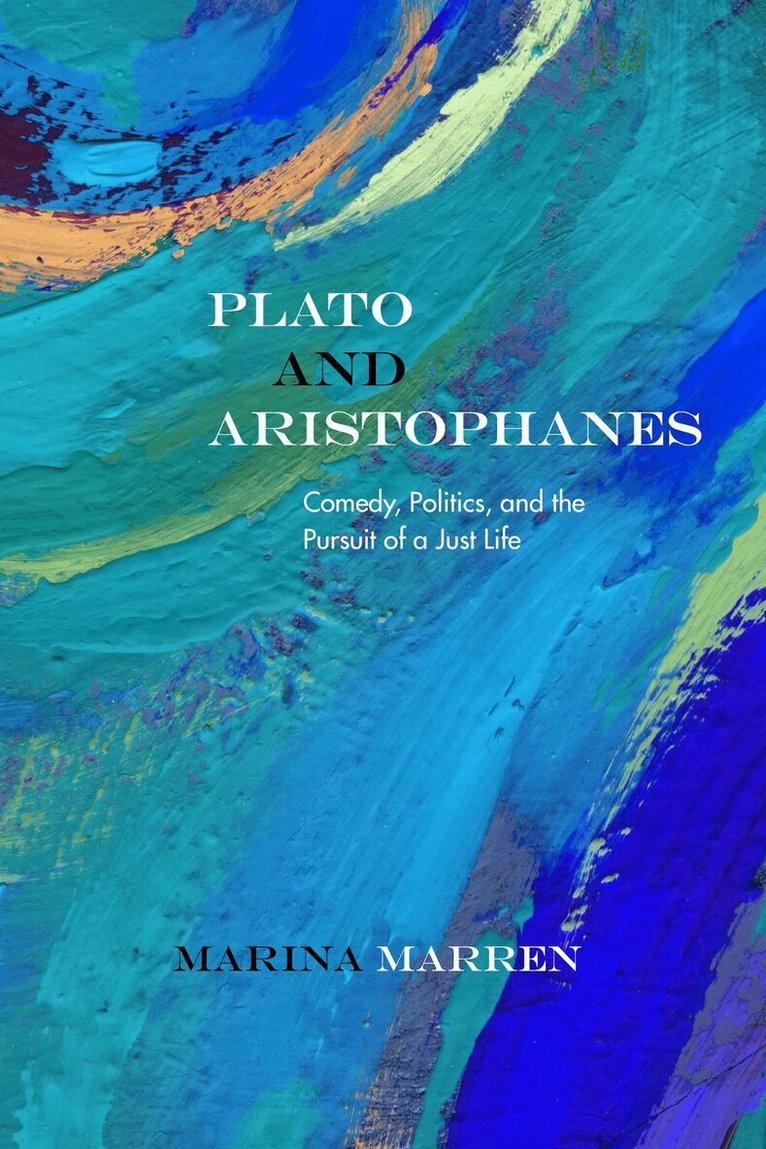
In Plato and Aristophanes, Marina Marren contends that our search for communal justice must start with self-examination. The realization that there are things that we cannot know about ourselves unless we become the subject of a joke is integral to such self-scrutiny. Jokes provide a new perspective on our politics and ethics; they are essential to our civic self-awareness. Marren makes this case by delving into Plato’s Republic, a foundational work of political philosophy. While the Republic straightforwardly condemns the decadence and greed of a tyrant, Plato’s attack on political idealism is both solemn and comedic. In fact, Plato draws on the same comedic stock and tropes as Aristophanes’s plays. Marren’s book strikes up an innovative conversation between three works by Aristophanes—Assembly Women, Knights, and Birds—and Plato’s philosophy, prompting important questions about individual convictions and one’s personal search for justice. These dialogic works offer critiques of tyranny that are by turns brilliant, scathing, and exuberant, making light of faults and ideals alike. Philosophical comedy exposes despotism in individuals as well as systems of government claiming to be just and good. This critique holds as much bite against contemporary injustices as it did at the time of Aristophanes and Plato. An ingenious new work by an emerging scholar, Plato and Aristophanes shows that comedy—in tandem with philosophy and politics—is essential to self-examination. And without such examination, there is no hope for a just life.