Rethinking Austrian and German Music – serie
Visar alla böcker i serien Rethinking Austrian and German Music. Handla med fri frakt och snabb leverans.
3 produkter
3 produkter
2 176 kr
Skickas inom 10-15 vardagar
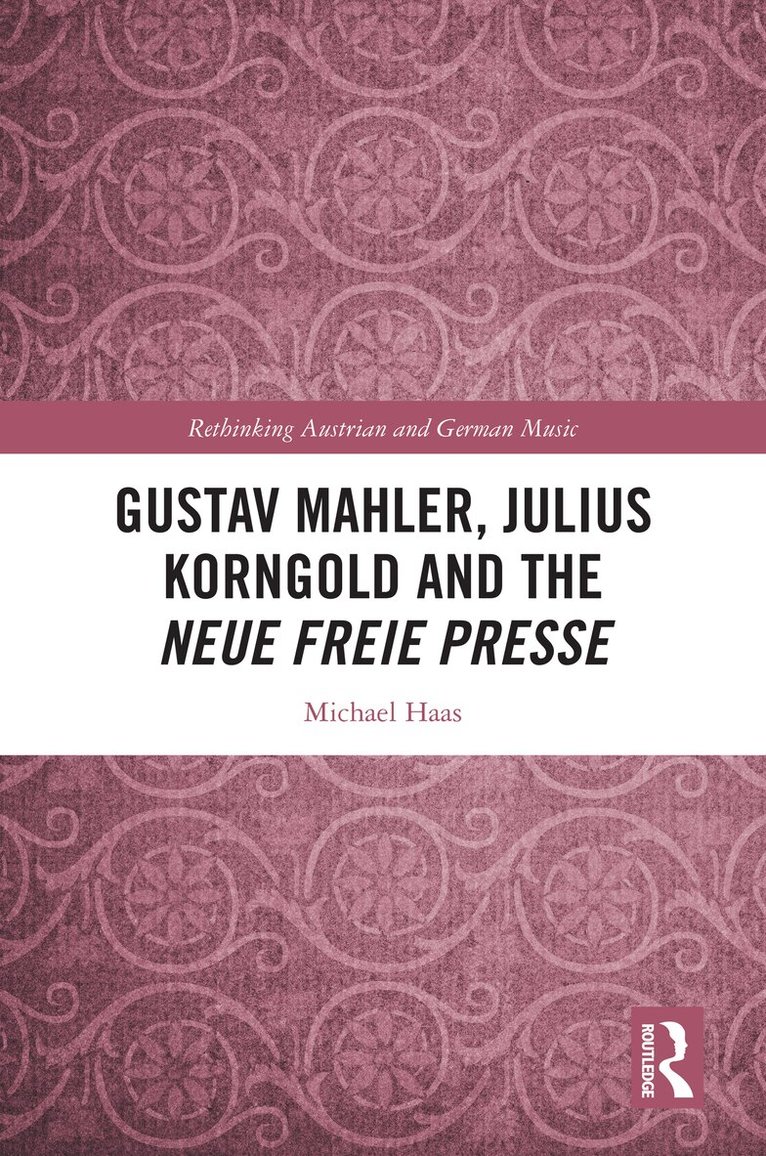
Julius Korngold, critic at the highly influential newspaper Neue Freie Presse, was close to and supportive of Gustav Mahler and, for the first time, essays on the man and his music are made available in English. Those on his time at Vienna’s Imperial Opera are extensive and well informed.Both Korngold and Mahler shared a common Moravian Jewish background, born in 1860 and both students of Anton Bruckner. The paper was Jewish owned, and Theodor Herzl, the founder of the Zionist movement, was its cultural editor and Korngold’s employer. Claims that Mahler was driven out of Vienna by an antisemitic press are shown to be wrong, given Mahler’s support by the most powerful critic of the day writing in the Empire’s most influential newspaper. Importantly, the essays also reveal a world of Modernism that includes Mahler’s innovations at the opera, and Modernism in music before departures from tonality. Mahler was claimed by Arnold Schoenberg as his musical hero, firmly placing him in the Modernist camp. Yet Korngold was universally seen as an archconservative and his relationship with Mahler was personal and his understanding profound. The book addresses the question of “Mahler, the first Modernist or the last Romantic?”.The book will be invaluable for Mahler enthusiasts, musicians, musicologists as well as cultural historians.
Tradition, Community, and Nationhood in Richard Wagner’s Die Meistersinger von Nürnberg
Inbunden, Engelska, 2024
2 036 kr
Skickas inom 10-15 vardagar
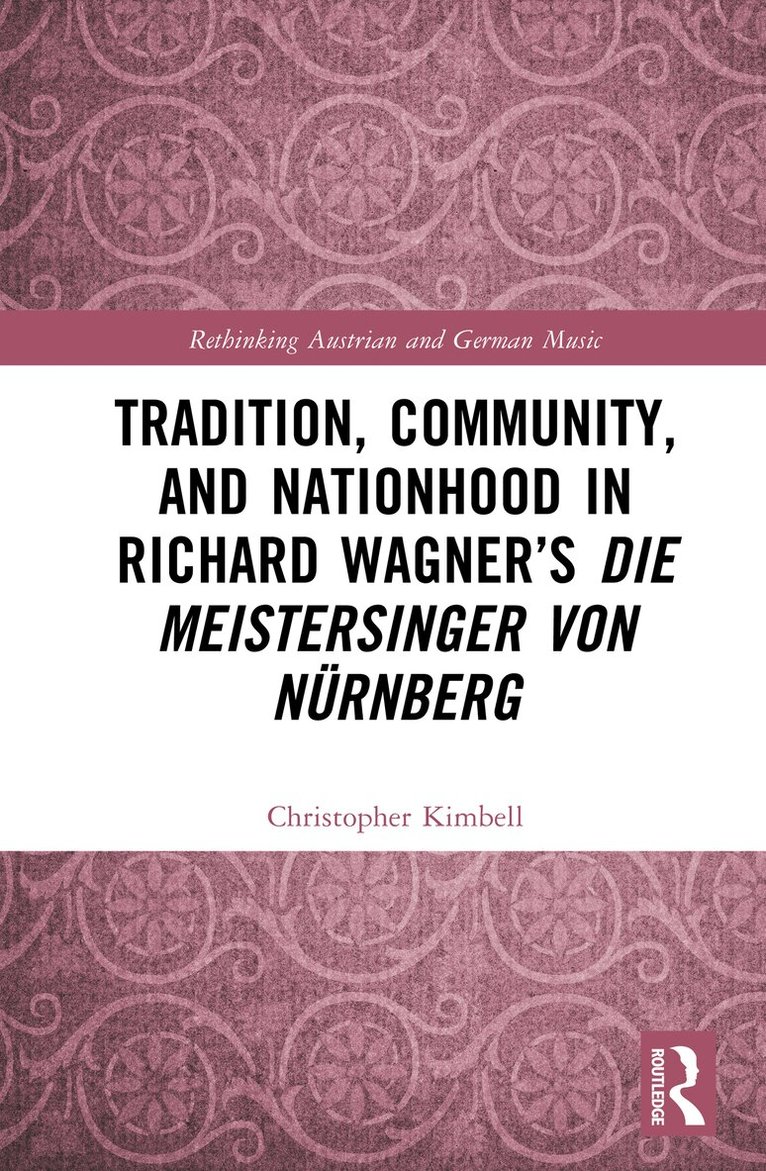
Since its premiere in 1868, Wagner’s Die Meistersinger von Nürnberg has defied repeated upheavals in the cultural-political landscape of German statehood to retain its unofficial status as the German national opera. The work’s significance as a touchstone of national culture survived even such troubling episodes as its public endorsement in 1933 as ‘the most German of all German operas’ by Joseph Goebbels or the rendition in previous years by audiences at Bayreuth of both national and Nazi-party anthems at the work’s culmination. This chequered reception history and apparent propensity for reinterpretation or reclamation has long fuelled debates over the socio-political meanings of Wagner’s musical narrative. On the question of Beckmesser, for instance, heated arguments have surrounded the existence of antisemitic stereotypes in the work as well as their possible indication of a racial-political dimension to Sachs’s restoration of Nuremberg society. Through a combination of musical-textual analysis with critical theory, this book interrogates the ideological underpinnings of Die Meistersinger’s narrative. In four interconnected studies of the characters of Walther, Sachs, Beckmesser, and Eva, the book traces a critical potential within the opera’s construction of provincial and national identities and problematizes existing discourse around its depiction of race and gender.
Tradition, Community, and Nationhood in Richard Wagner’s Die Meistersinger von Nürnberg
Häftad, Engelska, 2026
695 kr
Kommande
Since its premiere in 1868, Wagner’s Die Meistersinger von Nürnberg has defied repeated upheavals in the cultural-political landscape of German statehood to retain its unofficial status as the German national opera. The work’s significance as a touchstone of national culture survived even such troubling episodes as its public endorsement in 1933 as ‘the most German of all German operas’ by Joseph Goebbels or the rendition in previous years by audiences at Bayreuth of both national and Nazi-party anthems at the work’s culmination. This chequered reception history and apparent propensity for reinterpretation or reclamation has long fuelled debates over the socio-political meanings of Wagner’s musical narrative. On the question of Beckmesser, for instance, heated arguments have surrounded the existence of antisemitic stereotypes in the work as well as their possible indication of a racial-political dimension to Sachs’s restoration of Nuremberg society. Through a combination of musical-textual analysis with critical theory, this book interrogates the ideological underpinnings of Die Meistersinger’s narrative. In four interconnected studies of the characters of Walther, Sachs, Beckmesser, and Eva, the book traces a critical potential within the opera’s construction of provincial and national identities and problematizes existing discourse around its depiction of race and gender.