Rethinking the Americas - Böcker
Visar alla böcker i serien Rethinking the Americas. Handla med fri frakt och snabb leverans.
4 produkter
4 produkter
323 kr
Skickas inom 10-15 vardagar
Arnold Krupat, one of the most original and respected critics working in Native American studies today, offers a clear and compelling set of reasons why red-Native American culture, history, and literature-should matter to Americans more than it has to date. Although there exists a growing body of criticism demonstrating the importance of Native American literature in its own right and in relation to other ethnic and minority literatures, Native materials still have not been accorded the full attention they require. Krupat argues that it is simply not possible to understand the ethical and intellectual heritage of the West without engaging America's treatment of its indigenous peoples and their extraordinary and resilient responses.Criticism of Native literature in its current development, Krupat suggests, operates from one of three critical perspectives against colonialism that he calls nationalism, indigenism, and cosmopolitanism. Nationalist critics are foremost concerned with tribal sovereignty, indigenist critics focus on non-Western modes of knowledge, and cosmopolitan critics wish to look elsewhere for comparative possibilities. Krupat persuasively contends that all three critical perspectives can work in a complementary rather than an oppositional fashion.A work marked by theoretical sophistication, wide learning, and social passion, Red Matters is a major contribution to the imperative effort of understanding the indigenous presence on the American continents.
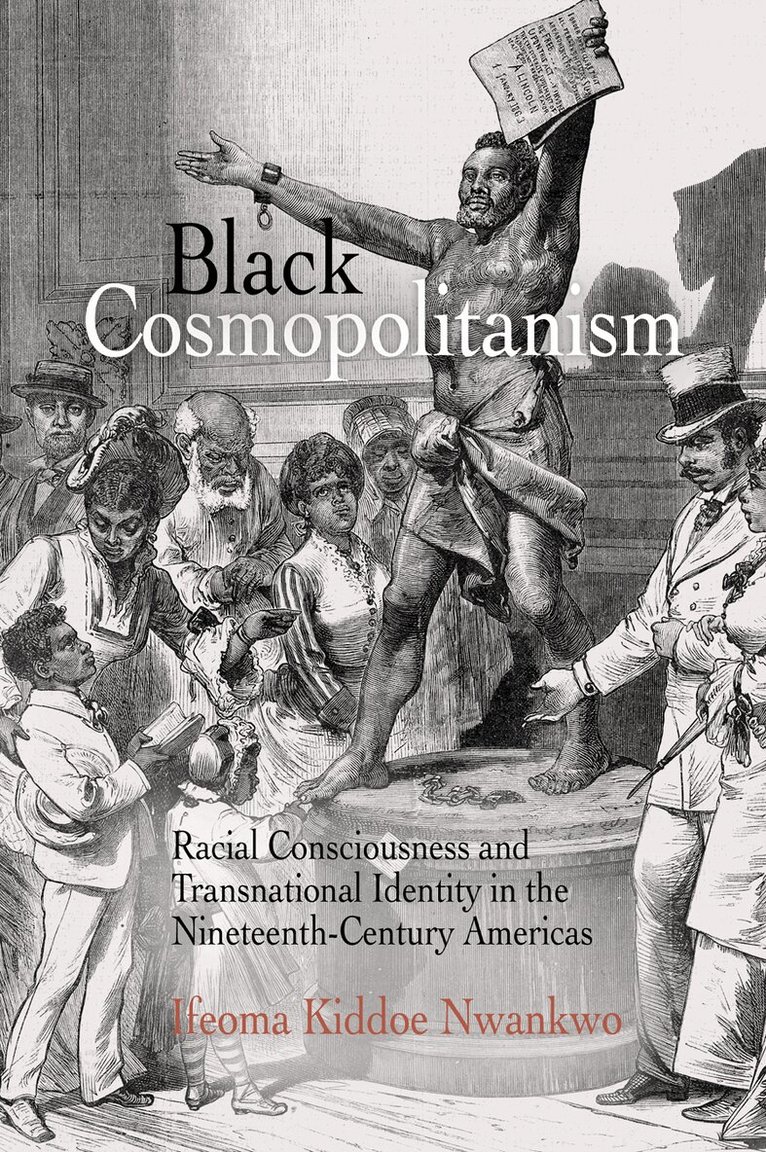
Black Cosmopolitanism
Racial Consciousness and Transnational Identity in the Nineteenth-Century Americas
Häftad, Engelska, 2014
422 kr
Skickas inom 10-15 vardagar
What are the perceived differences among African Americans, West Indians, and Afro Latin Americans? What are the hierarchies implicit in those perceptions, and when and how did these develop? For Ifeoma Kiddoe Nwankwo the turning point came in the wake of the Haitian Revolution of 1804. The uprising was significant because it not only brought into being the first Black republic in the Americas but also encouraged new visions of the interrelatedness of peoples of the African Diaspora. Black Cosmopolitanism looks to the aftermath of this historical moment to examine the disparities and similarities between the approaches to identity articulated by people of African descent in the United States, Cuba, and the British West Indies during the nineteenth century.In Black Cosmopolitanism, Nwankwo contends that whites' fears of the Haitian Revolution and its potentially contagious nature virtually forced people of African descent throughout the Americas who were in the public eye to articulate their stance toward the event. While some U.S. writers, like William Wells Brown, chose not to mention the existence of people of African heritage in other countries, others, like David Walker, embraced the Haitian Revolution and the message that it sent. Particularly in print, people of African descent had to decide where to position themselves and whether to emphasize their national or cosmopolitan, transnational identities.Through readings of slave narratives, fiction, poetry, nonfiction, newspaper editorials, and government documents that include texts by Frederick Douglass, the freed West Indian slave Mary Prince, and the Cuban poets PlÁcido and Juan Francisco Manzano, Nwankwo explicates this growing self-consciousness about publicly engaging other peoples of African descent. Ultimately, she contends, these writers configured their identities specifically to counter not only the Atlantic power structure's negation of their potential for transnational identity but also its simultaneous denial of their humanity and worthiness for national citizenship.
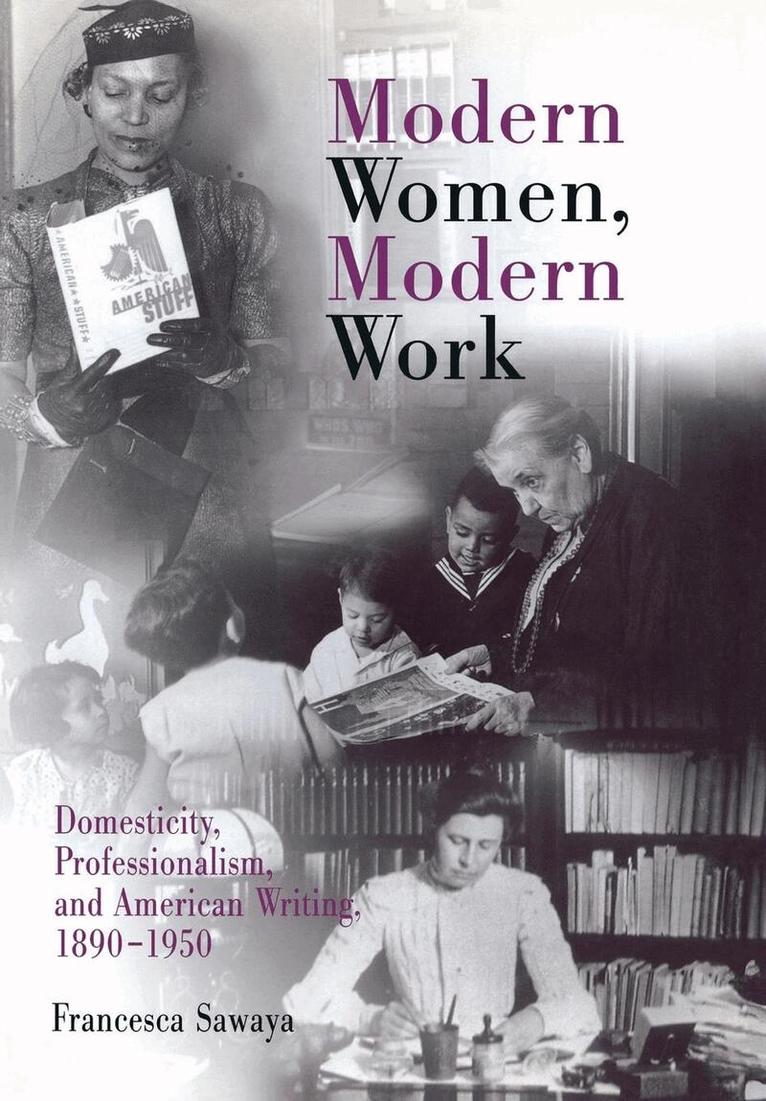
Modern Women, Modern Work
Domesticity, Professionalism, and American Writing, 189-195
Inbunden, Engelska, 2003
867 kr
Skickas inom 10-15 vardagar
Focusing on literary authors, social reformers, journalists, and anthropologists, Francesca Sawaya demonstrates how women intellectuals in early twentieth-century America combined and criticized ideas from both the Victorian "cult of domesticity" and the modern "culture of professionalism" to shape new kinds of writing and new kinds of work for themselves.Sawaya challenges our long-standing histories of modern professional work by elucidating the multiple ways domestic discourse framed professional culture. Modernist views of professionalism typically told a racialized story of a historical break between the primitive, feminine, and domestic work of the Victorian past and the modern, masculine, professional expertise of the present. Modern Women, Modern Work historicizes this discourse about the primitive labor of women and racial others and demonstrates how it has been adopted uncritically in contemporary accounts of professionalism, modernism, and modernity.Seeking to recuperate black and white women's contestations of the modern professions, Sawaya pairs selected novels with a broad range of nonfiction writings to show how differing narratives about the transition to modernity authorized women's professionalism in a variety of fields. Among the figures considered are Jane Addams, Ruth Benedict, Willa Cather, Pauline Hopkins, Zora Neale Hurston, Sarah Orne Jewett, Josephine St. Pierre Ruffin, and Ida Tarbell. In mapping out the constraints women faced in their writings and their work, and in tracing the slippery compromises they embraced and the brilliant adaptations they made, Modern Women, Modern Work boldly reenvisions the history of modern professionalism in the United States.
776 kr
Skickas inom 10-15 vardagar
Blackface Cuba, 1840-1895 offers a critical history of the relation between racial impersonation, national sentiment, and the emergence of an anticolonial public sphere in nineteenth-century Cuba. Through a study of Cuba's vernacular theatre, the teatro bufo, and of related forms of music, dance, and literature, Lane argues that blackface performance was a primary site for the development of mestizaje, Cuba's racialized national ideology, in which African and Cuban become simultaneously mutually exclusive and mutually formative.Popular with white Cuban-born audiences during the period of Cuba's anticolonial wars, the teatro bufo was celebrated for combining Spanish elements with supposedly African rhythms and choreography. Its wealth of short comic plays developed a well-loved repertory of blackface stock characters, from the negrito to the mulata, played by white actors in blackface. Lane contends that these practices were embraced by white audiences as especially national forms that helped define Cuba's opposition to Spain, at the same time that they secured prevailing racial hierarchies for a future Cuban nation. Comparing the teatro bufo to related forms of racial representation, particularly those created by black Cubans in theatres and in the press, Lane analyzes performance as a form of social contestation through which an emergent Cuban national community struggled over conflicting visions of race and nation.