• Fri frakt över 249 kr
  • •
  • Snabba leveranser
  • •
  • Billiga böcker
Kundservice

Du är på sajten för privatpersoner.

Företag, bibliotek eller offentlig verksamhet?

Du handlar på classic.bokus.com, där alla dina funktioner finns intakta.
Till classic.bokus.com
Bokus logotyp. Gå till startsidan.
  • Erbjudanden
  • Nyheter
  • Student
  • Topplistor
  • Barn & ungdom
  • Bokus Play
  • E-böcker
  • Pocketböcker
  • Spel & pussel

10% rabatt på allt med kod NYSTART10 →

Sidfot

Mina sidor

    Hjälp

    • Kundservice
    • Vanliga frågor och svar
    • Frakt och leverans
    • Retur vid ångerrätt
    • Reklamera vara
    • Betalning
    • Köpvillkor
    • Allmänna villkor
    • Information om webbplatsens tillgänglighet

    Om Bokus

    • Om oss
    • Pressrum
    • För studenter
    • För företag
    • För bibliotek och offentlig verksamhet
    • För leverantörer
    • Hållbarhet

    Populärt

    • Aktuella erbjudanden
    • Presentkort
    • Studentlitteratur
    • Nya böcker
    • Topplistor
    • Signerade böcker
    • Engelska böcker

    Inspiration

    • Boktips
    • BookTok
    • Populära bokserier
    • Barnbokskaraktärer
    • Populära författare
    Logotyp för Bokus
    Följ oss på Facebook (extern länk)Följ oss på Instagram (extern länk)Följ oss på YouTube (extern länk)Följ oss på TikTok (extern länk)
    bokus @ CookiesAnpassa cookiesIntegritetspolicyKöpvillkor
    Till Citymail hemsida (extern länk)Till Budbee hemsida (extern länk)Till Postnord hemsida (extern länk)Till Schenker hemsida (extern länk)Till Early Bird hemsida (extern länk)Till Walleys hemsida (extern länk)
    1. Samhälle och politik
    2. Samhälle och kultur
    3. Sociala grupper och identitet

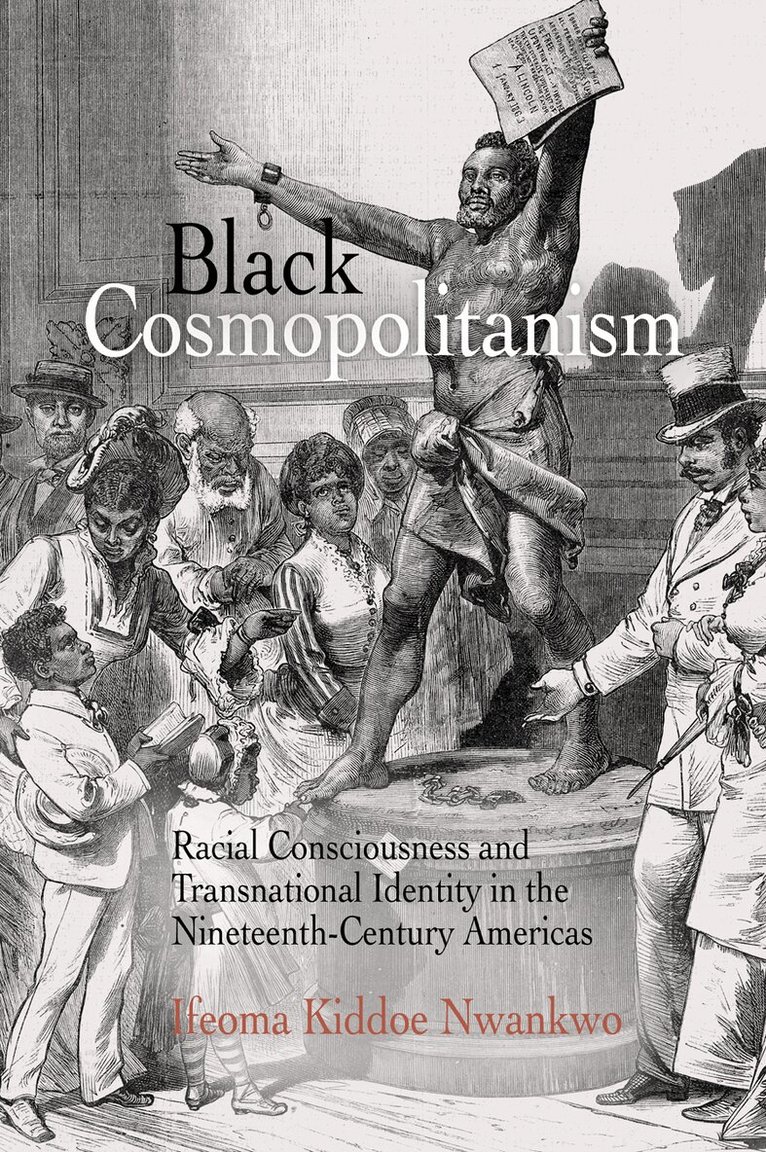
    Black Cosmopolitanism

    Racial Consciousness and Transnational Identity in the Nineteenth-Century Americas

    AvIfeoma Kiddoe Nwankwo

    Häftad, Engelska, 2014

    Del i serien Rethinking the Americas

    439 kr

    Beställningsvara. Skickas inom 10-15 vardagar. Fri frakt över 249 kr.

    Beskrivning

    What are the perceived differences among African Americans, West Indians, and Afro Latin Americans? What are the hierarchies implicit in those perceptions, and when and how did these develop? For Ifeoma Kiddoe Nwankwo the turning point came in the wake of the Haitian Revolution of 1804. The uprising was significant because it not only brought into being the first Black republic in the Americas but also encouraged new visions of the interrelatedness of peoples of the African Diaspora. Black Cosmopolitanism looks to the aftermath of this historical moment to examine the disparities and similarities between the approaches to identity articulated by people of African descent in the United States, Cuba, and the British West Indies during the nineteenth century.In Black Cosmopolitanism, Nwankwo contends that whites' fears of the Haitian Revolution and its potentially contagious nature virtually forced people of African descent throughout the Americas who were in the public eye to articulate their stance toward the event. While some U.S. writers, like William Wells Brown, chose not to mention the existence of people of African heritage in other countries, others, like David Walker, embraced the Haitian Revolution and the message that it sent. Particularly in print, people of African descent had to decide where to position themselves and whether to emphasize their national or cosmopolitan, transnational identities.Through readings of slave narratives, fiction, poetry, nonfiction, newspaper editorials, and government documents that include texts by Frederick Douglass, the freed West Indian slave Mary Prince, and the Cuban poets PlÁcido and Juan Francisco Manzano, Nwankwo explicates this growing self-consciousness about publicly engaging other peoples of African descent. Ultimately, she contends, these writers configured their identities specifically to counter not only the Atlantic power structure's negation of their potential for transnational identity but also its simultaneous denial of their humanity and worthiness for national citizenship.

    Produktinformation

    • Utgivningsdatum:2014-05-14
    • Mått:152 x 229 x 22 mm
    • Vikt:424 g
    • Format:Häftad
    • Språk:Engelska
    • Serie:Rethinking the Americas
    • Antal sidor:304
    • Förlag:University of Pennsylvania Press
    • ISBN:9780812223231

    Utforska kategorier

    • Sociala grupper och identitet inom Samhälle och politik
    • Litteraturvetenskap inom Skönlitteratur

    Mer om författaren

    Ifeoma Kiddoe Nwankwo is Associate Professor of English at Vanderbilt University.

    Recensioner i media

    "Black Cosmopolitanism seeks to tell a story about the complex hemispheric context in which multiple public discourses of blackness emerged in the work of black intellectuals, writing and publishing throughout a nineteenth century shaped by the cataclysmic impact of the Haitian revolution . . . [The book reflects] the richness of new pathways in a hemispheric American studies, moving outward to explore philosophies of race and histories of racial identity that traveled back and forth between colonial and imperial worlds." (American Literature) "Black Cosmopolitanism presents a strong, innovative case for looking back in order to look forward. . . .Nwankwo's book highlights its relevance to a varied cross section of disciplines that include, but are not limited to, African-American Studies, Caribbean Studies, Latin American Studies, Afro-Hispanic Literature, and History of the nineteenth, twentieth, and twenty-first centuries." (Journal of Haitian Studies)

    Innehållsförteckning

    • PT. 1. THE MAKING OF A RACE (MAN)1. The view from above: Placido through the eyes of the Cuban colonial government and white abolitionists2. The view from next door: Placido through black abolitionists' eyesPT. 2. BOTH (RACE) AND (NATION)?3. On being black and Cuban: race, nation, and romanticism in the poetry of Placido4. "We intend to stay here": the international shadows in Frederick Douglass's representations of African American community5. "More a Haitian than an American": Frederick Douglass and the black world beyond the United StatesPT. 3. NEGATING NATION, REJECTING RACE6. A slave's cosmopolitanism: Mary Prince, a West Indian slave, and the geography of identity7. Disidentification as identity: Juan Francisco Manzano and the flight from blackness