Ronald Coase Institute Series on New Institutional Economics – serie
Visar alla böcker i serien Ronald Coase Institute Series on New Institutional Economics. Handla med fri frakt och snabb leverans.
4 produkter
4 produkter
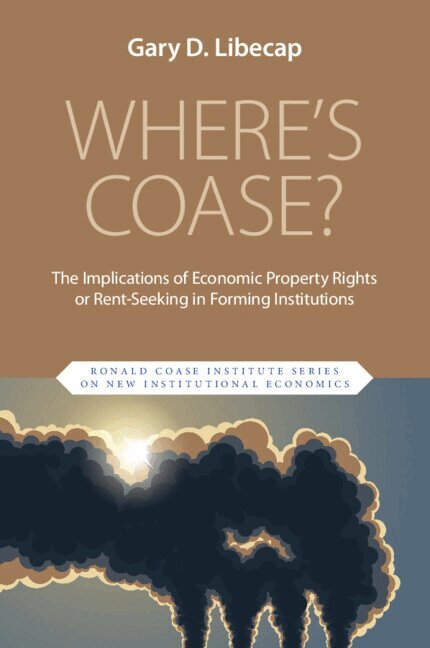
Where's Coase?
The Implications of Economic Property Rights or Rent-Seeking in Forming Institutions
Häftad, Engelska, 2026
331 kr
Skickas inom 7-10 vardagar
Ronald Coase's Nobel work outlined gains by reducing transaction costs and promoting property rights and markets to confront externalities. Countering market failure assertions and calls for centralized government intervention, Coase retorted that decentralized market negotiations could be welfare-improving by promoting collaborative, efficient problem solving, and releasing resources to the general economy. Despite this, his approach is not central to any US environmental law implemented after 1970. Federal government mandates dominate. Where's Coase? explains why. The private objectives of political agents lead to policies that are likely to be too costly and inequitable, despite provision of public goods. Citizens face high collective action costs and lack information to distinguish between public goods and private agent benefits. Examining three major environmental laws: the Clean Air Act, the Magnuson Stevens Fishery Act, and the Endangered Species Act, the book explores policy development and assesses the resulting costs relative to Coase's framework.
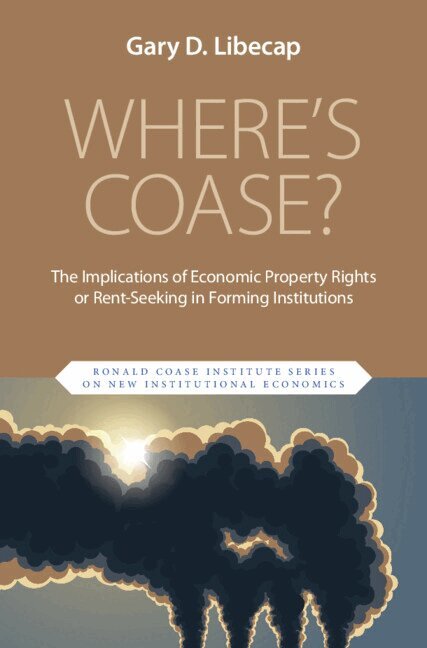
Where's Coase?
The Implications of Economic Property Rights or Rent-Seeking in Forming Institutions
Inbunden, Engelska, 2026
1 124 kr
Skickas inom 7-10 vardagar
Ronald Coase's Nobel work outlined gains by reducing transaction costs and promoting property rights and markets to confront externalities. Countering market failure assertions and calls for centralized government intervention, Coase retorted that decentralized market negotiations could be welfare-improving by promoting collaborative, efficient problem solving, and releasing resources to the general economy. Despite this, his approach is not central to any US environmental law implemented after 1970. Federal government mandates dominate. Where's Coase? explains why. The private objectives of political agents lead to policies that are likely to be too costly and inequitable, despite provision of public goods. Citizens face high collective action costs and lack information to distinguish between public goods and private agent benefits. Examining three major environmental laws: the Clean Air Act, the Magnuson Stevens Fishery Act, and the Endangered Species Act, the book explores policy development and assesses the resulting costs relative to Coase's framework.
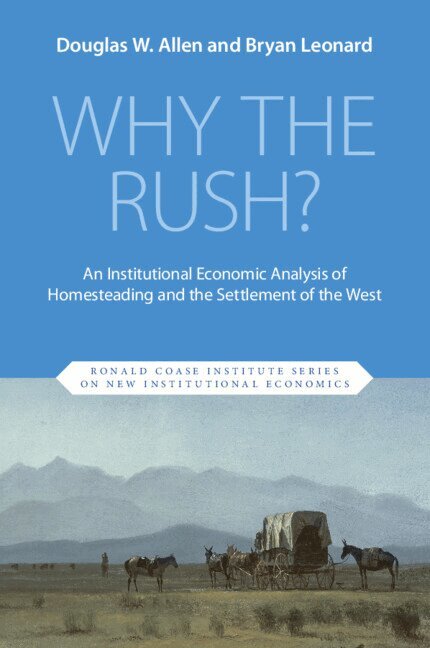
Why the Rush?
An Institutional Economic Analysis of Homesteading and the Settlement of the West
Häftad, Engelska, 2026
422 kr
Skickas inom 7-10 vardagar
Establishing economic property rights is a ubiquitous human activity that is key to the creation of wealth. Why the Rush? combines economic and historical analysis to argue that the institution of homesteading, as established in the US through the Homestead Act of 1862, was a method to establish meaningful, economic property rights on the American frontier. It explains how homesteading rushed millions of people into specific areas, established a meaningful sovereignty without the use of military force and became the means by which the US Thwarted military and legal challenges. Using fine-grained data, along with a detailed theoretical analysis and exhaustive institutional content, this book makes a serious contribution to the study of economic property rights and institutions providing the definitive analysis of the economics of homesteading and its role in American economic history.
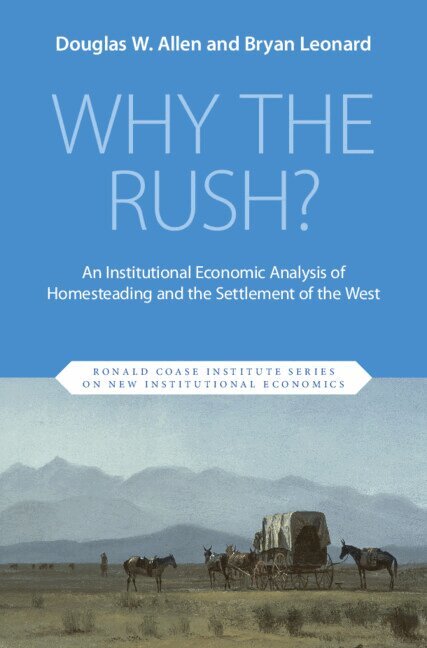
Why the Rush?
An Institutional Economic Analysis of Homesteading and the Settlement of the West
Inbunden, Engelska, 2026
1 363 kr
Skickas inom 7-10 vardagar
Establishing economic property rights is a ubiquitous human activity that is key to the creation of wealth. Why the Rush? combines economic and historical analysis to argue that the institution of homesteading, as established in the US through the Homestead Act of 1862, was a method to establish meaningful, economic property rights on the American frontier. It explains how homesteading rushed millions of people into specific areas, established a meaningful sovereignty without the use of military force and became the means by which the US Thwarted military and legal challenges. Using fine-grained data, along with a detailed theoretical analysis and exhaustive institutional content, this book makes a serious contribution to the study of economic property rights and institutions providing the definitive analysis of the economics of homesteading and its role in American economic history.