Routledge Advances in the History of Philosophy – serie
Visar alla böcker i serien Routledge Advances in the History of Philosophy. Handla med fri frakt och snabb leverans.
6 produkter
6 produkter
2 508 kr
Skickas inom 10-15 vardagar
Most philosophical writing is impersonal and argumentative, but many important philosophers have nevertheless written accounts of their own lives. Filling a gap in the market for a text focusing on autobiography as philosophy, this collection discusses several such autobiographies in the light of their authors' broader work, and considers whether there are any philosophical tasks for which life accounts are particularly appropriate. Instead of the common impersonal and argumentative forms of ordinary philosophical discussion, these autobiographical texts are deeply personal and largely narrative or explanatory. The contributors to this book examine the philosophical significance of philosophers’ autobiographies and whether or not there are broadly philosophical tasks for which this sort of writing is particularly suited. Autobiography as Philosophy contains a general discussion about the relation between philosophical and autobiographical writing, and essays on the specific writings of Augustine, Abelard, Montaigne, Descartes, Vico, Hume, Rousseau, Newman, Mill, Nietzsche, Collingwood and Russell by specialists on the works of these individuals. Original and distinctive in its efforts to think about the writings of historically recognized philosophers as communicative acts governed by their own distinctive interests and purposes, the book reveals that it is as much about the texts and the authors as it is about their doctrines and arguments. As a result the book steps back from many of the issues of substantive philosophical discussion to reflect on certain forms of writing as means to philosophical ends, to consider what those ends have included.
Concepts and Reality in the History of Philosophy
Tracing a Philosophical Error from Locke to Bradley
Inbunden, Engelska, 2005
2 588 kr
Skickas inom 10-15 vardagar
This book traces a deep misunderstanding about the relation of concepts and reality in the history of philosophy. It exposes the influence of the mistake in the thought of Locke, Berkeley, Kant, Nietzche and Bradley, and suggests that the solution can be found in Hegelian thought. Ellis argues that the treatment proposed exemplifies Hegel's dialectical method. This is an important contribution to this area of philosophy.
774 kr
Skickas inom 10-15 vardagar
Most philosophical writing is impersonal and argumentative, but many important philosophers have nevertheless written accounts of their own lives. Filling a gap in the market for a text focusing on autobiography as philosophy, this collection discusses several such autobiographies in the light of their authors' broader work, and considers whether there are any philosophical tasks for which life accounts are particularly appropriate. Instead of the common impersonal and argumentative forms of ordinary philosophical discussion, these autobiographical texts are deeply personal and largely narrative or explanatory. The contributors to this book examine the philosophical significance of philosophers’ autobiographies and whether or not there are broadly philosophical tasks for which this sort of writing is particularly suited. Autobiography as Philosophy contains a general discussion about the relation between philosophical and autobiographical writing, and essays on the specific writings of Augustine, Abelard, Montaigne, Descartes, Vico, Hume, Rousseau, Newman, Mill, Nietzsche, Collingwood and Russell by specialists on the works of these individuals. Original and distinctive in its efforts to think about the writings of historically recognized philosophers as communicative acts governed by their own distinctive interests and purposes, the book reveals that it is as much about the texts and the authors as it is about their doctrines and arguments. As a result the book steps back from many of the issues of substantive philosophical discussion to reflect on certain forms of writing as means to philosophical ends, to consider what those ends have included.
Concepts and Reality in the History of Philosophy
Tracing a Philosophical Error from Locke to Bradley
Häftad, Engelska, 2012
754 kr
Skickas inom 10-15 vardagar
This book traces a deep misunderstanding about the relation of concepts and reality in the history of philosophy. It exposes the influence of the mistake in the thought of Locke, Berkeley, Kant, Nietzche and Bradley, and suggests that the solution can be found in Hegelian thought. Ellis argues that the treatment proposed exemplifies Hegel's dialectical method. This is an important contribution to this area of philosophy.
2 317 kr
Skickas inom 10-15 vardagar
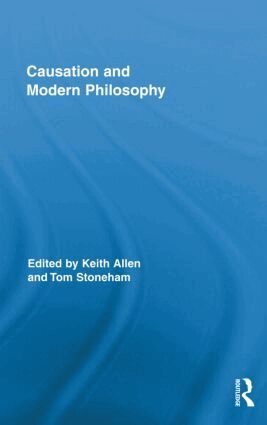
This volume brings together a collection of new essays by leading scholars on the subject of causation in the early modern period, from Descartes to Lady Mary Shepherd. Aimed at researchers, graduate students and advanced undergraduates, the volume advances the understanding of early modern discussions of causation, and situates these discussions in the wider context of early modern philosophy and science. Specifically, the volume contains essays on key early modern thinkers, such as Descartes, Hobbes, Spinoza, Leibniz, Hume, Kant. It also contains essays that examine the important contributions to the causation debate of less widely discussed figures, including Louis la Forge, Thomas Brown and Lady Mary Shepherd.
809 kr
Skickas inom 10-15 vardagar
This volume brings together a collection of new essays by leading scholars on the subject of causation in the early modern period, from Descartes to Lady Mary Shepherd. Aimed at researchers, graduate students and advanced undergraduates, the volume advances the understanding of early modern discussions of causation, and situates these discussions in the wider context of early modern philosophy and science. Specifically, the volume contains essays on key early modern thinkers, such as Descartes, Hobbes, Spinoza, Leibniz, Hume, Kant. It also contains essays that examine the important contributions to the causation debate of less widely discussed figures, including Louis la Forge, Thomas Brown and Lady Mary Shepherd.