Routledge Reading the Bible in Islamic Context Series - Böcker
Visar alla böcker i serien Routledge Reading the Bible in Islamic Context Series. Handla med fri frakt och snabb leverans.
5 produkter
5 produkter
646 kr
Skickas inom 10-15 vardagar
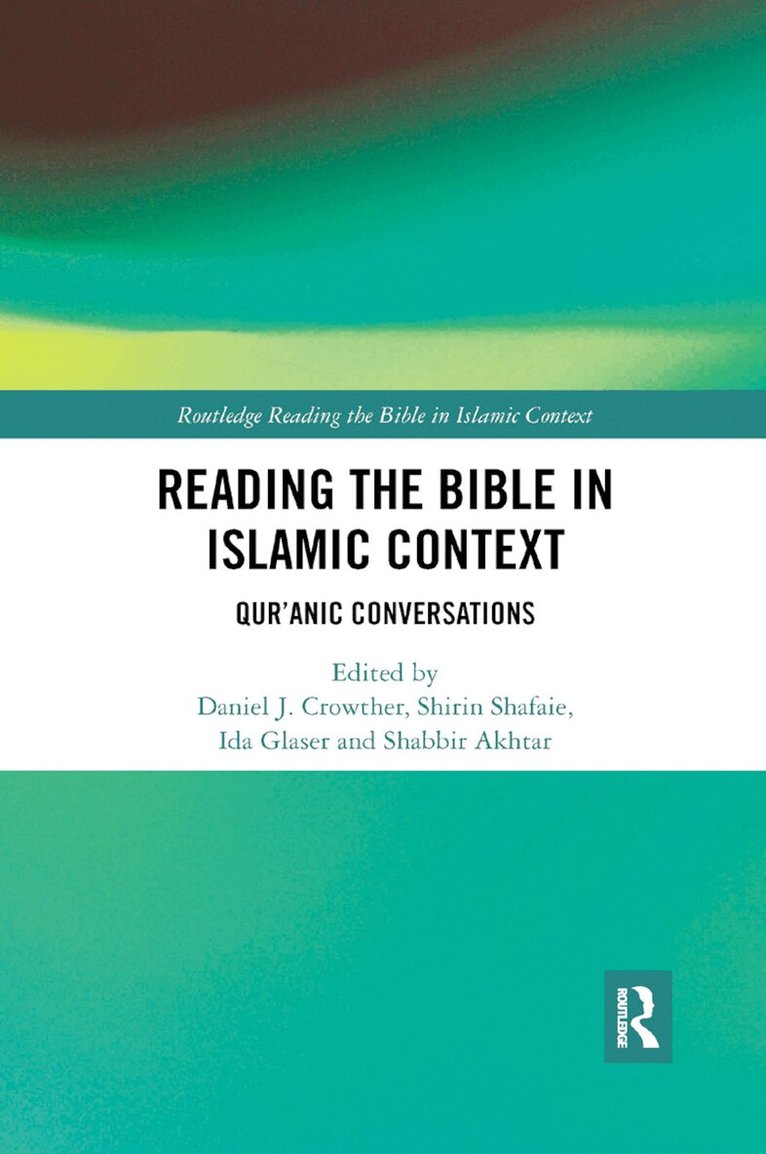
In the current political and social climate, there is increasing demand for a deeper understanding of Muslims, the Qur’an and Islam, as well as a keen demand among Muslim scholars to explore ways of engaging with Christians theologically, culturally, and socially. This book explores the ways in which an awareness of Islam and the Qur’an can change the way in which the Bible is read. The contributors come from both Muslim and Christian backgrounds, bring various levels of commitment to the Qur’an and the Bible as Scripture, and often have significantly different perspectives. The first section of the book contains chapters that compare the report of an event in the Bible with a report of the same event in the Qur’an. The second section addresses Muslim readings of the Bible and biblical tradition and looks at how Muslims might regard the Bible - Can they recognise it as Scripture? If so, what does that mean, and how does it relate to the Qur’an as Scripture? Similarly, how might Christian readers regard the Qur’an? The final section explores different analogies for understanding the Bible in relation to the Qur’an. The book concludes with a reflection upon the particular challenges that await Muslim scholars who seek to respond to Jewish and Christian understandings of the Jewish and Christian scriptures.A pioneering venture into intertextual reading, this book has important implications for relationships between Christians and Muslims. It will be of significant value to scholars of both Biblical and Qur’anic Studies, as well as any Muslim seeking to deepen their understanding of the Bible, and any Christian looking to transform the way in which they read the Bible.
2 113 kr
Skickas inom 10-15 vardagar
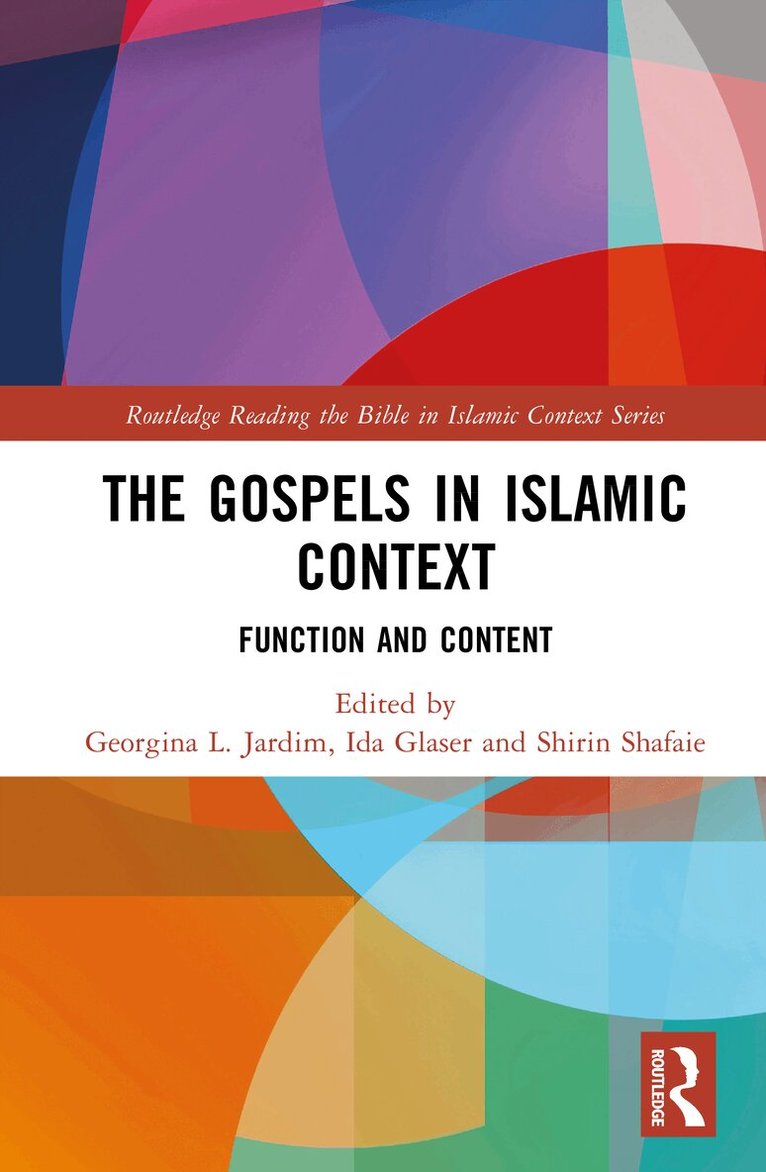
Bringing together scholars from across the world, this publication shows Christians and Muslims – individually or together – reading the canonical Gospels of the New Testament in ‘conversation’ with Islamic texts and contexts.In the discovery of meaning between text, context and praxis, this volume asks ‘what are the texts doing?’ in contexts as far flung as Indonesia, the Hijaz of early Islam, in Persian poetry of medieval times or modern Sunni interpretation in north America. This second edited volume in the series Reading the Bible in Islamic Context, continues the pioneering venture in contextual and intertextual reading. It shows the richness of cooperative scholarship that results from reading the New Testament in Islamic context, and exploring how the Gospel is understood in various religious traditions.The Gospels in Islamic Context will be of interest to scholars, students, and practitioners, encouraging them to explore new methods for taking into account intertextual factors as well as the history of Muslim-Christian relations that arises from them. It is a venture in which Muslims and Christians travel side by side and in conversation with each other, although with significantly different perspectives and often different agendas.
2 113 kr
Skickas inom 10-15 vardagar
In the current political and social climate, there is increasing demand for a deeper understanding of Muslims, the Qur’an and Islam, as well as a keen demand among Muslim scholars to explore ways of engaging with Christians theologically, culturally, and socially. This book explores the ways in which an awareness of Islam and the Qur’an can change the way in which the Bible is read. The contributors come from both Muslim and Christian backgrounds, bring various levels of commitment to the Qur’an and the Bible as Scripture, and often have significantly different perspectives. The first section of the book contains chapters that compare the report of an event in the Bible with a report of the same event in the Qur’an. The second section addresses Muslim readings of the Bible and biblical tradition and looks at how Muslims might regard the Bible - Can they recognise it as Scripture? If so, what does that mean, and how does it relate to the Qur’an as Scripture? Similarly, how might Christian readers regard the Qur’an? The final section explores different analogies for understanding the Bible in relation to the Qur’an. The book concludes with a reflection upon the particular challenges that await Muslim scholars who seek to respond to Jewish and Christian understandings of the Jewish and Christian scriptures.A pioneering venture into intertextual reading, this book has important implications for relationships between Christians and Muslims. It will be of significant value to scholars of both Biblical and Qur’anic Studies, as well as any Muslim seeking to deepen their understanding of the Bible, and any Christian looking to transform the way in which they read the Bible.
2 113 kr
Skickas inom 10-15 vardagar
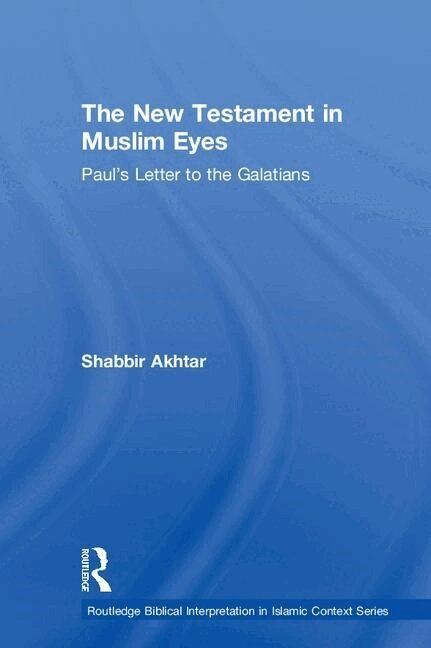
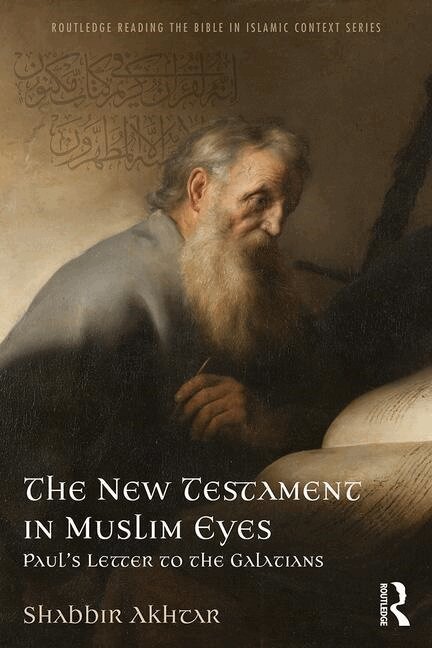
This book explores Christian origins by examining a key New Testament epistle, Paul’s letter to the Galatian churches, seen by Christians as the charter of Christian liberty from the inherited Jewish law. The New Testament in Muslim Eyes provides a close textual commentary on perhaps the earliest declaration of Paul’s apostleship and of his undying commitment to the risen Christ. It notes the subtleties of the Greek original against the backdrop of an exciting glimpse of Quranic Arabic parallels and differences. It asks: Does Paul qualify as a prophet of Allah (God)? The thoughts of Paul are assessed by examining his claims against the background of Islam’s rival views of Abraham and his legacy. The Arabic Quran framed and inspired the life of the Arab Apostle, Muhammad, who was sent, according to Islam, to all humanity, Jewish and Gentile alike. Pauline themes are set in dialectical tension with the claims of the Quran. Akhtar compares and contrasts the two rival faiths with regard to: the resources of human nature, the salvation of the sinner, and the status of the works of the law. Both Christians and Muslims concur on the need for God’s grace, an essential condition of success in the life of faith. The core Pauline Christian doctrine of justification by faith alone is scrutinised and assessed from a variety of non-Christian, especially Islamic, stances. Providing an Islamic view of Christian origins, this book helps to build bridges between the two religions. It will be a valuable resource to students and scholars of Biblical Studies, Islamic Studies, and the Philosophy of Religion.
659 kr
Skickas inom 10-15 vardagar
This book explores Christian origins by examining a key New Testament epistle, Paul’s letter to the Galatian churches, seen by Christians as the charter of Christian liberty from the inherited Jewish law. The New Testament in Muslim Eyes provides a close textual commentary on perhaps the earliest declaration of Paul’s apostleship and of his undying commitment to the risen Christ. It notes the subtleties of the Greek original against the backdrop of an exciting glimpse of Quranic Arabic parallels and differences. It asks: Does Paul qualify as a prophet of Allah (God)? The thoughts of Paul are assessed by examining his claims against the background of Islam’s rival views of Abraham and his legacy. The Arabic Quran framed and inspired the life of the Arab Apostle, Muhammad, who was sent, according to Islam, to all humanity, Jewish and Gentile alike. Pauline themes are set in dialectical tension with the claims of the Quran. Akhtar compares and contrasts the two rival faiths with regard to: the resources of human nature, the salvation of the sinner, and the status of the works of the law. Both Christians and Muslims concur on the need for God’s grace, an essential condition of success in the life of faith. The core Pauline Christian doctrine of justification by faith alone is scrutinised and assessed from a variety of non-Christian, especially Islamic, stances. Providing an Islamic view of Christian origins, this book helps to build bridges between the two religions. It will be a valuable resource to students and scholars of Biblical Studies, Islamic Studies, and the Philosophy of Religion.