Routledge Research in Air and Space Law - Böcker
Visar alla böcker i serien Routledge Research in Air and Space Law. Handla med fri frakt och snabb leverans.
15 produkter
15 produkter
1 944 kr
Skickas inom 10-15 vardagar
This book indicates the shortcomings of the current international legal system and customary international norms that govern international aviation law to comply with contemporary air transport market realities. As the air transport market develops globally, the safety regime of civil aviation should also be governed and applied globally. In this book, the author departs from current international legal norms to examine the emerging legal field of global administrative law. Through that lens, the possibility of reconstructing the set of legal mechanisms that govern domestic and international administrative interaction in the global field of aviation safety is explored. This book demonstrates that a legal system is never complete but always develops in tandem with changing needs, i.e. the participation of the affected parties.Exploring the principles of GAL theory contributes to addressing the contemporary legal issues relating to state compliance with international aviation safety standards that would otherwise not be covered by customary international law. In particular, the principles of GAL theory regarding global governance and the ‘public’ character of global regulations, the role of individuals and states in global governance, and state sovereignty are considered valuable contributions to contemporary global aviation safety issues in practice.It is asserted in this book that proper checks and balances in global aviation safety can be improved by making these accessible to individuals by way of national courts. Finally, establishing public awareness of global aviation safety standards will eventually create greater pressure on states to implement and enforce them. This book is in an area increasing academic and research interest of practitioners of public international aviation law, global administrative law, global governance, and global aviation safety, global air transport market regulations.
Law and Regulation of Airspace Liberalisation in Brazil
What is the Way Forward?
Inbunden, Engelska, 2022
1 944 kr
Skickas inom 10-15 vardagar
The book starts from the premise that the current aviation framework, in Brazil, cannot sustain a full liberalisation in the long run. While the competition rules in place offer a strong framework, which only requires small modifications, these rules are not "enough" to foster a "healthy" liberalisation. In fact, until recently, Brazilian airlines were operating in a homogenous market, where competition was artificial. This artificial competition, obtained through the imposition of a legal obligation to provide water and a snack and grant a 23kg bag allowance, has resulted in a highly concentrated domestic market with very few players. Compared to other same size markets, such as China or India, Brazil is far behind in terms of airlines operating at national level. Consequently, the opening of the domestic market must be closely regulated to avoid national carriers suffocating under external pressure. For this reason, state intervention during the liberalisation process is crucial. State intervention is also with regard to the protection of passengers.The other major problem is the protection framework for passengers which is much too uncertain and burdensome. In a sense, it is detrimental to the domestic market and passengers. Indeed, there is no harmonisation of passenger compensation leading to contradictory judgments and possible high moral damages which hinders legal certainty for airlines. Compared to the situation in the EU, in Brazil, airlines have a limited range of defences, which are often dismissed by courts.This book, therefore, critically analyses the policies and regulations in place by mainly comparing the Brazilian framework to the European one. This choice has been motivated by the fact that European liberalisation is considered the best so far, and as Brazil is starting this process much later, it could benefit from the European experience.This book will be of particular interest to scholars and practitioners interested in the Brazilian system.
Law and Regulation of Airspace Liberalisation in Brazil
What is the Way Forward?
Häftad, Engelska, 2024
569 kr
Skickas inom 10-15 vardagar
The book starts from the premise that the current aviation framework, in Brazil, cannot sustain a full liberalisation in the long run. While the competition rules in place offer a strong framework, which only requires small modifications, these rules are not "enough" to foster a "healthy" liberalisation. In fact, until recently, Brazilian airlines were operating in a homogenous market, where competition was artificial. This artificial competition, obtained through the imposition of a legal obligation to provide water and a snack and grant a 23kg bag allowance, has resulted in a highly concentrated domestic market with very few players. Compared to other same size markets, such as China or India, Brazil is far behind in terms of airlines operating at national level. Consequently, the opening of the domestic market must be closely regulated to avoid national carriers suffocating under external pressure. For this reason, state intervention during the liberalisation process is crucial. State intervention is also with regard to the protection of passengers.The other major problem is the protection framework for passengers which is much too uncertain and burdensome. In a sense, it is detrimental to the domestic market and passengers. Indeed, there is no harmonisation of passenger compensation leading to contradictory judgments and possible high moral damages which hinders legal certainty for airlines. Compared to the situation in the EU, in Brazil, airlines have a limited range of defences, which are often dismissed by courts.This book, therefore, critically analyses the policies and regulations in place by mainly comparing the Brazilian framework to the European one. This choice has been motivated by the fact that European liberalisation is considered the best so far, and as Brazil is starting this process much later, it could benefit from the European experience.This book will be of particular interest to scholars and practitioners interested in the Brazilian system.
1 944 kr
Skickas inom 10-15 vardagar
International Aviation Labour Law explores the status quo of the international regulation of labour and employment within the air transport industry and provides a detailed analysis of the regulatory endeavours undertaken at the international, European and domestic level to harmonise aviation labour regulations and ensure adequate labour standards for aircrew members.Offering an original insight into the regulation of labour in the aviation sector and airline industry, it analyses regulatory endeavours undertaken at the international, European and domestic level, exploring the main challenges arising from non-uniform and fragmented regulation of labour standards in the air transport sector. In particular, it investigates whether aviation labour regulations are sufficiently harmonised at an international level to ensure adequate labour standards for aircrew members. Key concerns relating to aviation labour are dealt with from a regulatory and practical perspective, and the current normative gaps are examined in view of potential future regulatory trends and solutions via a thorough analysis of the applicable legislation, landmark court decisions and the use of practical examples, to provide an overview of the various nuances of the topic.The book identifies and explore the main implications and repercussions of regulatory asymmetry and highlights the critical role of labour for air transport and how discrepancies in labour regulation may affect the practice of flying and the essence of aviation safety. It emphasises a strong need for international regulatory coordination and is a key reference for a varied audience of students, academics, professionals and rule-makers involved in the air transport arena and for all those who have an interest in the regulation of labour and employment in aviation.
569 kr
Skickas inom 10-15 vardagar
International Aviation Labour Law explores the status quo of the international regulation of labour and employment within the air transport industry and provides a detailed analysis of the regulatory endeavours undertaken at the international, European and domestic level to harmonise aviation labour regulations and ensure adequate labour standards for aircrew members.Offering an original insight into the regulation of labour in the aviation sector and airline industry, it analyses regulatory endeavours undertaken at the international, European and domestic level, exploring the main challenges arising from non-uniform and fragmented regulation of labour standards in the air transport sector. In particular, it investigates whether aviation labour regulations are sufficiently harmonised at an international level to ensure adequate labour standards for aircrew members. Key concerns relating to aviation labour are dealt with from a regulatory and practical perspective, and the current normative gaps are examined in view of potential future regulatory trends and solutions via a thorough analysis of the applicable legislation, landmark court decisions and the use of practical examples, to provide an overview of the various nuances of the topic.The book identifies and explore the main implications and repercussions of regulatory asymmetry and highlights the critical role of labour for air transport and how discrepancies in labour regulation may affect the practice of flying and the essence of aviation safety. It emphasises a strong need for international regulatory coordination and is a key reference for a varied audience of students, academics, professionals and rule-makers involved in the air transport arena and for all those who have an interest in the regulation of labour and employment in aviation.
1 819 kr
Skickas inom 10-15 vardagar
The governing international space law regime has been locked in a norm-creation stalemate for over 40 years. This stalemate endangers the preservation of established, guiding legal principles, as well as the sustainability of the parts of outer space that humans utilize. The discrepancy between norm creation, technological advancement, and the ecosystem of novel actors could generate serious consequences for future space activities and the nature of international relations. Besides the return of old rivalries in a New Cold War, new activities and actors emerging amidst a legal void emphasizes the risks of the stalemate: unstable peace, fragile cooperation, uneven technological development, and uncertain eco-sustainability. The prolonged legal stalemate cannot be treated simply as an academic question, for it has broader political and economic implications of growing strategic relevance. Unresolved issues in international space law could threaten the survival of space as a global common, thus it is essential that the ability of the norm-creation mechanism of UN COPUOS is equipped to address the ongoing changes and provide for adequate global governance. This book evaluates the current legal state and sheds light on potential future prospects, offering an overview of the political context within which it developed, providing an assessment of the selected successful examples in international law, and analyzing lessons learned. It makes recommendations for how the UN COPUOS legal apparatus should be modified in order to ensure that future space activities are possible beyond anarchy, greed, and ecological irresponsibility, and to ensure that the principle of the peaceful uses of outer space remains the governing norm.
531 kr
Skickas inom 10-15 vardagar
The governing international space law regime has been locked in a norm-creation stalemate for over 40 years. This stalemate endangers the preservation of established, guiding legal principles, as well as the sustainability of the parts of outer space that humans utilize. The discrepancy between norm creation, technological advancement, and the ecosystem of novel actors could generate serious consequences for future space activities and the nature of international relations. Besides the return of old rivalries in a New Cold War, new activities and actors emerging amidst a legal void emphasizes the risks of the stalemate: unstable peace, fragile cooperation, uneven technological development, and uncertain eco-sustainability. The prolonged legal stalemate cannot be treated simply as an academic question, for it has broader political and economic implications of growing strategic relevance. Unresolved issues in international space law could threaten the survival of space as a global common, thus it is essential that the ability of the norm-creation mechanism of UN COPUOS is equipped to address the ongoing changes and provide for adequate global governance. This book evaluates the current legal state and sheds light on potential future prospects, offering an overview of the political context within which it developed, providing an assessment of the selected successful examples in international law, and analyzing lessons learned. It makes recommendations for how the UN COPUOS legal apparatus should be modified in order to ensure that future space activities are possible beyond anarchy, greed, and ecological irresponsibility, and to ensure that the principle of the peaceful uses of outer space remains the governing norm.
531 kr
Skickas inom 10-15 vardagar
This book indicates the shortcomings of the current international legal system and customary international norms that govern international aviation law to comply with contemporary air transport market realities. As the air transport market develops globally, the safety regime of civil aviation should also be governed and applied globally. In this book, the author departs from current international legal norms to examine the emerging legal field of global administrative law. Through that lens, the possibility of reconstructing the set of legal mechanisms that govern domestic and international administrative interaction in the global field of aviation safety is explored. This book demonstrates that a legal system is never complete but always develops in tandem with changing needs, i.e. the participation of the affected parties.Exploring the principles of GAL theory contributes to addressing the contemporary legal issues relating to state compliance with international aviation safety standards that would otherwise not be covered by customary international law. In particular, the principles of GAL theory regarding global governance and the ‘public’ character of global regulations, the role of individuals and states in global governance, and state sovereignty are considered valuable contributions to contemporary global aviation safety issues in practice.It is asserted in this book that proper checks and balances in global aviation safety can be improved by making these accessible to individuals by way of national courts. Finally, establishing public awareness of global aviation safety standards will eventually create greater pressure on states to implement and enforce them. This book is in an area increasing academic and research interest of practitioners of public international aviation law, global administrative law, global governance, and global aviation safety, global air transport market regulations.
1 944 kr
Skickas inom 10-15 vardagar
This book identifies and discusses problems and opportunities for the future theory and practice of outer space law.The corpus of outer space law, including the Outer Space Treaty 1967, has faced multiple challenges and critiques. In recent times, these have included advances in technology, the militarisation of outer space, space debris, and geopolitics. The prominent and emerging contributors to this collection draw on diverse research frameworks to discuss proposals for the future of outer space law and policy. These include addressing regulatory gaps and under-examined and emerging areas of the law, but also beyond, the Outer Space Treaty – especially related to potential extraterrestrial settlements, satellites technology, self-defence, self-determination, and the environment. The book discusses the tensions between universalism and localisation, as well as the regionalisation of outer space law and policy – and how these approaches might adapt to create a dynamic space industry for the future.This book is both practical and theoretical in scope and will be of interest to academics, researchers and students. It will also be of interest to international organisations, diplomats, and other government officials and policymakers.
3 069 kr
Skickas inom 10-15 vardagar
Exploring the intricate relationship between law, economics, and global politics, this book examines the regulatory environment of the aviation industry.Tracing the historical development of aviation law, the book has a particular focus on how economic polycentrism and the liberal international economic order have influenced the sector's regulatory framework. It discusses the aviation industry's responses to unforeseen global events, such as the COVID-19 pandemic and geopolitical conflicts, providing a detailed analysis of the legal mechanisms that ensure industry stability and resilience. Key topics include the role of arbitration in resolving disputes, the impact of international regulations, and the critical contributions of both public and private actors in shaping aviation law. Additionally, the book explores the challenges posed by new and emerging technologies, such as the increasing automation in aviation systems and the legal considerations surrounding cybersecurity in aviation operations. The collection also features diverse international case studies, offering practical examples of legal challenges and solutions in different contexts. By examining the intersection of various legal disciplines and the global nature of aviation, this comprehensive exploration not only reflects on past and present challenges but also provides forward-looking insights into the future of aviation law.The book will be of interest to researchers in the field of air transport law and dispute resolution, offering a thorough understanding of the legal and economic complexities facing the industry today.
1 944 kr
Skickas inom 10-15 vardagar
This book analyses the complex regulations and standards governing aviation safety on a global scale. Combining theoretical analysis with practical insights, it offers a comprehensive exploration of the normative foundations and real-world applications of international aviation law in ensuring air travel safety.From the foundational principles established by the Chicago Convention to the evolving challenges posed by technological advancements and geopolitical shifts, this book provides a nuanced understanding of the complex legal landscape shaping aviation safety. Through in-depth critical analysis, the book examines the role of key stakeholders – including states, international and regional organizations, and regulatory bodies – in promoting and enforcing safety standards. By exploring the intersection of legal theory and practice, this book sheds light on the practical implications of normative principles in addressing contemporary safety concerns, such as the COVID-19 pandemic. It encourages the regional institutionalization of civil aviation in order to improve local and regional aviation safety.The book will be of interest to researchers, practitioners, and policymakers seeking to navigate the legal frameworks and ethical considerations underpinning aviation safety law.
1 944 kr
Skickas inom 10-15 vardagar
This book seeks to bridge disciplinary and scholarly gaps by bringing together a range of social science studies to capture state-of-the-art advancements in the field of advanced air technology governance, as the vision for the future of aviation systems evolves.With novel and innovative developments taking place in many different technological fields, the future of aviation is at a pivotal point. Advanced air technologies, including drones, electric vertical take-off and landing vehicles, and electric/hydrogen-fuelled conventional take-off and landing aircraft could transform how we live, move, and transport goods. What we call ‘future flight’ encompasses a complex range of legal, social, economic, cultural, and environmental issues that cut across a diverse range of sectors, stakeholders, and disciplines. This book discusses the transformative nature of emerging advanced air technologies through an inter- and cross-disciplinary lens, with chapters covering law, economics, geography, and accessibility, alongside other relevant issues that look beyond conventional methodologies and traditional disciplines.The book will be of interest to academics, practitioners, policy makers, regulators, and those stakeholders working at the intersection of law, policy and governance of emerging technologies, science, the environment, and the economy.
Air Transport Industry in Africa
A Legal Analysis of the Single African Air Transport Market
Inbunden, Engelska, 2025
1 944 kr
Skickas inom 10-15 vardagar
This book provides legal analysis of the multilateral liberalisation of the air transport industry in Africa within the framework of the African Union Agenda 2063 initiative, the Single African Air Transport Market (SAATM).Offering a detailed examination of the regulatory framework and policy considerations that have shaped the political economy of air transport in Africa, the book offers a comparative analysis with the European Union (EU) and the Association of Southeast Asian Nations (ASEAN). By highlighting the need for a tailored approach to air transport liberalisation in Africa, it underscores the importance of considering the continent's unique socio-political context, diverse values, identities, circumstances, and challenges arising from its vast and varied landscape. The book proposes a principled approach to the implementation of the SAATM initiatives and calls on stakeholders to consider holistic implementation that favours the principle of variable geometry, stakeholder engagement, and alignment with Agenda 2063. It also emphasises the significance of supporting aviation policies such as safety, security, financing, competition, and environmental sustainability.The Air Transport Industry in Africa will be of interest to researchers in the fields of aviation law, economic law, and regional integration in Africa.
1 944 kr
Skickas inom 10-15 vardagar
This book critically examines how international law can address the pressing issues of labour regulation in the airline industry, highlighting the insufficiencies of current international labour standards and air law in safeguarding workers’ rights and improving working conditions.In an era of rapid growth and globalisation within the civil aviation sector, the labour landscape has become increasingly complex and hybrid, characterised by diverse business models, atypical employment arrangements, and weakened union influence. This complexity, coupled with gaps in international legal frameworks, leaves aviation workers vulnerable to inadequate labour protection and skewed bargaining power. By delving into social and technical deficiencies, the book underscores the challenges posed by forum shopping, fragmented employment structures, and the limitations of Comprehensive Air Transport Agreements (CATAs). Proposing a pragmatic "crawl-walk-run" approach, the book advocates for the progressive enhancement of labour regulations, starting with refining CATAs and advancing towards more comprehensive and enforceable standards. This seeks to harmonise decent work principles with the demands of a liberalised aviation market. Offering an in-depth exploration of landmark legal cases, international agreements, and State practices, this book provides a nuanced understanding of the interplay between international law and aviation labour.This book will be of interest to researchers in labour law, international law, and air and space law.
1 944 kr
Skickas inom 10-15 vardagar
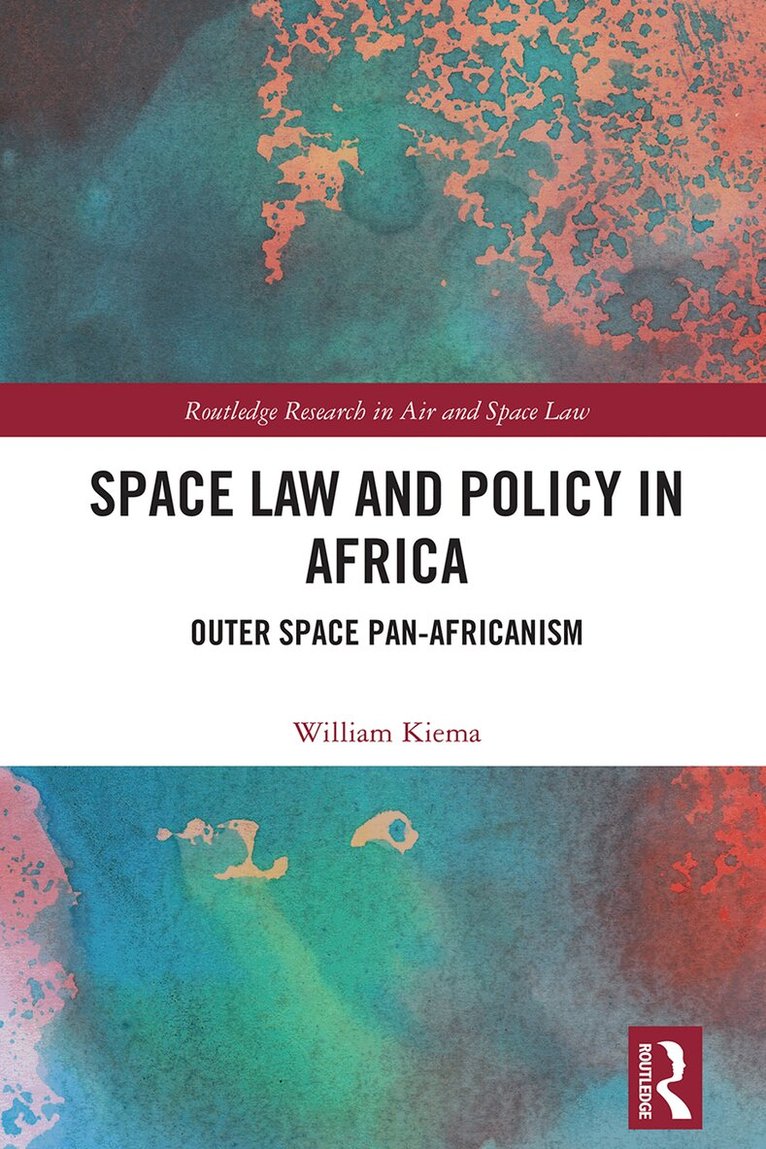
This book explores a normative and regulatory pathway for Africa’s venture into outer space. It situates African space law and policy within the continent’s regionalist vision and mission under Agenda 2063 while also engaging in a comparative analysis with global models to suggest new legal standards, investment approaches, and institutional measures that can be adopted incrementally by the Member States.The volume emphasises how space is no longer an aspirational luxury but a critical infrastructure for food security, climate resilience, education, medicine, and continental cohesion. It proposes the idea of ‘Outer Space Pan-Africanism’ as an essential lens for interpreting and shaping the political economy of outer space law and policy in Africa. It defines this ‘Outer-Space Pan-Africanism’ as a set of six principles based on Pan-African solidarity in outer space initiatives, technological self-reliance, equitable access to space benefits and alignment with global space law and policy. Through case studies of South Africa, Kenya, Nigeria, Algeria, Angola and Egypt, the book discusses how divergent legal and policy models interact with regional development objectives. At the same time, it also examines the significance of benchmarks drawn from the European Union (EU), Latin America and the Caribbean, the Arab World, and the Association of Southeast Asian Nations (ASEAN) in illuminating transferable lessons in funding mechanisms, governance, technology transfer and phased integration.This book will be useful for postgraduate students, researchers and academics interested in space law, international economic law, development economics and political economy, international relations and regional integration in Africa.