Routledge Studies in African American Literature – Serie
Visar alla böcker i serien Routledge Studies in African American Literature. Handla med fri frakt och snabb leverans.
6 produkter
6 produkter
2 195 kr
Skickas inom 10-15 vardagar
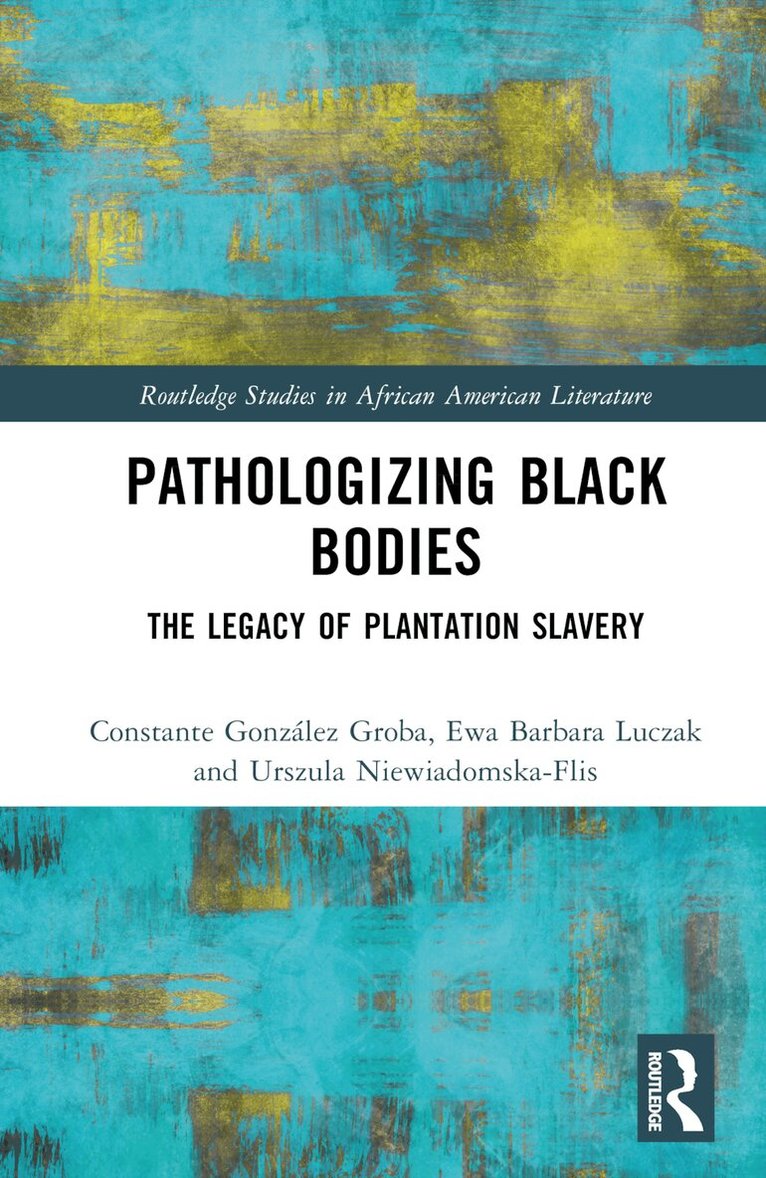
Pathologizing Black Bodies reconsiders the black body as a site of cultural and corporeal interchange; one involving violence and oppression, leaving memory and trauma sedimented in cultural conventions, political arrangements, social institutions and, most significantly, materially and symbolically engraved upon the body, with “the self” often deprived of agency and sovereignty. Consisting of three parts, this study focuses on works of the twentieth- and twenty-first-century fiction and cultural narratives by mainly African American authors, aiming to highlight the different ways in which race has been pathologized in America and examine how the legacies of plantation ideology have been metaphorically inscribed on black bodies. The variety of analytical approaches and thematic foci with respect to theories and discourses surrounding race and the body allow us to delve into this thorny territory in the hope of gaining perspectives about how African American lives are still shaped and haunted by the legacies of plantation slavery. Furthermore, this volume offers insights into the politics of eugenic corporeality in an illustrative dialogue with the lasting carceral and agricultural effects of life on a plantation. Tracing the degradation and suppression of the black body, both individual and social, this study includes an analysis of the pseudo-scientific discourse of social Darwinism and eugenics; the practice of mass incarceration and the excessive punishment of black bodies; and food apartheid and USDA practices of depriving black farmers of individual autonomy and collective agency. Based on such an interplay of discourses, methodologies and perspectives, this volume aims to use literature to further examine the problematic relationship between race and the body and stress that black lives do indeed matter in the United States.
564 kr
Skickas inom 10-15 vardagar
Pathologizing Black Bodies reconsiders the black body as a site of cultural and corporeal interchange; one involving violence and oppression, leaving memory and trauma sedimented in cultural conventions, political arrangements, social institutions and, most significantly, materially and symbolically engraved upon the body, with “the self” often deprived of agency and sovereignty. Consisting of three parts, this study focuses on works of the twentieth- and twenty-first-century fiction and cultural narratives by mainly African American authors, aiming to highlight the different ways in which race has been pathologized in America and examine how the legacies of plantation ideology have been metaphorically inscribed on black bodies. The variety of analytical approaches and thematic foci with respect to theories and discourses surrounding race and the body allow us to delve into this thorny territory in the hope of gaining perspectives about how African American lives are still shaped and haunted by the legacies of plantation slavery. Furthermore, this volume offers insights into the politics of eugenic corporeality in an illustrative dialogue with the lasting carceral and agricultural effects of life on a plantation. Tracing the degradation and suppression of the black body, both individual and social, this study includes an analysis of the pseudo-scientific discourse of social Darwinism and eugenics; the practice of mass incarceration and the excessive punishment of black bodies; and food apartheid and USDA practices of depriving black farmers of individual autonomy and collective agency. Based on such an interplay of discourses, methodologies and perspectives, this volume aims to use literature to further examine the problematic relationship between race and the body and stress that black lives do indeed matter in the United States.
Street, Text, and Representation in African American Literature
Urban Writing/Dwelling
Inbunden, Engelska, 2024
2 274 kr
Skickas inom 5-8 vardagar
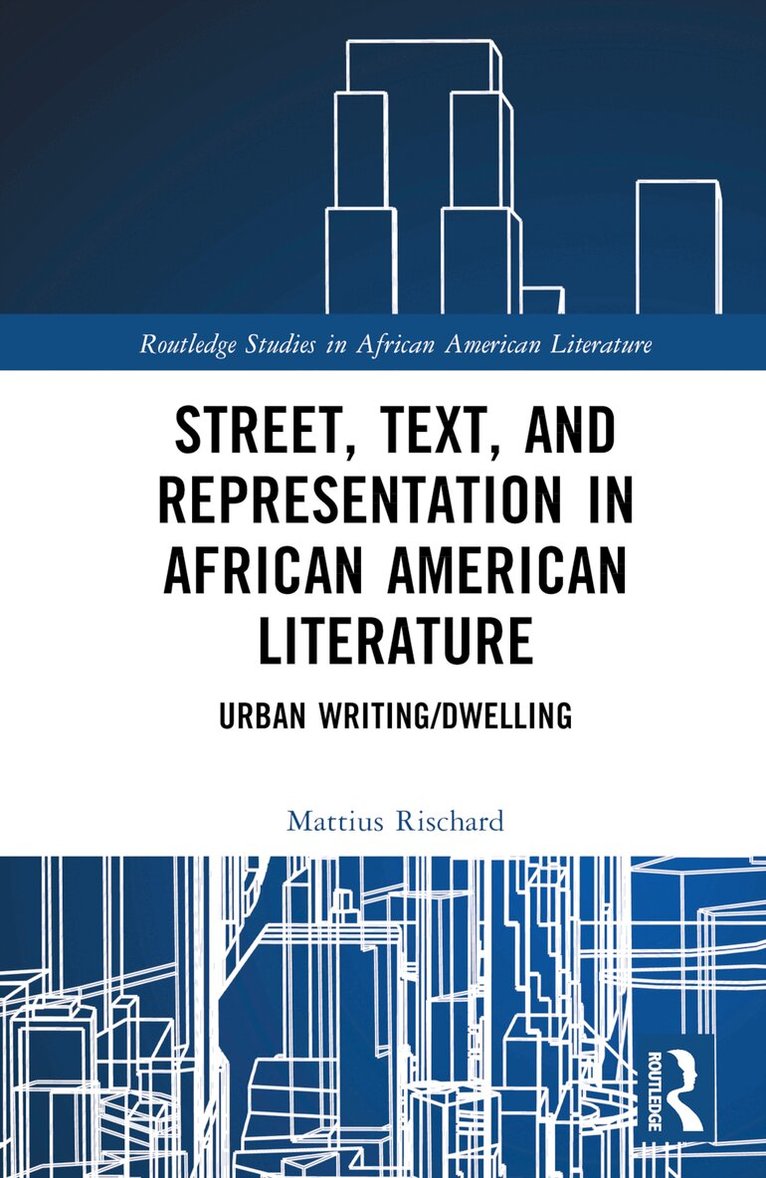
Comprehensive and comparative, this volume investigates African American street novelists since the Chicago Black Renaissance and the semiotic strategies they employ in publication, consumption, and depiction of street life. Divided into three chapters, this text analyzes the content, style, and ethics of “street” narrative through a discursive/rhetorical lens, exploring the development of street literature’s formal and contextual concerns to resolve the sociocultural and political questions surrounding cultural work. The book also gives emphasis to “text” or (post)structural literary analysis by answering questions about the genre’s aesthetic and linguistic techniques that respond to the injustices of urban planning. The last chapter, “Representation,” investigates the phenomenological hermeneutics of more recent street literature and its satire, highlighting the political stakes for authorship, credibility, and subjectivity. Through historical and contemporary studies of urban space, Blackness, and adaptations of street literature, this work attempts to network activists, artists, and scholars with the greater reading public by providing a functional ontology of reading the inner city.
Street, Text, and Representation in African American Literature
Urban Writing/Dwelling
Häftad, Engelska, 2025
727 kr
Skickas inom 10-15 vardagar
Comprehensive and comparative, this volume investigates African American street novelists since the Chicago Black Renaissance and the semiotic strategies they employ in publication, consumption, and depiction of street life. Divided into three chapters, this text analyzes the content, style, and ethics of “street” narrative through a discursive/rhetorical lens, exploring the development of street literature’s formal and contextual concerns to resolve the sociocultural and political questions surrounding cultural work. The book also gives emphasis to “text” or (post)structural literary analysis by answering questions about the genre’s aesthetic and linguistic techniques that respond to the injustices of urban planning. The last chapter, “Representation,” investigates the phenomenological hermeneutics of more recent street literature and its satire, highlighting the political stakes for authorship, credibility, and subjectivity. Through historical and contemporary studies of urban space, Blackness, and adaptations of street literature, this work attempts to network activists, artists, and scholars with the greater reading public by providing a functional ontology of reading the inner city.
2 430 kr
Skickas inom 10-15 vardagar
Black feminist mothering can birth new worlds. As today’s world becomes increasingly hostile—with the rising cost of food coupled with global warming’s devastating impact—we are in need of a feminism bold enough to imagine new pathways for survival. Black feminist mothering may well be the remedy. This volume positions Black feminist mothering as much more than a biological or caregiving role. Building on key Black feminist tenets, Carr examines Black women’s maternal labors as a practice and proclamation for mothering ourselves, tending to each other, and nourishing our communities. Far too often, Black women’s maternal, intellectual, and political labors are recognized only in service to white supremacist capitalism. Mammy. Breeder. Welfare queen. This text counters these dehumanizing iconographies to focus instead on the Black maternal’s imaginitive possibilities. Not only does Carr address Black women’s resistance to white supremacist power plays, but she also attends to Black heteropatriarchy and the burdens racial solidarity imposes on Black women. The Black maternal, Carr argues, is a cradle for Black revolution. As Assata Shakur famously declared, “We are pregnant with freedom.”The Open Access version of this book, available at http://www.taylorfrancis.com, has been made available under a Creative Commons Attribution-Non Commercial-No Derivatives (CC BY-NC-ND) 4.0 license.
2 430 kr
Skickas inom 10-15 vardagar
How do twenty-first century Black satirists rewrite American ideas of race? This book plunges into the New Black Renaissance – a flowering of the 2000s and 2010s African American culture – and argues that its most potent tool is anti-essentialist satire. The study traces what Baratunde Thurston calls “Open-source Blackness,” an ethos that prizes individuality, inclusivity, and remix.To map this new terrain, this volume offers close readings of three signature works: Percival Everett’s metafictional Erasure, Justin Simien’s campus satire Dear White People, and Thurston’s own multimedia endeavors – his memoir How to Be Black and the playful software experiments developed under the auspices of his company, Cultivated Wit.Together, these texts show how literature, film, and technology fracture worn stereotypes and invite broader co-creation of (non-)racial identity. The result is the first sustained academic account of Open-source Blackness – of interest to students and scholars in literary, media, and cultural studies.