Routledge Studies in Penal Abolition and Transformative Justice - Böcker
Visar alla böcker i serien Routledge Studies in Penal Abolition and Transformative Justice. Handla med fri frakt och snabb leverans.
8 produkter
8 produkter
1 944 kr
Skickas inom 10-15 vardagar
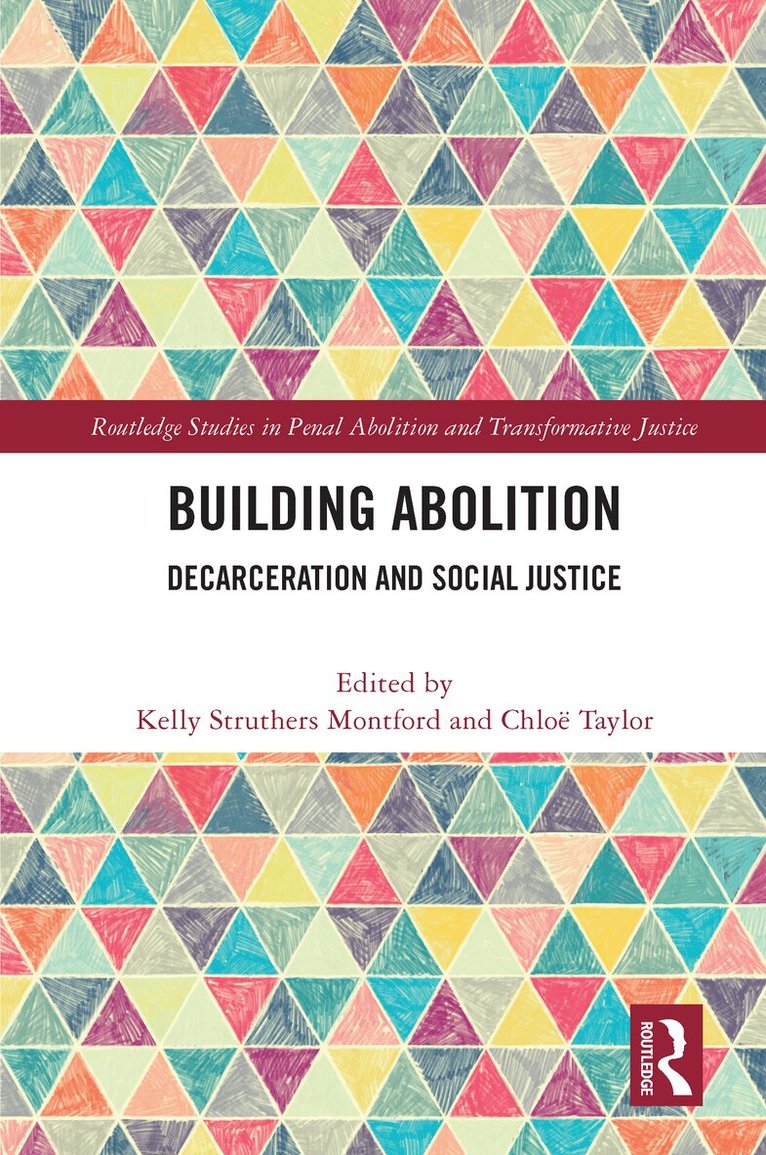
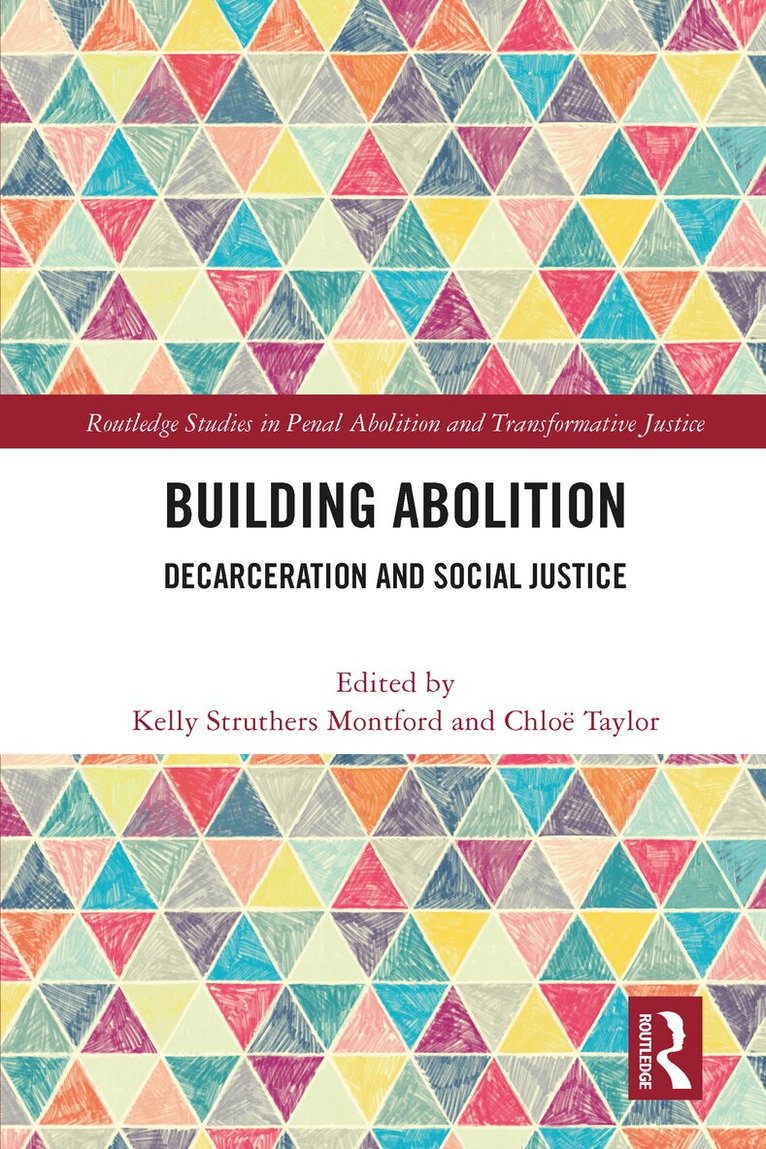
Building Abolition: Decarceration and Social Justice explores the intersections of the carceral in projects of oppression, while at the same time providing intellectual, pragmatic, and undetermined paths toward abolition.Prison abolition is at once about the institution of the prison, and a broad, intersectional political project calling for the end of the social structured by settler colonialism, anti-black racism, and related oppressions. Beyond this, prison abolition is a constructive project that imagines and strives for a transformed world in which justice is not equated with punishment, and accountability is not equated with caging. Composed of sixteen chapters by an international team of scholars and activists, with a Foreword by Perry Zurn and an Afterword by Justin Piché, the book is divided into four themes:• Prisons and Racism• Prisons and Settler Colonialism• Anti-Carceral Feminisms• Multispecies Carceralities.This book will be of interest to undergraduate and postgraduate students, activists, and scholars working in the areas of Critical Prison Studies, Critical Criminology, Native Studies, Postcolonial Studies, Black Studies, Critical Race Studies, Gender and Sexuality Studies, and Critical Animal Studies, with particular chapters being of interest to scholars and students in other fields, such as, Feminist Legal Studies, Animal Law, Critical Disability Studies, Queer Theory, and Transnational Feminisms.
1 819 kr
Skickas inom 10-15 vardagar
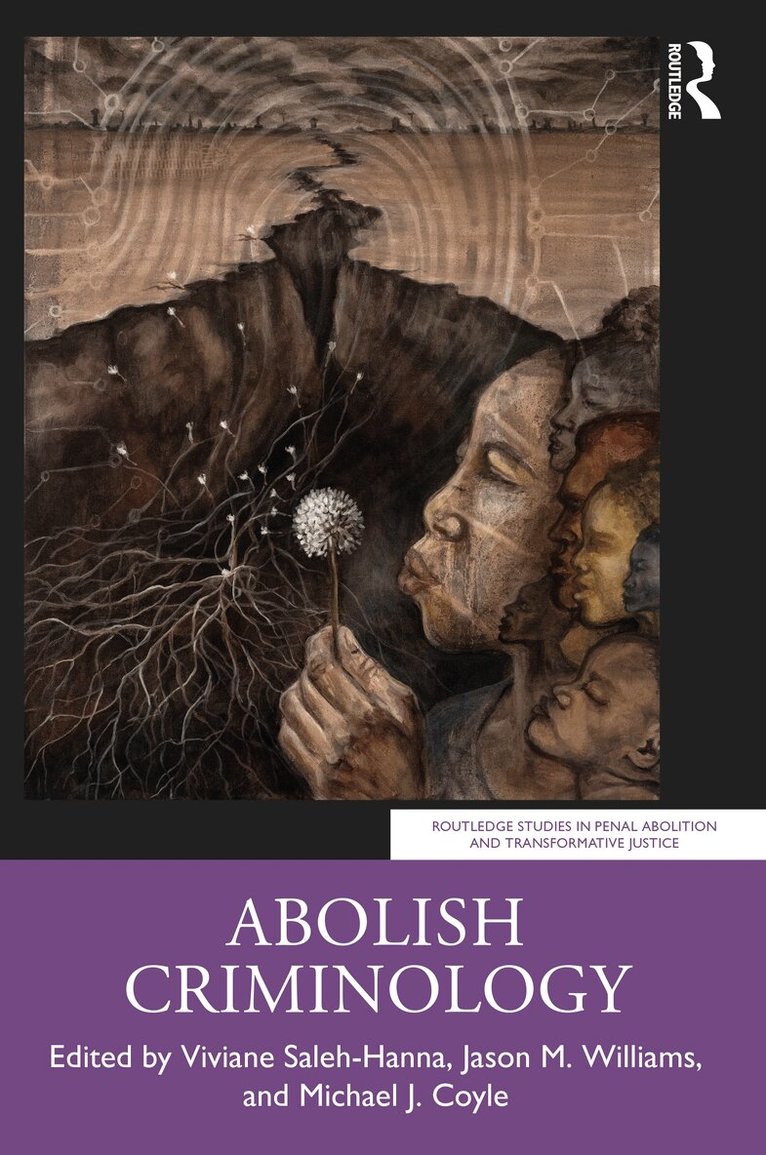
Abolish Criminology presents critical scholarship on criminology and criminal justice ideologies and practices, alongside emerging freedom-driven visions and practices for new world formations.The book introduces readers to a detailed history and analysis of crime as a concept and its colonizing trajectories into existence and enforcement. These significant contexts buried within peculiar academic histories and classroom practices are often overlooked or unknown outside academic spaces. This causes the impact of criminology's racializing-gendering-sexualizing histories to extend and grow through criminology’s creation of crime as a very limiting way of thinking about violence and what can be done about it. These limitations allow the concept of crime to be weaponized and enforced through the criminal legal system. Abolish Criminology offers an accessible, critical study of criminology in written, visual, and poetic forms, and through the perspectives of university students, professors, imprisoned and formerly imprisoned scholars, poets, and visual artists. This allows readers to engage in multi-sensory, inter-disciplinary, and multi-perspective teachings on criminology’s often discussed but seldom interrogated mythologies on violence and danger, while bringing to light the wide-reaching enforcements of violence through criminology's research, theories, agencies, and dominant cultures.Abolish Criminology serves the needs of undergraduate and graduate students and educators in the social sciences, arts, and humanities. It will also appeal to scholars, researchers, policy makers, activists, community organizers, social movement builders, and various reading groups in the general public who are grappling with increased critical public discourse on policing and criminal legal reform or abolition.
1 756 kr
Skickas inom 10-15 vardagar
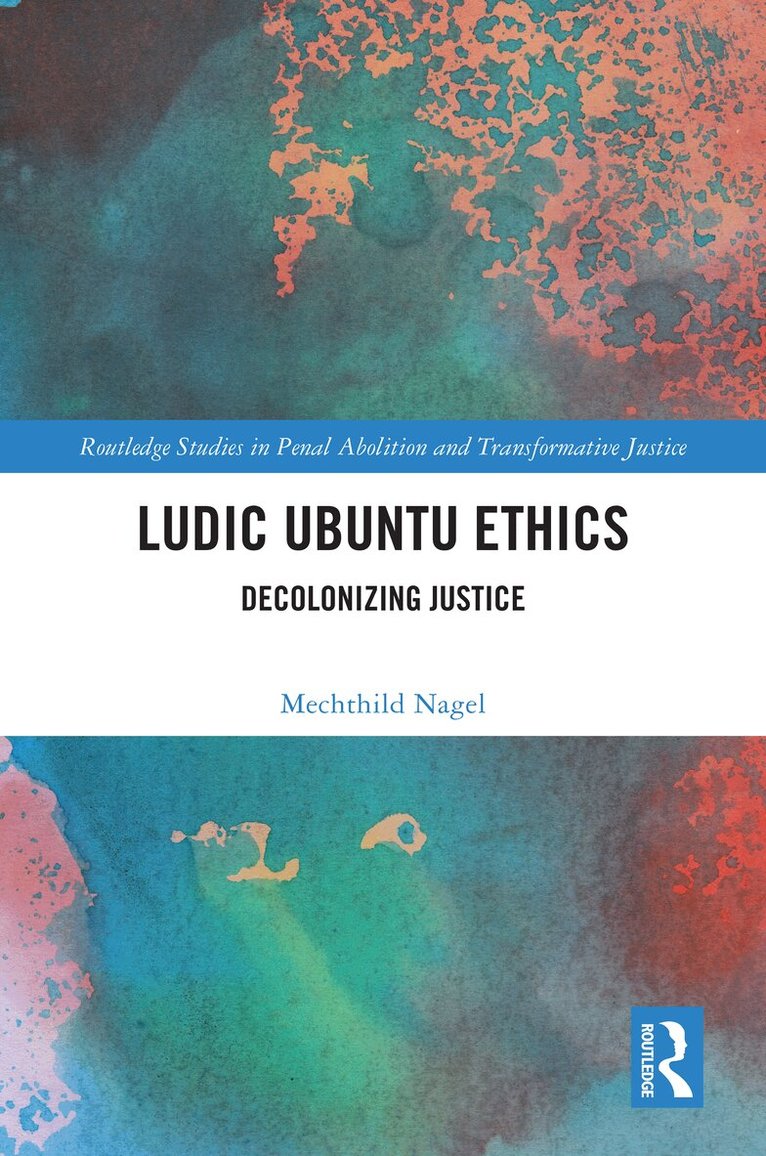
Ludic Ubuntu Ethics develops a positive peace vision, taking a bold look at African and Indigenous justice practices and proposes new relational justice models.‘Ubuntu’ signifies shared humanity, presenting us a sociocentric perspective of life that is immensely helpful in rethinking the relation of offender and victim. In this book, Nagel introduces a new theoretical liberation model—ludic Ubuntu ethics—to showcase five different justice conceptions through a psychosocial lens, allowing for a contrasting analysis of negative Ubuntu (eg., through shaming and separation) towards positive Ubuntu (eg., mediation, healing circles, and practices that no longer rely on punishment). Providing a novel perspective on penal abolitionism, the volume draws on precolonial (pre-carceral) Indigenous justice perspectives and Black feminism, using discourse analysis and a constructivist approach to justice theory. Nagel also introduces readers to a post secular turn by taking seriously the spiritual dimensions of healing from harm and highlighting the community’s response.Spanning disciplinary boundaries and aimed at readers seeking to understand how to move beyond reintegrative shaming and restorative justice theories, the volume will engage scholars of criminology, philosophy and law, and more specifically penal abolitionism, social ethics, peace studies, African studies, critical legal studies, and human rights. It will also be of great interest to practitioners and activists in restorative justice, mediation, social work, and performance studies.
578 kr
Skickas inom 10-15 vardagar
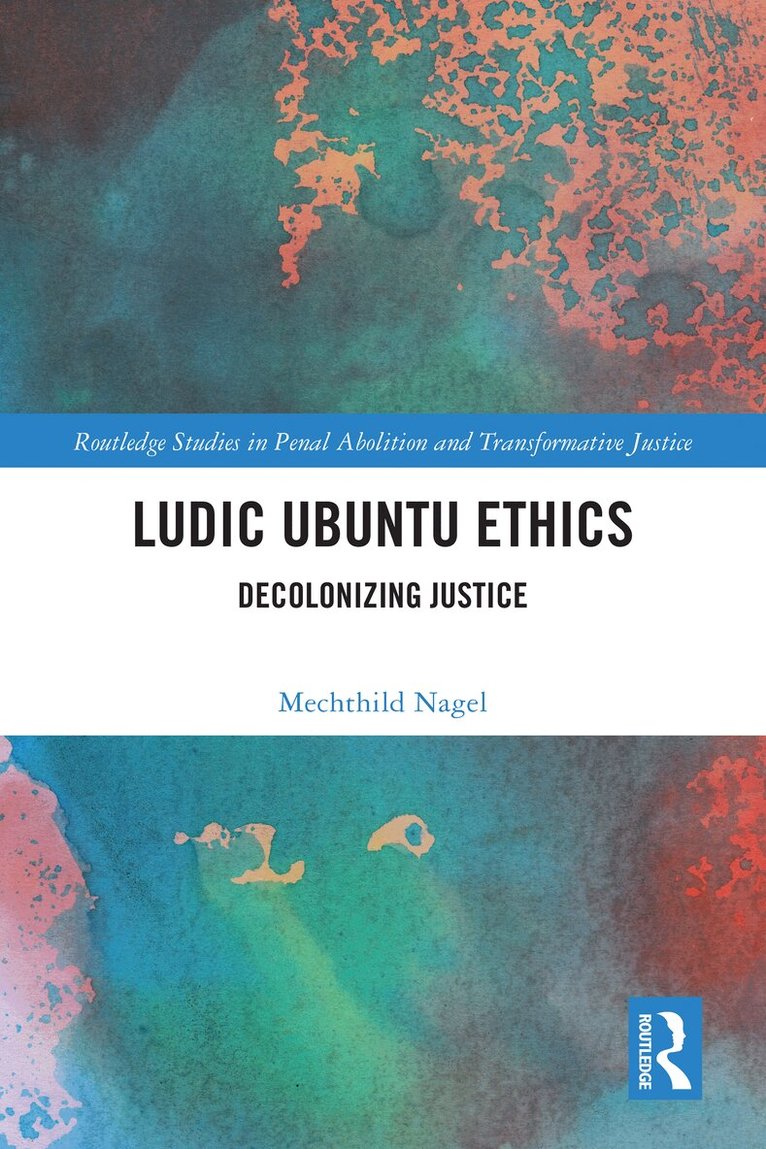
Ludic Ubuntu Ethics develops a positive peace vision, taking a bold look at African and Indigenous justice practices and proposes new relational justice models.‘Ubuntu’ signifies shared humanity, presenting us a sociocentric perspective of life that is immensely helpful in rethinking the relation of offender and victim. In this book, Nagel introduces a new theoretical liberation model—ludic Ubuntu ethics—to showcase five different justice conceptions through a psychosocial lens, allowing for a contrasting analysis of negative Ubuntu (eg., through shaming and separation) towards positive Ubuntu (eg., mediation, healing circles, and practices that no longer rely on punishment). Providing a novel perspective on penal abolitionism, the volume draws on precolonial (pre-carceral) Indigenous justice perspectives and Black feminism, using discourse analysis and a constructivist approach to justice theory. Nagel also introduces readers to a post secular turn by taking seriously the spiritual dimensions of healing from harm and highlighting the community’s response.Spanning disciplinary boundaries and aimed at readers seeking to understand how to move beyond reintegrative shaming and restorative justice theories, the volume will engage scholars of criminology, philosophy and law, and more specifically penal abolitionism, social ethics, peace studies, African studies, critical legal studies, and human rights. It will also be of great interest to practitioners and activists in restorative justice, mediation, social work, and performance studies.
519 kr
Skickas inom 10-15 vardagar
Abolish Criminology presents critical scholarship on criminology and criminal justice ideologies and practices, alongside emerging freedom-driven visions and practices for new world formations.The book introduces readers to a detailed history and analysis of crime as a concept and its colonizing trajectories into existence and enforcement. These significant contexts buried within peculiar academic histories and classroom practices are often overlooked or unknown outside academic spaces. This causes the impact of criminology's racializing-gendering-sexualizing histories to extend and grow through criminology’s creation of crime as a very limiting way of thinking about violence and what can be done about it. These limitations allow the concept of crime to be weaponized and enforced through the criminal legal system. Abolish Criminology offers an accessible, critical study of criminology in written, visual, and poetic forms, and through the perspectives of university students, professors, imprisoned and formerly imprisoned scholars, poets, and visual artists. This allows readers to engage in multi-sensory, inter-disciplinary, and multi-perspective teachings on criminology’s often discussed but seldom interrogated mythologies on violence and danger, while bringing to light the wide-reaching enforcements of violence through criminology's research, theories, agencies, and dominant cultures.Abolish Criminology serves the needs of undergraduate and graduate students and educators in the social sciences, arts, and humanities. It will also appeal to scholars, researchers, policy makers, activists, community organizers, social movement builders, and various reading groups in the general public who are grappling with increased critical public discourse on policing and criminal legal reform or abolition.
644 kr
Skickas inom 10-15 vardagar
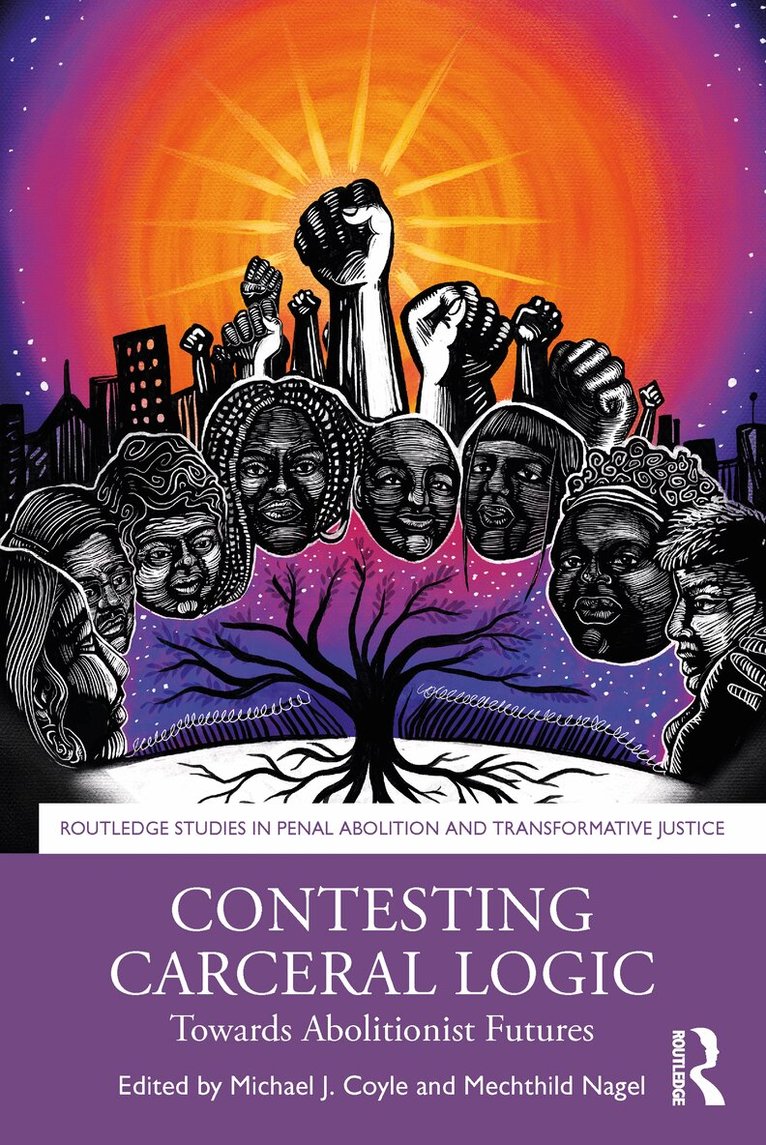
Contesting Carceral Logic provides an innovative and cutting-edge analysis of how carceral logic is embedded within contemporary society, emphasizing international perspectives, the harms and critiques of using carceral logic to respond to human wrongdoing, and exploring penal abolition thought. With chapters from scholars across many disciplines, people in prison, as well as penal abolition activists, the book explores what a future without carceral logic would look like, as well as how such a future is to be developed. The book is also an exploration of penal abolition thought as it is developing in the twenty-first century. Diverse geographical, cultural, identity and experiential frames inform the book’s themes of analysing carceral logic as it harms disparate people in disparate places, creating anti-carceral knowledge, exploring case studies pointing to radical alternatives, and to contesting carceral logic from below. Ultimately, Contesting Carceral Logic provides the reader with an alternative and critical perspective from which to reflect on carceral logic, the punitive state and the criminalizing systems that almost exclusively dominate across the world. Finally, it raises the questions of how we are to build communities as well as transform our response to human wrongdoing in ways that are not defined by racism/ethnocentrism, class war and heteropatriarchy.Contesting Carceral Logic will be of great interest to not only scholars and activists, but also provides an introduction to key carceral issues and debates for students of penology, criminology, social policy, geography, politics, philosophy, social work and social history programmes in countries all around the world.
1 944 kr
Skickas inom 10-15 vardagar
Contesting Carceral Logic provides an innovative and cutting-edge analysis of how carceral logic is embedded within contemporary society, emphasizing international perspectives, the harms and critiques of using carceral logic to respond to human wrongdoing, and exploring penal abolition thought. With chapters from scholars across many disciplines, people in prison, as well as penal abolition activists, the book explores what a future without carceral logic would look like, as well as how such a future is to be developed. The book is also an exploration of penal abolition thought as it is developing in the twenty-first century. Diverse geographical, cultural, identity and experiential frames inform the book’s themes of analysing carceral logic as it harms disparate people in disparate places, creating anti-carceral knowledge, exploring case studies pointing to radical alternatives, and to contesting carceral logic from below. Ultimately, Contesting Carceral Logic provides the reader with an alternative and critical perspective from which to reflect on carceral logic, the punitive state and the criminalizing systems that almost exclusively dominate across the world. Finally, it raises the questions of how we are to build communities as well as transform our response to human wrongdoing in ways that are not defined by racism/ethnocentrism, class war and heteropatriarchy.Contesting Carceral Logic will be of great interest to not only scholars and activists, but also provides an introduction to key carceral issues and debates for students of penology, criminology, social policy, geography, politics, philosophy, social work and social history programmes in countries all around the world.
531 kr
Skickas inom 10-15 vardagar
Building Abolition: Decarceration and Social Justice explores the intersections of the carceral in projects of oppression, while at the same time providing intellectual, pragmatic, and undetermined paths toward abolition.Prison abolition is at once about the institution of the prison, and a broad, intersectional political project calling for the end of the social structured by settler colonialism, anti-black racism, and related oppressions. Beyond this, prison abolition is a constructive project that imagines and strives for a transformed world in which justice is not equated with punishment, and accountability is not equated with caging. Composed of sixteen chapters by an international team of scholars and activists, with a Foreword by Perry Zurn and an Afterword by Justin Piché, the book is divided into four themes:• Prisons and Racism• Prisons and Settler Colonialism• Anti-Carceral Feminisms• Multispecies Carceralities.This book will be of interest to undergraduate and postgraduate students, activists, and scholars working in the areas of Critical Prison Studies, Critical Criminology, Native Studies, Postcolonial Studies, Black Studies, Critical Race Studies, Gender and Sexuality Studies, and Critical Animal Studies, with particular chapters being of interest to scholars and students in other fields, such as, Feminist Legal Studies, Animal Law, Critical Disability Studies, Queer Theory, and Transnational Feminisms.