Rutgers Series: the Public Life of the Arts – serie
Visar alla böcker i serien Rutgers Series: the Public Life of the Arts. Handla med fri frakt och snabb leverans.
6 produkter
6 produkter
Public Life of the Arts in America
The Public Life of the Arts in America, Revised Edition
Häftad, Engelska, 2000
422 kr
Skickas inom 5-8 vardagar
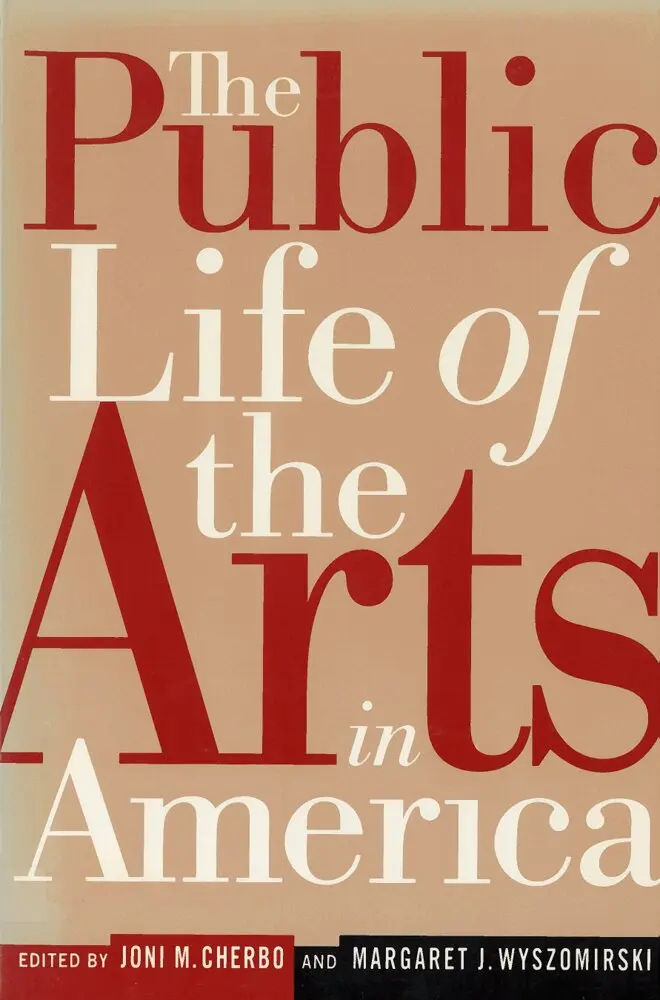
Art and entertainment constitute America’s second-largest export. Most Americans-96%, to be exact-are somehow involved in the arts, whether as audience participants, hobbyists, or via broadcast, recording, video, or the Internet. The contribution of the arts to the U.S. economy is stunning: the nonprofit arts industry alone contributes over 857 billion dollars per year, and America’s fine and performing arts enjoy world-class status.Despite its size, quality, and economic impact, the arts community is not articulate about how they serve public interests, and few citizens have an appreciation of the myriad of public policies that influence American arts and culture. The contributors to this volume argue that U.S. policy can-and should-support the arts and that the arts, in turn serve a broad rather than an elite public. Indeed, increased support for the arts and culture equals good economic and trade policy; it also contributes to the quality of life and community, and helps sustain the creativity of American artists and organizations.By encouraging policy-makers to systematically start investigating the crucial role and importance of all of the arts in the United States, The Arts and Public Purpose moves the field forward with fresh ideas, new concepts, and important new data.
442 kr
Skickas inom 7-10 vardagar
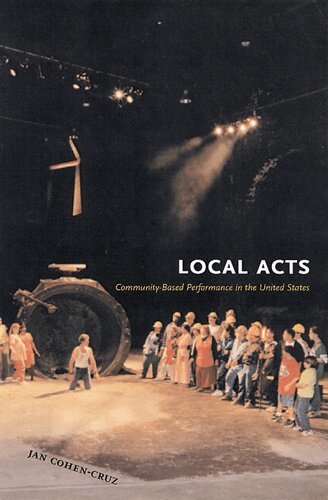
An eclectic mix of art, theatre, dance, politics, experimentation, and ritual,community-based performance has become an increasingly popular art movement in the United States. Forged by the collaborative efforts of professional artists and local residents, this unique field brings performance together with a range of political, cultural, and social projects, such as community-organizing, cultural self-representation, and education. Local Acts presents a long-overdue survey of community-based performance from its early roots, through its flourishing during the politically-turbulent 1960s, to present-day popular culture. Drawing on nine case studies, including groups such as the African American Junebug Productions, the Appalachian Roadside Theater, and the Puerto Rican Teatro Pregones, Jan Cohen-Cruz provides detailed descriptions of performances and processes, first-person stories, and analysis. She shows how the ritual side of these endeavors reinforces a sense of community identification while the aesthetic side enables local residents to transgress cultural norms, to question group habits, and to incorporate a level of craft that makes the work accessible to individuals beyond any one community. The book concludes by exploring how community-based performance transcends even national boundaries, connecting the local United States with international theater and cultural movements.
377 kr
Skickas inom 5-8 vardagar
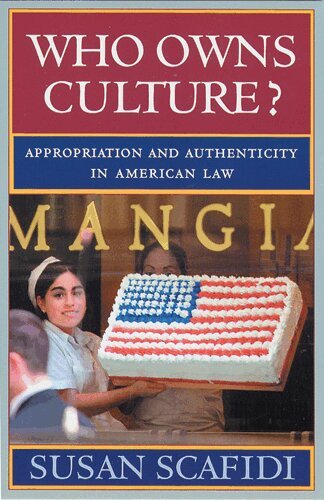
It is not uncommon for white suburban youths to perform rap music, for New York fashion designers to ransack the world's closets for inspiration, or for Euro-American authors to adopt the voice of a geisha or shaman. But who really owns these art forms? Is it the community in which they were originally generated, or the culture that has absorbed them?While claims of authenticity or quality may prompt some consumers to seek cultural products at their source, the communities of origin are generally unable to exclude copyists through legal action. Like other works of unincorporated group authorship, cultural products lack protection under our system of intellectual property law. But is this legal vacuum an injustice, the lifeblood of American culture, a historical oversight, a result of administrative incapacity, or all of the above?Who Owns Culture? offers the first comprehensive analysis of cultural authorship and appropriation within American law. From indigenous art to Linux, Susan Scafidi takes the reader on a tour of the no-man's-land between law and culture, pausing to ask: What prompts us to offer legal protection to works of literature, but not folklore? What does it mean for a creation to belong to a community, especially a diffuse or fractured one? And is our national culture the product of Yankee ingenuity or cultural kleptomania?Providing new insights to communal authorship, cultural appropriation, intellectual property law, and the formation of American culture, this innovative and accessible guide greatly enriches future legal understanding of cultural production.
381 kr
Skickas inom 5-8 vardagar
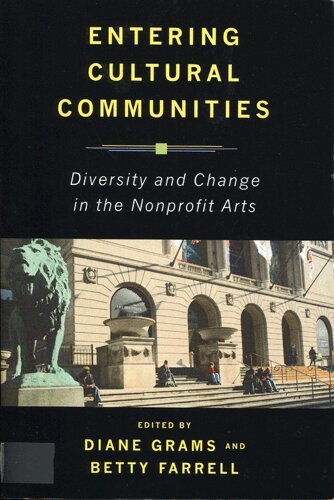
Arts organizations once sought patrons primarily from among the wealthy and well educated, but for many decades now they have revised their goals as they seek to broaden their audiences. Today, museums, orchestras, dance companies, theaters, and community cultural centers try to involve a variety of people in the arts. They strive to attract a more racially and ethnically diverse group of people, those from a broader range of economic backgrounds, new immigrants, families, and youth. The chapters in this book draw on interviews with leaders, staff, volunteers, and audience members from eighty-five nonprofit cultural organizations to explore how they are trying to increase participation and the extent to which they have been successful. The insiders' accounts point to the opportunities and challenges involved in such efforts, from the reinvention of programs and creation of new activities, to the addition of new departments and staff dynamics, to partnerships with new groups. The authors differentiate between "relational" and "transactional" practices, the former term describing efforts to build connections with local communities and the latter describing efforts to create new consumer markets for cultural products. In both cases, arts leaders report that, although positive results are difficult to measure conclusively, long-term efforts bring better outcomes than short-term activities. The organizations discussed include large, medium, and small nonprofits located in urban, suburban, and rural areas-from large institutions such as the Smithsonian, the Walker Art Center, the Museum of Fine Arts Houston, and the San Francisco Symphony to many cultural organizations that are smaller, but often known nationally for their innovative work, such as AS220, The Loft Literary Center, Armory Center for the Arts, Appalshop, and the Western Folklife Center.
429 kr
Skickas inom 5-8 vardagar
The arts and creative sector is one of the nation's broadest, most important, and least understood social and economic assets, encompassing both nonprofit arts and cultural organizations, for-profit creative companies, such as advertising agencies, film producers, and commercial publishers, and community-based artistic activities. The thirteen essays in this timely book demonstrate why interest in the arts and creative sector has accelerated in recent years, and the myriad ways that the arts are crucial to the social and national agenda and the critical issues and policies that relate to their practice. Leading experts in the field show, for example, how arts and cultural policies are used to enhance urban revitalization, to encourage civic engagement, to foster new forms of historic preservation, to define national identity, to advance economic development, and to regulate international trade in cultural goods and services.Illuminating key issues and reflecting the rapid growth of the field of arts and cultural policy, this book will be of interest to students at both the undergraduate and graduate levels, to arts educators and management professionals, government agency and foundation officials, and researchers and academics in the cultural policy field.
401 kr
Skickas inom 7-10 vardagar
Art in the Lives of Immigrant Communities in the United States is the first book to provide a comprehensive and lively analysis of the contributions of artists from America's newest immigrant communities--Africa, the Middle East, China, India, Southeast Asia, Central America, and Mexico. Adding significantly to our understanding of both the arts and immigration, multidisciplinary scholars explore tensions that artists face in forging careers in a new world and navigating between their home communities and the larger society. They address the art forms that these modern settlers bring with them; show how poets, musicians, playwrights, and visual artists adapt traditional forms to new environments; and consider the ways in which the communities' young people integrate their own traditions and concerns into contemporary expression.