Ruth Benedict Book Series - Böcker
Visar alla böcker i serien Ruth Benedict Book Series. Handla med fri frakt och snabb leverans.
6 produkter
6 produkter
1 835 kr
Skickas inom 3-6 vardagar
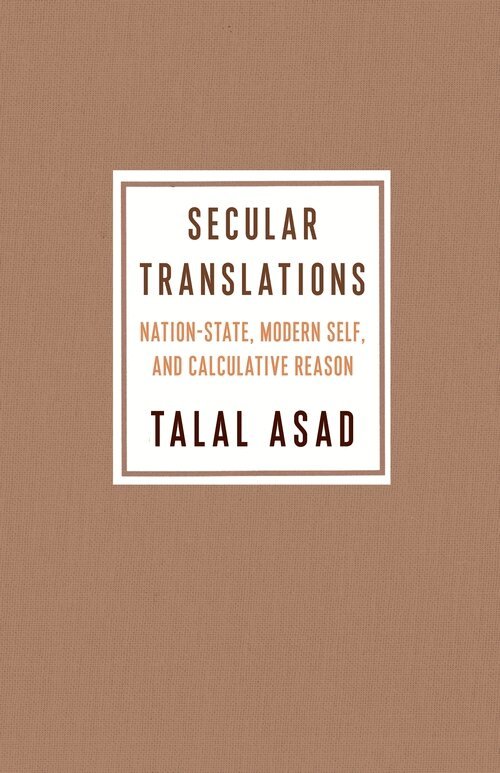
In Secular Translations, the anthropologist Talal Asad reflects on his lifelong engagement with secularism and its contradictions. He draws out the ambiguities in our concepts of the religious and the secular through a rich consideration of translatability and untranslatability, exploring the circuitous movements of ideas between histories and cultures.In search of meeting points between the language of Islam and the language of secular reason, Asad gives particular importance to the translations of religious ideas into nonreligious ones. He discusses the claim that liberal conceptions of equality represent earlier Christian ideas translated into secularism; explores the ways that the language and practice of religious ritual play an important but radically transformed role as they are translated into modern life; and considers the history of the idea of the self and its centrality to the project of the secular state. Secularism is not only an abstract principle that modern liberal democratic states espouse, he argues, but also a range of sensibilities. The shifting vocabularies associated with each of these sensibilities are fundamentally intertwined with different ways of life. In exploring these entanglements, Asad shows how translation opens the door for—or requires—the utter transformation of the translated. Drawing on a diverse set of thinkers ranging from al-Ghazālī to Walter Benjamin, Secular Translations points toward new possibilities for intercultural communication, seeking a language for our time beyond the language of the state.
243 kr
Skickas inom 7-10 vardagar
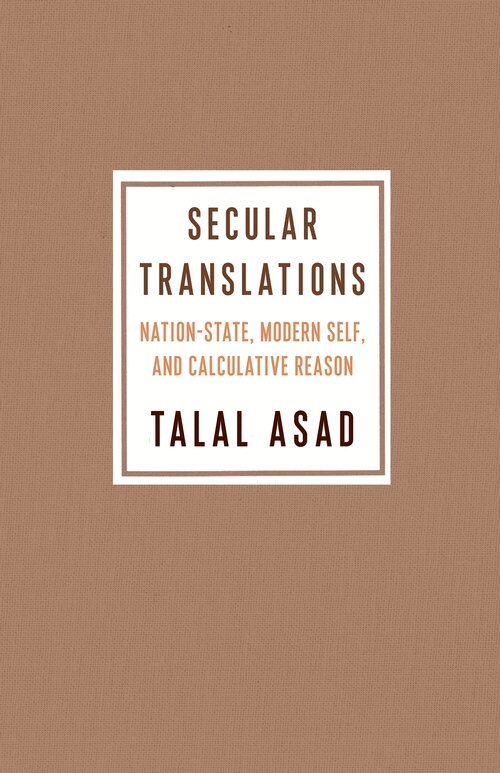
In Secular Translations, the anthropologist Talal Asad reflects on his lifelong engagement with secularism and its contradictions. He draws out the ambiguities in our concepts of the religious and the secular through a rich consideration of translatability and untranslatability, exploring the circuitous movements of ideas between histories and cultures.In search of meeting points between the language of Islam and the language of secular reason, Asad gives particular importance to the translations of religious ideas into nonreligious ones. He discusses the claim that liberal conceptions of equality represent earlier Christian ideas translated into secularism; explores the ways that the language and practice of religious ritual play an important but radically transformed role as they are translated into modern life; and considers the history of the idea of the self and its centrality to the project of the secular state. Secularism is not only an abstract principle that modern liberal democratic states espouse, he argues, but also a range of sensibilities. The shifting vocabularies associated with each of these sensibilities are fundamentally intertwined with different ways of life. In exploring these entanglements, Asad shows how translation opens the door for—or requires—the utter transformation of the translated. Drawing on a diverse set of thinkers ranging from al-Ghazālī to Walter Benjamin, Secular Translations points toward new possibilities for intercultural communication, seeking a language for our time beyond the language of the state.
1 543 kr
Skickas inom 3-6 vardagar
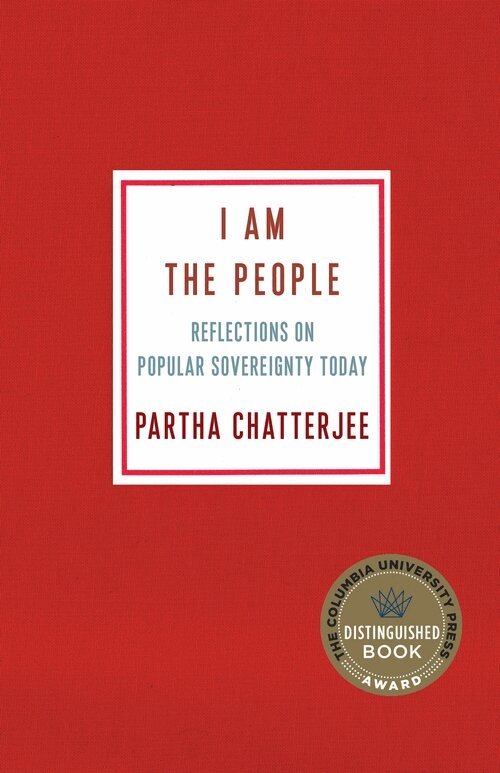
The forms of liberal government that emerged after World War II are in the midst of a profound crisis. In I Am the People, Partha Chatterjee reconsiders the concept of popular sovereignty in order to explain today’s dramatic outburst of movements claiming to speak for “the people.”To uncover the roots of populism, Chatterjee traces the twentieth-century trajectory of the welfare state and neoliberal reforms. Mobilizing ideals of popular sovereignty and the emotional appeal of nationalism, anticolonial movements ushered in a world of nation-states while liberal democracies in Europe guaranteed social rights to their citizens. But as neoliberal techniques shrank the scope of government, politics gave way to technical administration by experts. Once the state could no longer claim an emotional bond with the people, the ruling bloc lost the consent of the governed. To fill the void, a proliferation of populist leaders have mobilized disaffected groups into a battle that they define as the authentic people against entrenched oligarchy.Once politics enters a spiral of competitive populism, Chatterjee cautions, there is no easy return to pristine liberalism. Only a counter-hegemonic social force that challenges global capital and facilitates the equal participation of all peoples in democratic governance can achieve significant transformation. Drawing on thinkers such as Antonio Gramsci, Michel Foucault, and Ernesto Laclau and with a particular focus on the history of populism in India, I Am the People is a sweeping, theoretically rich account of the origins of today’s tempests.
446 kr
Skickas inom 3-6 vardagar
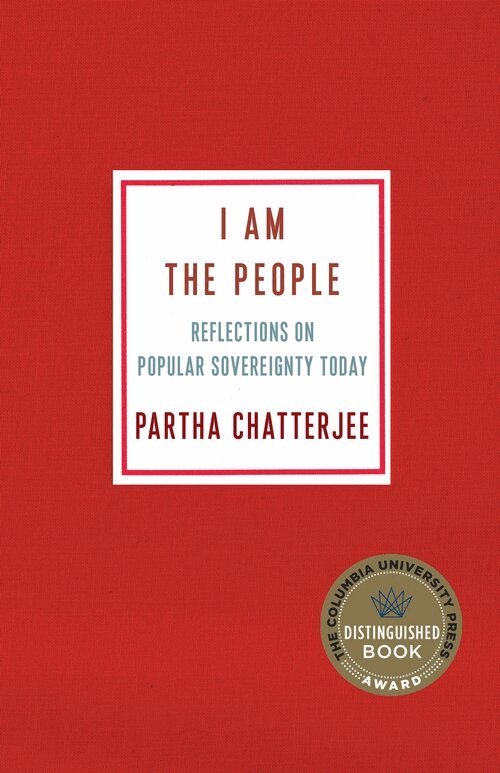
The forms of liberal government that emerged after World War II are in the midst of a profound crisis. In I Am the People, Partha Chatterjee reconsiders the concept of popular sovereignty in order to explain today’s dramatic outburst of movements claiming to speak for “the people.”To uncover the roots of populism, Chatterjee traces the twentieth-century trajectory of the welfare state and neoliberal reforms. Mobilizing ideals of popular sovereignty and the emotional appeal of nationalism, anticolonial movements ushered in a world of nation-states while liberal democracies in Europe guaranteed social rights to their citizens. But as neoliberal techniques shrank the scope of government, politics gave way to technical administration by experts. Once the state could no longer claim an emotional bond with the people, the ruling bloc lost the consent of the governed. To fill the void, a proliferation of populist leaders have mobilized disaffected groups into a battle that they define as the authentic people against entrenched oligarchy.Once politics enters a spiral of competitive populism, Chatterjee cautions, there is no easy return to pristine liberalism. Only a counter-hegemonic social force that challenges global capital and facilitates the equal participation of all peoples in democratic governance can achieve significant transformation. Drawing on thinkers such as Antonio Gramsci, Michel Foucault, and Ernesto Laclau and with a particular focus on the history of populism in India, I Am the People is a sweeping, theoretically rich account of the origins of today’s tempests.
753 kr
Skickas inom 7-10 vardagar
In the face of conflict and despair, we often console ourselves by saying that history will be the judge. Today’s oppressors may escape being held responsible for their crimes, but the future will condemn them. Those who stand up for progressive values are on the right side of history. As ideas once condemned to the dustbin of history—white supremacy, hypernationalism, even fascism—return to the world, threatening democratic institutions and values, can we still hold out hope that history will render its verdict?Joan Wallach Scott critically examines the belief that history will redeem us, revealing the implicit politics of appeals to the judgment of history. She argues that the notion of a linear, ever-improving direction of history hides the persistence of power structures and hinders the pursuit of alternative futures. This vision of necessary progress perpetuates the assumption that the nation-state is the culmination of history and the ultimate source for rectifying injustice. Scott considers the Nuremberg Tribunal and South Africa’s Truth and Reconciliation Commission, which claimed to carry out history’s judgment on Nazism and apartheid, and contrasts them with the movement for reparations for slavery in the United States. Advocates for reparations call into question a national history that has long ignored enslavement and its racist legacies. Only by this kind of critical questioning of the place of the nation-state as the final source of history’s judgment, this book shows, can we open up room for radically different conceptions of justice.
203 kr
Skickas inom 7-10 vardagar
In the face of conflict and despair, we often console ourselves by saying that history will be the judge. Today’s oppressors may escape being held responsible for their crimes, but the future will condemn them. Those who stand up for progressive values are on the right side of history. As ideas once condemned to the dustbin of history—white supremacy, hypernationalism, even fascism—return to the world, threatening democratic institutions and values, can we still hold out hope that history will render its verdict?Joan Wallach Scott critically examines the belief that history will redeem us, revealing the implicit politics of appeals to the judgment of history. She argues that the notion of a linear, ever-improving direction of history hides the persistence of power structures and hinders the pursuit of alternative futures. This vision of necessary progress perpetuates the assumption that the nation-state is the culmination of history and the ultimate source for rectifying injustice. Scott considers the Nuremberg Tribunal and South Africa’s Truth and Reconciliation Commission, which claimed to carry out history’s judgment on Nazism and apartheid, and contrasts them with the movement for reparations for slavery in the United States. Advocates for reparations call into question a national history that has long ignored enslavement and its racist legacies. Only by this kind of critical questioning of the place of the nation-state as the final source of history’s judgment, this book shows, can we open up room for radically different conceptions of justice.