Sacra Doctrina – serie
Visar alla böcker i serien Sacra Doctrina. Handla med fri frakt och snabb leverans.
9 produkter
9 produkter
261 kr
Skickas inom 10-15 vardagar
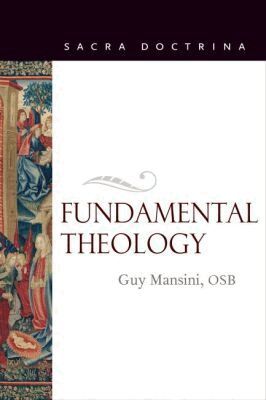
Fundamental Theology examines the light by which the mysteries of Christ and the Church, the Trinity and the Sacraments, are revealed to us. That light we call “revelation,” and fundamental theology examines in the first place what this light shows about itself, and how it is sustained in the world. Or again, fundamental theology considers what the word of God has to say both about itself and what it has to say about where in the world it is to be heard. So, first it is a theology of Revelation (chapter 1), and second, a theology of the transmission of Revelation in Tradition, Scripture, and the Church (chapters 2, 3, and 4). Why must Revelation have the shape it does, and why must it be constituted by both word and event? Why is Tradition prior to Scripture, why must the word of God be written down, and why must Scripture come to us in two testaments? And why must the message conveyed in Tradition and Scripture have a living interpreter in the Church? Since no word is spoken unless it is heard, fundamental theology also investigates the conditions of hearing the word of God, the very hearing itself in the assent of faith, and a necessary consequence of this hearing. The remote conditions of hearing are also what theology calls our ability to come to the knowledge of the preambula fidei- the things about God than can be known by the natural light (chapter 5). The immediate condition of hearing is the credibility of the word (chapter 6). Hearing is faith (chapter 7). And true hearing gives the hearer to recapitulate what is heard in his own wondering and thankful voice in theology (chapter 8). The introduction to theology in the last chapter is by way of considering the history of Catholic theology in the 20th century.
261 kr
Skickas inom 10-15 vardagar
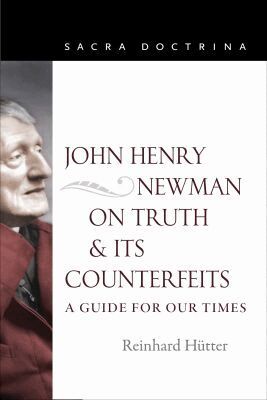
Reinhard Hütter’s main thesis in this third volume of the Sacra Doctrina series is that John Henry Newman, in his own context of the nineteenth century, a century far from being a foreign one to our own, faced the same challenges as we do today; the problems then and now differ in degree, not in kind. Hence, Newman’s engagement with these problems offers us a prescient and indeed prophetic diagnosis of what these problems or errors, if not corrected, will lead to—consequences which have more or less come to pass—and, furthermore, an alternative way which is at once thoroughly Catholic and holds contemporary relevance.The introduction offers a survey of Newman’s life and works and each of the subsequent four chapters addresses one significant aspect of Christianity that is not only contested or rejected by secular unbelief, but also has a counterfeit for which not only Christians, but even Catholics have fallen. The counterfeit of conscience is the “conscience” of the sovereign subject (Ch. 1); the counterfeit of faith is the “faith” of one who does not submit to the living authority through which God communicates but rather adheres to the principle of private judgment in matters of revealed religion(Ch.2); the counterfeit of doctrinal development is twofold: (i) paying lip service to development while only selectively accepting its consequences on the grounds of a specious antiquarianism and (ii) invoking development theory to justify all sorts of contemporary changes according to the present Zeitgeist (Ch. 3). Finally, the counterfeit of the university are all those “universities” whose end is not to educate and thereby to perfect the intellect, but rather to feed more efficiently the empire of desire that is informed by the techno-consumerism of today (Ch. 4). John Henry Newman on Truth and its Counterfeits concludes with an epilogue on Hütter’s journey to Catholicism.
310 kr
Skickas inom 7-10 vardagar
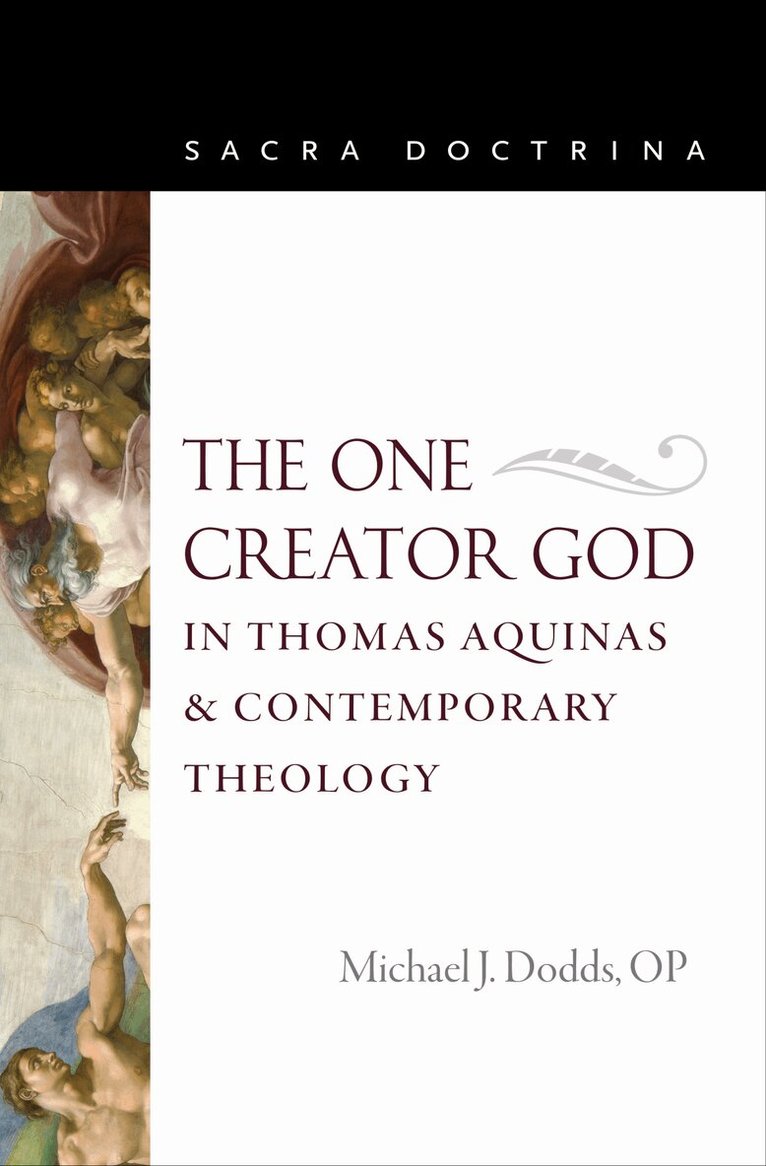
This book provides a fundamental introduction to Aquinas's theology of the One Creator God. Aimed at making that thought accessible to contemporary audiences, it gives a basic explanation of his theology while showing its compatibility with contemporary science and its relevance to current theological issues. Opening with a brief account of Aquinas’s life, it then describes the purpose and nature of the Summa Theologica and gives a short review of current varieties of Thomism. Without neglecting other works, it then focuses primarily on the discussion of the One God in the first part of the Summa Theologica. God's transcendence and immanence is a recurrent theme in that discussion. Evidence of God's immanent causality in the natural world grounds Aquinas's five arguments for the existence of God (the Five Ways) which then open onto God's transcendence. The subsequent discussion of the divine attributes builds on the modes of God's causality established in the Five Ways. It also shows the need for a language of analogy to preserve God's transcendence and prevent us from reducing God to the level of creatures, even as qualities such as ""goodness"" and ""love,"" which we first know from creatures, are applied to God. The discussion of God's providence and governance establishes that the transcendent Creator God is most intimately present in creation. God acts in all creatures in a way that does not diminish their proper causality, but is rather its source. As there is no contradiction between God's transcendence and immanence, so there is no competition between the primary causality of God and the secondary causality of creatures. Empirical science, which is limited by its method to the secondary causality of creatures, is shown to be compatible with the broader discipline of theology which also embraces the primary causality of the Creator.
310 kr
Skickas inom 7-10 vardagar
Christian satisfaction stands at the center of the Church’s teaching about salvation. Satisfaction pertains to studies about Christ, redemption, the Sacraments, and pastoral practice. The topic also enters into questions about God and the creature as well as about the divine mercy and providence. Somewhat neglected in the period after Vatican II, satisfaction now appears to scholars as the forgotten key to entering deeply into the mystery of Christ and his work. Seminarians especially will benefit from studying the place satisfaction holds in Catholic life.Further, ecumenical work requires a proper understanding of the place that satisfaction holds in Christian theology. Various factors operative since the sixteenth century have worked to displace satisfaction almost entirely from reformed practice and theology. To address such concerns, The Godly Image, has, over the past several decades and more, done a great deal to put satisfaction within its proper context of image-restoration. That is, to interpret satisfaction within the context of the divine mercy and not the divine justice. This unique contribution to satisfaction studies owes a great deal to the achievement of Saint Thomas Aquinas. In this sense, the book enacts a retrieval of the theology of the high classical period. Like much of Aquinas’s refined teaching, a proper understanding requires appeal to the commentatorial tradition that follows him. Interested students will find in this study the touchstones for further studies of these authors.The Godly Image aims also to distinguish the theology of Aquinas from that of the medieval author with whom the notion of satisfaction remains mostly identified, that is, Anselm of Canterbury. Although not a developed focus of the book’s contents, the attentive reader will recognize that Aquinas treats Saint Anselm with a reverential reading, even as the Common Doctor moves significantly away from interpretations of satisfaction that suggest that an angry God exacts from his innocent Son a painful substitutional penalty for a fallen human race.
314 kr
Skickas inom 10-15 vardagar
The first part of the book explains the antecedent probability both of revelation and of God’s institution of a church. It is ecclesiology in the mode of fundamental theology.The second part rounds up what Scripture and Tradition teach about the Church under the heads of the People of God, the Temple of the Holy Spirit, the Bride of Christ, and the Body of Christ. The chapters present this thematic material under each head as a unified whole, across the Testaments, with each chapter keyed to one of the “marks” of the Church: the catholicity of the people of God, the apostolicity of the ministers of the messianic temple, the holiness of the Bride of Christ, and the unity of the Body of Christ. This already organizes things in a proto-systematic frame.The third part of the book gives systematic exploration, in reverse order, to the unity of the Church, with attention to non-Catholic ecclesial communities and churches, to the holiness of the Church, objective and subjective, to the apostolicity of the Church and her mediation of revealed truth and grace, and to the catholicity of the Church, with attention to non-Christian religions.The center of the book, on the definition of the Church as the sacrament of communion, renders recent French Dominican ecclesiology in a form more accessible to undergraduates and seminarians, rooting it in the New Testament teachings on communion and mysterion. The book concludes with a strenuous argument for the necessity of the Church and her mission of evangelization. Thus, the trajectory of the book is from the naturally knowable antecedent probability of the Church to its revealed necessity.
310 kr
Skickas inom 7-10 vardagar
Bread from Heaven offers a contemporary theological synthesis on the Eucharist that brings together classical and critical biblical exegesis, debates on the early history of the Christian liturgy, patristic doctrine, the teachings offered by the Councils of Florence, Trent and Vatican II, and the Church’s lex orandi, all within a framework provided by the Eucharistic theology of Thomas Aquinas.The volume begins with Christ’s Bread of Life discourse in John 6, in light of the Old Testament theme of the manna, and the Synoptic accounts of the Last Supper. These biblical texts offer solid foundation for a theology of Eucharistic sacrifice, presence and Communion. It then continues with a historical and systematic study of the institution of the Eucharist by Christ, with special attention given to the emergence of the first Eucharistic prayers. Then follows a survey of key Christological and ecclesiological themes which undergird Eucharistic theology. The chapters on Eucharistic sacrifice and presence form the heart of the work. Here, the focus moves to key conciliar, patristic and Thomistic insights on these themes. Bread from Heaven clarifies misunderstandings of Eucharistic sacrifice and renders transubstantiation accessible to beginners.Blankenhorn concludes with a study of the consecration, the minister of the Eucharist and the fruits of communion. The chapter on the debate over the words of institution and the epiclesis gives a fresh perspective that integrates both eastern and western tradition. The study of the Eucharistic celebrant strikes a balance between a spirituality of the priest as acting in persona Christi and of the priest as praying in persona ecclesiae. The concluding chapter centers on the Eucharist’s unitive, mystical fruits in the Church.This textbook is ideal for an advanced undergraduate or graduate course on Eucharistic theology. It also seeks to advance the debate on several controversial historical and speculative issues in sacramental theology.
310 kr
Skickas inom 7-10 vardagar
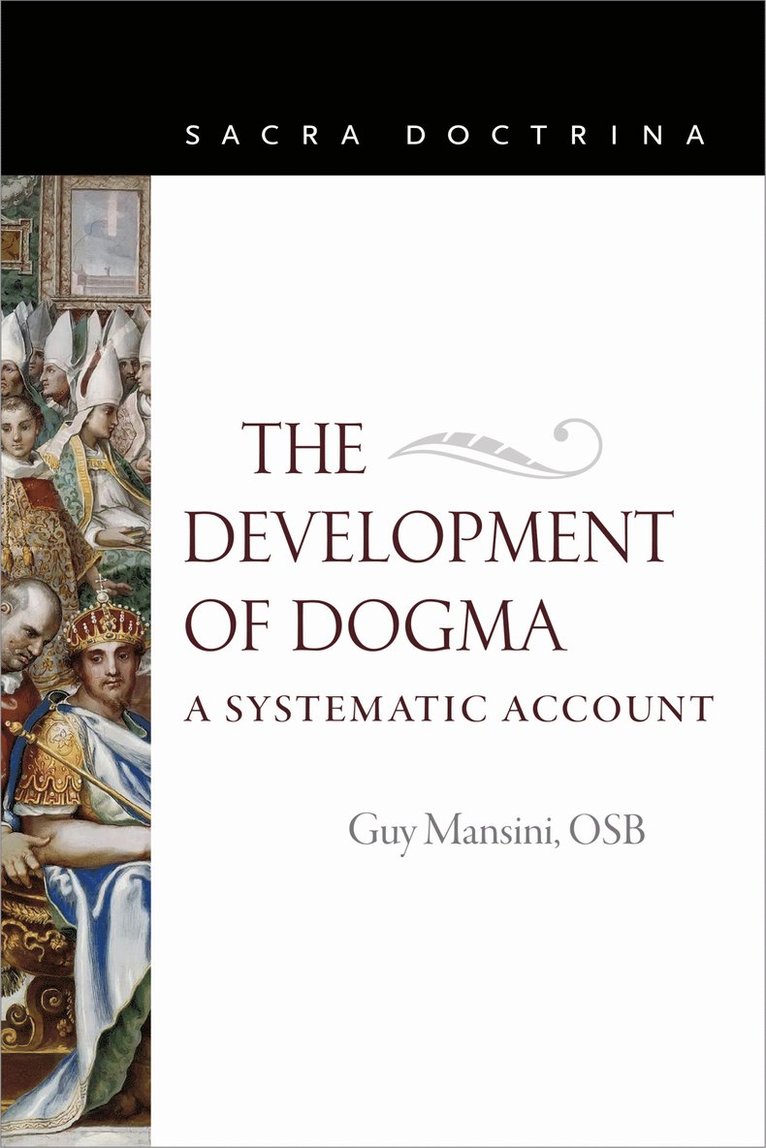
The Development of Dogma examines the nature of dogmatic statements and the causes of development. It devotes particular attention to the emergence of the form of dogmatic statements at the Council of Nicaea, but notes how this form is anticipated in the New Testament. It situates dogma and its development within the matrix of the great fundamental theological realities of Scripture, Tradition, and Magisterium. Fr. Mansini examines at some length how the Church comes to recognize a development as a genuine development rather than as a distortion of the word of God. The Development of Dogma is especially valuable today for its discussion and defense of the philosophical presuppositions of dogma, which are often simply presupposed but should not be ignored in a complete account of development. These presuppositions touch on fundamental philosophical issues, including the nature of knowledge, the objectivity and trustworthiness of names, and the various logical forms employed in understanding how development is related to a closed revelation. The historicity of human knowledge is also addressed, and the role of dogma itself in heading off the extreme relativism the historical nature of man is supposed to imply for ecclesial faith and life. The Church's dogma about dogma enunciated at the First Vatican Council is also examined. The role of certain fundamental concepts in understanding the possibility of the irreformability of dogma it speaks of is expressly addressed--concepts in principle accessible to all human beings and that enable a trans-cultural, trans-temporal proposal and reception of revealed truth.
310 kr
Skickas inom 7-10 vardagar
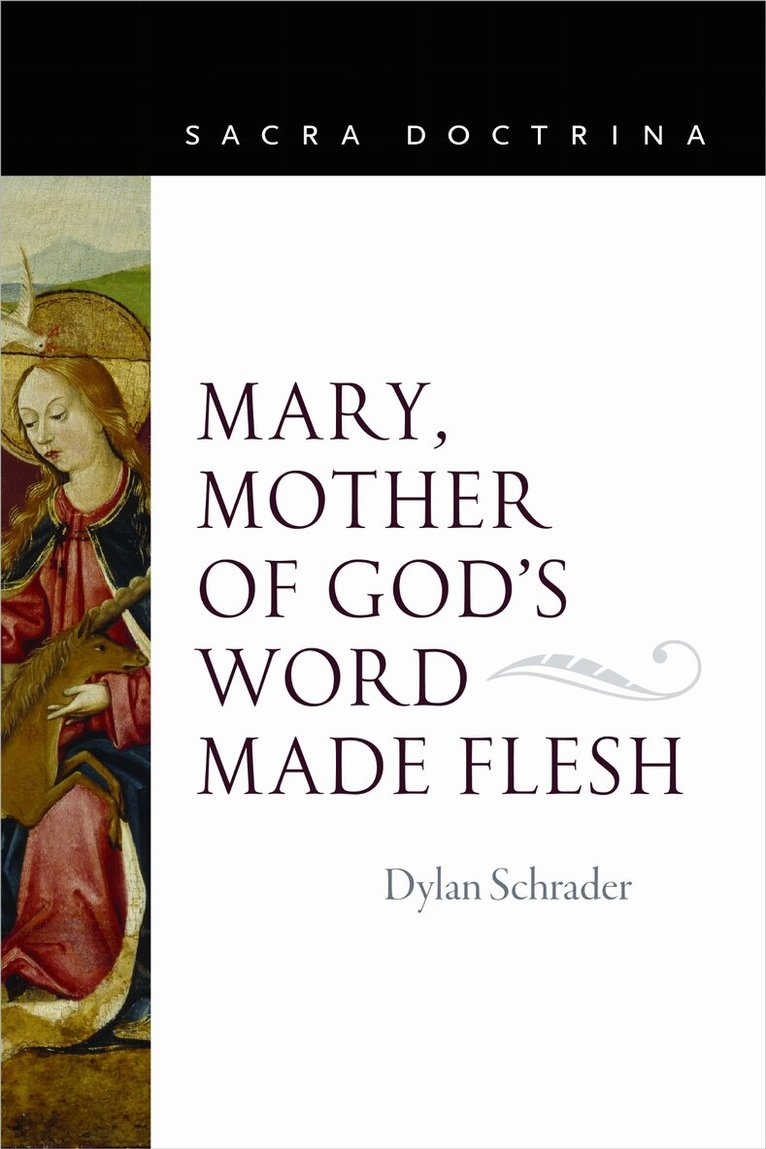
Mary, Mother of God Made Flesh overviews Catholic teaching on Mary, with a special focus on the "four Marian dogmas" and other major doctrines, such as Mary’s cooperation in the work of salvation and the distribution of graces. The book takes the relationship of Mary to Jesus as its starting point, while also drawing on insights from ecclesiotypical and Christotypical approaches to Mariology.This book emphasizes that Marian doctrine must be grounded in the revealed Word of God. Thus, it does not rely on private revelations but instead draws on scriptural, magisterial, patristic, and liturgical sources. At the same time, Mary, Mother of God Made Flesh is systematic and not merely historical. It strives to show how Catholic teachings on Mary fit together and explores precisely what they mean.In this task, Mary, Mother of God Made Flesh draws in a special way on St. Thomas Aquinas and the Thomistic school, while also incorporating insights from other approaches. Thus, it also engages with some speculative questions that have not received as much attention in other recent works of Mariology but that remain important for the correct understanding and elaboration of magisterial teachings. For example, it deals with the issue of the debitum peccati ("debt of sin"), which touches on how to connect the Immaculate Conception with the notion of redemption, and the question of precisely how Mary is involved in the conferral of graces.The most important parts of this book are the chapters on the dogmas of the divine maternity, the immaculate conception, the perpetual virginity of Mary, and her assumption intoheaven. There are also chapters on Mary’s holiness of life, her participation in Christ’s saving work, and Marian devotion in the life of the Church. The first appendix overviews the problem of what St. Thomas Aquinas taught about the Immaculate Conception, while the second discusses the magisterium’s current approach to private revelations and extraordinary phenomena.
347 kr
Kommande
Fullness of Life is a basic introduction to the Catholic understanding of salvation. It begins with a presentation of the background against which the teaching on salvation must be situated (the contemporary context of the question of salvation, the positions of other religions, the teaching of the magisterium) (chapter one), and a concise sketch on the history of soteriology (chapter two). The following chapters are a discussion of models for interpreting salvation relating to Christ's death on the cross (chapter three) and the totality of His life (chapter four). These considerations are concluded with a presentation of St. Thomas Aquinas' interpretative proposal (chapter five), which proves to be an apt way to synthesize the discussions presented earlier. The model of salvific mediation eventually turns out to be a higher-order model that allows to close the entire presentation (chapter six). The body of the text is supplemented by appendices that discuss a chosen set of particular problems related to the reflections in the corpus, that is, the "scapegoat" as a figure of Christ, the salvific function of other religions, substitution in Aquinas, and salutary suffering. The entire text ends with a selection of relevant sources.With the help of such a structure, the book proposes a basic explanation of (sometimes distorted) interpretations of sacrifice, substitution, satisfaction, divinization. It helps to bring readers from their first steps of soteriological reflection to Aquinas’ synthesis and to help them to discover that – taking into account the contemporary discussions and problems – Aquinas’ account can still offer a very convincing way for synthesizing soteriology.The book is addressed primarily to students of theology. However, it has been written in such a way that any Christian properly motivated to deepen their faith can benefit from reading it. And since it may serve as an aid in learning how to interpret the whole of soteriology, professional theologians may also find themselves inspired by it.