
Santa Cruz Summer Workshops in Astronomy and Astrophysics – serie
Visar alla böcker i serien Santa Cruz Summer Workshops in Astronomy and Astrophysics. Handla med fri frakt och snabb leverans.
3 produkter
3 produkter
Häftad, Engelska, 2011
1 072 kr
Skickas inom 10-15 vardagar
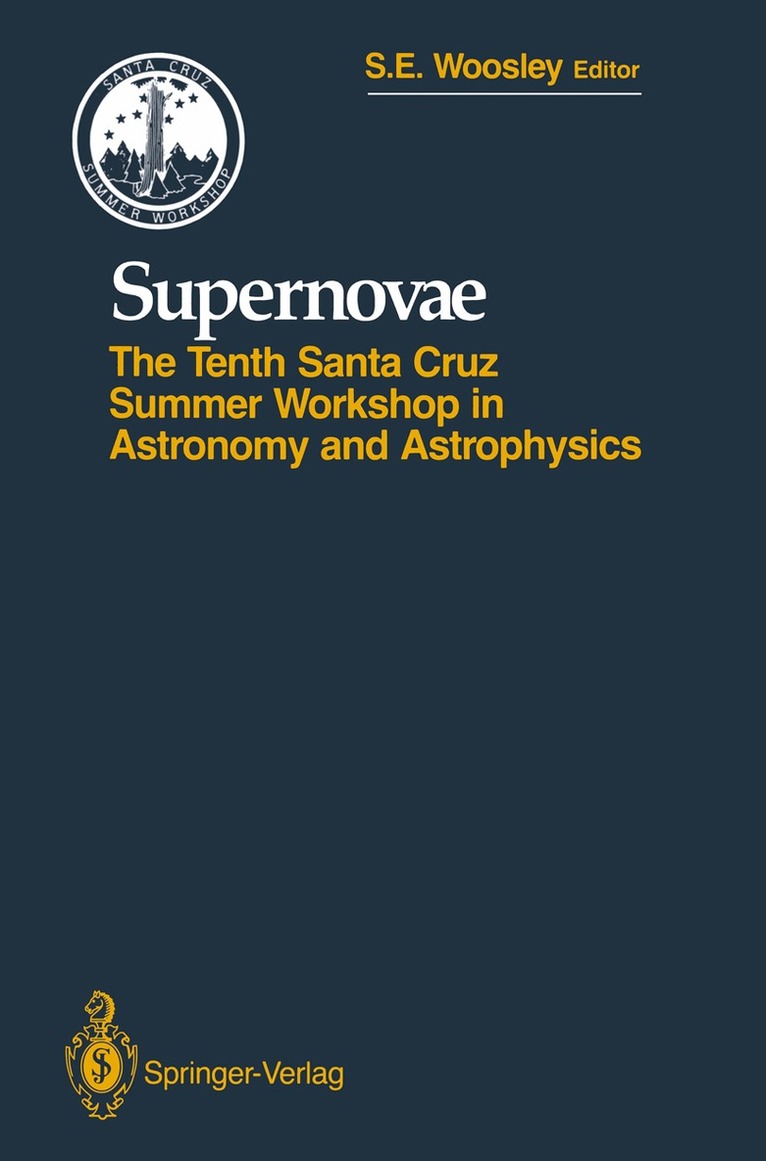
Supernova explosions are not only important to the ecology of the universe, seeding it, among other things, with the heavy elements necessary for the existence of life, but they are also a natural laboratory in which a host of unique physical phenomena occur. While still far from a complete understanding, scientists have made great advances during the last twenty-five years in understanding the nature and conse- quences of supernovae. This book presents the state of supernova studies at the beginning of the 1990's, as reported at a two-week meeting on the Santa Cruz campus of the University of California in July 1989 in- volving 177 astronomers and astrophysicists from 17 nations. The 110 papers contained in this volume report all aspects of the field - observations at all wavelengths from radio through gamma-rays, bolometric light curves and spectra, neutrino observations, the theory of stellar explosions, multidimensional models for mixing, nucleosynthesis calculations, synthetic spectral modeling, presupernova evolution, supernova remnants, supernova rates, supernovae as standard candles, the interaction of supernovae with their surroundings - and constitute the most comprehensive and up-to-date treatment of SN 1987A currently available. Astronomers and astronomy graduate students will find this an in valuable summary of the current state of supernova research. The informed layperson or undergraduate astronomy student will also find it a useful introduction and guide to the literature in the subject.
Häftad, Engelska, 2011
1 605 kr
Skickas inom 10-15 vardagar
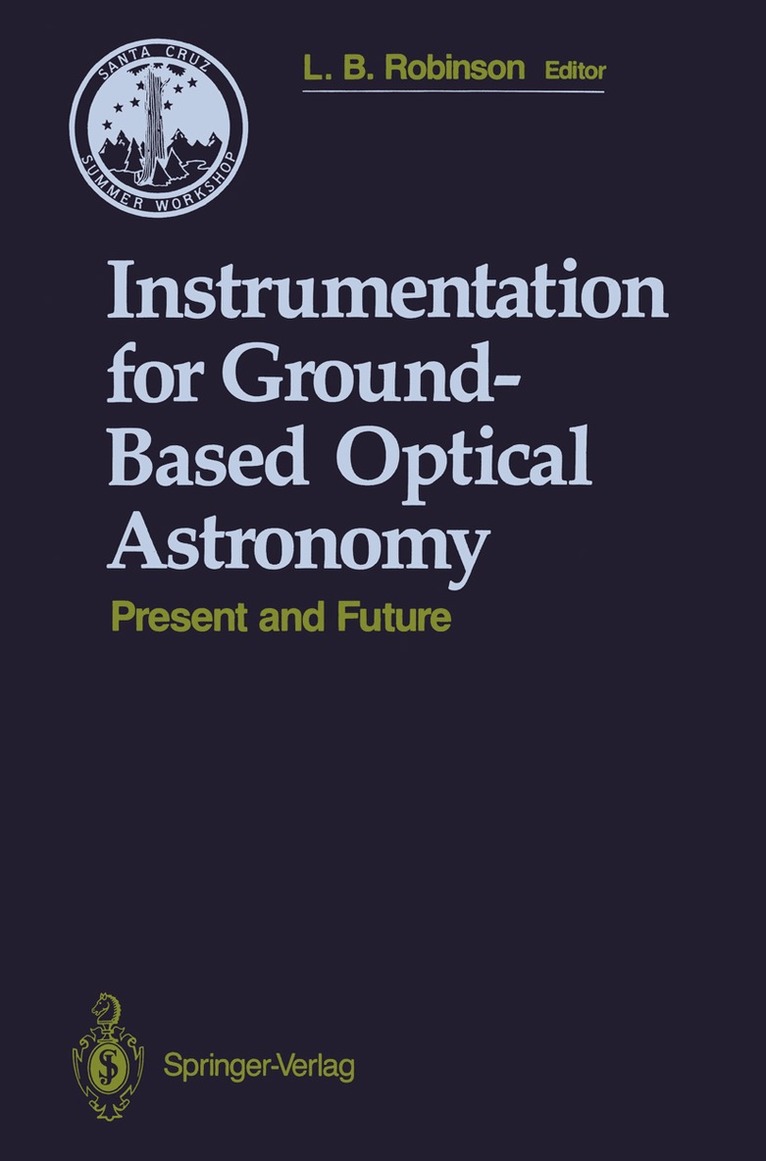
Historically, the discovery of tools, or evidence that tools have been used, has been taken as proof of human activity; certainly the invention and spread of new tools has been a critical marker of human progress and has increased our ability to observe, measure, and understand the physical world. In astronomy the tools are telescopes and the optical and electronic instruments that support them. The use of the telescope by Galileo marked the beginning of a new and productive way to study and understand the universe in which we live. The effects of this new tool on what we can see, and how we see ourselves, are well known. However, after almost four centuries of developing ever more sensitive and subtle instruments as tools for astronomy, it might have been expected that only a few minor improvements would remain to be made, or that possibly the law of diminishing returns would have taken effect. On the contrary, the new instruments and ideas for new instruments described in this book make it clear that the rate of progress has not diminished, and that this subject is still as exciting and productive as ever. Instrumentation for Ground-Based Optical Astronomy was chosen as the theme for the Ninth Santa Cruz Summer Workshop in Astronomy and Astrophysics.
Häftad, Engelska, 2011
1 072 kr
Skickas inom 10-15 vardagar
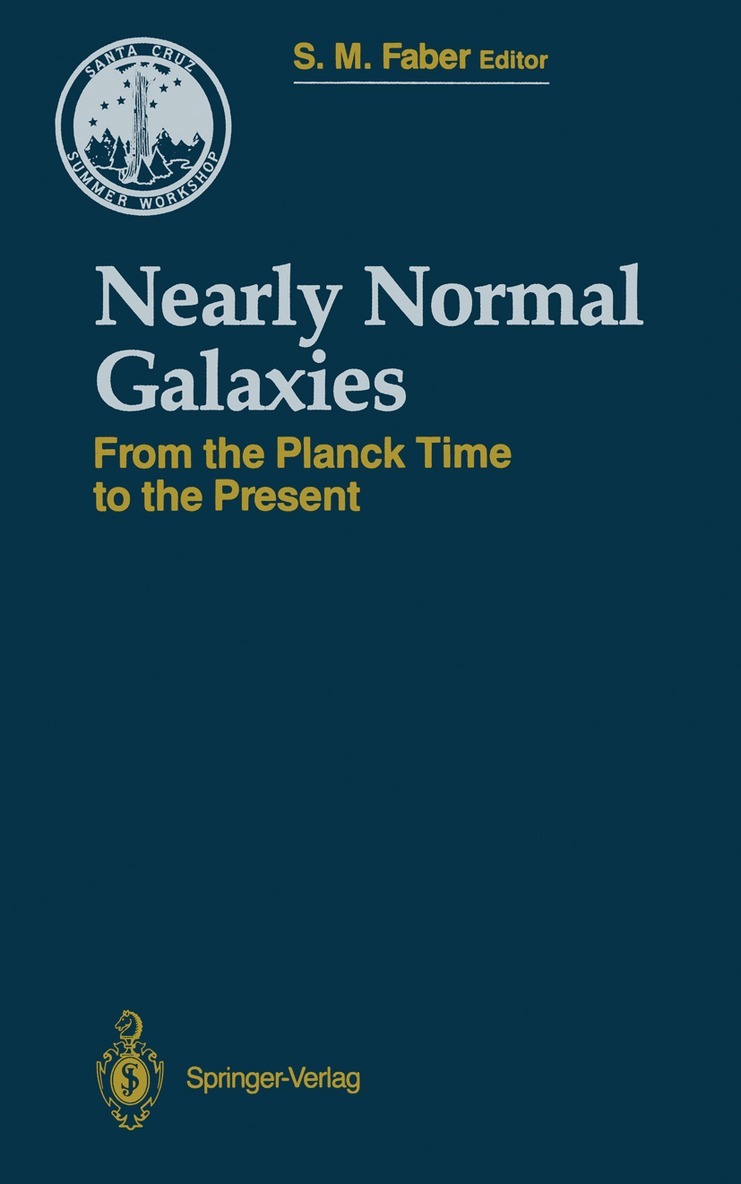
It is sometimes said that astronomy is the crossroads of physics. In the same spirit, it can forcefully be argued that galaxies are the crossroads of astronomy. Internal pro ces ses within galaxies involve all of the fundamental components of astrophysics: stellar evolution, star formation, low-density astrophysics, dynamics, hydrodynamics, and high-energy astrophysics. Indeed, one can hardly name an observational datum in any wavelength range on any kind of celestial object that does not provide a useful clue to galaxy formation and evolution. Although internal processes in galaxies until recently occupied most of our attention, we now know that it is also vital to relate galaxies to their environment. How galaxies congregate in larger structures and are in turn influenced by them are crucial questions for galactic evolution. On a grander level we have also come to regard galaxies as the basic building blocks of the universe, the basic units whereby the large scale structure of the universe is apprehended and quantified. On a grander level still, we also believe strongly that galaxies are the direct descendents of early density irregularities in the Big Bang. Galaxy properties are now viewed as providing a crucial constraint on the physics of the Big Bang and a vital link between the macroscopic and microscopic structure of the universe.