Seeds / Pollen / Fruit - Böcker
Visar alla böcker i serien Seeds / Pollen / Fruit. Handla med fri frakt och snabb leverans.
4 produkter
4 produkter
479 kr
Skickas
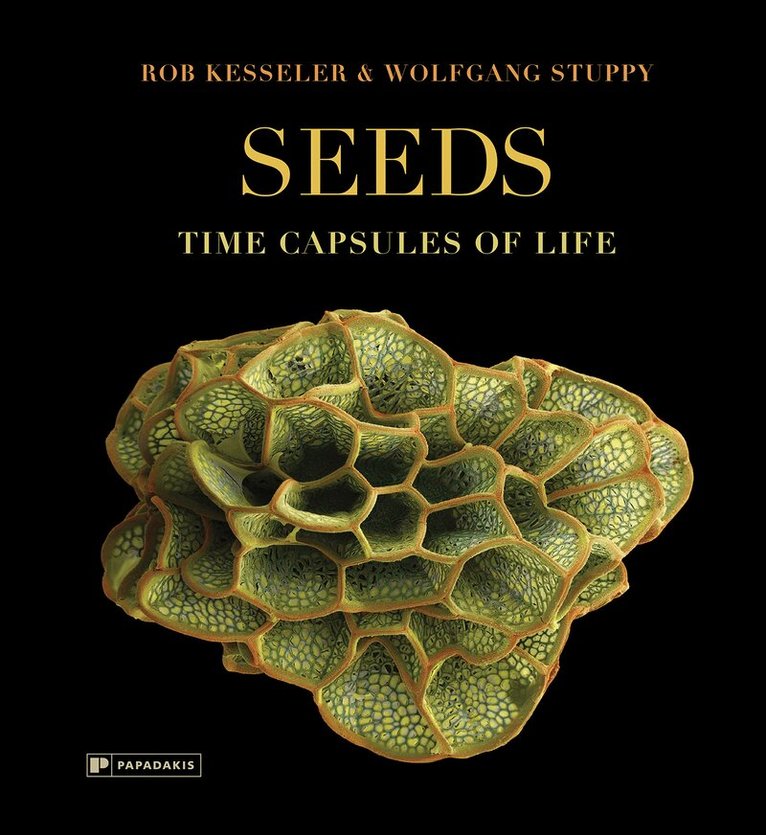
“One of the most important books in botanical history” - The Botanist’s Library, Carolyn Fry“Amazing” - New Scientist“A book that vividly illustrates why plants remain so endlessly fascinating” - Botanical Society of Britain and IrelandSeeds are tiny parcels of life, poised to give rise to anything from ephemeral herbs to giant trees that can live for thousands of years. A close look at these tiny miracles of nature through a scanning electron microscope opens up a view into a fascinating and breathtakingly beautiful microcosm few people, even scientists, have ever seen before. The range of sizes, shapes, and patterns plants have evolved over 360 million years to perfect their one and only chance in life to travel is beyond our wildest imagination.In this astonishing book, artist Rob Kesseler and world-renowned botanist Wolfgang Stuppy, previously of Kew’s Millennium Seed Bank, present a unique and highly unusual natural history of seeds. The story of how seeds evolved to ensure the survival of their species and how they adapted to their natural environments including the animals they share them with is stunningly illustrated, combining close-up photography with digitally enhanced scanning electron micrographs.This book not only captivates and enlightens those interested in the natural world, but also will appeal to artists, designers, architects, and everyone else drawing inspiration from the wonderful and endlessly fascinating world in which we live.
247 kr
Skickas
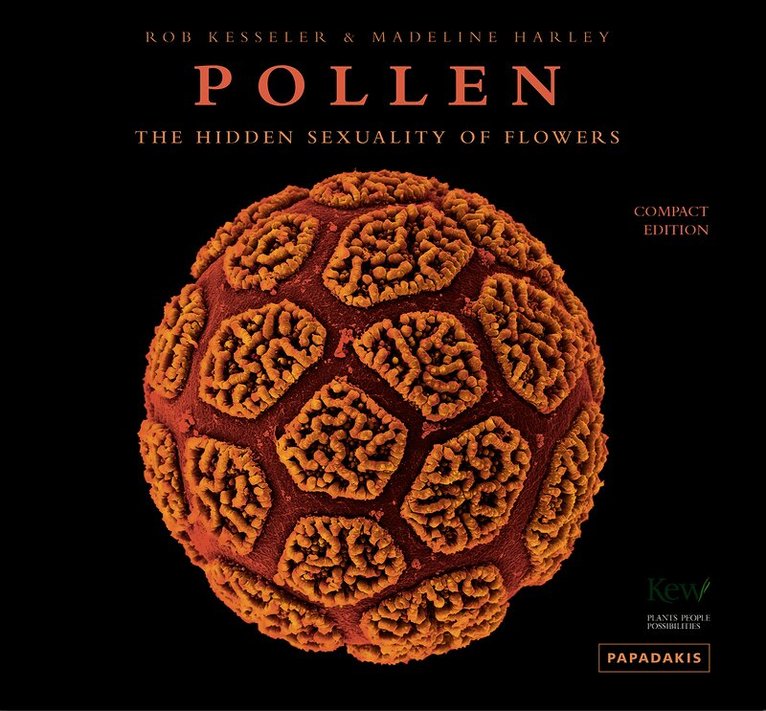
This ground-breaking book is the result of the shared fascination of an artist and a scientist with the perfect design of pollen grains, organisms so small that they cannot be seen without a microscope. The grains are enclosed beyond the accessible beauty of the flower until the moment of release, when they are carried by wind, water or animal vectors to achieve their purpose, which is procreation.Pollen is ubiquitous; in childhood we all learn a little about plant reproduction and the role of the bee but few of us are aware of the astonishing diversity of the structure of pollen grains, although these tiny, extraordinary forms have fascinated the scientifically curious since the seventeenth century.Starting with a clear explanation of the structure and form of pollen, the authors go on to examine the remarkable events from pollination to fertilisation, and the many ways in which pollen impacts unseen on our lives. All of this is interwoven with a dazzling array of original images by the authors, created especially for the book. In this new edition many more original illustrations have been added and the text has been fully updated.Pollen is a unique interpretation of a magical world that no other book on the subject has ever been able to achieve.
421 kr
Tillfälligt slut
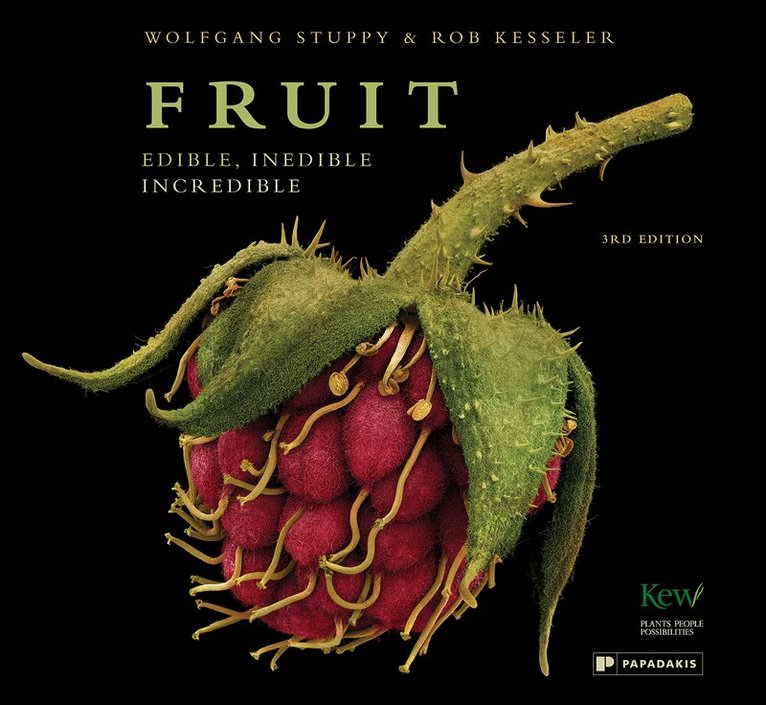
Fruit. The word itself conjures up mouthwatering memories of crunchy apples, luscious strawberries, sweet bananas, succulent melons and juicy pineapples, to which we can add the splendid tropical fruits on our supermarket shelves. They are one of nature’s most wonderful gifts but providing us with a healthy source of food is not the reason that plants produce such delicious fruits. It is therefore quite legitimate to ask what fruits are, and why they exist.As will be revealed, the true nature of fruits is concealed in what is buried in their core: their seeds. The key role that both play in the survival of each species explains the manifold strategies and ruses that plants have developed for the dispersal of their seeds. Whether these involve wind, water, humans, animals or the plant’s own explosive triggers, they are reflected in the many colours, shapes and sizes of the fruits that protect the seeds and in the extraordinary way that some fruits have adapted to the animals that disperse their seeds, and the animals to the fruits they relish.In this pioneering collaboration, visual artist Rob Kesseler and seed morphologist Wolfgang Stuppy use scanning electronmicroscopy to obtain astonishing images of a variety of fruits and the seeds they protect. Razor-sharp cross-sections reveal intricate interiors, nuts and other examples of botanical architecture and reproductive ingenuity. The black and white microscope images have been sumptuously coloured by Rob Kesseler highlighting the structure and functioning of the minuscule fruit and seeds some almost invisible to the naked eye and in so doing creating a work of art. Larger fruits, flowers and seeds have been especially photographed. The formation, development and demise of the fruits are described their vital role in the preservation of the biodiversity of our planet explained.Fruits are the keepers of the precious seeds that ensure our future; some are edible, others inedible and many, quite simply, incredible.
247 kr
Skickas
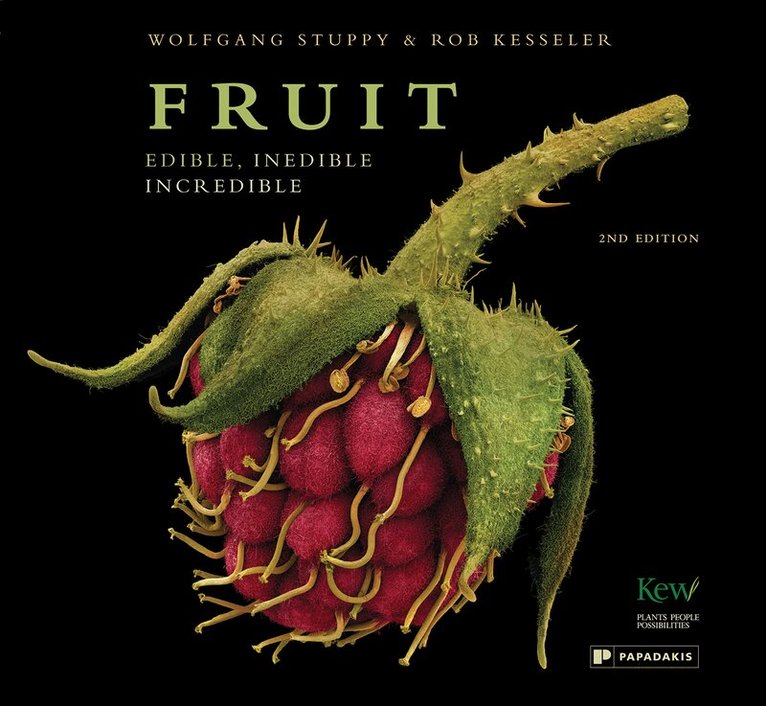
Fruit. The word itself conjures up mouthwatering memories of crunchy apples, luscious strawberries, sweet bananas, succulent melons and juicy pineapples, to which we can add the splendid tropical fruits on our supermarket shelves. They are one of nature’s most wonderful gifts but providing us with a healthy source of food is not the reason that plants produce such delicious fruits. It is therefore quite legitimate to ask what fruits are, and why they exist. As will be revealed, the true nature of fruits is concealed in what is buried in their core: their seeds. The key role that both play in the survival of each species explains the manifold strategies and ruses that plants have developed for the dispersal of their seeds. Whether these involve wind, water, humans, animals or the plant’s own explosive triggers, they are reflected in the many colours, shapes and sizes of the fruits that protect the seeds and in the extraordinary way that some fruits have adapted to the animals that disperse their seeds, and the animals to the fruits they relish. In this pioneering collaboration, visual artist Rob Kesseler and seed morphologist Wolfgang Stuppy use scanning electronmicroscopy to obtain astonishing images of a variety of fruits and the seeds they protect. Razor-sharp cross-sections reveal intricate interiors, nuts and other examples of botanical architecture and reproductive ingenuity. The black and white microscope images have been sumptuously coloured by Rob Kesseler highlighting the structure and functioning of the minuscule fruit and seeds some almost invisible to the naked eye and in so doing creating a work of art. Larger fruits, flowers and seeds have been especially photographed. The formation, development and demise of the fruits are described their vital role in the preservation of the biodiversity of our planet explained. Fruits are the keepers of the precious seeds that ensure our future; some are edible, others inedible and many, quite simply, incredible.