
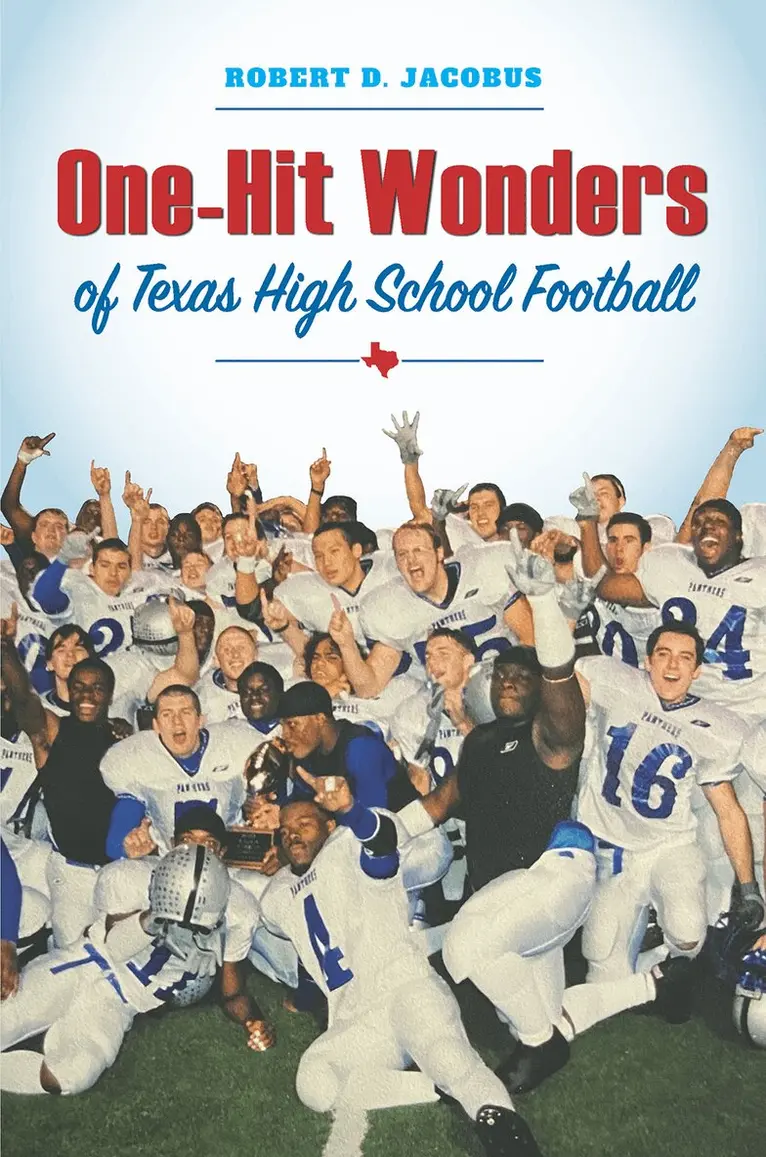
Swaim-Paup Sports Series, Sponsored by James C. '74 & Debra Parchman Swaim and T. Edgar '74 & Nancy Paup – serie
Visar alla böcker i serien Swaim-Paup Sports Series, Sponsored by James C. '74 & Debra Parchman Swaim and T. Edgar '74 & Nancy Paup. Handla med fri frakt och snabb leverans.
5 produkter
5 produkter
Standing Ready
The Golden Era of Texas Aggie Football and the Beginning of the 12th Man Tradition
Inbunden, Engelska, 2022
301 kr
Skickas inom 3-6 vardagar
Across America in the wake of World War I, college football entered a time of prominence, often referred to as a “Golden Era.” This same period saw the origins of many beloved traditions of Texas A&M: cadets became known as “Aggies;” the “Aggie War Hymn” penned by J. V. “Pinky” Wilson ’21 was officially adopted; maroon and white emerged as the sanctioned college colors. And in 1922, a lanky Dallas athlete named E. King Gill stepped up and agreed to be the “12th Man” at a football game that may have been the greatest ever played. Today, the 12th Man tradition is one of the most cherished parts of A&M heritage.The 1922 Dixie Classic, precursor to today’s Cotton Bowl, featured a contest between two championship coaches with strong ties to Texas A&M: D. X. Bible, who led the Aggies from 1916 to 1928, and Centre College’s “Uncle Charlie” Moran, who coached at A&M from 1909 to 1914. Historian John A. Adams Jr. ’73 uncovers enthralling details: the pregame conversation between Bible and E. King Gill that helped place Gill in uniform on the sidelines, the wedding celebration involving the Centre College team at the historic Adolphus Hotel the night before the game, the diagram of the play the Aggies used to score the game-winning touchdown, and so much more. Sports fans and historians, especially those interested in the early days of American football, will savor the rich, previously unknown details surrounding this storied contest between two renowned coaches and their steadfast squads.
Fifth Ward to Fourth Quarter
Football's Impact on an NFL Player's Body and Soul
Inbunden, Engelska, 2022
399 kr
Skickas inom 7-10 vardagar
After his release from the Green Bay Packers, realizing that his football career was abruptly over, Delvin Williams asked himself some hard questions: What happened to the game he fell in love with as a kid? What is a retired football player supposed to do? Where did he fit in? Nothing had prepared him for life after football. From his childhood in inner-city Houston and school days at all-Black Kashmere High School, Williams tells the story of a young boy who realized that football filled some of the empty places in his spirit left by an absent father, a poverty-stricken childhood, and the ongoing sting of racism. His determination carried him through a four-year degree at the University of Kansas and, ultimately, an All-Pro career with the San Francisco 49ers and Miami Dolphins. Football afforded him an education and a good living. But it also had an impact on his body and soul beyond anything he could have imagined. In Fifth Ward to Fourth Quarter: Football’s Impact on an NFL Player’s Body and Soul, Delvin Williams brings readers on the long journey from Houston’s Fifth Ward to the packed stadiums of the NFL, continuing with his decades-long fight for the compensation due an athlete who sustained injuries on the job. Here, Williams recounts the circumstances that motivated him to meet challenges at every level, exceeding his own expectations, telling the story of a career that produced a head-on collision between a starry-eyed kid from the tough streets of Houston and the industry of football.
Hole in the Roof
The Dallas Cowboys, Clint Murchison Jr., and the Stadium That Changed American Sports Forever
Inbunden, Engelska, 2022
343 kr
Skickas inom 7-10 vardagar
In 1966, when the still-young Dallas Cowboys franchise ended six years of agony with their first winning season, the team’s owner and founder, Clint Murchison Jr., son of a billionaire oilman, was feeling ambitious. He believed his team would be good, even special, for years to come. With such dreams dancing in his head, Murchison found that the aging Cotton Bowl in Dallas’s Fair Park was no longer a suitable home for what would soon be dubbed “America’s Team.” Hole in the Roof: The Dallas Cowboys, Clint Murchison Jr., and the Stadium That Changed American Sports Forever tells the story of Texas Stadium, with its trademark hole in the roof, which served the Cowboys for 38 seasons without ever requiring a penny of public dollars. In 1966, though the Cotton Bowl was one of the newer stadiums in the National Football League, Murchison saw it as an outdated venue. What he envisioned was a shiny new stadium near downtown Dallas, but to realize his vision for what a professional sports venue could be—and the many benefits that the resulting revenue could generate—he needed buy-in from Dallas city leaders. Opening with a foreword by Drew Pearson, all-time Cowboy great and NFL Hall-of-Famer, and based on extensive research in both public and media archives and Murchison family records, Hole in the Roof chronicles Murchison’s founding of an extraordinary sports franchise and the battles he fought to build the stadium he wanted—where the Cowboys went on to play each of their five Super Bowl-winning seasons and where Murchison proved that stadiums could be a source of revenue surpassing even television.
Handgame of the Kiowa, Comanche, and Apache
Spirited Competition on the Southern Plains
Inbunden, Engelska, 2025
534 kr
Skickas inom 7-10 vardagar
The North American handgame has a long lineage, attested in the myth, oral traditions, and archaeological records of Native American people. In The Handgame of the Kiowa, Comanche, and Apache: Spirited Competition on the Southern Plains, noted scholar William C. Meadows examines the game’s history, evolution, and practice from origin accounts to the present day among people of the Southern Plains American Indian nations. According to Meadows, the handgame, once primarily a source of winter recreation, now includes round-robin tournaments as well as public school and university teams. In fact, it has evolved to occupy an important social arena in Native American life. Based on ethnographic fieldwork and the author’s own participation since the early 1990s, the book also incorporates extensive archival research in ethnographic, archaeological, and historical sources. Examining such topics as the handgame’s relation to language, gender roles, economics, and tribal sovereignty, Meadows argues that the game is just as important in tribal contexts as other more widely known activities such as powwows, dances, sweat lodges, and stickball in maintaining American Indian culture and ethnicity. The Handgame of the Kiowa, Comanche, and Apache affords readers a greater sense of how this traditional game has developed, how its practitioners feel about it, how it is played, and why it is, in the words of the author, “so spirited, popular, and infectious as an activity.”
You Saw Me on the Radio
Recollections and Favorite Calls As the Voice of Aggie Athletics
Häftad, Engelska, 2025
334 kr
Skickas inom 10-15 vardagar
For forty-eight years, Dave South was the radio voice of Southwest Conference and Texas A&M University football, basketball, and baseball. Along the way, he amassed a treasure trove of unforgettable stories, anecdotes, and conversations with noteworthy personalities, both on and off the field. In You Saw Me on the Radio, he collects some of his favorite stories from the broadcast booth, locker room, and other behind-the-scenes locations. This collection of lively tales is organized around themes such as “Memorable Games,” “Players,” “Interviews,” “Goofs,” and “Fans.” These good-natured recollections of a long and colorful career are accompanied by a gallery of photographs gathered from South’s interactions with Aggie sports greats, iconic venues, and other people, places, and events that have created treasured sports memories over almost five decades. With a wink and a generous dose of self-deprecating humor, South relates some of his most embarrassing gaffes and miscues, including the time he conducted an awkward interview with the Treasurer of the United States—while having no idea who she was or what she did. He tells about the infamous “yellow spot” on Kyle Field. He reveals the truth behind “beanie weenies,” the culinary secret weapon of Texas A&M football recruiters. And of course, South pays heartfelt tribute to the coaches, players, fans, and fellow broadcasters who became his friends through the years. Loaded with accounts of unforgettable contests, hilarious moments, and poignant memories, You Saw Me on the Radio is sure to be a favorite for fans of Texas A&M University athletics and sports lovers everywhere. The author’s proceeds from the sale of this book will benefit the Wounded Warrior Project.