STUDIES COMPAR ENERGY ENVIRON POL SERIES - Böcker
Visar alla böcker i serien STUDIES COMPAR ENERGY ENVIRON POL SERIES. Handla med fri frakt och snabb leverans.
4 produkter
4 produkter
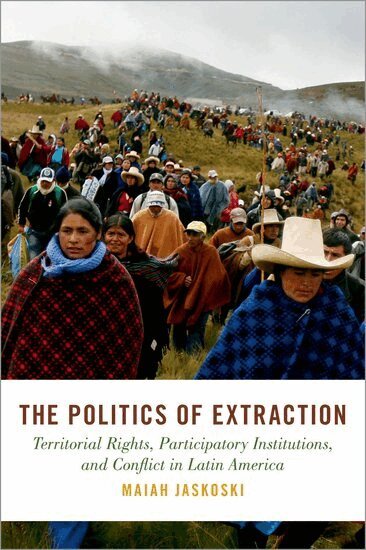
The Politics of Extraction
Territorial Rights, Participatory Institutions, and Conflict in Latin America
Inbunden, Engelska, 2022
1 010 kr
Skickas inom 5-8 vardagar
Mining and hydrocarbon production in Latin America is high-stakes for extractive firms, communities in resource-rich zones, and states. Amid global commodity price increases and liberal economic policies, the sectors have expanded dramatically in recent decades. This surge has made private investors and governments in the region ever more committed to extraction. It also has increased alarm within local communities, which have organized around the environmental, cultural, and social impacts of mining and hydrocarbons. Moreover, activists have mobilized to demand material benefits, in the forms of royalty distributions and direct company investment in local services and infrastructure. These conflicts take the form of legal battles, large-scale protests, and standoffs that pit communities against companies and the state, and consequently have suspended production, destabilized politics, and expended state security resources. In The Politics of Extraction, Maiah Jaskoski looks at how mobilized communities in Latin America's hydrocarbon and mining regions use participatory institutions to challenge extraction. In some cases, communities act within formal participatory spaces, while in others, they organize "around" or "in reaction to" these institutions, using participatory procedures as focal points in the escalation of conflict. Based on analysis of thirty major extractive conflicts in Bolivia, Colombia, and Peru in the 2000s and 2010s, Jaskoski examines community uses of public hearings built into environmental licensing, state-led prior consultation with native communities affected by large-scale development, and local popular consultations or referenda. She finds that communities select their strategies in response to the specific participatory challenges they confront: the trials of initiating participatory processes, gaining inclusion in participatory events, and, for communities with such access, expressing views about extraction at the participatory stage. Surprisingly, the communities least likely to channel their concerns through state institutions are the most unified and have the strongest guarantee of participation. Including a wealth of data and complex stories, Jaskoski provides the first systematic study of how participatory institutions either channel or exacerbate conflict over extraction.
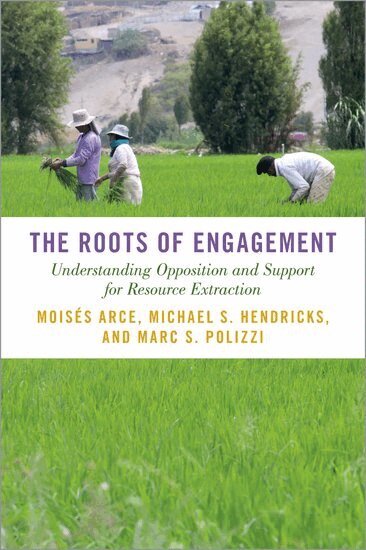
The Roots of Engagement
Understanding Opposition and Support for Resource Extraction
Inbunden, Engelska, 2022
1 132 kr
Skickas inom 5-8 vardagar
In recent years, emerging economies in the Global South have increased the overall demand for raw materials and bolstered the price of oil, minerals, and other commodities. As a result, resource-rich countries in Latin America and Sub-Saharan Africa have experienced an important economic bonanza and reduced levels of poverty and inequality. However, for communities living near the extractive frontier, mining has caused serious environmental degradation, and many in these communities have protested local extractive industries. Departing from the existing literature, The Roots of Engagement examines the individual-level factors that shape a person's opinions over resource extraction. It looks at what makes some individuals accept extractive activities close to their homes, while other individuals strongly reject them. Moreover, it asks why some individuals focus on the potential benefits of employment and local development, while other individuals focus on the defense of livelihoods and the ecological risks associated with mining. Moisés Arce, Michael S. Hendricks, and Marc S. Polizzi find that an individual's level of social engagement--defined by a person's participation in local organizations--is critical for understanding these differences. The greater the participation in local organizations, they argue, the greater the rejection of proposed mining activities. This individual-level approach unveils the fluidity of attitudes over resource extraction, even in areas that appear uniformly opposed to mining; the processes of attitude formation rooted in micro-politics and collective behaviors; and a cross-regional perspective on campaigns against mining. Based on three original public opinion surveys and interviews conducted in Tía María in Peru, Fuleni in South Africa, and Rancho Grande in Nicaragua, The Roots of Engagement is the first book to measure social engagement in organizations and its connection to attitudes about extraction and development.
780 kr
Skickas inom 5-8 vardagar
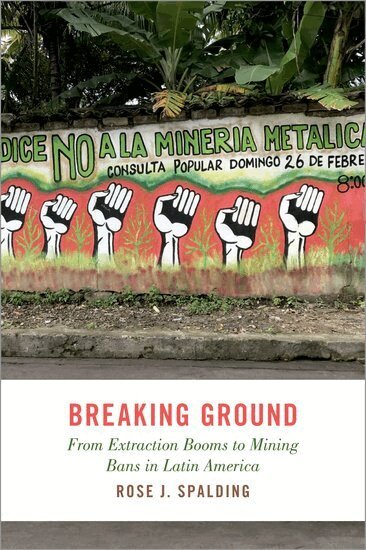
Natural resource extraction, once promoted by international lenders and governing elites as a promising development strategy, is beginning to hit a wall. After decades of landscape gutting and community resistance, mine developers and their allies are facing new challenges. The outcomes of the anti-mining pushback have varied, as increasing payments, episodic repression, and international pressures have deflected some opposition. But operational space has been narrowing in the extractive sector, as evidenced by the growing adoption of mining bans, moratoria, suspensions, and standoffs. This book tells the story of how that happened.In Breaking Ground, Rose J. Spalding examines mining conflict in new extraction zones and reactivated territories--places where "mining as destiny" is a contested idea. Spalding's innovative approach to the mining story traces the construction of mine-friendly rules in up-and-coming mining zones, as late-comers gear up to compete with mining giants. Spalding also excavates the tale of mining containment in countries that have turned away from the extraction model.By challenging deterministic assumptions about the "commodities consensus" in Latin America, Breaking Ground expands the analysis of resource governance to include divergent trajectories, tracing movement not just toward but also away from extractivism. Spalding explores how people living in targeted communities frame their concerns about the impacts of mining and organize to protect local voice and the environment. Then she unpacks the emerging array of policy responses, including those that encompass national level mining rejection. Breaking Ground takes up a timeless set of questions about the interconnection between politics and the environment, now re-examined with a fresh set of eyes.
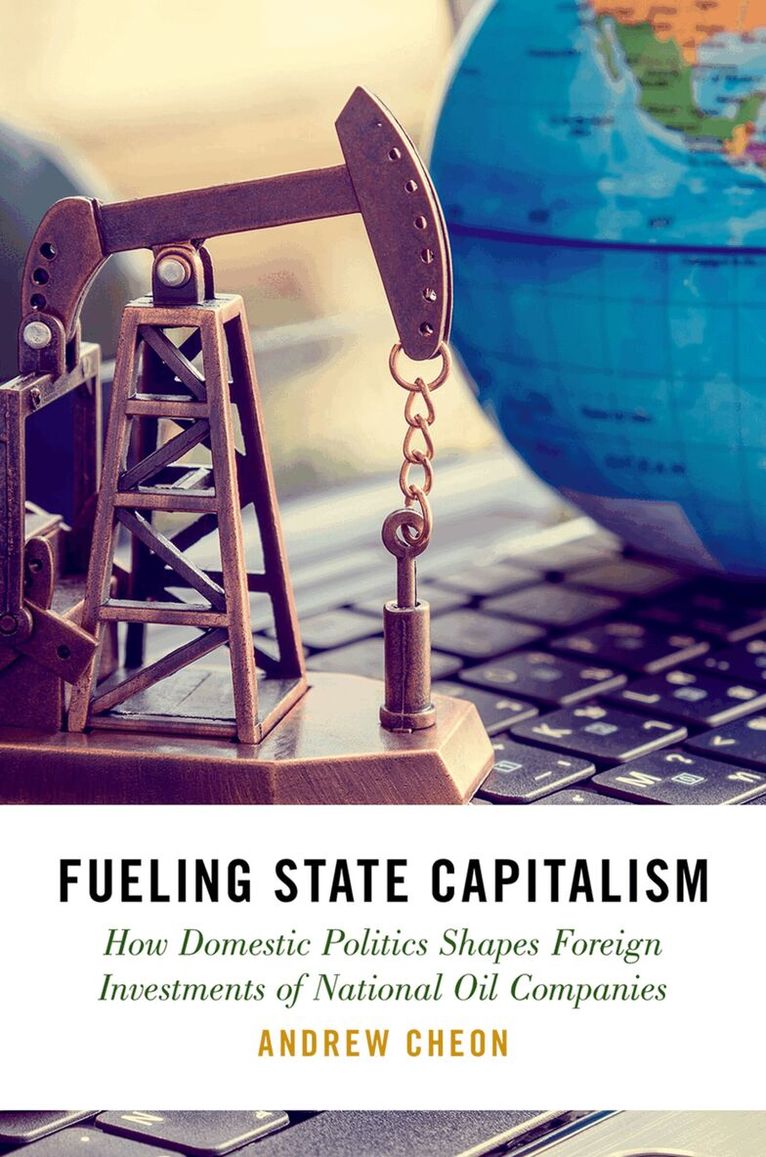
Fueling State Capitalism
How Domestic Politics Shapes Foreign Investments of National Oil Companies
Inbunden, Engelska, 2023
780 kr
Skickas inom 5-8 vardagar
In the late 1990s, governments began investing hundreds of billions of dollars in foreign oil and gas assets through their national oil companies (NOCs), raising concerns about a "resource war" and asymmetric interdependence. Most critics perceive the foreign investments of NOCs as politically driven and inefficient. In Fueling State Capitalism, however, Andrew Cheon sees these investments as commercial ventures by ambitious state-owned enterprises seeking to become global players amid rising oil prices. Some have invested aggressively abroad, often in politically risky destinations, whereas others have been more moderate in their ambitions. The NOCs' capacity to pursue foreign investments varies, as Cheon argues, according to regime types and bureaucratic structures of their governments. Using principal agent theory, Cheon shows that competition among NOCs' principals at two different levels of government--national and bureaucratic--conditions the foreign investments of NOCs. While competition between the chief executive and opposition parties can limit democratic governments' capacity to tolerate failed investments abroad, non-democratic governments are less constrained. An overlap of authority among bureaucratic institutions can also encourage counterproductive behavior among NOCs, whereas a clear line of authority among them can prevent it. Looking at investments from 79 countries from 2000 to 2013, as well as case studies of China, India, Brazil, Norway, and Russia, Fueling State Capitalism unpacks the role of institutions, both national and bureaucratic, in shaping the global expansion of national energy firms. Moreover, Cheon probes the energy security motivations of NOC investments and the origins of bureaucratic structures. Based on the experience of NOC global expansion, Cheon concludes that bureaucratic institutions will be critical in achieving decarbonization that not only allows governments to meet their political objectives, but also helps NOCs ensure their long-term commercial viability through a managed transition to renewable energy.