Studies in Computing and Culture - Böcker
Visar alla böcker i serien Studies in Computing and Culture. Handla med fri frakt och snabb leverans.
5 produkter
5 produkter
560 kr
Skickas inom 7-10 vardagar
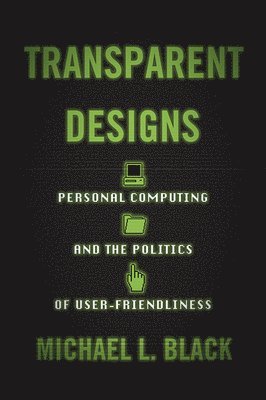
This fascinating cultural history of the personal computer explains how user-friendly design allows tech companies to build systems that we cannot understand.Modern personal computers are easy to use, and their welcoming, user-friendly interfaces encourage us to see them as designed for our individual benefit. Rarely, however, do these interfaces invite us to consider how our individual uses support the broader political and economic strategies of their designers.In Transparent Designs, Michael L. Black revisits early debates from hobbyist newsletters, computing magazines, user manuals, and advertisements about how personal computers could be seen as usable and useful by the average person. Black examines how early personal computers from the Tandy TRS-80 and Commodore PET to the IBM PC and Apple Macintosh were marketed to an American public that was high on the bold promises of the computing revolution but also skeptical about their ability to participate in it. Through this careful archival study, he shows how many of the foundational principles of usability theory were shaped through disagreements over the languages and business strategies developed in response to this skepticism. In short, this book asks us to consider the consequences of a computational culture that is based on the assumption that the average person does not need to know anything about the internal operations of the computers we've come to depend on for everything.Expanding our definition of usability, Transparent Designs examines how popular and technical rhetoric shapes user expectations about what counts as usable and useful as much as or even more so than hardware and software interfaces. Offering a fresh look at the first decade of personal computing, Black highlights how the concept of usability has been leveraged historically to smooth over conflicts between the rhetoric of computing and its material experience. Readers interested in vintage computing, the history of technology, digital rhetoric, or American culture will be fascinated in this book.
428 kr
Skickas inom 7-10 vardagar
Cutting-edge historians explore ideas, communities, and technologies around modern computing to explore how computers mediate social relations.Computers have been framed both as a mirror for the human mind and as an irreducible other that humanness is defined against, depending on different historical definitions of "humanness." They can serve both liberation and control because some people's freedom has historically been predicated on controlling others. Historians of computing return again and again to these contradictions, as they often reveal deeper structures.Using twin frameworks of abstraction and embodiment, a reformulation of the old mind-body dichotomy, this anthology examines how social relations are enacted in and through computing. The authors examining "Abstraction" revisit central concepts in computing, including "algorithm," "program," "clone," and "risk." In doing so, they demonstrate how the meanings of these terms reflect power relations and social identities. The section on "Embodiments" focuses on sensory aspects of using computers as well as the ways in which gender, race, and other identities have shaped the opportunities and embodied experiences of computer workers and users. Offering a rich and diverse set of studies in new areas, the book explores such disparate themes as disability, the influence of the punk movement, working mothers as technical innovators, and gaming behind the Iron Curtain. Abstractions and Embodiments reimagines computing history by questioning canonical interpretations, foregrounding new actors and contexts, and highlighting neglected aspects of computing as an embodied experience. It makes the profound case that both technology and the body are culturally shaped and that there can be no clear distinction between social, intellectual, and technical aspects of computing. Contributors: Janet Abbate, Marc Aidinoff, Troy Kaighin Astarte, Ekaterina Babinsteva, André Brock, Maarten Bullynck, Jiahui Chan, Gerardo Con Diaz, Liesbeth De Mol, Stephanie Dick, Kelcey Gibbons, Elyse Graham, Michael J. Halvorson, Mar Hicks, Scott Kushner, Xiaochang Li, Zachary Loeb, Lisa Nakamura, Tiffany Nichols, Laine Nooney, Elizabeth Petrick, Cierra Robson, Hallam Stevens, Jaroslav Švelch
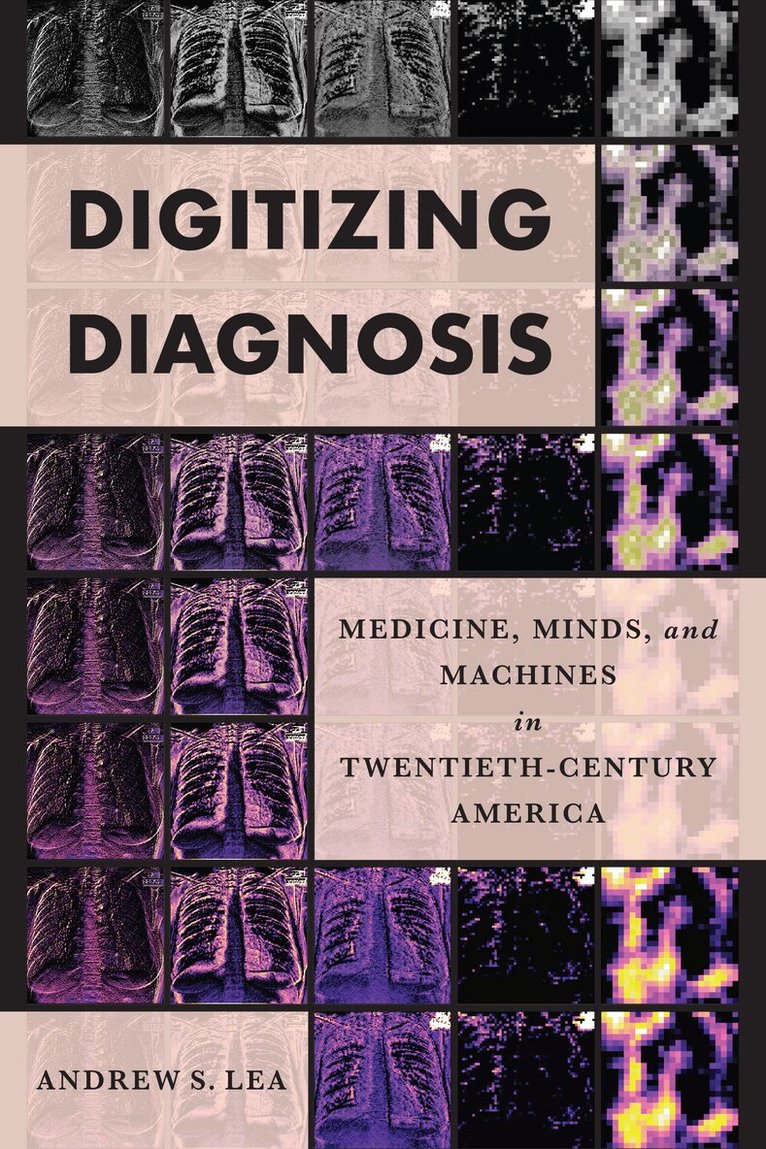
Digitizing Diagnosis
Medicine, Minds, and Machines in Twentieth-Century America
Inbunden, Engelska, 2023
603 kr
Skickas inom 7-10 vardagar
A fascinating history of the first attempts to computerize medical diagnosis.Beginning in the 1950s, interdisciplinary teams of physicians, engineers, mathematicians, and philosophers began to explore the possible application of a new digital technology to one of the most central, and vexed, tasks of medicine: diagnosis. In Digitizing Diagnosis, Andrew Lea examines these efforts—and the larger questions, debates, and transformations that emerged in their wake. While surveying the continuities spanning the analog and digital worlds of medicine, Lea uncovers how the introduction of the computer to medical diagnosis reconfigured the identities of patients, diseases, and physicians. Debates about how and whether to apply computers to the problem of diagnosis, he demonstrates, were animated by larger concerns about the nature of medical reasoning, the definitions of disease, and the authority and identity of physicians and patients.In their attempts to digitize diagnosis, these interdisciplinary groups of researchers repeatedly came up against fundamental moral and philosophical questions. How should doctors classify diseases? Could humans understand, and come to trust, the opaque decision-making processes of machines? And how might computerized systems circumvent—or calcify—bias? As medical algorithms become more deeply integrated into clinical care, researchers, clinicians, and caregivers continue to grapple with these questions today.
691 kr
Skickas inom 7-10 vardagar
How code shapes power and inequality across technology, governance, and global political economies.Code—whether software routines, legal frameworks, or informal social norms—shapes the world around us in profound and often invisible ways. In Just Code, editors Jeffrey R. Yost and Gerardo Con Díaz bring together a diverse group of scholars to examine how different forms of code both structure and reinforce power dynamics across societies.From algorithmic bias in artificial intelligence to global labor practices, this collection uncovers the hidden mechanisms by which code perpetuates inequality and injustice. It explores connections among technology, governance, and socioeconomic systems to reveal how code is both a tool of control and a product of the power structures it enables. Contributors analyze topics such as platform economies, algorithmic collusion, and labor practices in the tech industry, as well as how systems of representation and communication encode biases that amplify racial, gendered, and economic inequalities. These essays provide a critical lens for understanding how code intersects with politics and global cultures of technology production and use.By broadening the concept of "code" to include legal, social, and cultural systems, this collection challenges readers to see beyond the technical and interrogate the structures of power embedded in every layer of modern life. Just Code introduces a new framework for understanding the relationships among information technologies, systemic inequities, and the political economies that sustain them.
Machining the Vote
The Forgotten Story of the Mechanical Voting Machine, and Why It Matters
Häftad, Engelska, 2026
529 kr
Kommande
How a hulking machine helped build and sustain American democracy in the mid-twentieth century.For more than a century, the mechanical lever voting machine stood in polling places across the United States. Unwieldy, unloved, and eventually discarded, it rarely attracted admiration. Yet as Bryan Pfaffenberger shows, this "lowly lever" shaped American democracy in profound ways. Machining the Vote traces the lever machine's rise from the contested elections of the late nineteenth century through its dominance in the twentieth century and its eventual demise in the era of digital voting. Pfaffenberger begins with the political crises that prompted inventors such as bank safe maker Jacob Myers to design a new system combining mechanical innovation with new election laws. He follows the fierce patent battles, corporate struggles, and legal fights that turned the lever machine into a near-national infrastructure, closely intertwined with New York election law and urban machine politics. Voting machines, Pfaffenberger argues, are political artifacts: they embody legal assumptions, administrative procedures, and cultural values. Lever machines promised to eliminate fraud, prevent overvoting, and enforce uniform procedures, because the machines were so transparent; technicians and precinct officials could easily recognize tampering. A former designer of bank vaults during the heyday of daring bank robberies, Myers understood the need to develop a security process capable of identifying exploits. Their gradual replacement by electronic systems—often without equivalent legal and procedural safeguards—set the stage for new controversies, culminating in the turmoil of the 2000 presidential election. Bringing together political history and science and technology studies, Machining the Vote offers a cultural analysis of how technologies are selected, stabilized, and abandoned. At a moment when election integrity is fiercely debated, this book provides essential historical perspective on how machines—and the laws surrounding them—shape the practice of democracy.