Studies in Feminist Institutionalism - Böcker
Visar alla böcker i serien Studies in Feminist Institutionalism. Handla med fri frakt och snabb leverans.
7 produkter
7 produkter
847 kr
Skickas inom 5-8 vardagar
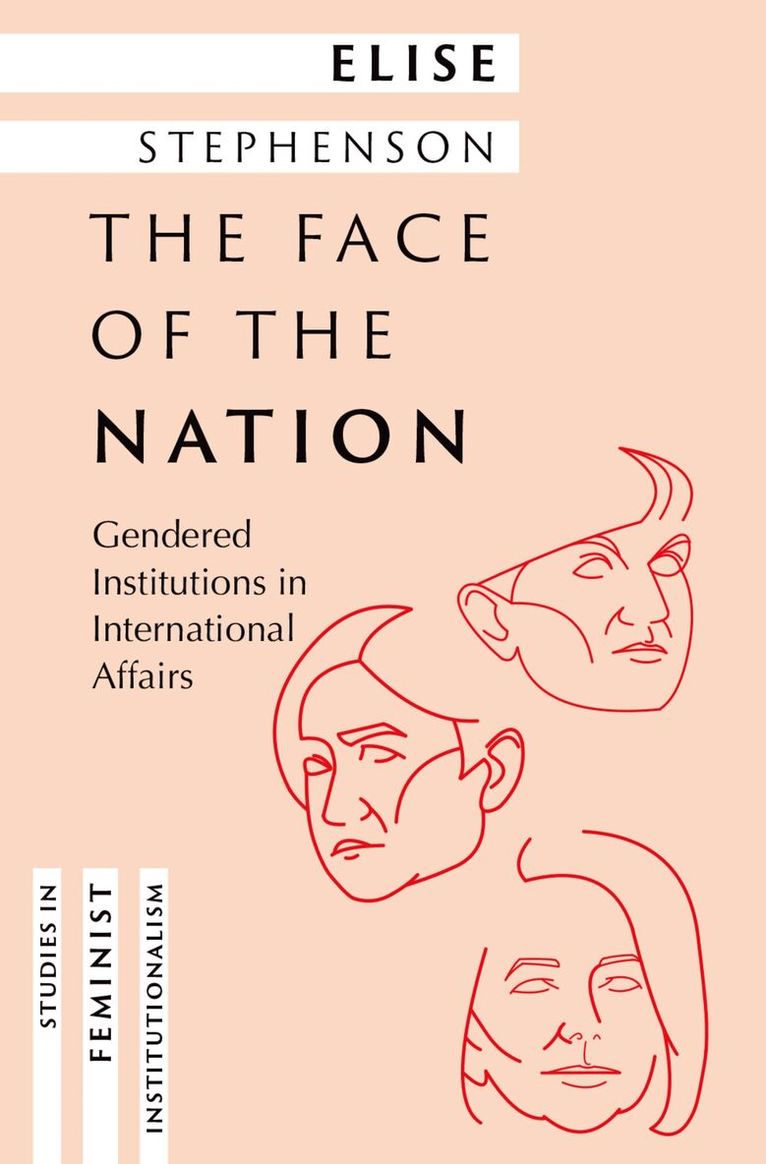
Foreign services globally are undergoing fundamental and rapid gendered change, spurred on by shifting social and governance norms and even the adoption of an explicit feminist foreign policy in some stages. For some, this has resulted in women's rapidly increasing representation at the frontlines of global governance. Yet, compounded by COVID-19, a rise in right-wing misogyny and extremism, and sometimes archaically slow-moving institutions, progress is marred by women's continued, entrenched under-representation in leadership and devastating challenges that have increased in recent years. Women remain frequently side-lined, marginalized, under-valued, and overlooked in international affairs. In short, international affairs has a gender problem, and remains one of the worst-performing sectors of the state. After studying women's leadership and gender relations across four international affairs agencies spanning diplomacy, defense, national security, policing, and intelligence, The Face of the Nation contributes empirical data from the last 30+ years on women's representation in a leading case context--Australia--to understand the disconnect between pockets of progress and undercurrents of resistance. Australia is a global leader in terms of representation of women and policy supports for gender equality in governance. Yet, Australia also demonstrates how deeply gendered, racialized, and heteronormative international institutions remain. Through in-depth interviews with almost 80 global leaders, including with Australia's first female prime minister, Julia Gillard, and first female foreign minister, Julie Bishop, this book delivers a much-needed Intersectional Feminist Institutionalist approach to trace the evolution of inequalities in international affairs and interrogate why women still remain under-represented in international affairs.
875 kr
Skickas inom 5-8 vardagar
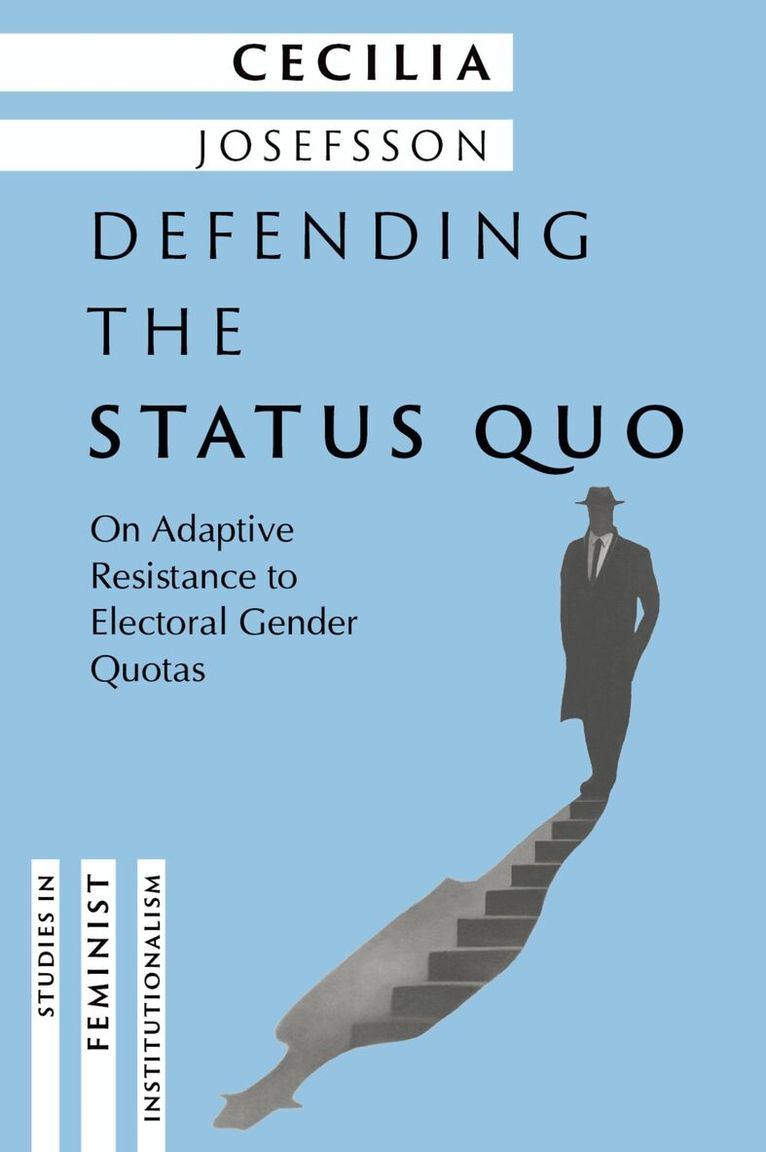
Defending the Status Quo explores political elites' resistance to electoral gender quota reforms. In order to explain this phenomenon, Cecilia Josefsson develops an original theoretical framework that she calls the Resistance Stage Framework.Anchored in feminist institutionalism and mapped onto the policy process, Josefsson outlines how status quo defenders adapt their resistance strategies to accommodate institutional and ideational changes across agenda setting, policy formulation, decision-making, and implementation phases. She bolsters her theory with a thick description of a 30-year-long process to adopt and implement electoral gender quotas in Uruguay. While Uruguay has been a vanguard in the women's rights movement, men's political dominance has been pervasive in this country. The struggle to introduce a gender quota has been marked by repeated reform attempts, persistent resistance, and a wide variation in the responses of the Uruguayan political parties, making this case apt for developing theory and shedding light on the adaptive nature of resistance.Drawing on extensive interviews with Uruguayan political elites, three quota debates, and party electoral lists, Josefsson carefully examines the power struggle over gender quota reform. She shows how powerful status quo defenders, seeking to ignore, stall, and undermine gendered institutional change, adapt their resistance strategies across different political parties and over time, as quota advocates make advances and manage to change the institutional and ideational context.
1 914 kr
Skickas inom 3-6 vardagar
What can gender tell us about political parties? Historically, and often still, political parties have been dominated by men from majority groups, and shaped by traditional gender relations and norms that generally disadvantage women. Gender is crucial in understanding the persistence of men's political overrepresentation and the corresponding marginalization of women in politics, as well as in exploring questions of why and how parties adapt and change, and what their role is in representative democracy. Gendering Party Politics explores the relationship between gender, institutions, and political parties through a feminist institutionalist lens, advancing new theoretical, methodological, and empirical directions for party politics scholarship. The contributors synthesize two decades of research, introduce foundational concepts and frameworks, and present innovative methods and empirical cases from around the world. They also make the case as to why this research matters, evaluating the practical opportunities for and obstacles to transforming parties in more gender equitable ways. Each chapter demonstrates the wide-ranging applications of feminist institutionalism for understanding the complexities of gender dynamics within parties. Together, these contributions constitute a significant intervention into wider debates over the relationship between political parties, power, democracy, and representation. Featuring insights from an international cast of leading scholars, Gendering Party Politics is essential for anyone interested in the evolving landscape of gender and politics, political parties and institutions, and political representation.Chapter 8 of this work is available under the terms of a CC BY-NC-ND 4.0 International open access license. This part of the work is free to read on the Oxford Academic platform and offered as a free PDF download from OUP and selected open access locations.
278 kr
Skickas inom 5-8 vardagar
What can gender tell us about political parties? Historically, and often still, political parties have been dominated by men from majority groups, and shaped by traditional gender relations and norms that generally disadvantage women. Gender is crucial in understanding the persistence of men's political overrepresentation and the corresponding marginalization of women in politics, as well as in exploring questions of why and how parties adapt and change, and what their role is in representative democracy. Gendering Party Politics explores the relationship between gender, institutions, and political parties through a feminist institutionalist lens, advancing new theoretical, methodological, and empirical directions for party politics scholarship. The contributors synthesize two decades of research, introduce foundational concepts and frameworks, and present innovative methods and empirical cases from around the world. They also make the case as to why this research matters, evaluating the practical opportunities for and obstacles to transforming parties in more gender equitable ways. Each chapter demonstrates the wide-ranging applications of feminist institutionalism for understanding the complexities of gender dynamics within parties. Together, these contributions constitute a significant intervention into wider debates over the relationship between political parties, power, democracy, and representation. Featuring insights from an international cast of leading scholars, Gendering Party Politics is essential for anyone interested in the evolving landscape of gender and politics, political parties and institutions, and political representation.Chapter 8 of this work is available under the terms of a CC BY-NC-ND 4.0 International open access license. This part of the work is free to read on the Oxford Academic platform and offered as a free PDF download from OUP and selected open access locations.
183 kr
Skickas inom 5-8 vardagar
Stories about gendered social relations permeate the Qur'an, and nearly three hundred verses involve specific women or girls. The Qur'an features these figures in accounts of human origins, in stories of the founding and destruction of nations, in narratives of conquest, in episodes of romantic attraction, and in incidents of family devotion and strife. Overall, stories involving women and girls weave together theology and ethics to reinforce central Qur'anic ideas regarding submission to God and moral accountability.Celene Ibrahim explores the complex cast of female figures in the Qur'an, probing themes related to biological sex, female sexuality, female speech, and women in sacred history. Ibrahim considers major and minor figures referenced in the Qur'an, including those who appear in narratives of sacred history, in parables, in descriptions of the eternal abode, and in verses that allude to events contemporaneous with the advent of the Qur'an in Arabia. Ibrahim finds that the Qur'an regularly celebrates the aptitudes of women in the realms of spirituality and piety, in political maneuvering, and in safeguarding their own wellbeing; yet, women figures also occasionally falter and use their agency toward nefarious ends. Women and Gender in the Qur'an outlines how women and girls--old, young, barren, fertile, chaste, profligate, reproachable, and saintly--enter Qur'anic sacred history and advance the Qur'an's overarching didactic aims.
Between Rights and Rightfulness
Regulating Gender and Violence in the Pacific Islands
Inbunden, Engelska, 2025
875 kr
Skickas inom 5-8 vardagar
For decades, activists have drawn attention to gender violence across the Pacific Islands and successfully argued for improved state responses. While reforms have been institutionalised in law and government policy, ongoing violence shows that these have limited effectiveness. In Between Rights and Rightfulness, Nicole George investigates how gender violence is regulated in Pacific Island countries, the factors that impede regulatory effectiveness, and women's own efforts and expertise in decreasing gender violence. Incorporating comparative fieldwork in Fiji, Bougainville, and within Kanak communities in New Caledonia, George assesses how gender violence is enabled and constrained by regulations created within and beyond the state. Importantly, the book engages directly with the women affected by systems of gendered regulation to understand how they interpret and navigate the regulatory complex that impacts their security.Drawing on feminist institutional theory and feminist theories of scale, George argues that the regulation of gender and gender violence occurs at a range of scales, and that efforts to enhance women's security require a clear and contextualised understanding of this regulatory complexity. This includes identifying the role of rule takers--actors who make determinations on which rules should be rightfully followed and those that they treat as more contestable. As George argues, women themselves must also be treated as active, but often marginalized, rule takers with knowledge and expertise on rule appropriateness. Providing a novel lens on the logics of rulemaking, Between Rights and Rightfulness offers important insights into how gendered security can be improved and made more meaningful to women who are vulnerable to violence.
255 kr
Kommande
Is it possible to design and build feminist legislatures? If so, how and by and with whom? Designing Feminist Institutions provides a novel study of feminist institutionalism in practice. Drawing on her own ethnographic research within the UK Parliament, Sarah Childs suggests that political institutions in need of gender sensitizing would benefit from the perspective of feminist academic critical actors. Childs defines these scholars as both analysts and agents of change, who are embedded in legislatures to think about institutional design from the inside out. As a feminist academic critical actor inside the UK House of Commons, Childs negotiated the highly masculinized political arena--confronting questions of access, legitimacy, authority, accountability, ethics, and safety. In this book, she evaluates these experiences, as well as new gendered dynamics, and critical moments to present her vision of The Good Parliament. In so doing, she explores the 'why', 'how' and 'what' of institutional re-gendering.Through vignettes, participant observation, original interviews, and parliamentary analysis, Childs illustrates wider lessons in redesigning and refashioning feminist institutions and sheds light on the particularities of allyship, resistance, and backlash. She asks, too, what new ethical issues arise when academics are intent on bringing about change, how to navigate competing political objectives, and what is 'in the interest' of women when it comes to representative democracy. Designing Feminist Institutions advances feminist institutionalist theory through a novel consideration of the experience, knowledge, and perspectives necessary to instigate and institute feminist change.