Studies in Intellectual History and the History of Philosophy – serie
Visar alla böcker i serien Studies in Intellectual History and the History of Philosophy. Handla med fri frakt och snabb leverans.
4 produkter
4 produkter
379 kr
Skickas inom 7-10 vardagar
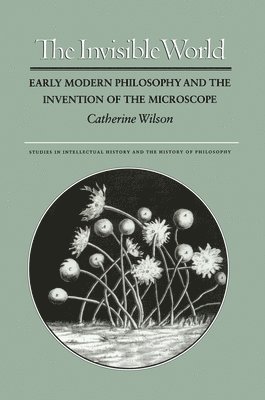
In the seventeenth century the microscope opened up a new world of observation, and, according to Catherine Wilson, profoundly revised the thinking of scientists and philosophers alike. The interior of nature, once closed off to both sympathetic intuition and direct perception, was now accessible with the help of optical instruments. The microscope led to a conception of science as an objective, procedure-driven mode of inquiry and renewed interest in atomism and mechanism. Focusing on the earliest forays into microscopical research, from 1620 to 1720, this book provides us with both a compelling technological history and a lively assessment of the new knowledge that helped launch philosophy into the modern era. Wilson argues that the discovery of the microworld--and the apparent role of living animalcula in generation, contagion, and disease--presented metaphysicians with the task of reconciling the ubiquity of life with human-centered theological systems. It was also a source of problems for philosophers concerned with essences, qualities, and the limits of human knowledge, whose positions are echoed in current debates about realism and instrument-mediated knowledge.Covering the contributions of pioneering microscopists (Leeuwenhoek, Swammerdam, Malpighi, Grew, and Hooke) and the work of philosophers interested in the microworld (Bacon, Descartes, Leibniz, Malebranche, Locke, and Berkeley), she challenges historians who view the abstract sciences as the sole catalyst of the Scientific Revolution as she stresses the importance of observational and experimental science to the modern intellect.
505 kr
Skickas inom 7-10 vardagar
This work is a powerful demonstration of how historical analysis can be brought to bear on the study of strategic issues, and, conversely, how strategic thinking can help drive historical research. Based largely on newly released American archives, History and Strategy focuses on the twenty years following World War II. By bridging the sizable gap between the intellectual world of historians and that of strategists and political scientists, the essays here present a fresh and unified view of how to explore international politics in the nuclear era. The book begins with an overview of strategic thought in America from 1952 through 1966 and ends with a discussion of "making sense" of the nuclear age. Trachtenberg reevaluates the immediate causes of World War I, studies the impact of the shifting nuclear balance on American strategy in the early 1950s, examines the relationship between the nuclearization of NATO and U.S.-West European relations, and looks at the Berlin and the Cuban crises. He shows throughout that there are startling discoveries to be made about events that seem to have been thoroughly investigated.
Battle of the Gods and Giants
The Legacies of Descartes and Gassendi, 1655-1715
Häftad, Engelska, 2014
616 kr
Skickas inom 7-10 vardagar
By the mid-1600s, the commonsense, manifest picture of the world associated with Aristotle had been undermined by skeptical arguments on the one hand and by the rise of the New Science on the other. What would be the scientific image to succeed the Aristotelian model? Thomas Lennon argues here that the contest between the supporters of Descartes and the supporters of Gassendi to decide this issue was the most important philosophical debate of the latter half of the seventeenth century. Descartes and Gassendi inspired their followers with radically opposed perspectives on space, the objects in it, and how these objects are known. Lennon maintains that differing concepts on these matters implied significant moral and political differences: the Descartes/Gassendi conflict was typical of Plato's perennial battle of the gods (friends of forms) and giants (materialists), and the crux of that enduring philosophical struggle is the exercise of moral and political authority. Lennon demonstrates, in addition, that John Locke should be read as having taken up Gassendi's cause against Descartes.In Lennon's reinterpretation of the history of philosophy between the death dates of Gassendi and Malebranche, Locke's acknowledged opposition to Descartes on some issues is applied to the most important questions of Locke exegesis. Originally published in 1993. The Princeton Legacy Library uses the latest print-on-demand technology to again make available previously out-of-print books from the distinguished backlist of Princeton University Press. These editions preserve the original texts of these important books while presenting them in durable paperback and hardcover editions. The goal of the Princeton Legacy Library is to vastly increase access to the rich scholarly heritage found in the thousands of books published by Princeton University Press since its founding in 1905.
Battle of the Gods and Giants
The Legacies of Descartes and Gassendi, 1655-1715
Inbunden, Engelska, 2016
1 549 kr
Skickas inom 7-10 vardagar
By the mid-1600s, the commonsense, manifest picture of the world associated with Aristotle had been undermined by skeptical arguments on the one hand and by the rise of the New Science on the other. What would be the scientific image to succeed the Aristotelian model? Thomas Lennon argues here that the contest between the supporters of Descartes and the supporters of Gassendi to decide this issue was the most important philosophical debate of the latter half of the seventeenth century. Descartes and Gassendi inspired their followers with radically opposed perspectives on space, the objects in it, and how these objects are known. Lennon maintains that differing concepts on these matters implied significant moral and political differences: the Descartes/Gassendi conflict was typical of Plato's perennial battle of the gods (friends of forms) and giants (materialists), and the crux of that enduring philosophical struggle is the exercise of moral and political authority. Lennon demonstrates, in addition, that John Locke should be read as having taken up Gassendi's cause against Descartes.In Lennon's reinterpretation of the history of philosophy between the death dates of Gassendi and Malebranche, Locke's acknowledged opposition to Descartes on some issues is applied to the most important questions of Locke exegesis. Originally published in 1993. The Princeton Legacy Library uses the latest print-on-demand technology to again make available previously out-of-print books from the distinguished backlist of Princeton University Press. These editions preserve the original texts of these important books while presenting them in durable paperback and hardcover editions. The goal of the Princeton Legacy Library is to vastly increase access to the rich scholarly heritage found in the thousands of books published by Princeton University Press since its founding in 1905.