Studies in Rhetorics & Feminisms - Böcker
Visar alla böcker i serien Studies in Rhetorics & Feminisms. Handla med fri frakt och snabb leverans.
7 produkter
7 produkter
411 kr
Skickas inom 7-10 vardagar
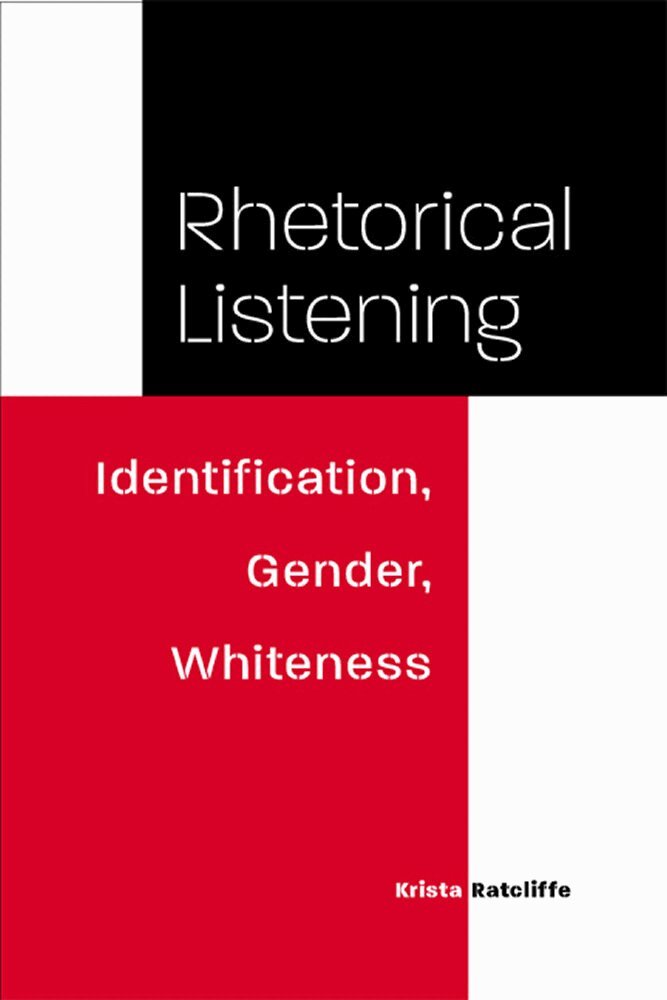
Extending the feminist rhetorical project to define and model rhetorical listening. Long-ignored within rhetoric and composition studies, listening has returned to the disciplinary radar. ""Rhetorical Listening: Identification, Gender, Whiteness"" argues that rhetorical listening facilitates conscious identifications needed for cross-cultural communication. Krista Ratcliffe establishes eavesdropping, listening metonymically, and listening pedagogically as approaches to rhetorical listening. She defines and models rhetorical listening, addressing identifications with gender and whiteness within public debates, scholarship, and pedagogy. Offering an approach grounded in classical rhetorical theory, Heideggerian theory, feminist theory, and critical race theory, Ratcliffe presents rhetorical listening as an invention tactic that engages spoken and written texts and supplements reading, writing, speaking, and silence as a rhetorical art. Theorizing intersections of gender and whiteness, ""Rhetorical Listening"" examines how whiteness functions as an ""invisible"" racial category and provides disciplinary and cultural reasons for the displacement of listening and for the use of rhetorical listening as a code of cross-cultural conduct. Ratcliffe presents rhetorical listening in terms of cultural logics, stances, and dominant interpretive tropes. She high-lights the modern identification theory of Kenneth Burke and the postmodern identification and disidentification theory of Diana Fuss and presents nonidentification as a more productive site for rhetorical listening.
411 kr
Skickas inom 7-10 vardagar
Wendy B. Sharer explores the rhetorical and pedagogical practices through which two prominent post suffrage organizations - the League of Women Voters and the Women's International League for Peace and Freedom - challenged the conventions of male-dominated political discourse and trained women as powerful rhetors. ""Vote and Voice"" is the first book-length study to address the writing and speaking practices of members of women's political organizations in the decade after the suffrage movement. During those years, women still did not have power within deliberative and administrative organs of politics, despite their recent enfranchisement. Because they were largely absent from diplomatic circles and political parties, post-suffrage women's organizations developed rhetorical practices of public discourse to push for reform within traditional politics. ""Vote and Voice"" is historically significant as well as pedagogically beneficial for instructors who connect rhetorical education with public participation by integrating writing and speaking skills into a curriculum that aims to prepare educated students and active citizens.
479 kr
Skickas inom 7-10 vardagar
Women physicians in nineteenth-century America faced a unique challenge in gaining acceptance to the medical field as it began its transformation into a professional institution. The profession had begun to increasingly insist on masculine traits as signs of competency. Not only were these traits inaccessible to women according to nineteenth-century gender ideology, but showing competence as a medical professional was not enough. Whether women could or should be physicians hinged mostly on maintaining their femininity while displaying the newly established standard traits of successful practitioners of medicine.Women Physicians and Professional Ethos provides a unique example of how women influenced both popular and medical discourse. This volume is especially notable because it considers the work of African American and American Indian women professionals. Drawing on a range of books, articles, and speeches, Carolyn Skinner analyses the rhetorical practices of nineteenth-century American women physicians. She redefines ethos in a way that reflects the persuasive efforts of women who claimed the authority and expertise of the physician with great difficulty.Descriptions of ethos have traditionally been based on masculine communication and behaviour, leaving women’s rhetorical situations largely unaccounted for. Skinner’s feminist model considers the constraints imposed by material resources and social position, the reciprocity between speaker and audience, the effect of one rhetor’s choices on the options available to others, the connections between ethos and genre, the potential for ethos to be developed and used collectively by similarly situated people, and the role ethos plays in promoting social change. Extending recent theorisations of ethos as a spatial, ecological, and potentially communal concept, Skinner identifies nineteenth-century women physicians’ rhetorical strategies and outlines a feminist model of ethos that gives readers a more nuanced understanding of how this mode of persuasion operates for all speakers and writers.
Claiming the Bicycle
Women, Rhetoric, and Technology in NineteenthCentury America
Inbunden, Engelska, 2015
670 kr
Skickas inom 3-6 vardagar
Tracing the role of nineteenthcentury women and rhetoric in transforming the bicycleAlthough the impact of the bicycle craze of the late nineteenth century on women’s lives has been well documented, rarely have writers considered the role of women’s rhetorical agency in the transformation of bicycle culture and the bicycle itself. In Claiming the Bicycle, Sarah Hallenbeck argues that through their collective rhetorical activities, women who were widely dispersed in space, genre, and intention negotiated proper uses for the bicycle, destabilizing cultural assumptions about femininity and gender difference.Making a significant contribution to studies of feminist rhetorical historiography, rhetorical agency, and technical communication, Claiming the Bicycle asserts the utility of a distributed or “collected” model of rhetorical agency and accounts for the efforts of widely dispersed actors to harness technology in promoting social change.
465 kr
Skickas inom 7-10 vardagar
This feminist rhetorical history explores women’s complex and changing relationship to the home and how that affected their entry into the workplace. Author Jessica Enoch examines the spatial rhetorics that defined the home in the mid- to late nineteenth and early twentieth centuries and considers how its construction and reconstruction—from discursive description to physical composition—has greatly shaped women’s efforts at taking on new kinds of work. In doing so, Enoch exposes the ways dominant discourses regarding women’s home life and work life—rhetorics that often assumed a white middle-class status—were complicated when differently raced, cultured, and classed women encountered them. Enoch explores how three different groups of women workers—teachers, domestic scientists, and World War II factory employees—contended with the physical and ideological space of the home, examining how this everyday yet powerful space thwarted or enabled their financial and familial security as well as their intellectual engagements and work-related opportunities. Domestic Occupations demonstrates a multimodal and multigenre research method for conducting spatio-rhetorical analysis that serves as a model for new kinds of thinking and new kinds of scholarship. This study adds historical depth and exigency to an important contemporary conversation in the public sphere about how women’s ties to the home inflect their access to work and professional advancement.
425 kr
Skickas inom 7-10 vardagar
Women's persuasion and performance in the Age of EnlightenmentOver a century before first-wave feminism, British women's Enlightenment rhetoric prefigured nineteenth-century feminist arguments for gender equality, women's civil rights, professional opportunities, and standardized education. Author Elizabeth Tasker Davis rereads accepted histories of seventeenth- and eighteenth-century British rhetoric, claiming a greater variety and power of women's rhetoric. This recovery of British women's performative and written roles as speakers, spectators, authors, and readers in diverse venues counters the traditional masculine model of European Enlightenment rhetoric. Davis broadens women's Enlightenment rhetorics to include highly public venues such as theaters, clubs, salons, and debating societies, as well as the mediated sites of the periodical essay, the treatise on rhetorical theory, and women's written proposals, plans, defenses and arguments for education. Through these sites, women's rhetorical postures diverged from patriarchal prescriptions rather to deliver protofeminist persuasive performances of wit, virtue, and emotion.Davis examines context, the effects of memory and gendering, and the cultural sites and media of women's rhetoric to reveal a fuller ecology of British Enlightenment rhetoric. Each chapter covers a cultural site of women's rhetorical practice-the court, the stage, the salon, and the printed page. Applying feminist rhetorical theory, Davis documents how women grasped their rhetorical ability in this historical moment and staged a large-scale transformation of British women from subalterns to a vocal counterpublic in British society.
412 kr
Skickas inom 7-10 vardagar
Examining the rhetorical and pedagogical workof three turn-of-the-century newspaperwomenAt the end of the nineteenth century, newspapers powerfully shaped the U.S. reading public, fostering widespread literacy development and facilitating rhetorical education. With new opportunities to engage audiences, female journalists repurposed the masculine tradition of journalistic writing by bringing together intimate forms of rhetoric and pedagogy to create innovative new dialogues. Rhetorical Education in Turn-of-the-Century U.S. Women’s Journalism illuminates the pedagogical contributions of three newspaperwomen to show how the field became a dynamic site of public participation, relationship building, education, and activism in the 1880s and 1890s.Grace Wetzel introduces us to the work of Omaha correspondent Susette La Flesche Tibbles (Inshata Theumba), African American newspaper columnist Gertrude Bustill Mossell, and white middle-class reporter Winifred Black (“Annie Laurie”). Journalists by trade, these three writers made the mass-circulating newspaper their site of teaching and social action, inviting their audiences and communities—especially systematically marginalized voices—to speak, write, and teach alongside them.Situating these journalists within their own specific writing contexts and personas, Wetzel reveals how Mossell promoted literary learning and community investment among African American women through a reader-centered pedagogy; La Flesche modeled relational news research and reporting as a survivance practice while reporting for the Omaha Morning World-Herald at the time of the Wounded Knee Massacre; and Black inspired public writing and activism among children from different socioeconomic classes through her “Little Jim” story. The teachings of these figures serve as enduring examples of how we can engage in meaningful public literacy and ethical journalism.