Studies in the Native Languages of the Americas - Böcker
Visar alla böcker i serien Studies in the Native Languages of the Americas. Handla med fri frakt och snabb leverans.
10 produkter
10 produkter
833 kr
Skickas inom 10-15 vardagar
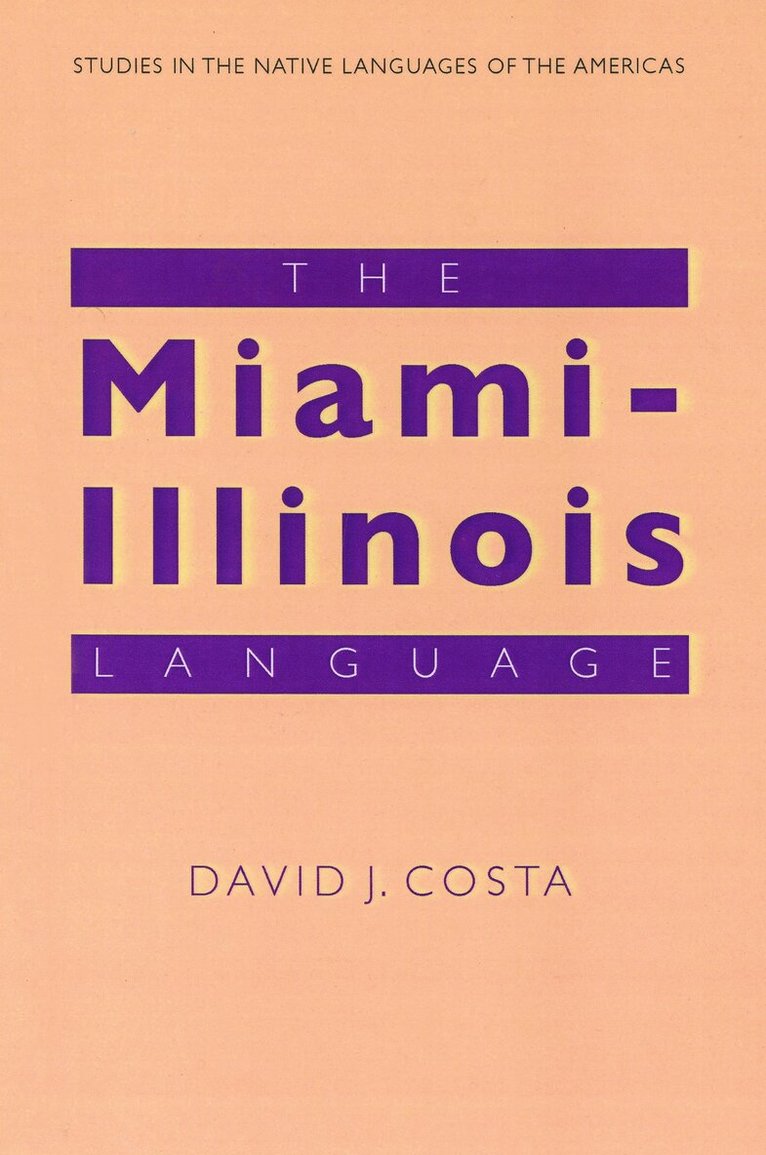
The Miami-Illinois Language reconstructs the language spoken by the Miami and the Illinois Native Americans. During the latter half of the seventeenth century both Native communities lived in the region to the south of Lake Michigan in present-day Illinois and Indiana. The French and Indian War, followed in the late eighteenth and early nineteenth centuries by massive influxes of white settlers into the Ohio River Valley, proved disastrous for both Native groups. Reduced in number by warfare and disease, the Illinois (now called the Peorias) along with half of the Miamis relocated first to Kansas and then to northeast Oklahoma, while the other half of the Miamis remained in northern Indiana. The Miami and the Illinois Native Americans speak closely related dialects of a language of the Algonquian language family. Linguist David J. Costa reconstructs key elements of their language from available historical sources, close textual analysis of surviving stories, and comparison with related Algonquian languages. The result is the first overview of the Miami-Illinois language.
845 kr
Skickas inom 11-20 vardagar
West Greenlandic Eskimo, a part of the Eskimo-Aleut language family spoken all across the Arctic, is primarily found among the Native peoples of central west Greenland. In this highly nuanced study of West Greenlandic, linguist Anna Berge examines how the speaker's role affects syntactic structures within discourse. Also included are transcripts of conversations with fluent Native speakers, providing a practical context in which to examine these grammatical questions. This study was the winner of the prestigious Mary R. Haas Award, presented annually by the Society for the Study of the Indigenous Languages of the Americas, the highest award given in the study of Native languages.
269 kr
Skickas inom 10-15 vardagar
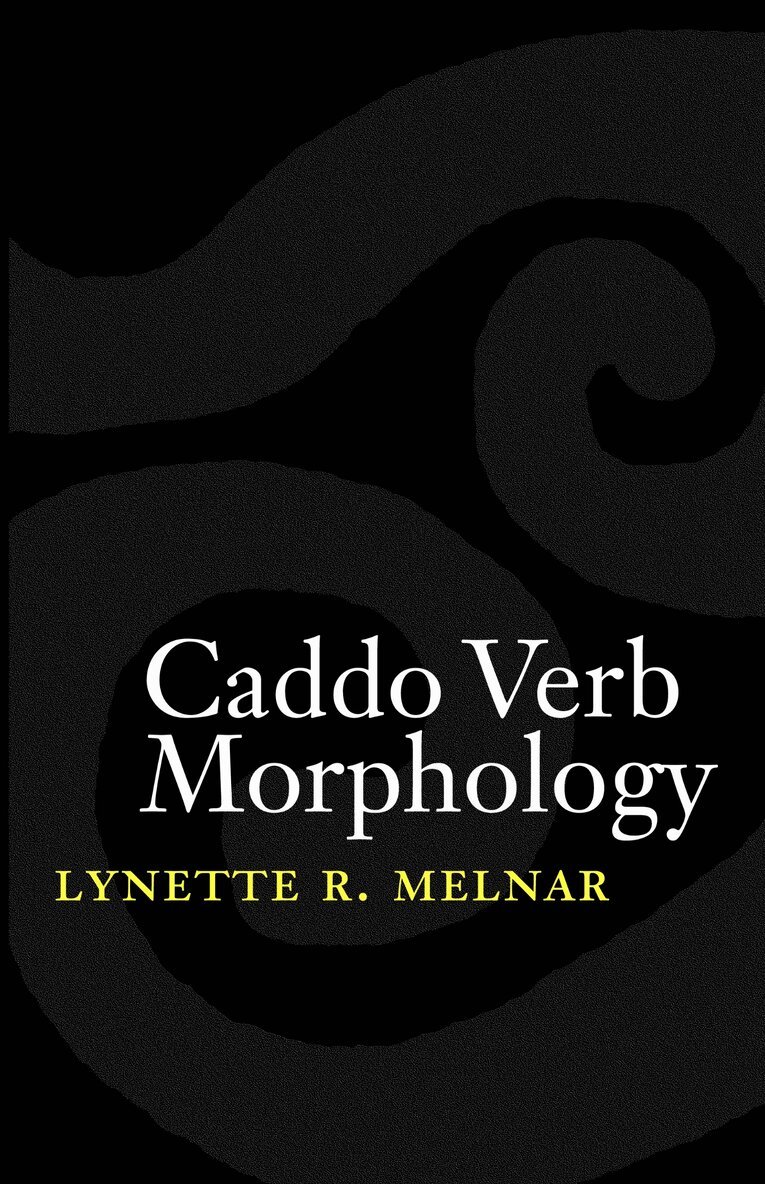
At the time of European contact with Native communities, the Caddos (who call themselves the Hasinai) were accomplished traders living in the southern plains. Their communities occupied parts of present-day Texas, Arkansas, Louisiana, and Oklahoma. It was early Spanish explorers who named a part of this territory "Texas," borrowing the Caddo word for "friend." Today there are approximately thirty-five hundred Caddos, most of whom live in Oklahoma. Their original language, which is related to the Plains languages—Pawnee, Arikara, Kitsai, and Wichita—is rapidly dying and is spoken only by a diminishing number of Caddo elders. Drawing on interviews with Caddo speakers, tapes made by earlier researchers, and written accounts, Lynette R. Melnar provides the first full-length overview and analysis of Caddo grammar. Because Caddo is an extremely complex language, Melnar's clear description will be important to linguists in general as well as to those specializing in Native languages. Caddo Verb Morphology is an essential contribution to our understanding of the Caddos' traditional world in particular and of Native America in general.
863 kr
Skickas inom 10-15 vardagar
Crow, a Siouan language spoken on the Crow Reservation in southeastern Montana, remains one of the most vital Native American languages, with several thousand speakers. A Grammar of Crow is the first detailed description of the Crow language in a contemporary linguistic framework. Randolph Graczyk draws on more than thirty-five years of daily contact with speakers of the language and his training as a linguist to offer an in-depth description and analysis of the crucial elements of the language, illustrated with numerous examples. The grammar is primarily descriptive, couched in terms of universal linguistic theory. It examines phonological, morphological, and syntactic features and treats the major phonological and morphological structures of Crow, paying considerable attention to the syntax of relative and subordinate clauses, noun incorporation, and various serial verb constructions. The switch reference system is also discussed in detail.
876 kr
Skickas inom 7-10 vardagar
Published through the Recovering Languages and Literacies of the Americas initiative, supported by the Andrew W. Mellon Foundation This volume is the first descriptive grammar of Kotiria (Wanano), a member of the eastern Tukanoan language family spoken in the Vaupes River basin of Colombia and Brazil in the northwest Amazon rain forest. The Kotirias, who have lived in this remote region for more than seven hundred years, participate in the complex VaupÉs social system, characterized by long-standing linguistic and cultural interaction. The Kotirias remained relatively isolated from the dominant societies until the early part of the twentieth century, when increasing outside influence in the region triggered rapid social and linguistic change. Today the Kotirias number only about sixteen hundred people, and their language, though still used in traditional communities, is in risk of becoming endangered. Kristine Stenzel draws on eight years of intensive work with the Kotirias to promote, record, and revitalize their language. Working with dozens of native speakers and drawing on numerous oral narratives and written texts, this book is the first comprehensive study of this endangered language and one of the few reference grammars of this language family.
434 kr
Skickas inom 10-15 vardagar
Published through the Recovering Languages and Literacies of the Americas initiative, supported by the Andrew W. Mellon Foundation This volume is the first descriptive grammar of Kotiria (Wanano), a member of the eastern Tukanoan language family spoken in the Vaupes River basin of Colombia and Brazil in the northwest Amazon rain forest. The Kotirias, who have lived in this remote region for more than seven hundred years, participate in the complex VaupÉs social system, characterized by long-standing linguistic and cultural interaction. The Kotirias remained relatively isolated from the dominant societies until the early part of the twentieth century, when increasing outside influence in the region triggered rapid social and linguistic change. Today the Kotirias number only about sixteen hundred people, and their language, though still used in traditional communities, is in risk of becoming endangered. Kristine Stenzel draws on eight years of intensive work with the Kotirias to promote, record, and revitalize their language. Working with dozens of native speakers and drawing on numerous oral narratives and written texts, this book is the first comprehensive study of this endangered language and one of the few reference grammars of this language family.
930 kr
Skickas inom 7-10 vardagar
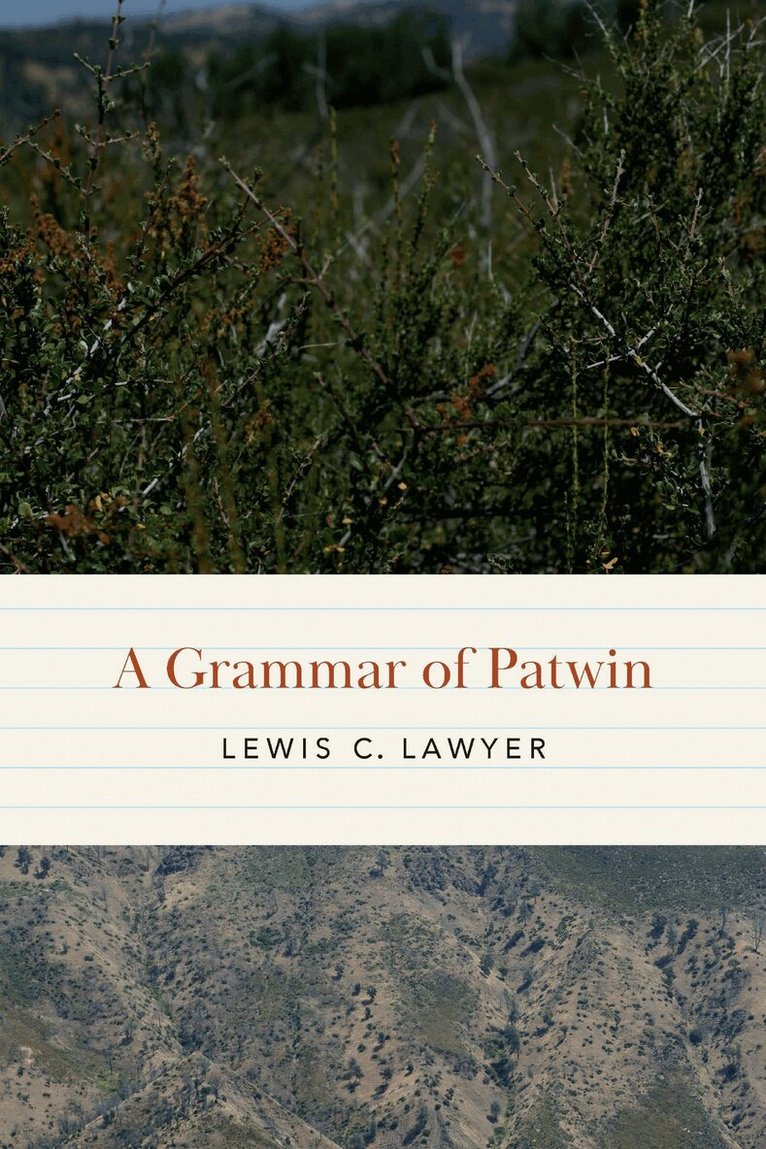
Published through the Recovering Languages and Literacies of the Americas initiative, supported by the Andrew W. Mellon Foundation.A Native American language formerly spoken in hundreds of communities in the interior of California, Patwin (also known as Wintun Tʼewe) is now spoken by a small but growing number of language revitalizationists and their students. A Grammar of Patwin brings together two hundred years of word lists, notebooks, audio recordings, and manuscripts from archives across the United States and synthesizes this scattered collection into the first published description of the Patwin language. This book shines a light on the knowledge of past speakers and researchers with a clear and well-organized description supported by ample archival evidence.Lewis C. Lawyer addresses the full range of grammatical structure with chapters on phonetics, phonology, nominals, nominal modifiers, spatial terms, verbs, and clauses. At every level of grammatical structure there is notable variation between dialects, and this variation is painstakingly described. An introductory chapter situates the language geographically and historically and also gives a detailed account of previous work on the language and of the archival materials on which the study is based. Throughout the process of writing this book, Lawyer remained in contact with Patwin communities and individuals, who helped to ensure that the content is appropriate from a cultural perspective.
944 kr
Skickas inom 10-15 vardagar
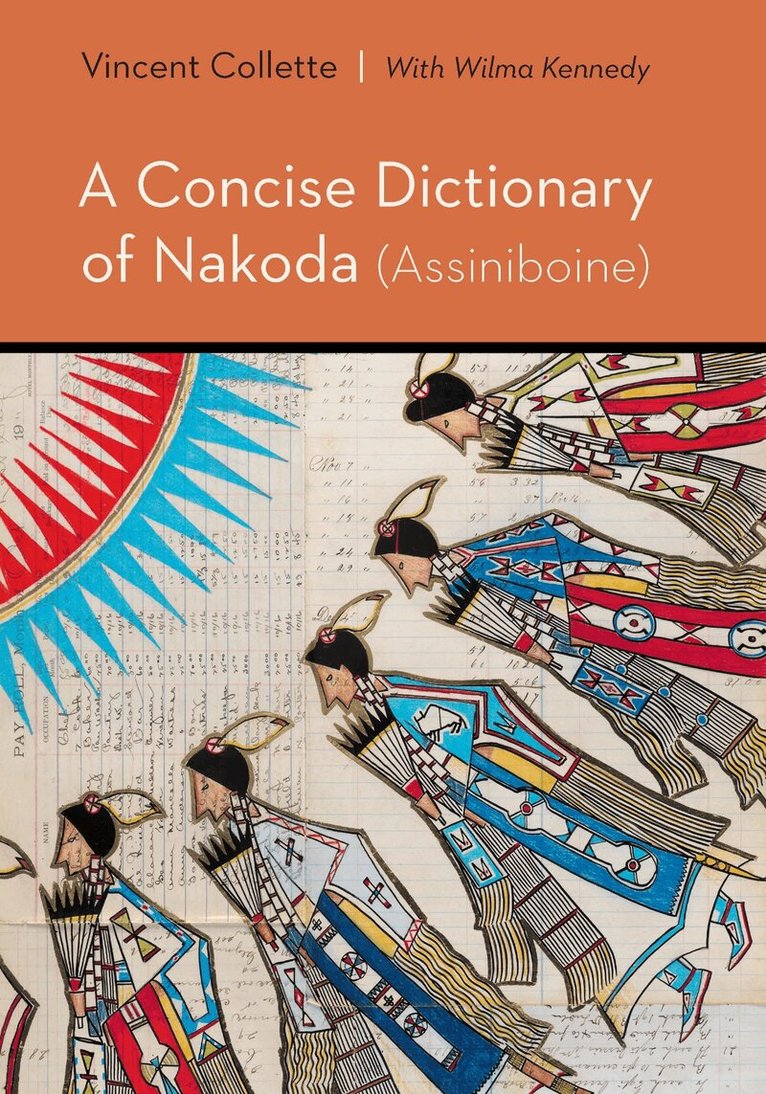
A Concise Dictionary of Nakoda (Assiniboine) brings to life the hopes and dreams of Nakoda (Assiniboine) elders. The Nakoda language-also known as Assiniboine, an Ojibwe ethnonym meaning “Stone Enemy”-is an endangered Siouan language of the Mississippi Valley branch spoken in southern Saskatchewan and northern Montana. Nakoda belongs to the Dakotan dialectal continuum, which includes Dakota, Lakota, and Stoney.The fieldwork for this project was done between 2018 and 2020 with Elder Wilma Kennedy, one of the last fluent speakers living in Carry The Kettle, Saskatchewan. The volume brings together many valuable stories and colorful expressions as well as archaic words that do not appear in any known sources of the language. Particular care was taken to obtain the derivatives of many verbal stems, along with sentences for many of the verbs, adverbs, and other function words.More than a list of words, this volume contains definitions and standard spellings along with a wealth of grammatical information. The dictionary contains more than 6,000 Nakoda-to-English translations, more than 3,000 English-to-Nakoda translations, and more than 1,500 sentences that will be extremely helpful for those interested in mastering the different usages of words and the various sentence patterns of the language. This dictionary of Nakoda can be used by anyone interested in learning or would like to refresh their knowledge of the language.
379 kr
Skickas inom 10-15 vardagar
Published through the Recovering Languages and Literacies of the Americas initiative, supported by the Andrew W. Mellon Foundation.A Native American language formerly spoken in hundreds of communities in the interior of California, Patwin (also known as Wintun Tʼewe) is now spoken by a small but growing number of language revitalizationists and their students. A Grammar of Patwin brings together two hundred years of word lists, notebooks, audio recordings, and manuscripts from archives across the United States and synthesizes this scattered collection into the first published description of the Patwin language. This book shines a light on the knowledge of past speakers and researchers with a clear and well-organized description supported by ample archival evidence.Lewis C. Lawyer addresses the full range of grammatical structure with chapters on phonetics, phonology, nominals, nominal modifiers, spatial terms, verbs, and clauses. At every level of grammatical structure there is notable variation between dialects, and this variation is painstakingly described. An introductory chapter situates the language geographically and historically and also gives a detailed account of previous work on the language and of the archival materials on which the study is based. Throughout the process of writing this book, Lawyer remained in contact with Patwin communities and individuals, who helped to ensure that the content is appropriate from a cultural perspective.
944 kr
Skickas inom 10-15 vardagar
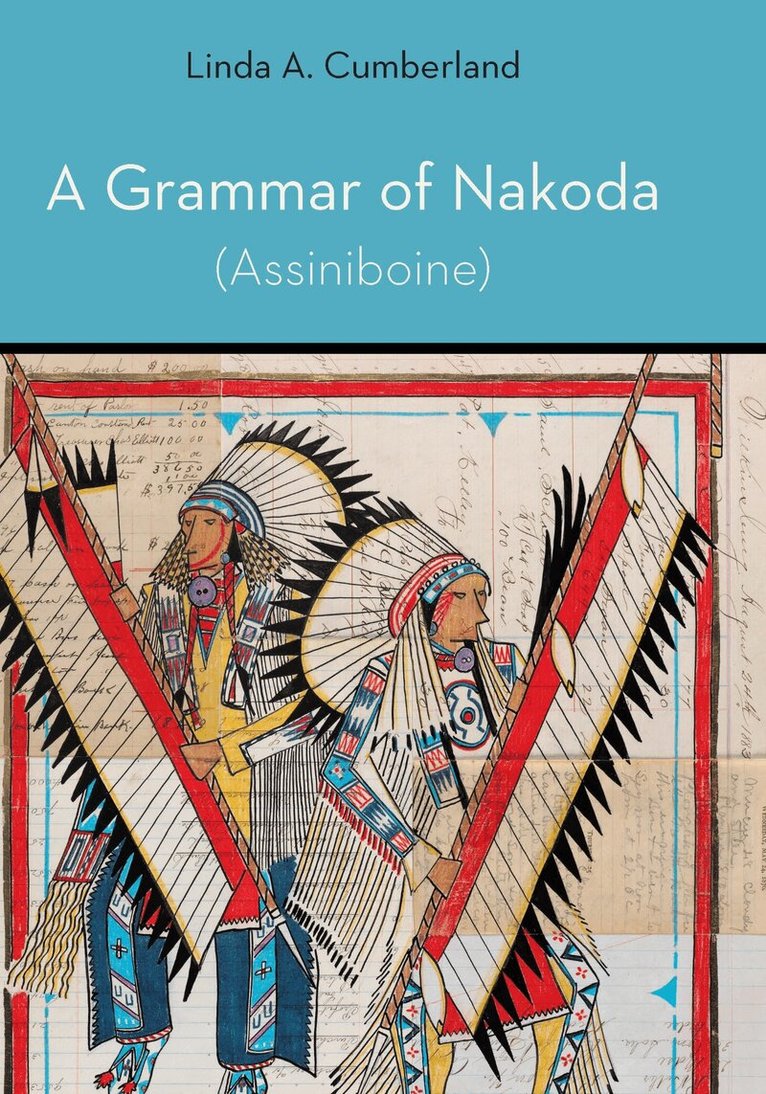
A Grammar of Nakoda (Assiniboine) is the first complete grammar of the Native American language Assiniboine, also known by the endonym Nakoda, a member of the Siouan language family. It addresses all major grammatical categories, including phonology, nouns, verbs, adverbs, enclitics, determiners, syntax, and kinship terminology. It also includes groundbreaking analysis of motion verbs of coming and going, demonstrating that such verbs compose a closed system that is consistent in varying degrees across all Siouan languages.Over the past century and a half, the classification of the Assiniboine language has suffered due to a complicated history regarding the Dakotan branch of the Siouan language family. Once spoken over a vast contiguous area of the northern plains, Assiniboine/Nakoda is used today among the Assiniboine people in and around Fort Belknap and Fort Peck in Montana and in five reserves in Saskatchewan. A Grammar of Nakoda (Assiniboine) establishes the singular basis of the language while also relating its unique features to other Great Plains American Indian languages.